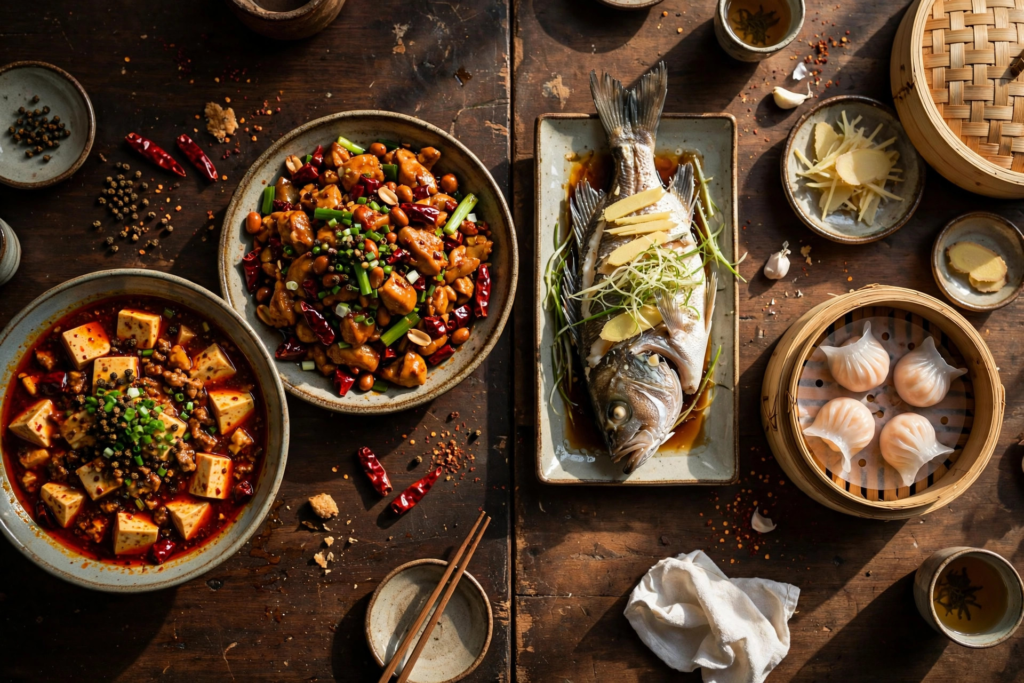
Walk into any Chinese restaurant in America and the menu usually splits into two camps: the Szechuan section, full of red chilies and warnings about spice, and the Cantonese section, all steamed fish and roast duck. They couldn’t be more different — and yet most diners pick between them without really knowing what the words mean.
Here’s the difference between Szechuan and Cantonese food: Szechuan (Sichuan) cooking is bold, spicy, and numbing, built on chilies, Sichuan peppercorns, and fermented pastes. Cantonese cooking is delicate and fresh, built on pristine ingredients, gentle technique, and the belief that a great fish needs almost nothing done to it. Same country, opposite philosophies. This guide breaks down the flavors, the signature dishes, why geography made them this way, and how to order like you know what you’re doing.
The 30-Second Version
If you only remember one thing, make it this: Szechuan food performs; Cantonese food reveals. A Szechuan chef wants you to feel something — heat blooming, your lips tingling, layers of flavor stacking up. A Cantonese chef wants the ingredient to speak — the sweetness of just-caught shrimp, the silkiness of perfectly steamed fish. One cuisine adds; the other subtracts.
As executive chef Matt Chan put it in an interview: Cantonese is about “balanced flavors, freshness, and bright presentation” that highlights natural flavors, while Sichuan is “bold, spicy, and thrilling,” built on málà — the famous numbing-spicy combination.
Quick Note: Szechuan vs Sichuan — Which Is Right?
Both. “Sichuan” is the modern pinyin spelling; “Szechuan” is the older Wade-Giles romanization that stuck around on American restaurant menus and spice jars. They refer to the same province and the same cuisine. You’ll see “Szechuan” on most takeout menus and “Sichuan” in most cookbooks written after about 2000. When a menu says Szechuan, it usually means Sichuan-style — though fair warning, plenty of American-Chinese “Szechuan” dishes (we’re looking at you, sweet gloopy kung pao) bear only a passing resemblance to the real thing.
Two Cuisines, Side by Side
| Szechuan (Sichuan) | Cantonese (Yue) | |
|---|---|---|
| Home province | Sichuan, western China (inland basin) | Guangdong, southern China (coast) |
| Core philosophy | Bold, layered seasoning transforms ingredients | Minimal seasoning reveals ingredients |
| Signature sensation | Málà — numbing + spicy | Wok hei — the smoky “breath of the wok” |
| Key seasonings | Sichuan peppercorns, dried chilies, doubanjiang, pickled vegetables | Light soy, oyster sauce, ginger, scallion |
| Go-to techniques | Dry-frying, braising in chili oil, hot pot | Steaming, quick stir-frying, roasting |
| Star proteins | Pork, beef, tofu, rabbit | Seafood, poultry, roast meats |
| Famous dishes | Mapo tofu, kung pao chicken, dan dan noodles | Char siu, dim sum, steamed whole fish |
| Mood | A rock concert | A string quartet |
Szechuan Food: The Numbing Spice King
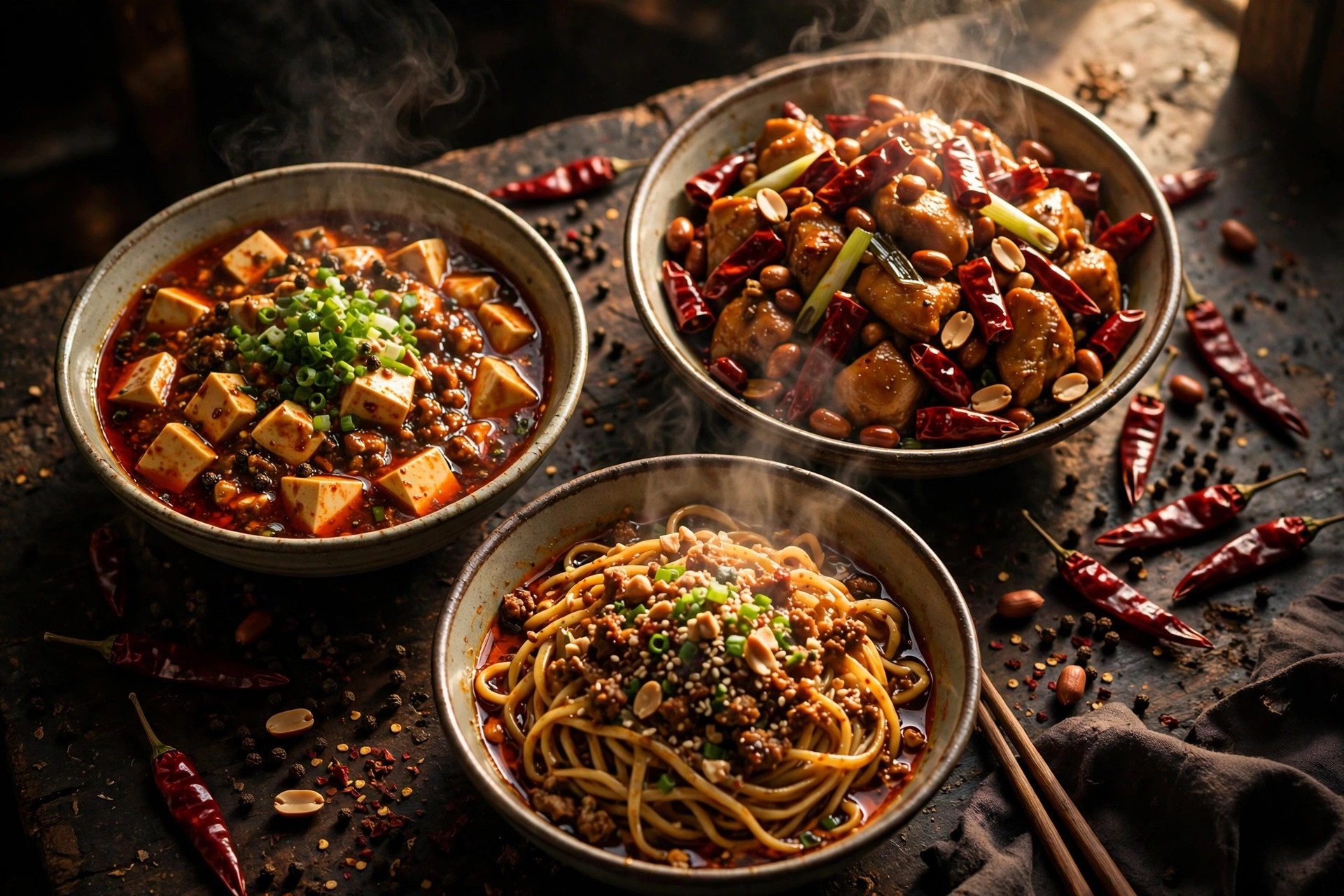
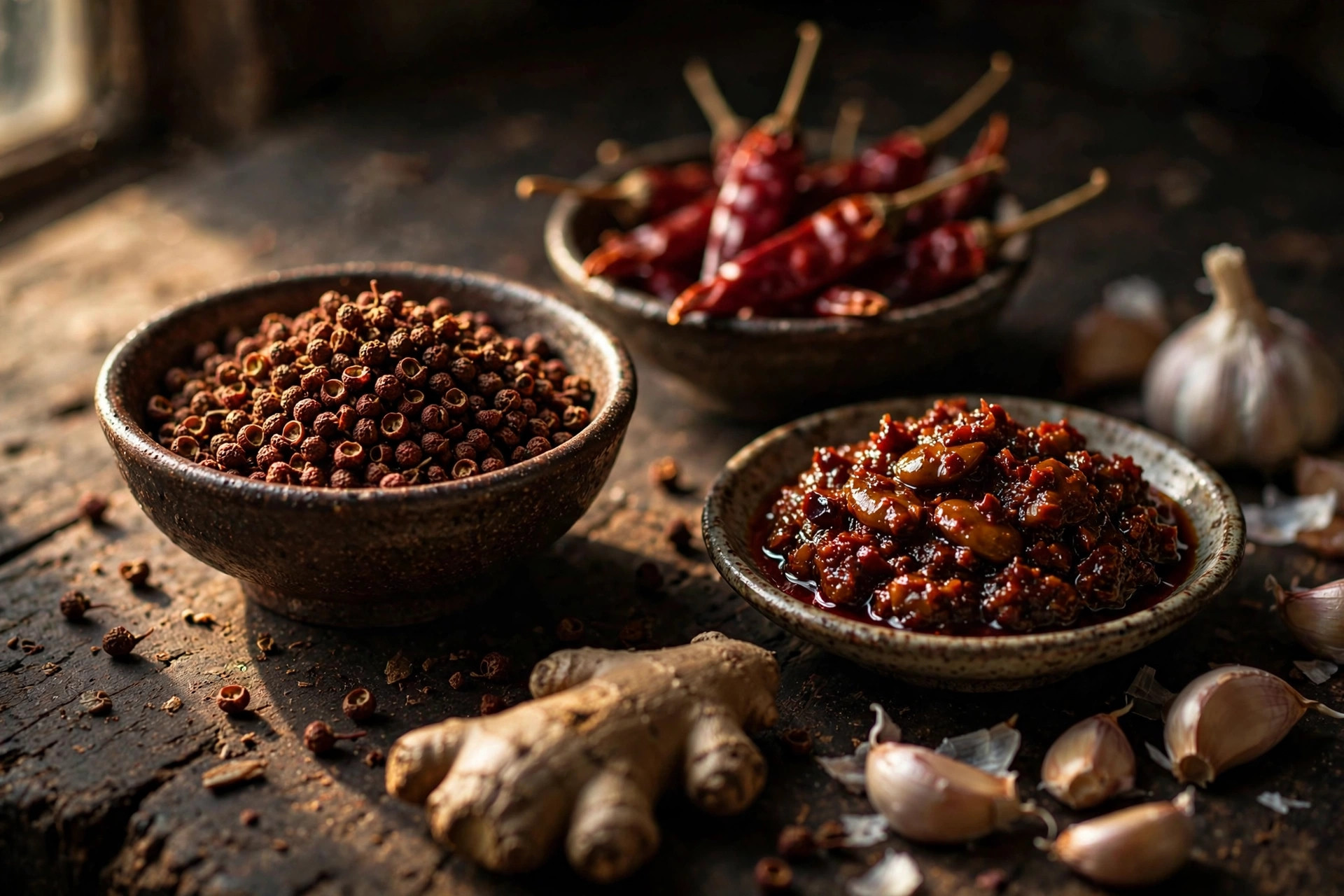
Szechuan cuisine’s calling card is málà (麻辣) — “numbing and spicy.” The numbness comes from the Sichuan peppercorn, which isn’t a true pepper at all but the dried husk of a prickly ash berry. It contains a compound called hydroxy-alpha-sanshool that literally makes your lips buzz and tingle. As one regional food guide describes it, the result is a multi-layered experience — floral, citrusy, and tingling all at once. Combined with dried chilies, it creates a sensation no other cuisine on earth quite replicates: heat you can feel around, not just burn from.
But here’s what most takeout menus get wrong: real Szechuan food isn’t just “spicy.” The cuisine is famous for complex, layered flavor profiles — sweet, sour, numbing, hot, savory, and aromatic, often several in a single dish. “Fish-fragrant” eggplant contains no fish; it’s a seasoning formula of pickled chilies, garlic, ginger, and vinegar. “Strange-flavor” chicken balances six tastes at once. The heat is the headline, not the whole story.
The dishes that define it:
- Mapo tofu — silken tofu in a fiery, numbing sauce with fermented broad bean paste and minced pork. The benchmark dish.
- Kung pao chicken — the real version: dried chilies, Sichuan peppercorns, peanuts, quick wok toss. Barely sweet, nothing like the takeout version.
- Dan dan noodles — wheat noodles in a punchy sesame-chili sauce with preserved vegetables and minced pork.
- Twice-cooked pork — pork belly boiled, sliced, then stir-fried with doubanjiang and leeks.
- Dry-fried green beans — blistered in the wok with pickled mustard greens and pork. Proof that Szechuan vegetables hit as hard as the meats.
- Szechuan hot pot — the communal bubbling cauldron of numbing-spicy broth. A whole social event, not just dinner. Here’s what Chinese hot pot is all about if you’ve never done one.
Cantonese Food: The Art of Subtlety
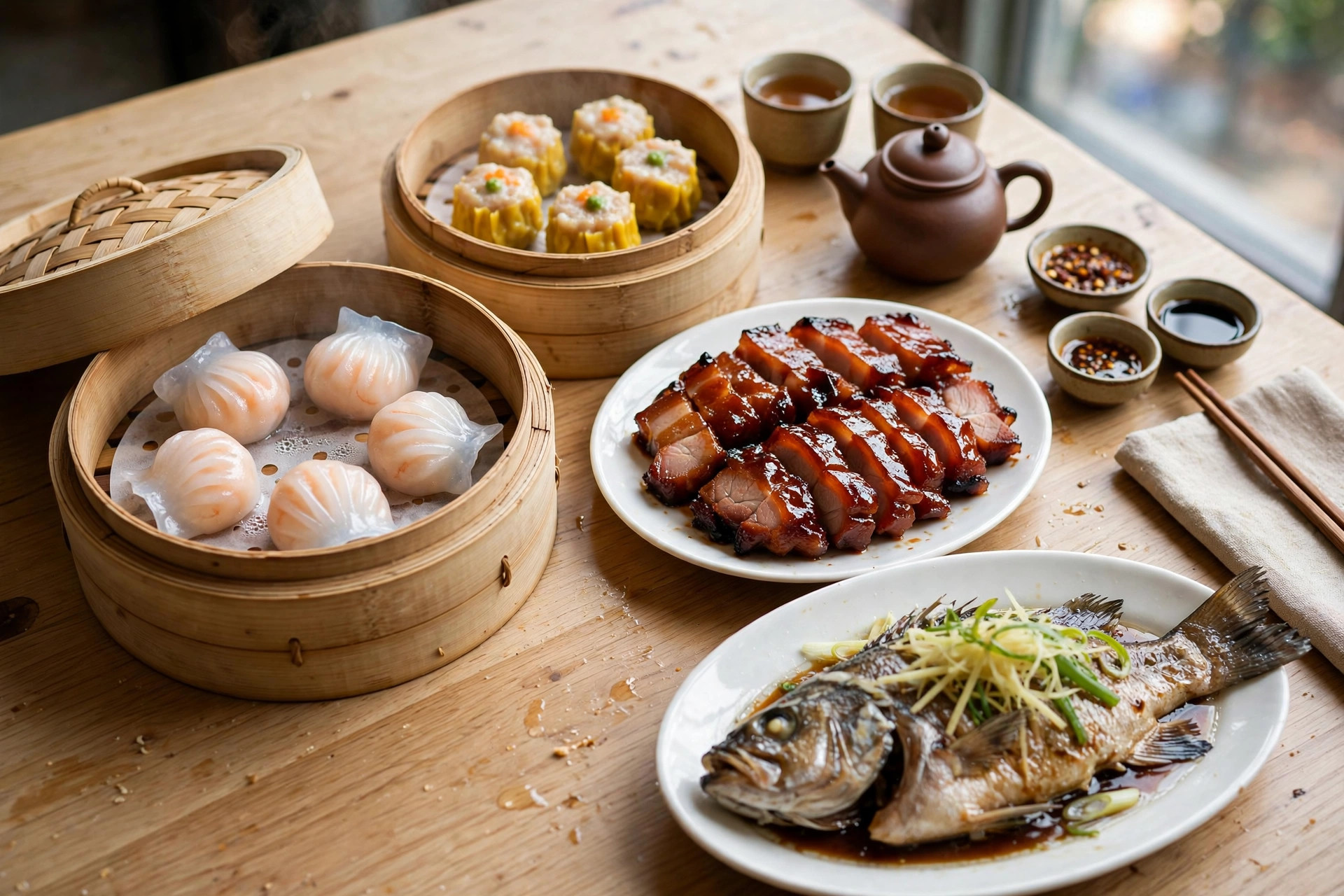
Cantonese cuisine comes from Guangdong province on China’s southern coast, and it plays a completely different game. The governing principle: start with the best possible ingredient, then do as little to it as you can get away with. A live fish steamed for eight minutes with ginger and scallion. Shrimp barely kissed by the wok. Roast pork where the marinade enhances rather than masks.
This is why Cantonese chefs obsess over wok hei — the “breath of the wok,” that fleeting smoky char only a ripping-hot wok and total mastery can produce. It’s also why Cantonese cooking prizes freshness to an almost extreme degree: live seafood tanks in restaurants aren’t theater, they’re the supply chain. When your whole cuisine is about revealing the ingredient, the ingredient had better be perfect.
Don’t mistake subtle for bland. Cantonese food has its own umami weapons — oyster sauce, XO sauce (dried scallops, shrimp, and chilies), fermented black beans — used with a light hand. And then there’s dim sum, the Cantonese brunch tradition of small steamed, fried, and baked bites: har gow, siu mai, cheung fun. An entire meal built on delicacy.
The dishes that define it:
- Char siu — Cantonese barbecue pork, lacquered sweet-savory, edges caramelized. (We have a whole piece on char siu pork if you’re curious.)
- Steamed whole fish with ginger and scallion — the purest expression of the cuisine. If a restaurant nails this, trust everything else.
- Dim sum — har gow (shrimp dumplings), siu mai, BBQ pork buns. Small bites, enormous technique.
- Wonton noodle soup — springy egg noodles in a clear, deeply savory broth. Comfort in a bowl.
- Salt and pepper squid — crispy, wok-tossed, the wok hei showpiece.
- White cut chicken — poached chicken served at room temperature with ginger-scallion sauce. Sounds plain; tastes like revelation.
Why Geography Made Them Opposites
This isn’t an accident of taste — it’s climate and geography writing the menu.
Sichuan sits in a humid inland basin, ringed by mountains, with damp summers and foggy winters. The traditional explanation: heavy, warming, sweat-inducing food helped people cope with the damp. Whether or not you buy the folk medicine, the practical result is clear — a landlocked province developed a cuisine built on preserved and fermented foods (pickled vegetables, doubanjiang, salted meats) and aggressive seasoning that makes humble ingredients exciting.
Guangdong, by contrast, is subtropical coastline: busy ports, abundant seafood, year-round produce, and centuries of trade bringing in new ingredients. When the ocean hands you perfect fish daily, you don’t bury it in chili paste — you steam it. The cuisine that emerged is a celebration of access: why season heavily when freshness does the work?
Both are counted among China’s great regional cuisines — in fact, a rundown of the eight major cuisines tags Sichuan as “spicy, numbing, aromatic, bold and layered” and Cantonese as “light, fresh, natural, ingredient-driven,” which sums up this whole article in about ten words. Understanding the geography behind them makes every menu easier to read. For a deeper tour of how Chinese flavor profiles break down by region, our guide to Chinese food flavors goes further.
How to Tell Which One You’re Eating
Staring at an unfamiliar menu? Look for these tells:
- The words “numbing,” “Sichuan pepper,” or “mala” — Szechuan, obviously. Dried whole chilies in the dish photo are another giveaway.
- Steamed anything, live seafood tanks, roast meats hanging in the window — Cantonese. That hanging duck is the international flag of Cantonese cooking.
- Dim sum carts or a dim sum menu section — Cantonese, full stop. Szechuan restaurants don’t do dim sum.
- A hot pot option with split broth (spicy/mild) — Szechuan influence, even in hybrid restaurants.
- Suspiciously sweet “kung pao” or “General Tso’s” — that’s American-Chinese wearing a Szechuan costume. Delicious, but don’t judge the real cuisine by it.
Which Should You Order?
Honestly? Both — but match the cuisine to the moment.
Pick Szechuan when you want excitement: a cold night, a group that shares, a craving for something that wakes you up. Order mapo tofu, dry-fried green beans, and dan dan noodles, and don’t skip the hot pot if they have one. Warn the spice-averse at your table — málà is a feature, not a bug.
Pick Cantonese when you want finesse: a date night, a family dinner, a meal where you actually want to taste the fish. Order the steamed whole fish, char siu, and whatever dim sum looks freshest. Go at brunch hours for the full dim sum cart experience.
And if the restaurant does both well — a rare and wonderful thing — order across the divide. A table with mapo tofu and steamed fish is the best argument for Chinese food’s range that exists.
Frequently Asked Questions
Is Szechuan food always spicy?
Mostly, but not entirely. Plenty of classic Sichuan dishes are mild — many steamed, braised, and sweet-savory dishes exist alongside the fire-breathers. But if you dislike heat, Cantonese is the safer cuisine to explore.
What’s the difference between Szechuan peppercorns and black pepper?
They’re unrelated plants. Black pepper gives sharp heat; Sichuan peppercorns give a citrusy, floral numbness with mild warmth. You can’t substitute one for the other.
Why is Cantonese food the most common Chinese food abroad?
History. Most early Chinese immigrants to North America, Southeast Asia, and beyond came from Guangdong province, so Cantonese cooking became the world’s default “Chinese food.” The Szechuan wave in the West is much more recent.
Can I find authentic versions of both in one restaurant?
Rarely at the highest level — the techniques and ingredient chains are genuinely different. Restaurants that do both tend to do one better. When in doubt, order each cuisine’s signature dishes and see which shines.
The Szechuan-Cantonese split is the fastest education in Chinese food there is. Once you can taste the difference between a cuisine that performs and one that reveals, every Chinese menu gets more interesting — and every order gets better. Start with mapo tofu one night and steamed fish the next, and you’ll never mix them up again.
[…] In Sichuan, where this salad is most at home, the cold dishes can be as thrilling as the hot ones: Sichuan cold dishes lean garlicky, vinegary, and numbingly spiced, and pai huang gua is the cool-headed member of that […]