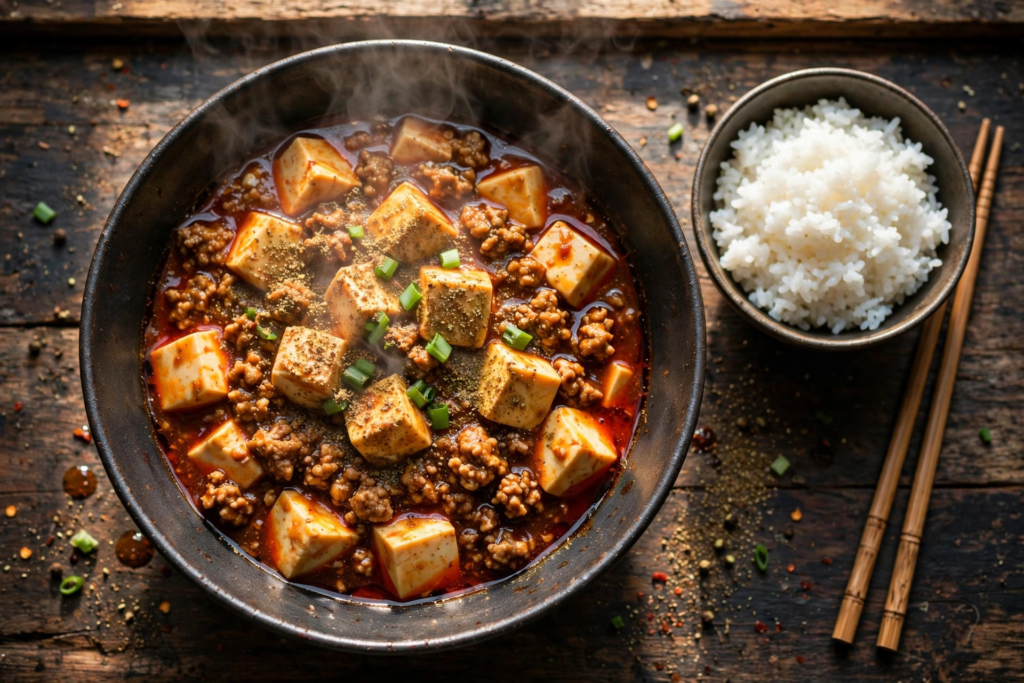
There aren’t many dishes that numb your mouth and set it on fire at the same time — and even fewer that make you reach for another bite while that’s happening. Mapo tofu is one of them. Silky cubes of tofu swim in a glossy, brick-red sauce that’s savory, spicy, and faintly electric on the tongue, all spooned over steaming rice. It’s the most famous dish to come out of Sichuan, and once you understand what’s in it, you’ll understand Sichuan cooking itself.
What Is Mapo Tofu, Exactly?
At its simplest, mapo tofu is tofu braised in a spicy, aromatic sauce. But that description misses everything interesting. The tofu — usually medium-firm, sometimes silken — is simmered in a sauce built from fermented chili bean paste, browned ground pork, garlic, ginger, and broth, then finished with a snowfall of freshly ground Sichuan peppercorns.
What comes out is mala: the signature Sichuan combination of numbing (ma) and spicy-hot (la). The chilies bring the burn. The peppercorns bring a tingling, almost fizzy numbness that makes your lips buzz. Together they create a flavor that doesn’t exist anywhere else in Chinese cooking — bold, layered, and deeply savory underneath the heat.
It’s humble food with a grand reputation: a Qing-dynasty street dish that became one of the defining plates of China’s great regional cuisines, now cooked in home kitchens and fine restaurants on every continent.
The Pockmarked Granny of Chengdu
The name tells the whole origin story, if you know how to read it. Ma (麻) means pockmarked. Po (婆) means old woman, or granny. Mapo tofu is “pockmarked granny’s tofu.”
The granny in question was Chen Mapo, who with her husband ran a small restaurant in 19th-century Chengdu, near Wanfu Bridge. The story goes that laborers and porters — hungry men who needed cheap, filling food — started asking her to cook tofu the way she made it at home: with the fermented bean paste, chilies, and peppercorns of Sichuan, plus whatever minced meat was on hand. It was fast, it was cheap, and it was unforgettable. Word traveled, the crowds came, and the dish took her nickname.
There’s a strange footnote to the story. During the Cultural Revolution, when anything “old” — old ideas, old customs, old habits — was under attack, the dish’s name became politically awkward. Some menus quietly renamed it to dodge trouble, and older diners still remember the era when you couldn’t always order it by its real name. A dish that survived dynasties, wars, and revolutions is a dish worth taking seriously.
Ma and La: The Two Sensations That Define the Dish
To cook mapo tofu well — or even to order it well — you need to understand its two halves.
Ma (麻), the numbness, comes from Sichuan peppercorns. These aren’t true peppercorns at all; they’re dried husks of a prickly-ash tree. They contain a compound called hydroxy-alpha-sanshool that literally makes your lips and tongue tingle and buzz, the way your foot feels waking up from pins and needles. It’s not heat — it’s electricity. Freshly toasted and ground, it’s floral and almost citrusy. Pre-ground and stale, it’s sawdust. This single ingredient is the difference between real mapo tofu and red tofu stew.
La (辣), the heat, comes from chilies two ways: dried chilies toasted in oil for a slow, smoky burn, and doubanjiang — the fermented chili-and-broad-bean paste — for a deep, savory fire. The heat should bloom, not blast. In a good mapo tofu, you taste the pork, the fermented beans, and the broth first; the burn arrives a beat later and lingers.
Together, ma and la form mala, the flavor principle behind half of Sichuan’s boldest dishes. As MySichuanFood’s authentic guide puts it, the goal is balance — spicy, savory, and lightly numbing rather than simply hot. If all you taste is fire, something went wrong.
The 5 Ingredients You Can’t Fake
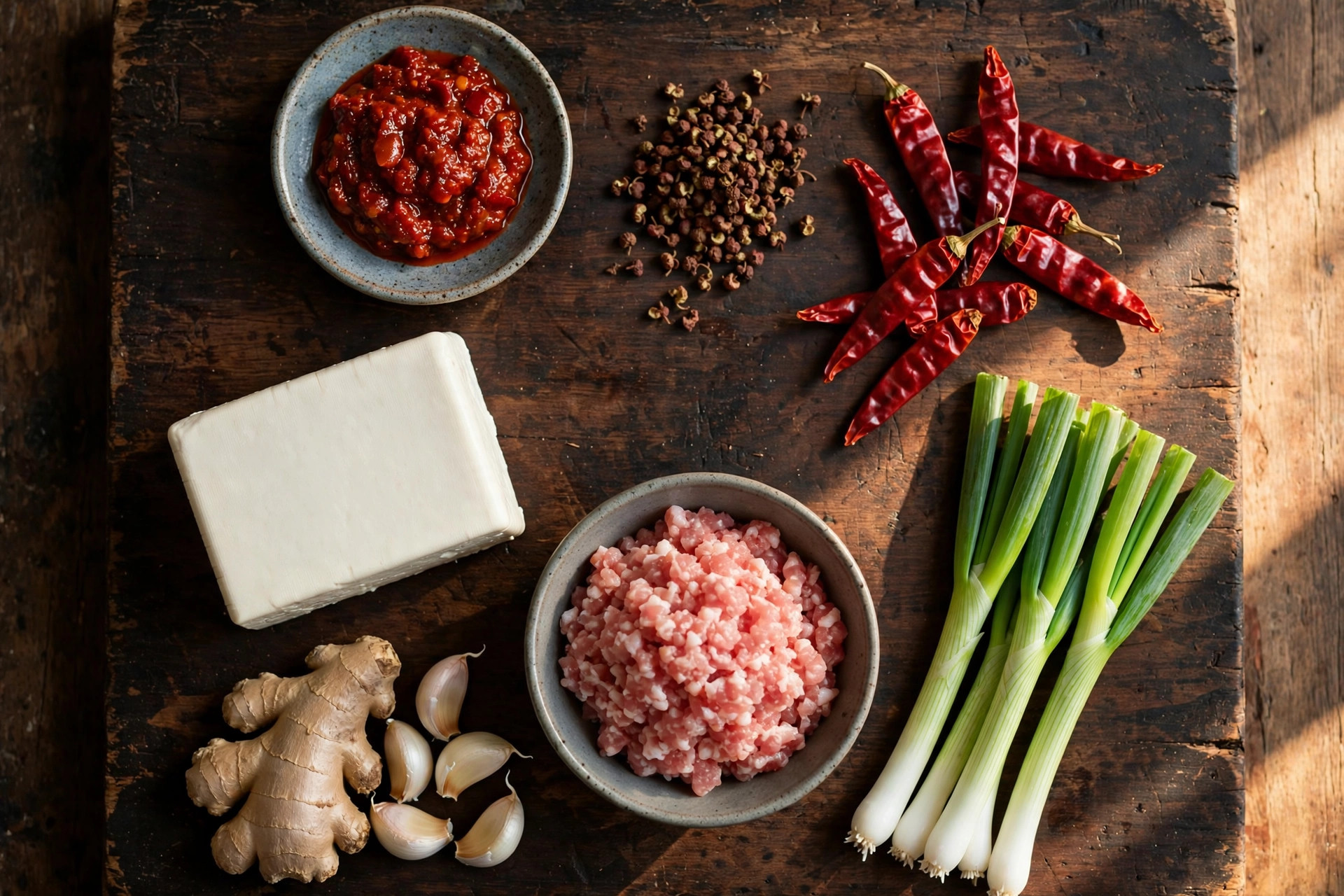
You can improvise around the edges of this dish, but not its core. These five do the heavy lifting:
- Pixian doubanjiang. Fermented broad-bean-and-chili paste from Pixian county in Sichuan, aged until it’s dark, funky, and complex. This is the soul of the dish — its savoriness, its color, its depth. Buy the real Pixian stuff (look for 郫县豆瓣 on the label); the generic “chili bean sauce” in a squeeze bottle is a different product wearing a similar name.
- Sichuan peppercorns. Toast them dry in a wok until fragrant, then grind fresh for each batch. The numbing compound fades fast once ground, so the little shaker of pre-ground peppercorns from three years ago won’t do anything. Red husks are standard; green ones are rarer, more citrusy, more intense.
- Tofu. Medium-firm is the forgiving choice — it holds its shape while staying tender. Silken tofu is the luxurious one, wobbling in the sauce like custard, but it demands a gentle hand. Either way, blanch the cubes in salted boiling water for a minute first: it firms the texture and washes away the raw beany taste.
- Ground meat. Pork is today’s standard, browned hard so it turns savory and a little crisp at the edges. The original was beef — Chengdu was a beef-eating town in the Qing era — and some traditionalists still insist on it.
- Fermented black soybeans (douchi). Optional in modern recipes, standard in old ones. A spoonful adds a dark, funky bass note that makes the sauce taste like it simmered for hours instead of minutes.
How It’s Made: Wok to Table in About 20 Minutes
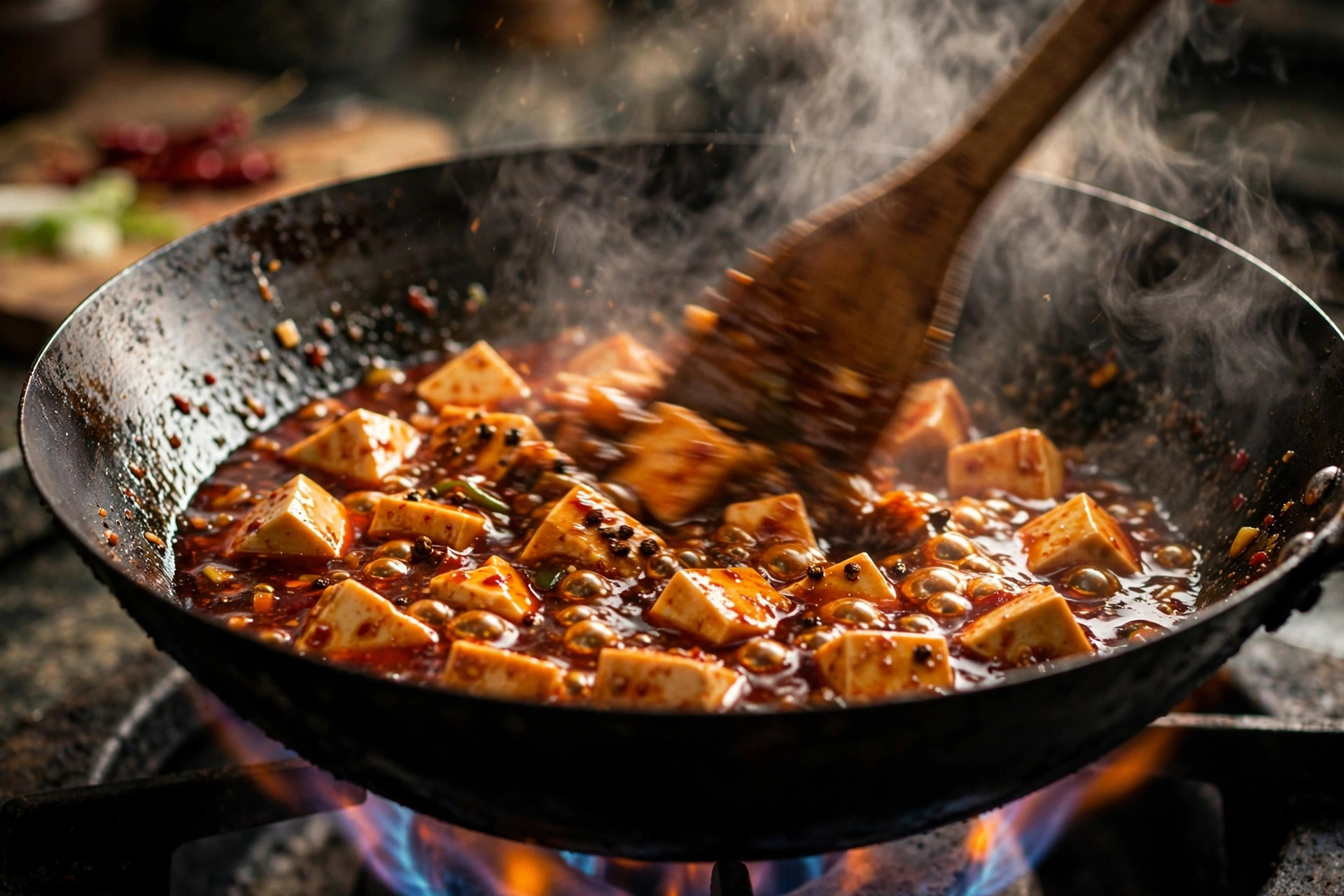
For all its reputation, mapo tofu is weeknight-fast. The whole thing happens in one wok:
- Brown the pork. Hot wok, a slick of oil, ground pork spread out and left alone until it crisps and browns, 3–4 minutes. This browning is flavor you can’t get back later.
- Bloom the aromatics. Garlic, ginger, and dried chilies go in for 30 seconds, then the doubanjiang — stir-fried in the pork fat until it darkens a shade and smells intensely savory. This step, frying the paste in fat, is where the sauce gets its depth.
- Build the braise. Broth goes in, everything comes to a simmer. A splash of light soy sauce, a pinch of sugar to round the edges.
- Add the tofu — gently. Slide the blanched cubes in and simmer 5–7 minutes, pushing (never vigorous stirring) so the tofu drinks up the sauce without breaking.
- Thicken lightly. A cornstarch slurry, drizzled in while stirring softly, until the sauce turns glossy and clings.
- Finish off the heat. Freshly ground Sichuan peppercorn and sliced scallions go on last. Heat destroys the numbing compound, so this is the one step with strict timing.
Serve it immediately, over rice, while the sauce is still trembling. Mapo tofu waits for no one.
Chinese vs Japanese Mapo Tofu
Mapo tofu emigrated to Japan decades ago and became a fixture there — but the Japanese version evolved into something quite different. Worth knowing, since “mapo tofu” on a menu could mean either:
| Sichuan (Chinese) | Japanese-style | |
|---|---|---|
| Heat level | Fierce, full mala | Noticeably milder |
| Sichuan peppercorn | Generous, freshly ground, added at the end | Little or none |
| Key paste | Pixian doubanjiang | Doubanjiang plus tianmianjiang (sweet bean sauce) |
| Extra seasonings | Minimal — the paste does the work | Oyster sauce, sometimes miso or sake |
| Character | Numbing, fiery, funky | Savory-sweet, rounded, comforting |
Neither is “wrong” — the Japanese version, documented in Chinese food histories, is its own legitimate tradition now. But if you want the Chengdu original, with the lip-buzzing ma that defines the dish, make sure peppercorns are in the ingredient list.
How to Serve and Eat It Like a Local
In Chengdu, mapo tofu is everyday food, and it’s eaten like everyday food — fast, hot, and with the right supporting cast:
- Steamed jasmine rice is non-negotiable. The sauce is the point, and rice is its delivery vehicle. Here’s how to cook jasmine rice properly so every grain stays separate.
- Something pickled on the side. Sichuan pickles (zha cai, ya cai) cut through the richness with sour crunch. A quick pickled vegetable does the same job in minutes.
- Something mild next to it. A clear soup or simply steamed greens gives your palate somewhere to rest between bites.
- Something cold to drink. Jasmine tea or a cold beer — the classic Sichuan fire extinguisher.
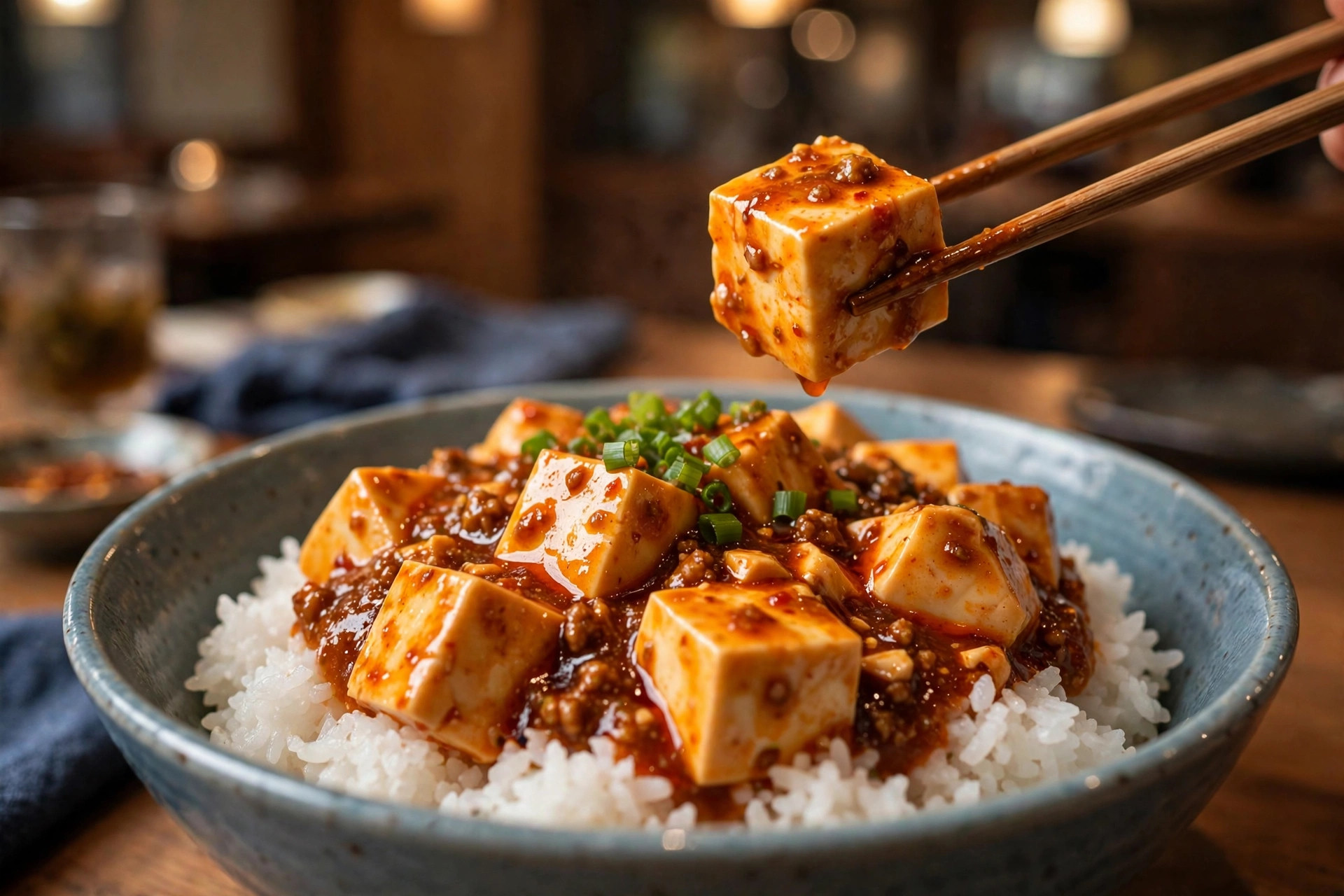
Eat it the way the laborers at Chen Mapo’s restaurant did: spoon the tofu and sauce directly over the rice, let it soak in, and don’t be precious about it. This was never banquet food. It’s fuel that happens to be delicious.
Frequently Asked Questions
Is mapo tofu extremely spicy?
It’s spicy, but “spicy” undersells it — the numbing tingle is the stranger sensation for most first-timers. That said, both halves are adjustable: less doubanjiang and dried chili for less burn, fewer peppercorns for less numbness. A home cook controls the dials completely.
Can I make mapo tofu vegetarian?
Easily. Swap the pork for finely chopped shiitake mushrooms or plant-based mince, use vegetable broth, and keep the doubanjiang and Sichuan peppercorns exactly as they are — the mala flavor doesn’t come from the meat. Check that your doubanjiang brand is vegetarian (most are, but some contain shrimp).
What’s the difference between doubanjiang and gochujang?
They look similar — red fermented pastes — but they’re different products. Doubanjiang is Chinese, made from broad beans and chilies, savory and funky. Gochujang is Korean, made from glutinous rice and chilies, noticeably sweeter. They don’t substitute for each other without changing the dish.
Why did my tofu fall apart?
Three usual suspects: the tofu was too soft for your stirring, you stirred instead of pushing, or you skipped the salted-water blanch that firms it up. Medium-firm tofu plus a gentle hand solves it.
Is mapo tofu healthy?
It’s tofu and vegetables in the starring roles, so the base is reasonable — high in plant protein, modest in fat. The caveats are sodium (doubanjiang and soy sauce are salty) and the oil used for blooming the paste. Made at home with a measured hand, it’s a perfectly respectable weeknight dinner.
The single highest-leverage move: buy real Pixian doubanjiang and whole Sichuan peppercorns this week, and cook it once. You’ll understand more about Sichuan food from one wok of mapo tofu than from a shelf of cookbooks — and you’ll have dinner in twenty minutes.