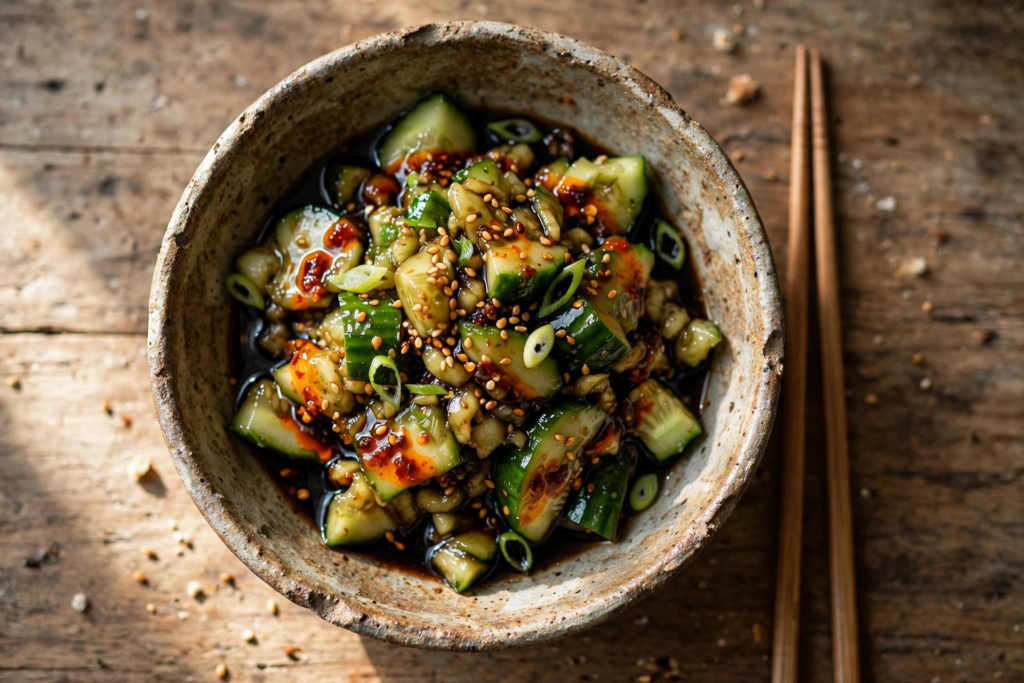
Some dishes earn their place through complexity. This one earns it by asking you to hit a vegetable with the side of a knife.
Chinese smashed cucumber salad — pai huang gua (拍黄瓜), literally “smacked cucumber” — is a cold side dish of bruised cucumber pieces tossed in a garlicky, tangy dressing of black vinegar, soy sauce, and sesame oil, often finished with chili oil. It takes about fifteen minutes, costs almost nothing, and shows up on tables all over China, especially in summer, next to rich braised meats and fiery Sichuan dishes that need something cool to lean against. This guide covers what it is, why the smashing actually matters, how to build the dressing, and the small mistakes that separate a great plate from a watery one.
What Is Pai Huang Gua, Exactly?
Say the name out loud: pie hwahng gwah. The characters are fun — 拍 means to pat or smack, and 黄瓜 means cucumber, though it literally reads as “yellow melon,” a leftover from older varieties that ripened yellow. So the dish is, very directly, “smacked yellow melon.”
It belongs to a whole category of Chinese cooking called liangban (凉拌), cold tossed dishes. Nearly every regional cuisine in China has its liangban lineup — they’re the appetizers and side plates that arrive first, wake up your palate, and buy the kitchen time. In Sichuan, where this salad is most at home, the cold dishes can be as thrilling as the hot ones: Sichuan cold dishes lean garlicky, vinegary, and numbingly spiced, and pai huang gua is the cool-headed member of that family.
At its core it’s dead simple. Cucumber gets smashed, salted, drained, and tossed with a dressing built from six pantry staples. There’s no cooking involved — no wok, no heat, no technique beyond the smack. That’s the whole appeal. When the weather turns hot and the main dishes are heavy — a clay pot of red-braised pork, a plate of mapo tofu — this cold, crunchy, sour-salty salad resets your mouth between bites.
Why Smash It? The Science of the Smack
This is the question everyone asks, and the answer is better than “because it’s fun” — though it is fun.
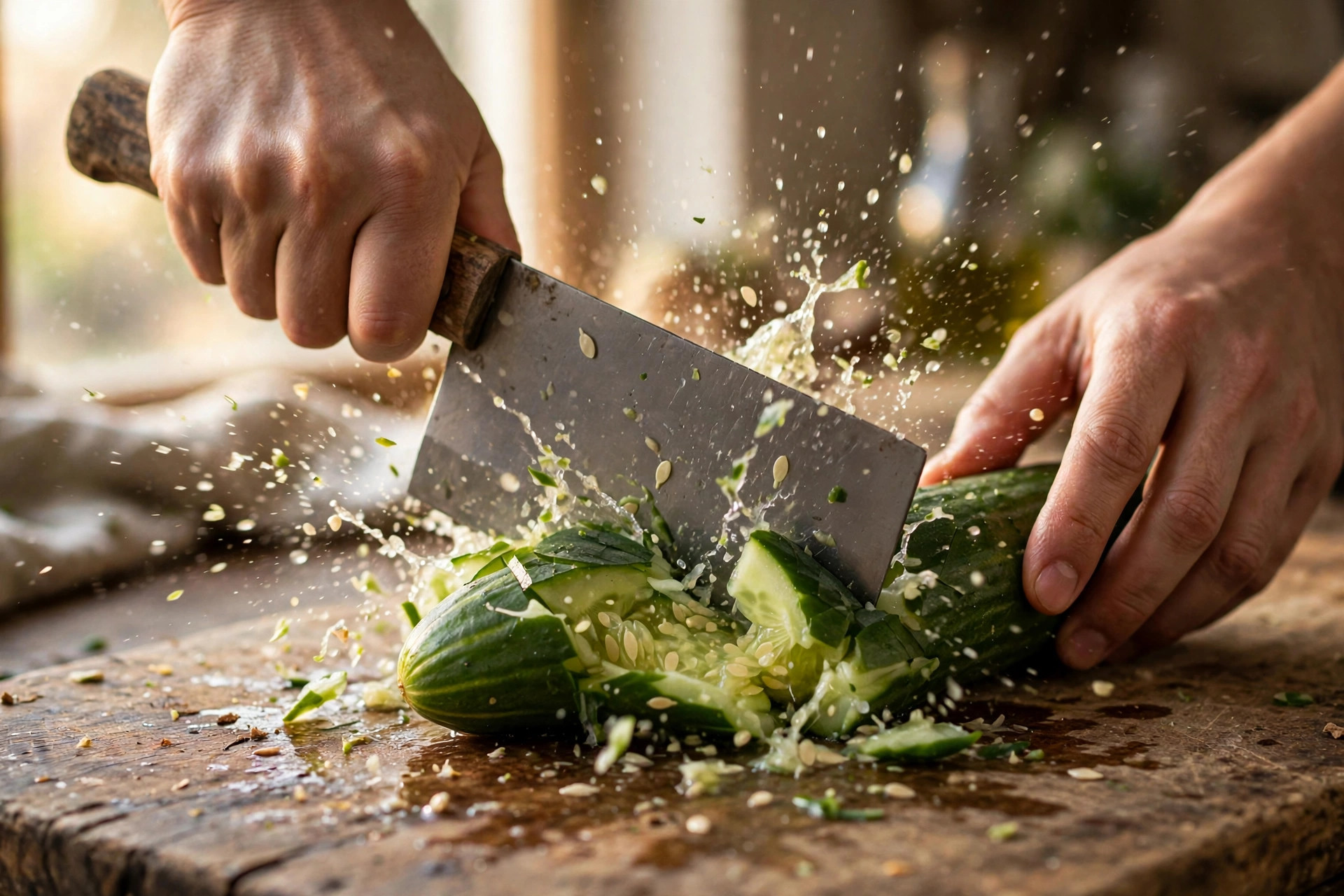
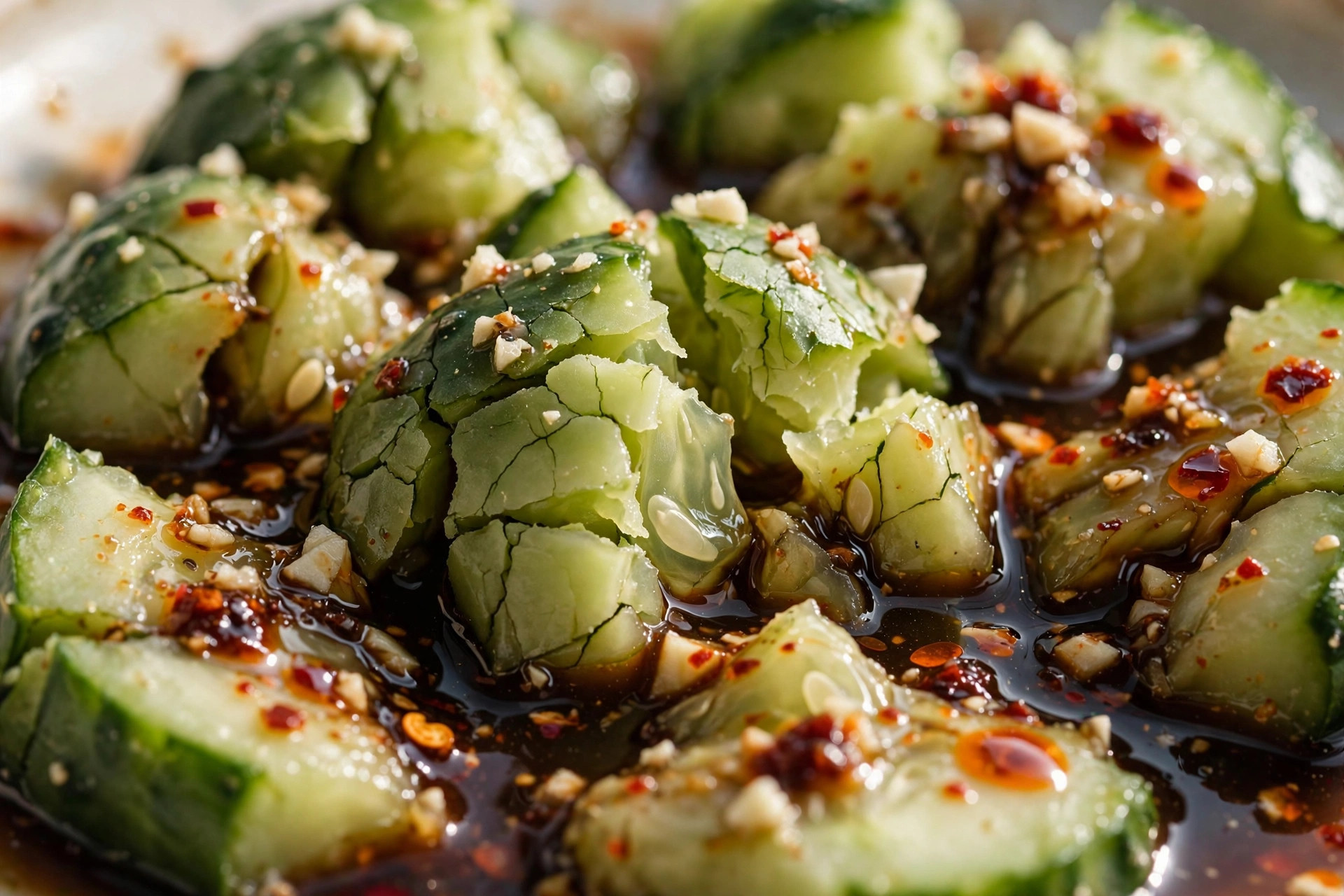
A cucumber is mostly water held inside firm cell walls. Slice it neatly and you get clean, sealed surfaces; dressing sits on top and slides off. Smash it and you shatter those cell walls unevenly. The flesh breaks into craggy, irregular chunks with torn edges, exposed seeds, and little fissures running through each piece. All of that torn surface area drinks up dressing the way a sponge takes in water. A sliced cucumber wears the dressing. A smashed cucumber absorbs it.
Smashing also changes the texture in a way slicing can’t copy. The pieces stay crunchy but develop a slightly yielding, almost juicy bite where the flesh has fractured. And there’s a practical bonus: the salt you add afterward penetrates those cracks fast, drawing out excess water in minutes instead of the half hour neat slices would need.
Technique matters less than restraint. Lay the cucumber on a sturdy board and whack it with the flat side of a cleaver, a rolling pin, or a heavy pan — firm, confident hits until it cracks and splits open. What you’re after is broken, not pulverized. Stop the moment it splits; if you keep going you’ll make cucumber paste, and no dressing can save that. Some cooks slip the cucumber into a zip-top bag first to contain the flying seeds. Not traditional, but your kitchen walls will thank you.
The Dressing: Six Ingredients, Zero Shortcuts
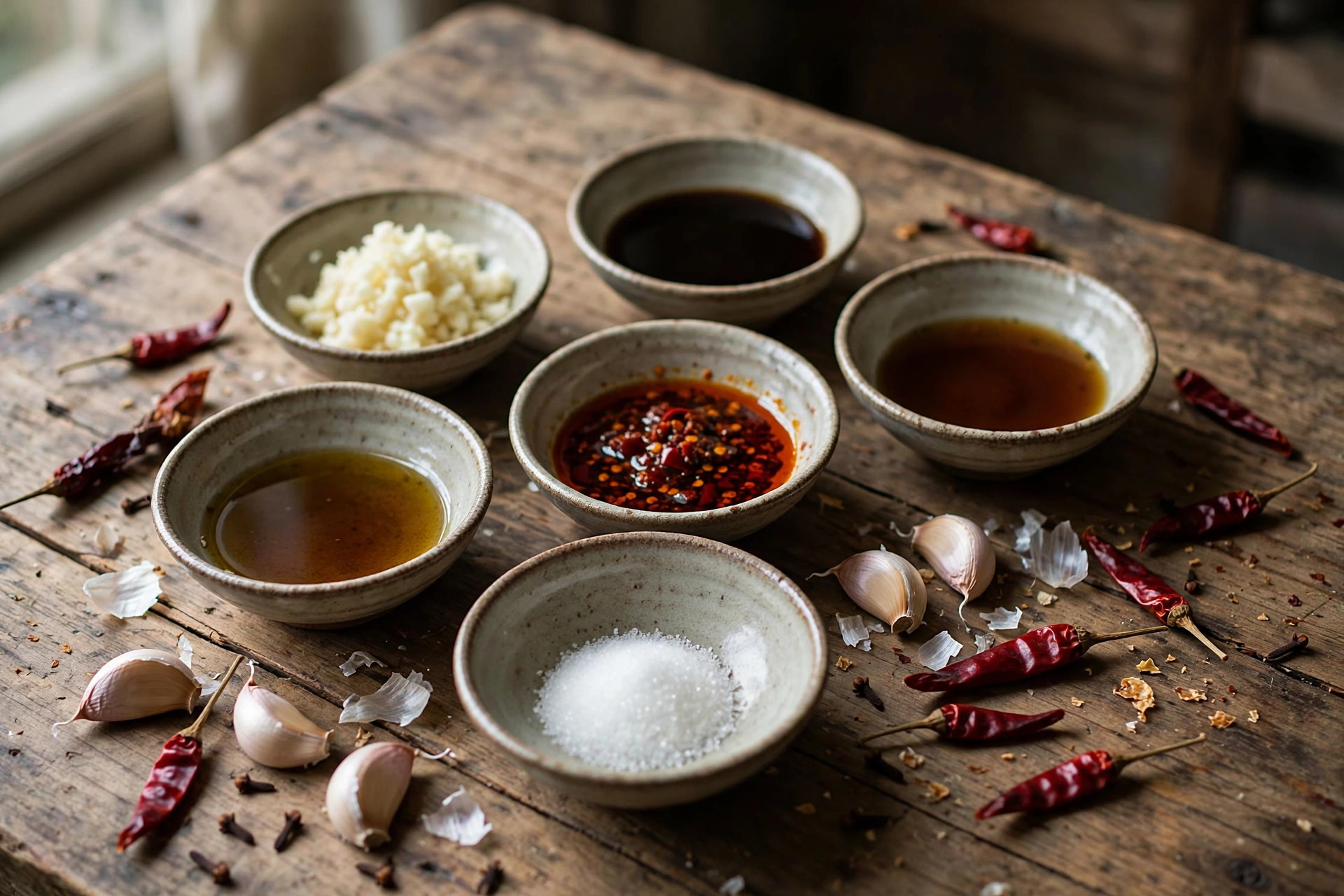
The dressing is where the dish lives or dies, and it’s built from the holy trinity of Chinese cold-dish seasoning — soy sauce, vinegar, sesame oil — plus garlic, sugar, and chili heat. Each one has a job:
- Garlic, crushed or grated raw. This is the backbone. Raw garlic brings a sharp, pungent heat that mellows slightly as it sits in the vinegar. Grate it if you want it to melt into the dressing; mince it if you like little fiery flecks.
- Black vinegar. The soul of the dish. Chinese black vinegar (Zhenjiang vinegar is the classic) is malty, woody, and complex — nothing like the sharp bite of white vinegar. It gives the salad its signature dark gloss and deep tang.
- Light soy sauce. Salt plus umami. Light soy keeps the flavor clean; dark soy would muddy the color and add sweetness you don’t want here.
- Sesame oil. A little goes a long way. Toasted sesame oil adds a nutty perfume that ties the vinegar and soy together. Too much and it bullies everything else — half a tablespoon is plenty for a whole plate.
- Sugar. Just a pinch. It doesn’t make the salad sweet; it rounds off the vinegar’s edge and makes the whole dressing taste more like itself.
- Chili oil or flakes. Optional but encouraged, especially in the Sichuan spirit. A spoonful of chili crisp on top adds heat, crunch, and those toasted flavors that make the dish addictive.
The vinegar choice deserves a moment, because it changes the dish more than anything else:
| Vinegar | Flavor | Effect on the dish | When to use it |
|---|---|---|---|
| Chinese black vinegar | Malty, woody, mellow, slightly sweet | Deep amber gloss, complex tang, the classic restaurant taste | Always, if you have it — this is the real thing |
| Rice vinegar | Light, clean, gently sharp | Brighter, fresher-tasting salad, paler color | A fine substitute; add a touch more sugar to compensate |
| Rice vinegar + balsamic | Dark and sweet-sour | Approximates black vinegar’s color and depth | The widely recommended hack — roughly 2:1 rice vinegar to balsamic |
One Sichuan-style recipe insists on Zhenjiang black vinegar specifically and suggests the rice-vinegar-plus-balsamic workaround if you can’t find it — solid advice. Black vinegar is worth tracking down at an Asian grocery; a bottle lasts ages and upgrades half your cold dishes.
How to Make It, Step by Step
For two to three people as a side. Scale it freely — the ratios are forgiving.
1. Smash. Rinse 2–3 cucumbers (about 400g total) and trim the ends. Lay each on a cutting board and smack with the flat side of a cleaver or a rolling pin until it cracks and splits. Tear or cut into bite-sized chunks, roughly an inch long.
2. Salt and wait. Toss the pieces with about half a teaspoon of salt in a colander set over a bowl. Leave 10–15 minutes. You’ll be surprised how much water comes out — that’s the whole point, and we’ll get to why in a moment.
3. Mix the dressing. While the cucumbers drain, whisk together 2 minced garlic cloves, 1½ tablespoons light soy sauce, 2–3 tablespoons black vinegar (or rice vinegar), ½ tablespoon toasted sesame oil, and 1 teaspoon sugar. Stir until the sugar dissolves.
4. Drain and squeeze. Pour off the liquid, then press the cucumber pieces gently — a clean towel or your hands — to squeeze out the last of the excess water. Don’t mash them; just a firm press.
5. Toss and finish. Put the cucumbers in a bowl, pour over the dressing, and toss well. Taste: it should be punchy — sour first, then salty, with garlic heat humming underneath. Adjust with a splash more vinegar or a pinch more sugar. Drizzle with chili oil, scatter sesame seeds or sliced scallions if you like, and serve. An hour in the fridge deepens everything, but it’s excellent immediately.
The Salting Step Everyone Wants to Skip
Here’s the step that separates good pai huang gua from a sad puddle: salting the smashed cucumber and letting it drain before dressing.
Cucumbers are over 95% water. Dress them straight and that water starts leaking within minutes, diluting your carefully balanced dressing into a thin, bland pool at the bottom of the bowl. Salting pulls the water out through osmosis before the dressing goes on — so the dressing stays concentrated and the cucumber pieces stay crunchy instead of turning soggy.
Ten to fifteen minutes is the sweet spot for smashed pieces (their torn surfaces give up water fast). Thirty minutes works too if you’re prepping ahead. After salting, always drain and give the pieces a gentle squeeze. Some recipes skip this and tell you to just dress and serve immediately — that works only if the salad gets eaten within minutes. For anything longer, salt first. Your dressing will thank you.
One thing salting does not do: it doesn’t make the dish salty. Most of the salt leaves with the drained water. You’re seasoning the dressing for saltiness; the pre-salt is purely structural.
Picking the Right Cucumber
Not all cucumbers smash equally well. What you want: thin skin, small seeds, firm flesh, and a size that fits under your cleaver without a fight.
- Persian or Lebanese cucumbers — the best choice. Small, thin-skinned, sweet, with tiny tender seeds. They smash beautifully and their size is perfect for this dish. If your store carries them, grab these.
- English (hothouse) cucumbers — very good. Long, thin-skinned, nearly seedless. Cut crosswise into thirds first so they’re easier to smash, then proceed as normal.
- Japanese cucumbers — very good. Similar virtues: thin skin, firm flesh, mild sweetness. A natural fit.
- Regular garden cucumbers — workable. Thicker, waxier skin and bigger watery seeds. Peel stripes off if the skin is waxed, and scoop out the seediest centers after smashing if they look waterlogged.
Whatever you buy, freshness matters more than variety. A firm, heavy cucumber with tight skin will smash into crunchy pieces; a soft, bendy one past its prime will collapse into mush no matter what you do. Press the ends — they should feel solid, not spongy.
Mistakes That Ruin It
- Smashing it into oblivion. The most common error. A few confident whacks until it splits, then stop. You’re making craggy chunks, not cucumber salsa.
- Skipping the salt-and-drain. Covered above, but it bears repeating: undrained cucumber = watery dressing within twenty minutes.
- Drowning it in sesame oil. Sesame oil is a seasoning, not a base. More than a small drizzle per plate and its toasted intensity steamrolls the vinegar’s brightness.
- Using dark soy sauce. Dark soy is for color and caramel notes in braises. Here it muddies the dressing and throws off the balance. Light soy only.
- Dressing it hours ahead. Unlike pickled vegetables that improve overnight, smashed cucumber peaks within an hour or two of dressing. After that the pieces soften and the garlic turns harsh. Prep the components ahead; toss close to serving.
Variations Worth Trying
Once you know the base, the dish is endlessly riffable. A few directions worth exploring:
- Sichuan-style (the classic). Add a teaspoon of ground toasted Sichuan peppercorns to the dressing and be generous with the chili oil. Numbing, tingly, and exactly what the dish was born for.
- Scallion and cilantro. Toss in thinly sliced scallions and a handful of cilantro for fresh, oniony lift. This is the version you’ll see at most home tables.
- Crushed peanuts. A handful of roughly crushed roasted peanuts on top adds richness and crunch — great next to plain rice.
- Wood ear mushrooms. Rehydrated wood ear, blanched and sliced, tossed in with the cucumber. It adds a slippery-crisp contrast and turns the side into something more substantial.
One thorough recipe suggests serving it alongside braised pork belly, roast duck, or noodle soups — exactly right. Think of pai huang gua as the cool, crunchy counterpoint on a table of rich things. Chinese cooking is built on this kind of balance: heavy needs light, hot needs cold, rich needs sour.
Frequently Asked Questions
Can I make smashed cucumber salad ahead of time?
Partially. Smash, salt, drain, and refrigerate the cucumber up to a day ahead, and mix the dressing separately. Toss them together an hour or less before serving. A fully dressed salad keeps overnight in the fridge and is still safe to eat, but it loses its crunch and the garlic sharpens — same-day is much better.
Do I have to peel the cucumber?
No. The skin adds color, flavor, and crunch — and with thin-skinned varieties there’s no reason to remove it. Only peel (or peel in stripes) if you’re using thick-skinned waxed cucumbers.
Why is my salad watery?
Almost always one of two things: you skipped the salting step, or you dressed it too far in advance. Salt, drain, squeeze gently, and toss close to serving time.
Is this dish spicy?
Only if you want it to be. The base dressing — garlic, vinegar, soy, sesame oil, sugar — has no heat at all. Chili oil or flakes are optional, so make it mild for kids or fiery for yourself.
What do you serve it with?
Anything rich, heavy, or spicy. It’s a natural partner for braised meats, roast duck, dumplings, noodle soups, and Sichuan dishes. It also works as a light appetizer on its own with cold beer.
Pai huang gua is proof that technique beats ingredients. A cucumber, six pantry staples, and one decisive smack — that’s all it takes to make the most refreshing plate on a summer table. Next time cucumbers are piling up and the weather is hot, you know what to do. The cleaver is waiting.
Leave a Reply