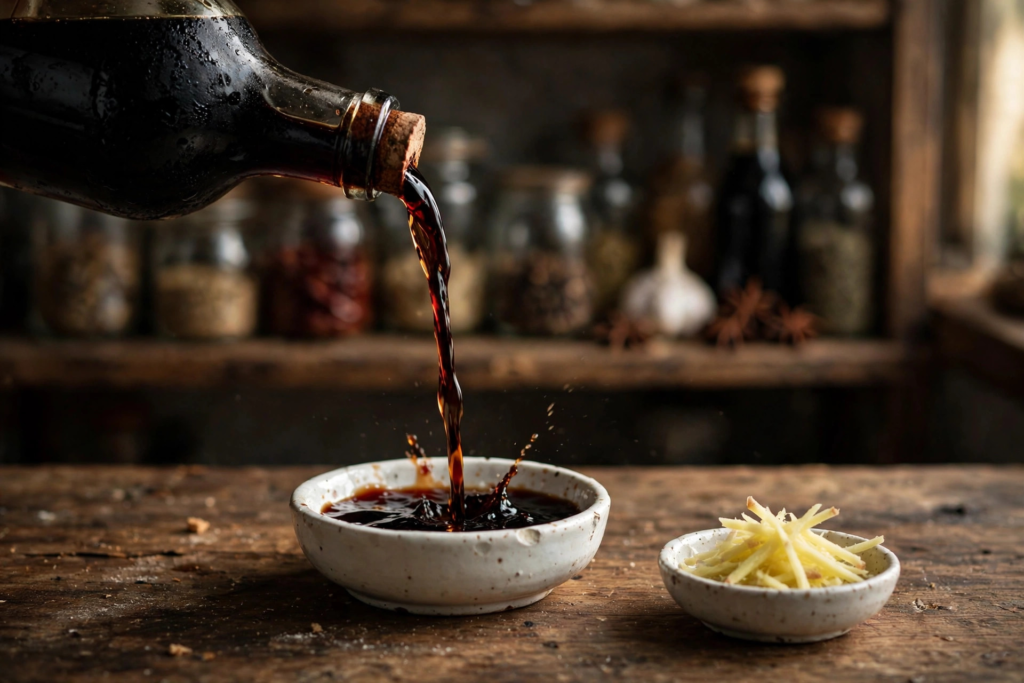
There’s a bottle in the Asian grocery aisle that most home cooks walk straight past. It’s dark, almost black, with a yellow label covered in Chinese characters — and it might be the single most transformative condiment you’re not using. Chinese black vinegar doesn’t shout like hot sauce or charm like sesame oil. It works quietly, adding a malty depth and gentle sourness that makes dumplings sing, braises turn glossy, and cold salads taste like they came from a restaurant.
If you’ve ever dipped a soup dumpling into that dark, fragrant sauce with the shredded ginger and wondered what exactly you were tasting — this is the guide. We’ll cover what black vinegar is, how it’s made, what it tastes like, the classic ways Chinese cooks use it, and how to start using it yourself tonight.
What Black Vinegar Actually Is
Chinese black vinegar — also called Chinkiang or Zhenjiang vinegar — is a dark, aged vinegar made from fermented glutinous rice. It takes its name from Zhenjiang, a city in Jiangsu province in eastern China, where it has been produced for centuries using local sticky rice.
Despite the name, it’s not really black. Hold a bottle to the light and you’ll see a deep reddish-brown, like strong tea or cola. The color comes from the long aging process, not from additives — and that aging is the whole story of why this vinegar tastes like nothing else in your pantry.
It’s worth knowing that “black vinegar” isn’t one single product. Chinkiang-style vinegar from the east is the malty, gently sweet one most recipes mean. Northern China has its own famous version — Shanxi mature vinegar, made from sorghum — which is smokier and more assertive. And Sichuan’s Baoning vinegar has its own character too. They can mostly substitute for each other in a pinch, but if a recipe just says “black vinegar,” the Chinkiang style in the yellow-labeled bottle is the safe bet.
How It’s Made: Rice, Wine, Then Patience
The journey from grain to bottle is one of the longest slow-food processes in the Chinese pantry, and it explains everything about the flavor. Asian Recipe’s detailed walkthrough of the traditional method lays out five stages, and none of them can be rushed.
It starts with glutinous “sticky” rice — fresh-crop grains, rinsed, soaked, and steam-cooked until soft. That cooked rice gets mixed with a starter culture (traditionally a mix of wheat, herbs, and microbes) and packed into ceramic jars, where yeasts convert the starches into alcohol over about two weeks. At this point it’s essentially rice wine.
Then the wine moves to large earthenware pots, where acetic acid bacteria go to work in the open air, converting alcohol into acetic acid over three to four months. What comes out is a raw, immature vinegar — sharp and one-dimensional.
The magic happens next. That young vinegar is transferred into smaller clay aging urns — some made from porous Yixing clay — sealed, and left alone. For one to three years. During that time it darkens to its signature reddish-black, picks up minerals from the clay, and develops the layered malt, fruit, and faintly smoky notes that define the finished product. Master blenders then mix vinegar from different urns to hit the house flavor, the same way whisky blenders work.
So when you taste black vinegar and get something almost like a mild balsamic crossed with soy sauce, that’s what you’re tasting: years of slow transformation in clay, not a flavoring added at the end.
What It Tastes Like
Forget everything white distilled vinegar taught you about what vinegar tastes like. Black vinegar is only mildly acidic — noticeably gentler than the sharp stuff you’d use for pickling. What leads instead is a malty, almost beery depth, a faint sweetness, and a savory roundness that some tasters describe as umami.
The closest Western comparison is a good aged balsamic: dark, a little sweet, complex. But black vinegar is less syrupy and less sweet than balsamic, with more savory character and a cleaner finish. Next to white rice vinegar — the clear, sharp one — black vinegar tastes like the difference between black tea and green tea. Same family, completely different mood.
This is why it works so differently in cooking. Sharp vinegars cut through food with acidity. Black vinegar wraps around food, adding depth the way a splash of wine or a spoonful of miso does. Once you taste the difference, you’ll start reaching for it in places you’d never have considered vinegar before.
How it stacks up against the other bottles in your pantry:
| Chinese Black Vinegar | White Rice Vinegar | Balsamic Vinegar | |
|---|---|---|---|
| Color | Deep reddish-black | Clear to pale | Dark brown, syrupy |
| Made from | Glutinous rice, aged in clay urns | Rice, briefly fermented | Grape must, barrel-aged |
| Acidity | Mild and rounded | Sharp and clean | Moderate, sweet-tart |
| Flavor | Malty, faintly sweet, savory depth | Neutral, crisp | Fruity, sweet, woody |
| Best for | Dumpling dips, braises, cold appetizers | Pickling, sushi rice, light dressings | Salads, reductions, finishing |
The Classic Ways Chinese Cooks Use It
Black vinegar shows up across Chinese cooking, but a few uses are so canonical they define the ingredient. The Woks of Life’s ingredient glossary — one of the most trusted English-language references for Chinese pantry staples — lists these as the core applications, and any Chinese cook would agree.
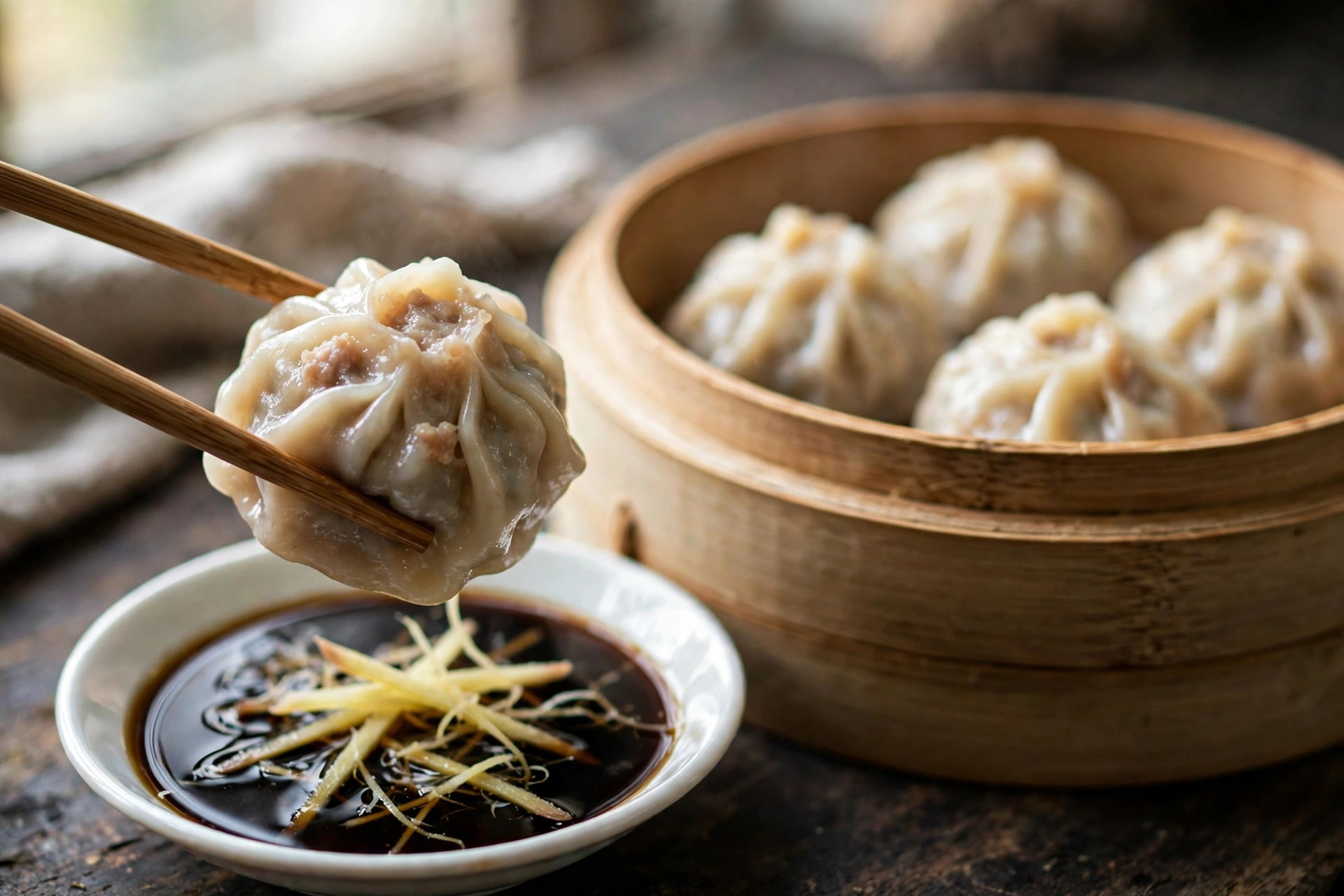
The dumpling dip. This is black vinegar’s most famous job. A small dish of black vinegar with julienned fresh ginger is the traditional partner for soup dumplings, and a mix of black vinegar, light soy sauce, and a drop of sesame oil is the all-purpose dip for boiled and pan-fried dumplings. The vinegar’s gentle acidity cuts the richness of the pork filling while the maltiness echoes the savory depth. If you only use black vinegar for one thing, make it this. Our easy dumpling dipping sauce builds on exactly this base.
Hot and sour soup. That restaurant soup with the tantalizing sweet-sour-peppery broth? Black vinegar is the “sour.” It gives the soup its characteristic dark color and rounded tang — white vinegar would make it harsh and one-note.
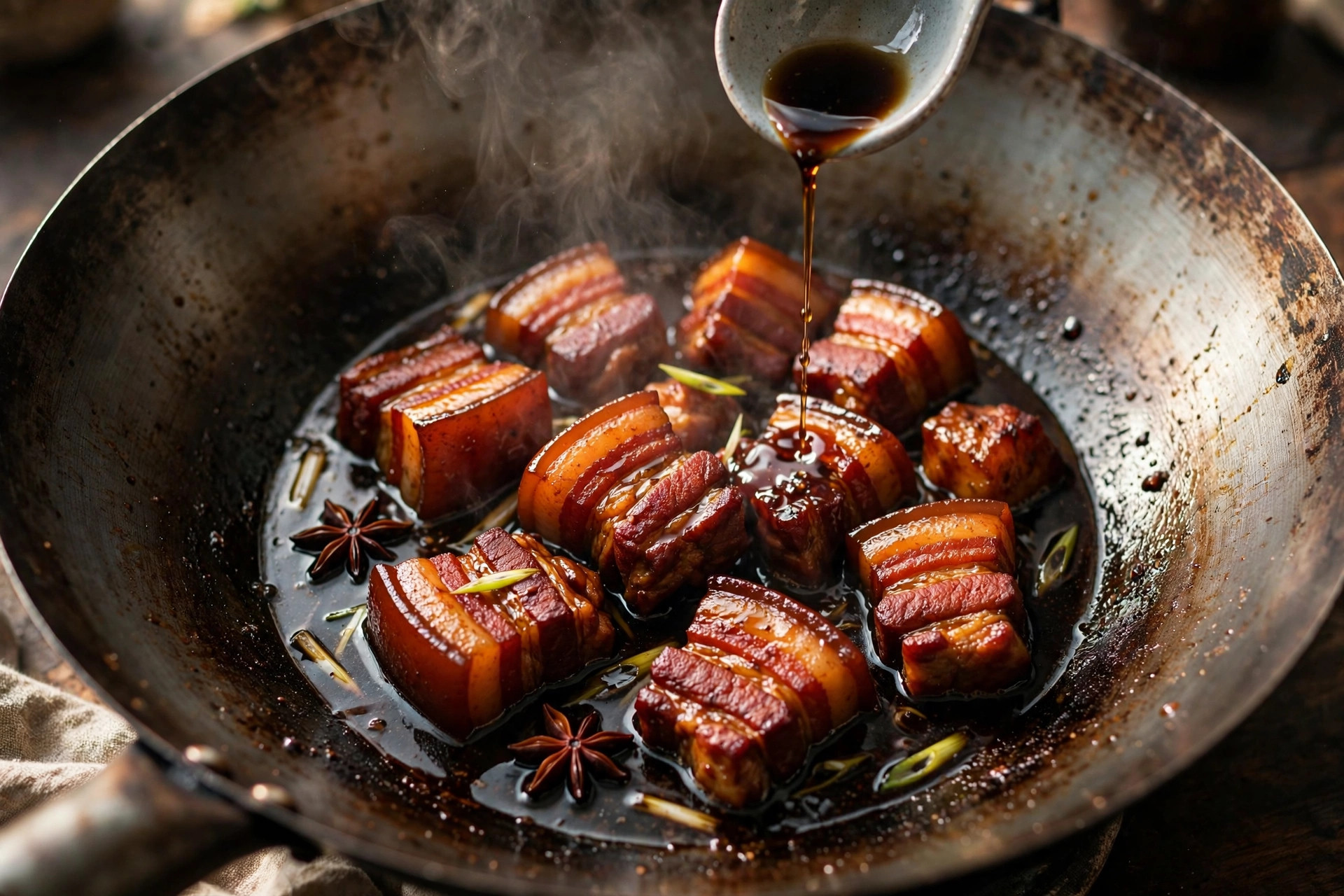
Braised dishes. In red-braised pork, braised fish, and similar slow-cooked dishes, black vinegar goes in during cooking, where heat mellows it into what Chinese cooks describe as “sweet black gold” — a glossy, caramel-like depth in the sauce. It adds acidity and sweetness at once, which is why braises made with it taste rounder than braises without.
Cold appetizers and salads. Smashed cucumber salad, wood ear mushroom salad, tofu salads, sliced pork belly with garlic dressing — the whole family of chilled, garlicky, sesame-scented starters leans on black vinegar for brightness. Tossed with quick-pickled vegetables, it’s what makes a simple cucumber taste like a restaurant dish.
Noodles. Dan dan noodles get part of their addictive tang from black vinegar. Cold sesame noodles — tossed with black vinegar, soy, sesame paste, and chili oil — are a summer staple built almost entirely on pantry condiments. Even a plain bowl of noodles with scallion oil wakes up with a spoonful.
The One Technique Rule That Matters
Here’s the thing most recipes don’t spell out: add black vinegar near the end of cooking, not the beginning. Its prized qualities — the malty aroma, the fruity top notes, the gentle complexity — are volatile. Boil it hard for twenty minutes and they evaporate, leaving behind plain acidity. You’d have paid for a three-year-aged vinegar and used it like distilled white.
The practical version: in stir-fries, splash it around the hot wok in the last minute so it sizzles and reduces slightly but doesn’t cook to death. In braises, it’s fine to add some early for depth — but finish with a fresh splash off the heat to bring the aroma back. In dipping sauces and dressings, it never sees heat at all, which is why those uses show off its character best.
- Add it late. A long boil drives off the malty aroma and leaves only acidity.
- Finish braises with a fresh splash off the heat to bring the fragrance back.
- Pair it with richness — fatty pork, oily noodles, fried foods, creamy sesame. That’s where it shines.
- Start with a teaspoon. A heavy hand turns malty into muddy; you can always add more.
And think about pairing logic. Black vinegar’s great talent is balancing richness — fatty pork, oily noodles, fried foods, creamy sesame. When a dish tastes heavy or flat, a teaspoon of black vinegar often fixes it faster than salt will. Start with a little; you can always add more. A heavy hand turns malty into muddy.
Beyond the classics, cooks have found it a natural in fusion territory too — whisked into chicken-salad dressings, splashed over roasted vegetables, even used to deglaze a pan of brown-butter scallops. Greatist’s roundup of creative uses shows how far one bottle can stretch once you understand its flavor.
Buying, Storing, and What to Use Instead
Shopping for black vinegar is easier than it looks. Here’s what to check on the shelf:
- Look for the yellow label marked “Chinkiang Vinegar” or “Zhenjiang Vinegar” — that’s the classic style most recipes mean.
- Read the ingredients: good bottles list grains — glutinous rice, wheat, sorghum — and little else.
- Skip caramel color. The real dark color comes from clay-urn aging; additives are a shortcut around it.
- Choose glass over plastic. Glass keeps flavor stable longer by limiting light and oxygen exposure.
Common reliable brands include Gold Plum (the yellow-label Chinkiang most cooks reach for), Koon Chun, and Hengshun, the centuries-old Zhenjiang producer.
Storage is gloriously undemanding. Keep it in a cool, dark pantry, tightly sealed, and an unopened bottle lasts for years. Opened, it’ll keep its character for a year or more — just keep it away from heat and light. If it ever smells harsh or off in a way it didn’t before, it’s past its prime.
Can’t find it? White rice vinegar is the closest widely available substitute for acidity, though it lacks the maltiness. In a real pinch, mix balsamic vinegar with a little rice vinegar and a pinch of sugar — the balsamic brings dark sweetness, the rice vinegar brings clean acidity, and together they approximate the profile. It won’t fool anyone in a dumpling dip, but it’ll get dinner on the table.

Frequently Asked Questions
Is Chinese black vinegar the same as Chinkiang vinegar?
Essentially, yes. Chinkiang (Zhenjiang) vinegar is the most famous type of Chinese black vinegar, and for most cooks the two names mean the same bottle. Strictly speaking, “black vinegar” is the category and Chinkiang is the best-known regional style within it.
What’s the difference between black vinegar and rice vinegar?
They’re related but different. White rice vinegar is clear, sharp, and clean-tasting. Black vinegar is aged for months or years in clay urns, giving it a dark color, malty depth, mild sweetness, and much gentler acidity. They aren’t interchangeable — swapping one for the other changes a dish’s character completely.
Can I use balsamic vinegar instead of black vinegar?
In a pinch, yes — balsamic is the closest Western analogue, with a similar dark sweetness. But balsamic is sweeter, syrupier, and fruitier, while black vinegar is more savory and malty. For dumpling dipping sauce especially, the difference is noticeable. A 50/50 mix of balsamic and rice vinegar with a pinch of sugar gets closer.
Does black vinegar go bad?
Practically, it lasts for years. Vinegar is self-preserving thanks to its acidity. An unopened bottle keeps 2–3 years in a cool, dark pantry; opened, it stays good for well over a year. If it develops a harsh, unpleasant smell it didn’t have before, replace it.
Is black vinegar gluten-free?
Usually not. Most black vinegar is made from glutinous rice (which is gluten-free despite the name) plus wheat or barley in the starter culture — and distillation doesn’t reliably remove all gluten from vinegar. If you need strictly gluten-free, look for a specifically labeled product or check with the manufacturer.
The fastest way to understand black vinegar is to taste it the way millions of people do every day: pour a tablespoon into a small dish, add a pinch of julienned fresh ginger, and dip something in it — a dumpling, a spring roll, even a piece of roast chicken. One dip tells you more than a thousand words about malt, aging, and patience. Then put the bottle in your pantry next to the soy sauce, where it belongs. It won’t stay full for long.
[…] final touch worth stealing from the restaurants: a few drops of black vinegar over either dish right before eating. The acidity cuts the richness and wakes everything up. And if […]
[…] or a dab of chili oil turns one-note sweetness into something interesting. Try it with a splash of Chinese black vinegar […]
[…] Watch out for seasoned rice vinegar — it has sugar and salt already mixed in (it’s the stuff made for sushi rice). In a Chinese recipe that calls for plain rice vinegar, seasoned vinegar will throw off the balance. Taste your bottle: if it’s noticeably sweet, it’s seasoned. For a fuller tour of China’s dark side of the vinegar shelf, read our guide to Chinese black vinegar. […]