Here’s the thing nobody tells you before your first real Chinese restaurant meal: you’re not supposed to order for yourself. That moment when the server hands everyone a menu and your table of six each picks a personal entrée — that’s a Western habit, and in a Chinese restaurant it quietly guarantees the worst version of the meal. The proper way to order is family-style, one person directing, every dish shared, the table planned like a small composition. This guide covers how it actually works: who orders, how much to get, how to build a balanced spread, the table manners that matter, and how to handle the bill without an international incident.
The One Rule That Changes Everything: Share Everything
Chinese restaurant dining is communal by default. Dishes arrive on large platters in the middle of the table, everyone takes what they want, and the meal is the sum of its parts — not six separate plates. This isn’t just custom; it’s how the food is designed to be eaten. A proper Chinese meal is built on contrast and balance across dishes: something cold and something hot, something rich and something light, crunch against silk, sour cutting through fat. You can’t get that balance on a single plate. You get it across a table.
So the first shift is mental. You’re not ordering your dinner. You’re co-authoring the table’s dinner. Once that clicks, everything else — the quantities, the variety, even the etiquette — starts making sense.
This also means the usual Western anxiety (“did I order enough for me?”) dissolves. Nobody goes hungry at a Chinese table, because a well-ordered spread always overshoots. Running out of food at a Chinese meal is considered an embarrassment for the host — so hosts order generously, and the table groans happily under the weight of it.
Who Does the Ordering?
Usually one person — the host, the guest of honor, or the most experienced eater at the table — handles the whole order. This isn’t rudeness; it’s efficiency and hospitality rolled into one. The person ordering takes responsibility for the table’s happiness: checking dietary restrictions, balancing the dishes, making sure there’s enough.
If that’s you, congratulations and condolences — the rest of this guide is your playbook. A few things to do before you open the menu:
- Ask about allergies and hard no’s. Shellfish allergy? Vegetarian? Someone who can’t handle heat? Find out now, not when the mapo tofu lands.
- Ask what people are in the mood for, loosely. You’re not taking individual orders — you’re gathering intelligence. “Anything anyone really wants?” is enough.
- Check the budget vibe. If it’s a casual weeknight dinner, don’t order the whole steamed fish. If someone’s treating, they’ll usually signal it by telling you to order freely.
If it’s not you, relax into it. Your job is to be good company, pour tea for others, and eat with enthusiasm. If the host asks your opinion, give a real answer — “I’d love something with greens” beats “whatever’s fine” — but don’t try to co-order dish by dish. Trust the system.
The Shape of a Chinese Meal: Cold, Hot, Soup, Starch
A traditional Chinese dinner follows a loose format, and ordering gets much easier once you know it. As one Shanghai-based guide puts it, think in four acts:
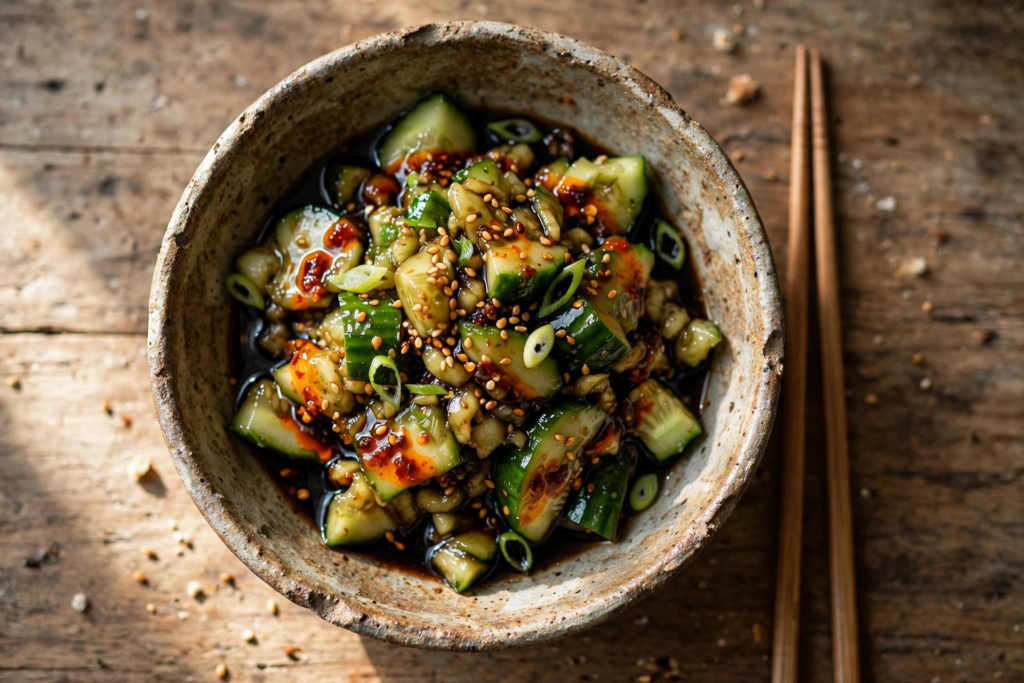
Cold dishes first. Small plates that arrive quickly — marinated cucumbers, cold chicken in chili oil, pickled vegetables, peanuts, sliced sausages. They’re appetizers in function but often the most interesting eating on the table. Order a few to anchor the meal while the hot dishes cook.
Hot dishes are the mains. This is the bulk of the order: stir-fries, braises, steamed fish, roasted meats, tofu preparations. Meat, vegetable, or mixed — these are what people mean by “the food.”
Soup is common but not mandatory. In southern China especially, a shared soup is a near-certainty — a light broth, a hot-and-sour, a winter melon soup. It arrives mid-meal and everyone gets a small bowl. Fair warning: Chinese soups can be more filling than they look.
Starch comes last. This surprises Western diners most. Rice and noodles traditionally arrive at the end of the meal, not alongside it — the logic being that if you’re still hungry after everything else, you fill up on starch. You can absolutely ask for rice earlier (nobody will mind), but knowing the default saves you from wondering where it is.
How Much Food to Order
The classic rule of thumb: order one dish per person, plus one extra — then add soup and starch on top. Four people? Five or six dishes. This sounds like a lot until you remember everything is shared and portions are built for it.
Here’s a practical breakdown adapted from experienced Shanghai diners:
| Party size | Cold dishes | Hot meat/seafood | Hot vegetable | Soup | Starch |
|---|---|---|---|---|---|
| 2 people | 0–1 | 1 | 1 | 0–1 | Rice to share |
| 3–4 people | 2 | 2–3 | 1 | 1 | Rice or 1 noodle dish |
| 5–6 people | 3 | 3–4 | 2 | 1 | Rice + 1 noodle dish |
| 7–10 people | 4–5 | 5–6 | 2–3 | 1–2 | Rice + noodles |
Two caveats. First, this assumes a standard dinner — banquet-style meals and dim sum brunches play by different rules (at dim sum, you just keep pointing at carts until morale improves). Second, when in doubt, round up. Leftover Chinese food is a feature, not a failure — and as noted, a bare table embarrasses the host.
Building a Balanced Spread
Quantity is the easy part. The art is in the mix. A great Chinese table feels like a composed playlist — no two dishes doing the same thing. Here’s how experienced orderers think:
- One protein, one preparation. Don’t order three chicken dishes. If you want chicken, pork, and fish, make them completely different: a steamed fish, a braised pork, a stir-fried chicken. Different meat, different method, different flavor — that’s the goal.
- Mix the cooking methods. Steamed, braised, stir-fried, roasted, cold-tossed — each method gives a different texture and richness. A table of five stir-fries is monotonous no matter how good each one is.
- Balance rich with light. For every heavy, saucy, or deep-fried dish, add something clean and bright: steamed greens with garlic, a cold cucumber salad, a simple soup. The light dishes make the rich ones taste richer.
- Balance the flavors. Think across the spectrum — spicy Sichuan heat against mild Cantonese steaming, sweet against sour, savory against fresh. Chinese cuisine is organized around this kind of equilibrium.
- Always include a vegetable dish. Non-negotiable. Stir-fried greens (garlic, oyster sauce, or just ginger and oil) are cheap, fast, and the thing everyone reaches for between the heavy hitters. Pea shoots, bok choy, Chinese broccoli — whatever’s in season.
- Consider color and texture. It sounds fussy, but a table that’s all brown and soft is less appetizing than one with green, red, and gold, with crunch playing against tenderness. Your eyes eat first, in any cuisine.
A sample order for four, to make it concrete: cold smashed cucumbers, steamed whole fish with ginger and scallion, mapo tofu, stir-fried garlic bok choy, one roast meat (char siu or soy-sauce chicken), a hot-and-sour soup, and rice. Six dishes, every method and flavor represented, nothing repeating. That’s a table.
Reading the Menu Like a Regular
Chinese menus can be overwhelming — dozens or hundreds of items, sometimes with cryptic translations. A few field-tested tactics:
Look at what other tables are eating. This is the single best trick in the book. If half the dining room has the same clay pot, order the clay pot. Restaurants reveal their strengths through their regulars.
Ask the server for recommendations — with a filter. Staff recommendations are genuinely useful, but take them with a grain of salt: they may steer you toward pricey dishes or whatever the kitchen needs to move. Ask specific questions instead of “what’s good?” — try “what’s the most popular dish here?” or “what do regulars order?” You’ll get more honest answers.
Know the restaurant’s region. A Sichuan place lives or dies by its ma la dishes; ordering sweet-and-sour pork there is a wasted opportunity. A Cantonese restaurant shines at steaming and roasting. Match your order to the kitchen’s home turf — our rundown of China’s major regional cuisines helps you spot which is which.
Don’t fear the “weird” section. Menus sometimes bury the most authentic dishes under vague translations. If something is described oddly or the English seems like a guess, that’s often the good stuff — ask the server what it actually is. Some of the best meals start with “what’s that?”
For takeout, simplify. The whole balancing act compresses when it’s just you and a container. One main, one vegetable or soup, rice — that’s a proper solo order. (Ordering takeout on Chinese takeout’s unofficial holiday or any Friday night follows the same logic, just smaller.)
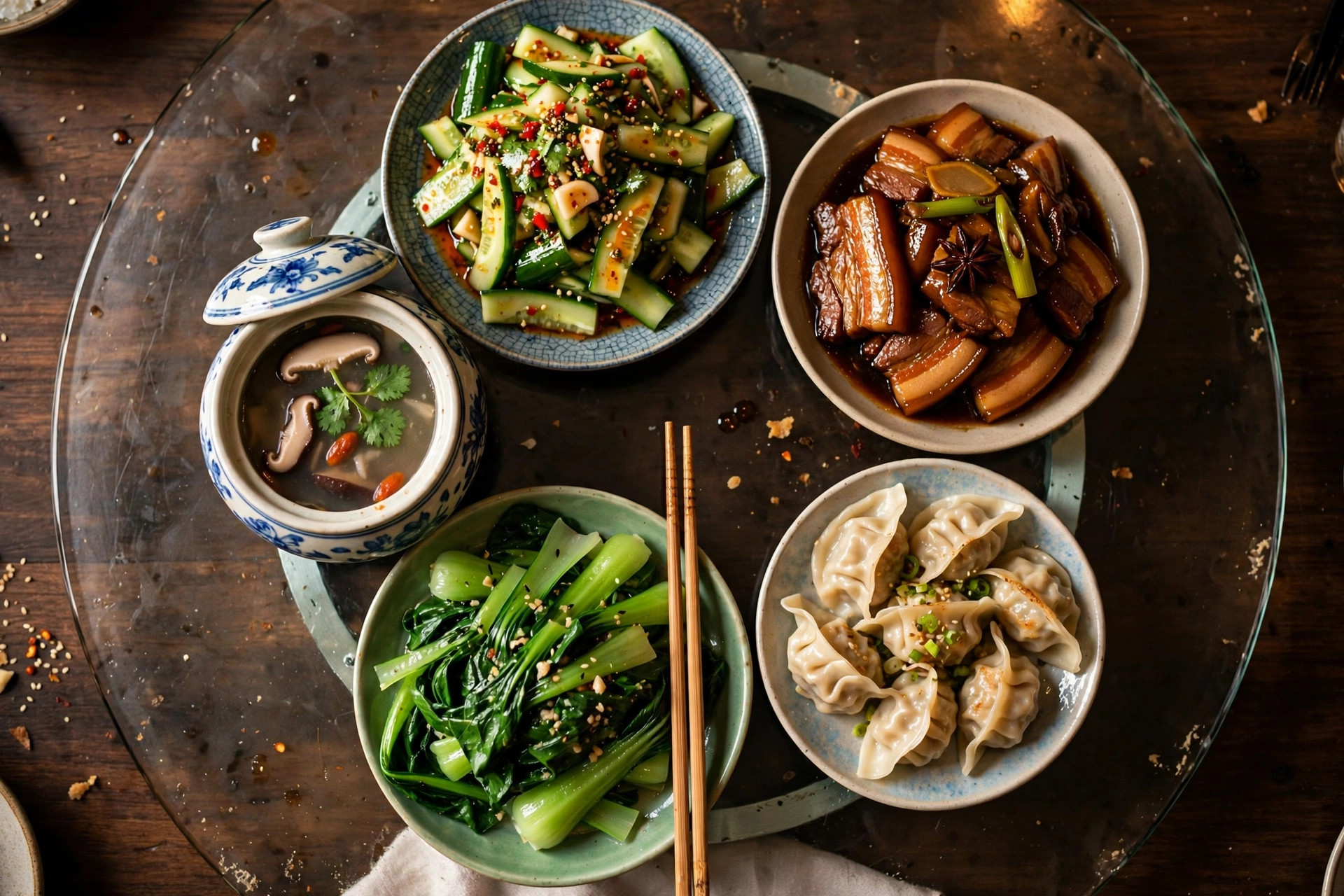
Table Manners That Actually Matter
Chinese table etiquette has deep roots, but you don’t need a finishing-school course — just a handful of habits that signal respect and keep the meal pleasant:
- Wait for the host or eldest to start. Don’t be the first to dig in. A beat of patience at the start of the meal goes a long way.
- Serve others before yourself. Offering the best pieces to elders and guests, and using the communal serving chopsticks or spoons (not your own chopsticks) for shared dishes, is the core courtesy of the Chinese table.
- Master the lazy Susan rhythm. Turn it to bring dishes within reach — but never spin it while someone is serving themselves. That’s the turntable equivalent of cutting someone off in traffic.
- Chopsticks have rules. Don’t stick them upright in your rice bowl (it resembles incense offered to the dead), don’t point with them, don’t spear food, and don’t dig through a shared dish hunting for the best piece. If your chopstick skills are shaky, nobody minds — effort counts.
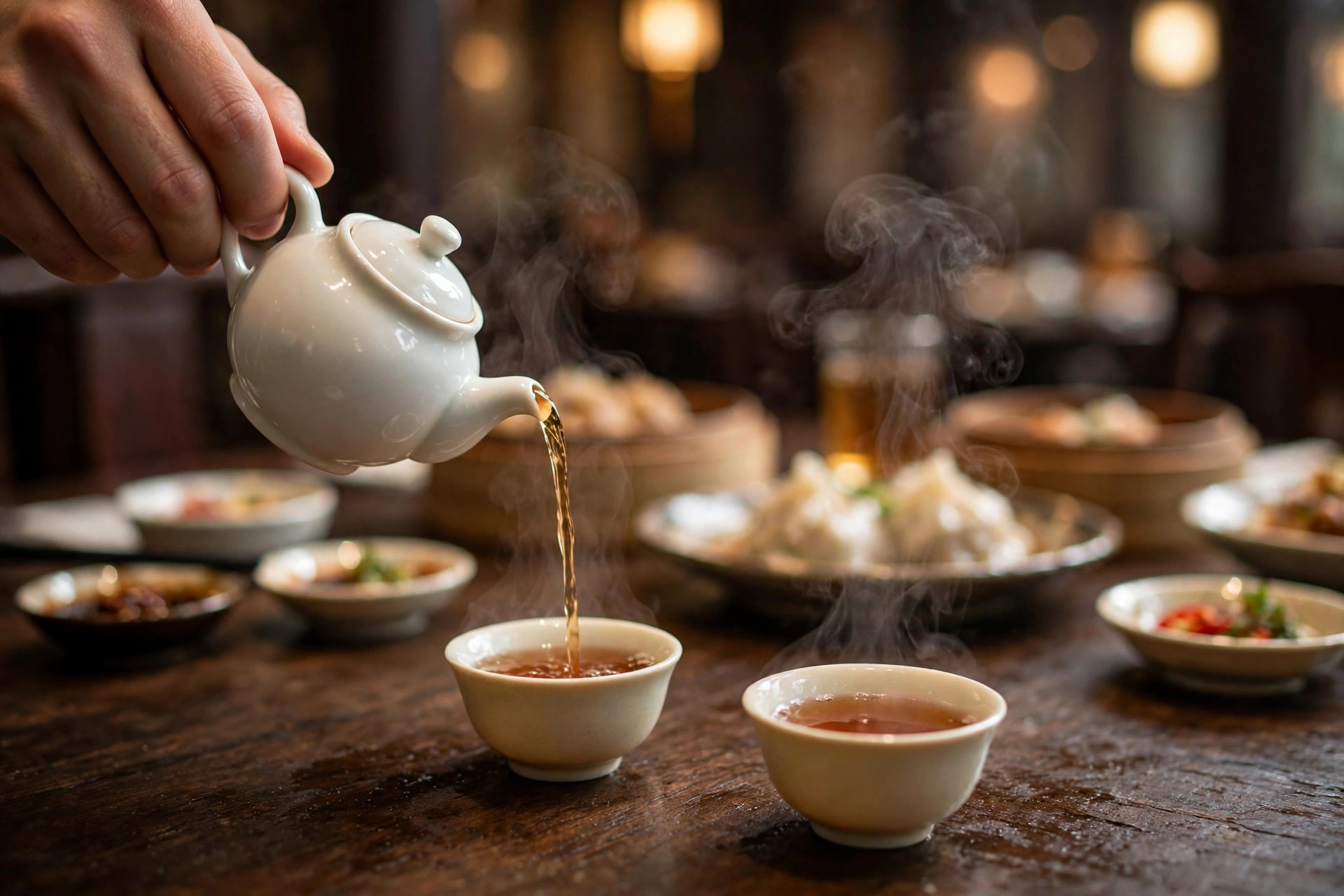
- Pour tea for others. Keep an eye on your neighbors’ cups. Topping up someone’s tea — especially an elder’s — is quiet, constant courtesy. If someone pours for you, tap two fingers on the table in thanks; it’s a small gesture with a long history.
- Slurping is fine. Noodles and soup are meant to be eaten with gusto. Nobody will judge enthusiastic slurping — it’s practically a compliment to the kitchen.
One detailed etiquette guide adds the seating nuance: the seat facing the door is traditionally the seat of honor, reserved for the eldest or most senior guest, with the host opposite. You won’t always be able to control where you sit, but knowing why the seating looks deliberate keeps you from accidentally claiming the throne.
The Bill, the Tea, and Other Awkward Bits
The bill fight is real and it’s ritual. In Chinese dining culture, the host — or whoever invited — is expected to pay the entire bill, and guests are expected to make a show of protesting. This isn’t false modesty; it’s the dance. Offer sincerely once or twice, then accept gracefully. Among close friends the rules relax and splitting happens, but at any formal or semi-formal meal, let the host win. Snatching the bill aggressively as a guest can actually cause offense — it implies the host can’t afford it.
Tipping: it depends where you are. In mainland China, tipping is not customary and can even confuse staff. In the US, Europe, and elsewhere, tip the local standard — the restaurant is operating in that economy. When in doubt, follow the country’s norm, not the cuisine’s.
Tea is the default drink. Most Chinese restaurants serve tea automatically — often jasmine, oolong, or pu-erh — and it’s usually free or nearly so. If you want water, beer, or something else, just ask. And if the teapot runs dry, flip the lid ajar or upside down; that’s the universal signal for “more tea, please.”
Don’t rush. A Chinese meal unfolds over courses and conversation. Lingering is the point. The table is where deals get made, families catch up, and friendships deepen — the food is the excuse, and a glorious one.
Frequently Asked Questions
How many dishes should I order for two people?
Three to four total: a cold dish or soup to start, one meat or seafood main, one vegetable dish, and rice. Two people can’t cover the full cold-hot-soup-starch spread, so prioritize one great main and one great green.
Is it rude to ask for a fork?
Not at all. No Chinese host or server will judge you for it — they’d much rather you enjoy the meal than struggle. That said, learning basic chopstick technique before you go makes everything more fun.
What if I’m vegetarian at a meat-heavy restaurant?
Speak up when the order is being placed. Chinese cuisine has deep vegetarian roots — tofu, mushrooms, greens, and Buddhist-style mock meats — and most kitchens can assemble a satisfying spread. Just confirm whether dishes use chicken stock or oyster sauce, which sneak into vegetable dishes often.
Should I order rice at the beginning?
You can, and nobody will blink. Traditionally starch arrives last, but restaurants serving Western diners expect the request. If you want to eat the Chinese way, try waiting — you may find you don’t need it until the end.
How do I handle the bill at a business dinner?
Let the host pay — it’s their role and their face on the line. Offer once out of politeness, accept the outcome, and thank them sincerely. Trying to split a business dinner bill comes across as tone-deaf, not generous.
The proper way to order at a Chinese restaurant isn’t a set of rigid rules — it’s a mindset. Share everything, balance the table, let one person drive, mind the small courtesies, and never let the table go empty. Do that, and the food almost takes care of itself. Next time you’re handed the menu and the table looks at you expectantly, you’ll know exactly what to do: cold dishes first, something steamed, something with heat, greens without fail, rice at the end. Order like that and eat like family.
Leave a Reply