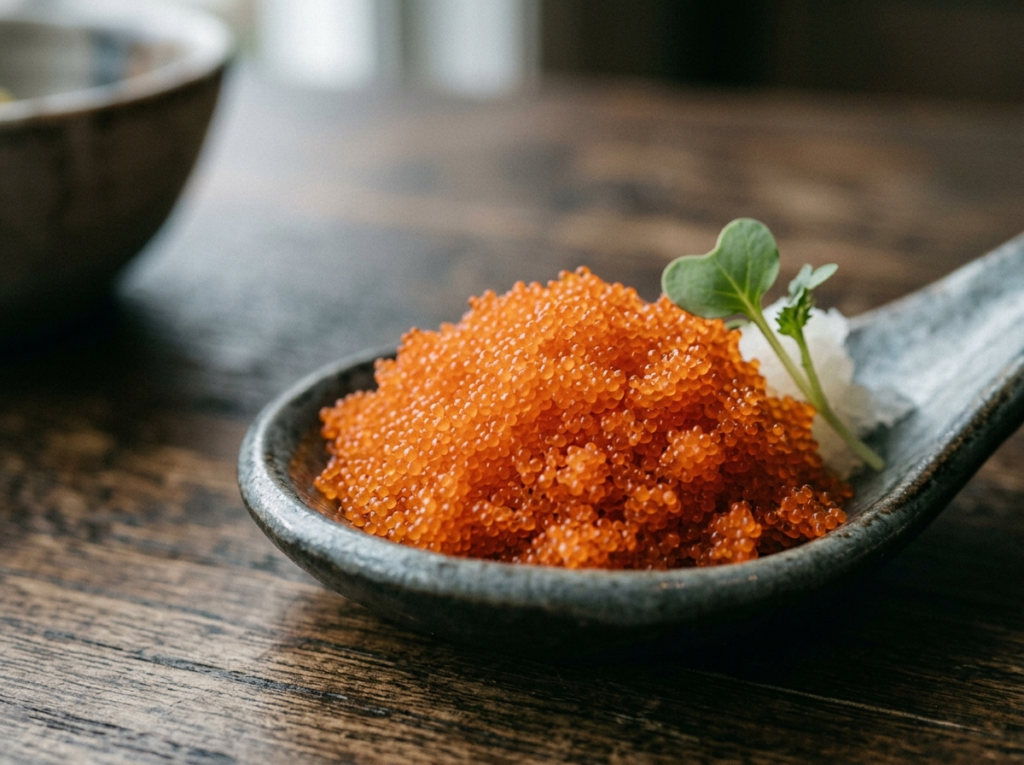
You’ve probably seen them hundreds of times without knowing their name. Those tiny, brightly colored eggs sitting on top of your sushi roll, crunching between your teeth with a mild, salty-sweet pop — that’s tobiko. Most people just call them “fish eggs” and move on, but there’s a lot more going on in that little orange sphere than you’d think. From where they come from to why sushi chefs love them so much, tobiko has a story worth knowing — especially if you’re the kind of person who likes understanding what you’re eating.
So What Exactly Is Tobiko?
Tobiko (とびこ) is the Japanese word for the roe (eggs) of flying fish, specifically from species in the family Exocoetidae. These are the same fish you’ve probably seen in nature documentaries, leaping out of the ocean and gliding dozens of meters above the waves. The eggs are tiny — each one measures roughly 0.5 to 0.8 millimeters in diameter — making them noticeably smaller than salmon roe (ikura) but slightly larger than capelin roe (masago).
In their natural state, tobiko eggs are a reddish-orange color. They have a mild, slightly smoky flavor with a hint of saltiness and a subtle sweetness that lingers. But the thing most people remember about tobiko is the texture. Each egg has a satisfying crunch, almost like biting into a tiny, juice-filled bead. That snap is what makes tobiko so popular as a topping and garnish — it adds a burst of both flavor and texture that flat-out changes the eating experience.
Flying fish are harvested for their roe primarily in waters around Japan, Taiwan, Indonesia, and other parts of the Indo-Pacific region. The eggs are typically collected, cleaned, and then cured in salt or seasoned with various ingredients before being sold to sushi restaurants and fish markets around the world.
Quick Fact: A single flying fish can produce thousands of eggs at a time, but the process of collecting and preparing tobiko is still labor-intensive, which is one reason it can be pricey.
Tobiko vs. Masago vs. Ikura: What’s the Difference?
This is one of the most common points of confusion. Walk into any sushi restaurant and you’ll likely encounter several types of fish roe, and they can look pretty similar to the untrained eye. But they’re not the same thing — not even close.
Tobiko vs. Masago
Masago comes from capelin, a small fish found in cold Atlantic and Pacific waters. It’s the roe you’ll most often see at budget-friendly sushi spots because it’s significantly cheaper than tobiko. The eggs are smaller, the texture is less crunchy (more of a soft, sandy feel), and the flavor is milder.
Here’s the thing a lot of people don’t realize: many sushi restaurants substitute masago for tobiko without telling you. If the eggs on your roll seem a bit mushy and lack that signature crunch, there’s a good chance you’re eating masago. Neither one is bad — they’re just different. Tobiko has a firmer bite and more pronounced flavor, while masago is softer and more subdued.
Tobiko vs. Ikura
Ikura is salmon roe, and it’s in a completely different league size-wise. Each ikura egg is about 6 to 9 millimeters across — roughly ten times larger than a tobiko egg. Ikura pops on your tongue and releases a rich, briny, almost buttery liquid. It’s served differently too, often draped over rice in a style called gunkan maki (a strip of nori wrapped around rice to form a little cup that holds the eggs in place).
Tobiko vs. Caviar
Traditional caviar comes from sturgeon, and it carries a much higher price tag. The flavor profile is different — caviar tends to be more intensely briny and complex. Tobiko is lighter, sweeter, and more approachable. While caviar shows up in fine dining across European and American cuisines, tobiko is firmly rooted in Japanese food culture.
Knowing these differences helps you order with confidence — and spot a substitution if one happens on your plate. If you enjoy exploring the details of Asian ingredients, you might also like learning about how to cook with fish sauce, another ingredient that’s all about adding umami depth.
The Different Colors of Tobiko (and What They Mean)
One of the things that makes tobiko so visually striking on a sushi platter is its color variety. You’ll see it in orange, black, green, red, and even gold. But here’s what most people don’t know: tobiko is naturally orange. All those other colors come from added ingredients — and each one changes the flavor slightly.
Orange tobiko is the classic, unflavored version. It tastes mildly smoky and sweet with a clean oceanic finish. This is the baseline.
Black tobiko gets its color from squid ink. Beyond the dramatic look, the squid ink adds a richer, brinier depth to the flavor. Sushi chefs love using it for contrast on lighter-colored rolls.
Green tobiko is infused with wasabi. You’ll notice a gentle heat along with the usual crunch. It’s not as intense as eating straight wasabi — think of it as wasabi with training wheels.
Red tobiko is flavored with sriracha or chili. It brings a warm, spicy kick that pairs well with rolls that already have bold flavors.
Yellow or gold tobiko often gets its hue from yuzu, a Japanese citrus fruit. It adds a bright, floral note that works beautifully with delicate fish like yellowtail or snapper.
These color variations aren’t just for show. Good sushi chefs pick specific tobiko colors to complement the other ingredients in a roll, balancing heat, acidity, and umami. Paying attention to the color can tell you something about what flavor experience the chef intended.
How Tobiko Is Used in Sushi
Tobiko plays several roles in Japanese cuisine, but its home base is sushi. Here’s where you’ll typically find it.
As a Topping on Maki Rolls
The most common use. Tobiko gets pressed onto the outside of inside-out rolls (uramaki), coating the rice in a crunchy, colorful layer. The California roll is probably the most famous example, though plenty of specialty rolls use tobiko too. The eggs stick to the rice easily and hold up well, which makes them ideal for this purpose.
Gunkan Maki (Battleship Sushi)
Gunkan maki is a style where a strip of nori wraps around a mound of rice, forming a little vessel. Tobiko gets spooned on top, filling the cup. Eating gunkan maki topped with tobiko gives you the full experience — the crunch of the eggs, the chewiness of the nori, and the softness of the rice all in one bite.
Sashimi Garnish
Some restaurants use tobiko as a garnish alongside raw fish sashimi. It adds color and a textural counterpoint to silky slices of tuna or salmon.
Nigiri
Less common, but some chefs place a quenelle of tobiko on top of a piece of nigiri sushi. You might see it combined with a small slice of fish or a dab of wasabi.
Beyond Sushi
Tobiko has made its way into dishes outside the sushi bar too. You’ll find it on poke bowls, mixed into pasta, sprinkled over deviled eggs, or used as a garnish on seafood appetizers. Some chefs even fold it into sauces or vinaigrettes for an unexpected burst of texture. If you love exploring Asian-inspired dishes, easy crispy shrimp rolls are another great example of how simple ingredients create something special.
What Does Tobiko Taste Like?
Describing the taste of tobiko to someone who hasn’t tried it is a bit like explaining what sparkling water feels like — you kind of have to experience it. But here’s a solid attempt.
The flavor is mild and slightly sweet, with a faint smokiness and a clean ocean taste. It’s not “fishy” the way some people fear. Think of it as a very gentle, salty-sweet note that complements whatever it’s paired with rather than overpowering it.
The real star, though, is the texture. Each egg has a firm outer shell that pops when you bite into it, releasing a tiny burst of liquid. Eating a cluster of tobiko creates this sensation of hundreds of little pops happening at once on your tongue. It’s oddly satisfying — almost addictive.
The flavor changes depending on color and preparation. Wasabi tobiko adds heat. Squid ink tobiko tastes richer and more savory. Yuzu tobiko brings brightness. But no matter the variation, that characteristic crunch stays consistent.
Pro Tip: If you’re trying tobiko for the first time, start with the classic orange variety on a simple roll. It’ll give you the purest sense of what tobiko actually tastes like before you explore flavored versions.
Nutritional Profile of Tobiko
Tobiko is small, but it packs a nutritional punch. A typical one-tablespoon serving (about 15 grams) contains roughly 20 to 30 calories, and those calories come with some genuinely useful nutrients.
It’s a good source of protein, offering about 3 to 4 grams per tablespoon. You also get omega-3 fatty acids, the same heart-healthy fats found in salmon and other oily fish. Tobiko contains vitamin B12, which supports nerve function and red blood cell production, along with selenium, a mineral that acts as an antioxidant.
There are a couple of things to be aware of, though. Tobiko is relatively high in cholesterol — about 40 to 50 milligrams per tablespoon. It’s also high in sodium, especially since it’s cured or seasoned during processing. If you’re watching your salt intake, keep portion sizes in mind.
The colored and flavored varieties may contain additional ingredients like food coloring or flavor additives, so if you have sensitivities, it’s worth asking your server about what’s been added.
⚠️ Food Safety Note: Tobiko is consumed raw. If you’re pregnant, have a compromised immune system, or have concerns about consuming raw seafood, talk to your doctor before eating tobiko or any raw fish roe. Always eat raw seafood from reputable restaurants that follow proper cold-chain storage and food safety practices. If you’re storing tobiko at home, keep it at or below 40°F (4°C) and consume it within a few days of opening. For more on safe food storage, our guide on how long cooked rice lasts in the fridge covers some useful general principles.
How to Buy and Store Tobiko at Home
You don’t have to go to a sushi restaurant to enjoy tobiko. It’s available for purchase at Japanese grocery stores, Asian supermarkets, and online seafood retailers. Here’s what to look for.
Buying Tips
Fresh tobiko is usually sold in small plastic tubs, typically ranging from 1 ounce to 8 ounces. It should look glossy and evenly colored, with each egg clearly defined rather than mushy or clumped together. If the eggs look deflated or the liquid in the container is cloudy, skip it.
Frozen tobiko is also widely available and often a better choice for home use. It keeps longer and, when thawed properly, tastes nearly identical to fresh. Many sushi restaurants actually use frozen tobiko because it ships more easily and maintains consistent quality.
Expect to pay somewhere between $8 and $25 per ounce depending on the type and quality. Wasabi and squid ink varieties sometimes cost a bit more than the classic orange.
Storing Tobiko
Keep unopened tobiko in the freezer, where it’ll stay good for several months (check the expiration date on the package). Once thawed, store it in the fridge and use it within 3 to 5 days. Don’t refreeze tobiko after thawing — the texture breaks down and you lose that signature crunch.
To thaw, move the container from the freezer to the fridge and let it defrost slowly overnight. Avoid thawing at room temperature, as this can create food safety concerns with raw seafood.
Making Tobiko Sushi at Home
Putting together tobiko sushi at home is more doable than you might think. You don’t need years of sushi training — just some decent ingredients and a little patience.
What You’ll Need
You’ll need sushi rice (short-grain Japanese rice seasoned with rice vinegar, sugar, and salt), nori sheets, your choice of filling (cucumber, avocado, crab, shrimp, or raw fish if you trust your source), and of course, tobiko. If you need help with the rice, our guide on how to cook perfect jasmine rice covers similar fundamentals for getting the texture right, though sushi rice uses a different variety.
A bamboo rolling mat (makisu) helps, but you can manage with a sheet of plastic wrap in a pinch.
Basic Tobiko Roll (Uramaki Style)
Start by laying a sheet of nori on your bamboo mat. Spread a thin, even layer of sushi rice over the nori, then flip the whole thing over so the rice faces down. Place your fillings — say, a strip of cucumber and some crab — along the center of the nori. Roll it up tightly using the mat, applying gentle, even pressure.
Once your roll is formed, spread a generous layer of tobiko over the outside. You can press it onto the rice with your fingers or use the bamboo mat to gently roll the tobiko into the surface. Wet your hands slightly to keep the eggs from sticking to your fingers instead of the roll.
Slice into 6 to 8 pieces with a sharp, wet knife. Clean the blade between cuts for cleaner slices.
Tobiko Gunkan Maki
This one’s even easier. Form a small oval mound of sushi rice by hand (about the size of your thumb). Wrap a strip of nori around the outside, leaving about a centimeter of nori above the rice to form a wall. Spoon tobiko on top until it fills the little cup. That’s it.
Pro Tip: Pair orange tobiko with avocado-based rolls. The creaminess of the avocado and the crunch of the tobiko create one of those perfect texture contrasts that makes every bite interesting. A drizzle of soy sauce and a touch of wasabi complete the picture.
For a more adventurous approach, try adding tobiko to a dumpling dipping sauce — the eggs add pops of flavor that work surprisingly well with gyoza.
Is Tobiko Sustainable?
This is a question worth asking. Flying fish populations are generally considered more stable than many other commercial fish species. They reproduce quickly and in large numbers, which helps maintain population levels even under fishing pressure.
That said, sustainability isn’t black and white. Demand for tobiko has grown significantly as sushi has become popular worldwide, and some flying fish populations in specific regions have faced pressure. The source of your tobiko matters. Fish harvested from well-managed fisheries in Japan and Taiwan tend to follow stricter guidelines than those from less regulated areas.
If sustainability is a priority for you, look for tobiko from suppliers who can tell you where and how the fish were caught. Some specialty seafood retailers now provide this traceability. It’s not always easy to get that information at a restaurant, but high-end sushi bars are usually more transparent about sourcing.
The substitution issue plays a role here too. Because masago (capelin roe) is cheaper and more abundant, some restaurants use it in place of tobiko. While capelin fisheries have their own sustainability concerns — particularly in the North Atlantic — the broader availability of masago means less pressure on flying fish stocks.
FAQ
Is tobiko safe to eat raw?
Yes, tobiko is eaten raw and is considered safe when handled and stored properly. Like all raw seafood, it needs to be kept at cold temperatures (40°F/4°C or below) and sourced from reputable suppliers. Pregnant women and people with compromised immune systems should consult a doctor before consuming raw fish roe.
Can you eat tobiko if you have a seafood allergy?
Tobiko is a seafood product, so if you have a fish or shellfish allergy, you should avoid it. Fish roe allergies are real and can cause reactions ranging from mild hives to anaphylaxis. If you’re unsure, get tested by an allergist before trying tobiko. Also keep in mind that flavored tobiko (like wasabi or sriracha varieties) may contain additional allergens.
What’s the difference between tobiko and caviar?
Tobiko comes from flying fish and is a staple of Japanese cuisine, while traditional caviar comes from sturgeon and is associated with European fine dining. Tobiko eggs are smaller, crunchier, and milder in flavor. Caviar is larger, softer, and more intensely briny. Price-wise, sturgeon caviar is dramatically more expensive — sometimes hundreds of dollars per ounce compared to tobiko’s $8 to $25 range.
How can I tell if a restaurant is using real tobiko or masago?
The easiest test is texture. Real tobiko has a firm crunch — you can feel each egg pop between your teeth. Masago is softer and pastier, without that satisfying snap. The eggs are also slightly smaller. Color can be a clue too: tobiko tends to have a more vibrant, natural-looking hue, while dyed masago sometimes looks a little flat or overly uniform. If you’re curious, just ask your server. A good sushi restaurant will be honest about what they use.
Is tobiko healthy?
In moderate amounts, yes. It provides protein, omega-3 fatty acids, vitamin B12, and selenium. The main things to watch are sodium and cholesterol content. A tablespoon here and there on your sushi isn’t going to cause problems for most people, but it shouldn’t be your primary protein source either.
Your Next Sushi Order Just Got More Interesting
Now that you know what those tiny orange eggs actually are, you’ll never look at a sushi roll the same way. Tobiko brings flavor, texture, nutrition, and visual appeal — all packed into something barely bigger than a grain of sand. Next time you’re at a sushi bar, try ordering a tobiko gunkan maki on its own, with no other toppings competing for your attention. Let the tobiko do the talking. You might be surprised at how much flavor is hiding in those little eggs.
And if you want to keep exploring the world of Asian cuisine, check out our guide to the art of Korean BBQ or learn about the flavors that define Chinese cooking. There’s always something new to taste.