I was standing in a chaotic, pre-dawn market in Bangkok, the air thick with the perfume of lemongrass and grilling charcoal. An elderly woman sat behind a small mountain of rice, each grain a pearly, translucent sliver. She wasn’t just selling rice; she was curating it. A customer pointed to a sack. The woman shook her head, took a small handful, and let it trickle through her fingers. She explained, in rapid Thai, that this morning’s batch had a higher moisture content and needed a touch less water. It wasn’t a product; it was a living ingredient.
That moment shattered my Western-trained perception of rice. I had always treated it as a static commodity, a simple ratio of grain to water. But she was treating it with the same reverence a baker gives flour, adjusting her technique based on humidity, age, and variety. She understood that jasmine rice isn’t just a side dish. It’s the soul of the meal, the fragrant canvas upon which all other flavors are painted.
After decades in professional kitchens, I can tell you that mastering rice is the single most important skill for anyone serious about Asian cuisine. And yet, it’s the most overlooked. This guide isn’t just about a jasmine rice recipe. It’s an insider’s philosophy. We’re going to deconstruct the grain, debunk the myths of the water ratio, and learn the techniques that will elevate your rice from a forgettable starch to the star of the show.
Deconstructing the Grain: Why Jasmine is Different
Before we can cook it, we must understand it. What makes jasmine rice, well, jasmine? And how does it differ from its long-grain cousins like Basmati? The answers lie in botany and chemistry.
All rice is primarily composed of two types of starch: amylose and amylopectin.
- Amylose: A long, straight-chain starch molecule. Grains high in amylose (like long-grain American rice) cook up fluffy, with separate, distinct grains. They also tend to get hard and dry as they cool.
- Amylopectin: A highly branched starch molecule. Grains high in amylopectin (like short-grain sushi rice or Arborio) stick together, becoming creamy and soft.
Jasmine rice sits in a beautiful, unique middle ground. It’s a long-grain rice, but it has a lower amylose content than most other long-grains. This means it has a soft, slightly sticky texture while still retaining some individuality. The grains cling to each other just enough to be picked up easily with chopsticks, but they aren’t a mushy clump.
Then there’s the aroma. The signature floral, popcorn-like scent of jasmine rice comes from a naturally occurring aromatic compound, 2-acetyl-1-pyrroline. This compound is more concentrated in fresh, new-crop rice. This is why that woman in the market was so particular.
| Grain Type | Amylose Content | Texture When Cooked | Aroma | Best For |
| :— | :— | :— | :— |
| Jasmine Rice | Low-Medium | Soft, slightly moist, grains cling gently | Floral, popcorn-like, pandan-like | Southeast Asian curries, stir-fries, everyday eating |
| Basmati Rice | Medium-High | Very fluffy, distinct, separate grains | Nutty, toasty, popcorn-like | Indian & Pakistani curries, pilafs |
| Long-Grain White | High | Very fluffy, dry, grains separate completely | Neutral | American/Chinese-style stir-fries, casseroles |
| Short-Grain (Sushi) | Very Low | Sticky, creamy, grains clump together | Subtle, slightly sweet | Sushi, rice puddings |
Understanding this table is your first step. When you ask basmati vs jasmine rice, you’re not asking which is “better.” You’re asking which tool is right for the job. For a Thai green curry, the soft, clinging texture of jasmine is perfect for soaking up the sauce. For an Indian biryani, the distinct, fluffy grains of Basmati are ideal.
The Tyranny of the Measuring Cup: The Knuckle Method
The most common question I get is about the jasmine rice water ratio. People want a number. 1:1? 1:1.5? I’m here to tell you that relying on a fixed ratio is a fool’s errand. The ideal amount of water depends on the age of your rice (older, drier rice needs more water), the specific variety, and even the humidity in your kitchen.
The best cooks in Asia don’t use measuring cups for rice. They use their senses. I want you to throw away your rigid ratios and learn the professional, tactile method: The Knuckle Method.
It’s simple, infallible, and it works every single time.
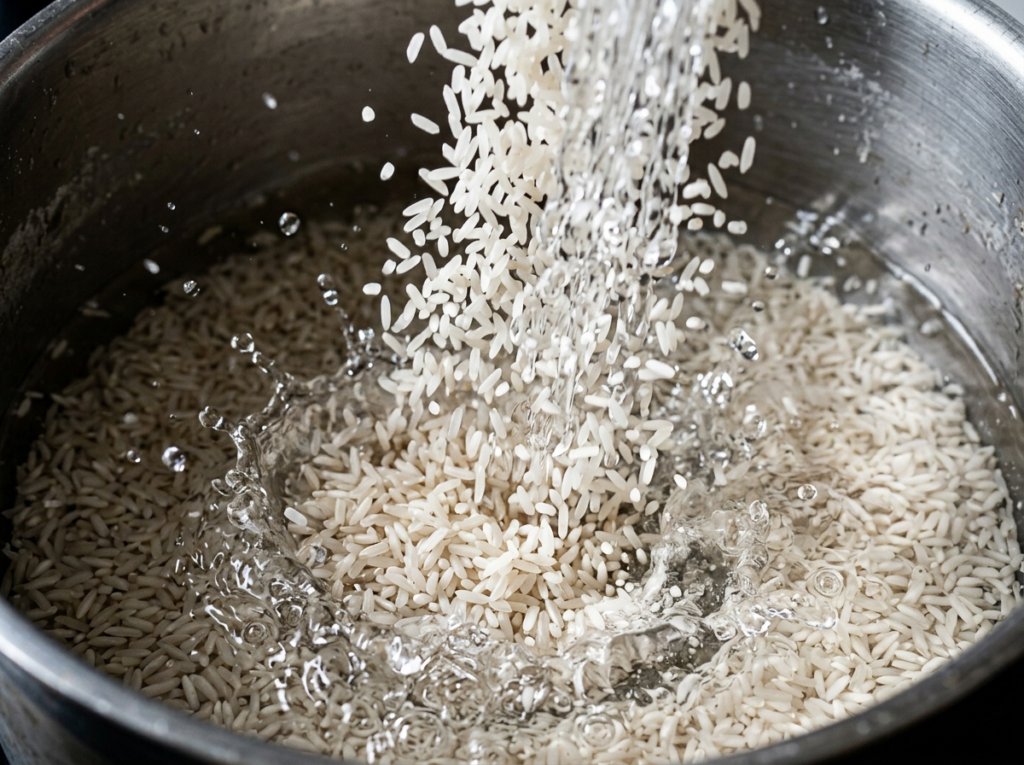
- Rinse and Drain: Put your desired amount of rice in the pot. Rinse it with cool water, swirling with your fingers. The water will be milky at first. Drain and repeat 3-4 times until the water runs mostly clear. This removes excess surface starch for a fluffier result.
- The First Knuckle: After the final drain, level the rice in the pot. Place your index finger, tip-down, gently on the surface of the rice.
- The Second Knuckle: Add cool water until it reaches the first knuckle joint on your index finger. That’s it. That’s your level.
- Cook and Rest: Cover the pot, bring to a boil, then reduce to the lowest possible simmer for 15-18 minutes. Then, and this is the most important part, turn off the heat completely and let it sit, covered and undisturbed, for at least 10 minutes. Do not lift the lid.
This method works because the volume of rice in the pot dictates the volume of water needed to reach your knuckle. It’s an automatic, built-in ratio. It’s the secret that has been passed down in kitchens for generations.