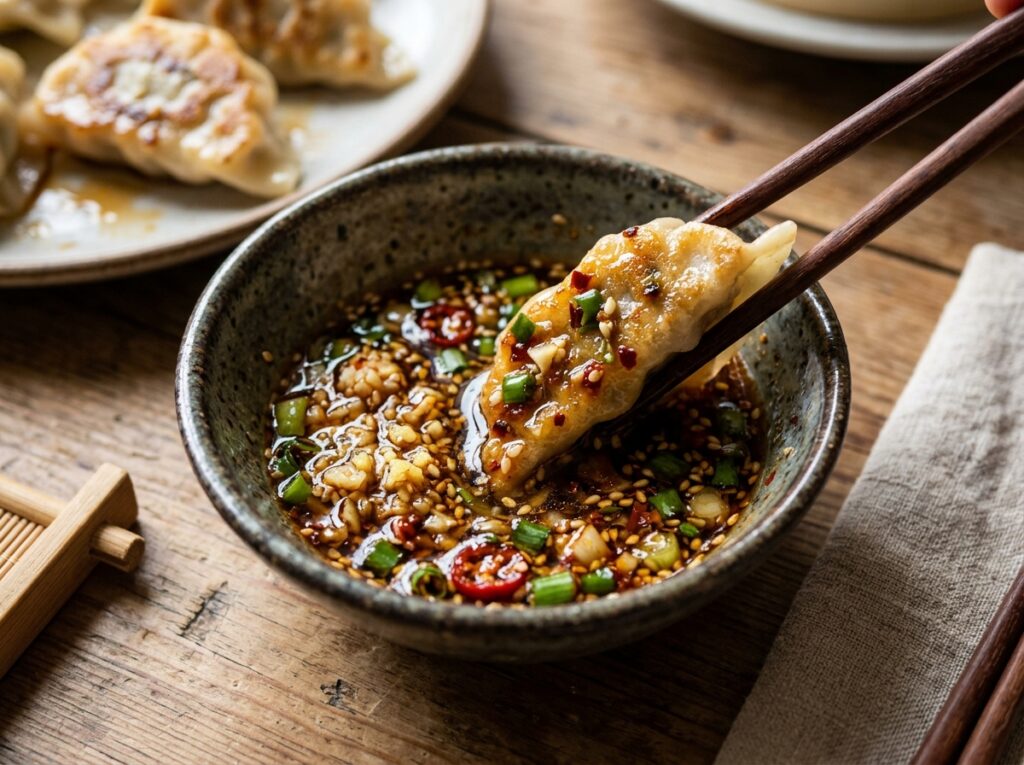
I was in a tiny, eight-seat ramen-ya in Tokyo, a place so focused on perfection that the chef only served one dish. The ramen was, without question, the best I’d ever had. But what struck me was what happened when he served it. Alongside the bowl, he placed a small, lacquered cup containing a single, perfect halved egg, a sheet of nori, and a tiny dish of freshly grated garlic and rayu (chili oil). He didn’t just give you a sauce; he gave you a toolkit. He was saying, “This is my masterpiece. Here are the final brushstrokes. You, the diner, get to complete the painting.”
That moment crystallized something for me. In the West, we treat dipping sauces as an afterthought—a quick mix of soy sauce and maybe some mustard. But in great Asian cooking, the sauce is a crucial, integral part of the dish’s architecture. It’s not a condiment; it’s a co-star. It’s the final, brilliant brushstroke that brings the entire composition to life.
After years of working in professional kitchens and obsessing over these details, I can tell you that the difference between a good dumpling and an unforgettable one often lies in that small bowl. This is not just a dumpling dipping sauce recipe. This is your guide to the philosophy, the framework, and the secrets that will transform you from a recipe-follower into a sauce architect. We’re going to deconstruct the classics, from the gyoza dipping sauce recipe to a Vietnamese dipping sauce recipe, and show you how they all operate on the same fundamental principles.
The Philosophy: A Sauce is a Balancing Act
Before we talk about a single ingredient, we need to understand the why. Why does a perfectly fried potsticker, with its juicy, savory filling and crispy, lacy bottom, even need a sauce? Because a great dumpling is a study in contrasts: a soft, yielding wrapper and a rich, often fatty filling. The sauce’s job is to provide the counterpoint. It cuts through the richness, cleanses the palate, and adds a new dimension of flavor that makes you want to take the next bite.
A great dipping sauce performs four key functions:
- It Cuts: It uses acid (vinegar, citrus) to slice through the richness of the filling and the oil from the cooking process.
- It Complements: It uses salt and umami (soy sauce, miso) to enhance the existing savory flavors of the dumpling.
- It Awakens: It uses aromatics (garlic, ginger, scallion) to provide a sharp, fresh, pungent note that awakens the palate.
- It Excites: It uses texture and heat (chili, sesame seeds, oil) to add a final layer of complexity and a lingering warmth.
Every single great dipping sauce recipe, whether it’s for dumplings, spring rolls, or tempura, is a masterful execution of these four functions. Understanding this is your first step toward mastery.
The Four Pillars: Deconstructing Flavor Architecture
Now, let’s get practical. Forget memorizing recipes. Instead, I want you to think in terms of what I call the Four Pillars of Flavor. Every sauce you can imagine is built from a combination of these pillars. Your job as a sauce architect is to choose one element from each pillar and balance them to your taste.
| Pillar | Function | Core Ingredients | Insider’s Note |
|---|---|---|---|
| 1. The Salty/Umami Base | The foundation. Provides savory depth and saltiness. | Light Soy Sauce, Dark Soy Sauce, Tamari, Miso Paste, Dashi Broth | Light soy is for salt and aroma. Dark soy is for color and molasses-like depth. Don’t use dark soy when you want a clean, light sauce. |
| 2. The Acid | The knife. Cuts richness and brightens flavors. | Rice Vinegar, Black Vinegar, Lime Juice, Mirin | Rice vinegar is clean and sharp. Black Chinkiang vinegar is complex, malty, and funky—perfect for richer dumplings. Mirin adds a gentle sweetness along with its acid. |
| 3. The Aromatic/Allium | The awakening. Provides a fresh, pungent kick. | Garlic, Ginger, Scallions, Shallots, Coriander Root | Always bloom your aromatics. Mince your garlic or ginger and let it sit in the acid (vinegar/lime) for 10 minutes before adding the soy. This “cooks” them slightly, mellowing their raw bite and infusing the acid with their flavor. |
| 4. The Texture/Heat | The finish. Provides spice, richness, and visual appeal. | Chili Oil (Rayu), Crisp Chili Flakes, Toasted Sesame Oil/Seeds, Sichuan Peppercorns | Don’t just use plain chili flakes. Toast them in a dry pan for 30 seconds to awaken their oils before adding them to your sauce. It makes a world of difference. |
This table is your new recipe book. The classic gyoza dipping sauce recipe? It’s Pillar 1 (Light Soy), Pillar 2 (Rice Vinegar), Pillar 3 (Blooming Garlic), and Pillar 4 (Chili Oil & Sesame Seeds). The classic Vietnamese dipping sauce recipe (nước chắm)? It’s Pillar 1 (Fish Sauce), Pillar 2 (Lime Juice & Rice Vinegar), Pillar 3 (Garlic & Chili), and Pillar 4 (Sugar & Water for body). See? The framework holds.
The Art of Assembly: Building Your Signature Sauce
Now that you have the pillars, how do you put them together? The order matters. It’s a simple, three-step process that ensures maximum flavor extraction.
Step 1: Bloom the Aromatics.
Take your chosen aromatic (minced garlic, ginger, etc.) and combine it with your chosen acid (vinegar, lime juice) in the bottom of your serving bowl. Let it sit for at least 5-10 minutes. This is the single most important technique for building a sauce with depth. The acid slightly pickles the aromatics, taming their harshness and turning the liquid itself into a flavorful infusion.
Step 2: Add the Base.
Pour in your salty/umami base (soy sauce, fish sauce, etc.). Stir to combine. At this stage, you can also add other liquid elements like water or mirin to adjust the overall saltiness and volume. A classic pot sticker dipping sauce recipe often has a 2:1 ratio of soy to vinegar, but this is personal. Taste and adjust.
Step 3: Finish with Texture & Heat.
This is the final flourish. Drizzle in your toasted sesame oil for nutty richness. Add a spoonful of your vibrant, red chili oil for heat and visual appeal. Sprinkle with toasted sesame seeds or your toasted chili flakes. This is what makes the sauce look and feel professional.
The Blueprints: Applying the Framework to Classics
Let’s apply this framework to the specific sauces you know and love, and maybe a few you don’t.
Blueprint 1: The Classic Japanese Gyoza/Potsticker Sauce
This is the most common dumpling dipping sauce recipe in the West. It’s clean, sharp, and perfect for the rich, pork-and-cabbage filling of a gyoza.
- Pillar 1 (Base): 4 parts high-quality light soy sauce.
- Pillar 2 (Acid): 2 parts Japanese rice vinegar.
- Pillar 3 (Aromatic): 1 clove of garlic, micro-minced, bloomed in the vinegar.
- Pillar 4 (Texture/Heat): A few drops of toasted sesame oil, a spoonful of store-bought or homemade chili oil (rayu), and a sprinkle of shichimi togarashi (Japanese seven-spice) or toasted sesame seeds.
The Insider Secret: Add a teaspoon of finely grated daikon radish. It adds an incredible, crisp, watery crunch and a subtle sweetness that is simply magical with the gyoza.
Blueprint 2: The Vietnamese Nước Chắm (The Ultimate All-Purpose)
This is the Vietnamese dipping sauce recipe that rules them all. It’s used for spring rolls, grilled meats, and noodle salads. Its genius lies in its perfect balance of all five flavor profiles: sweet, sour, salty, bitter, and spicy.
- Pillar 1 (Base): 1 part high-quality fish sauce.
- Pillar 2 (Acid): 1 part fresh lime juice (or 1 part rice vinegar).
- Pillar 3 (Aromatic): 1-2 cloves garlic (minced) and 1 Thai chili (sliced), bloomed in the lime juice.
- Pillar 4 (Texture/Heat): 2 parts sugar (dissolved in 2 parts hot water). The sugar and water create the body and the sweet balance to the salty fish sauce and sour lime.
The Insider Secret: Don’t just stir it. Use a small whisk and whip it for 20 seconds. This incorporates a bit of air and helps the sugar dissolve completely, creating a more homogenous, professional texture. This is also the definitive spring roll dipping sauce recipe.
Blueprint 3: The Unexpected Honey Mustard Twist
Let’s get creative. How can we apply this to a Western flavor profile, like a honey mustard dipping sauce recipe for fried chicken dumplings?
- Pillar 1 (Base): Dijon mustard (provides salt, acid, and texture).
- Pillar 2 (Acid): A splash of apple cider vinegar.
- Pillar 3 (Aromatic): A tiny pinch of garlic powder or a teaspoon of very finely minced shallot.
- Pillar 4 (Texture/Heat): Honey for sweetness and viscosity, and a dash of cayenne pepper for a gentle heat.
This shows the framework’s versatility. You’re not just limited to Asian ingredients. You can build a balanced sauce with any culinary palette.