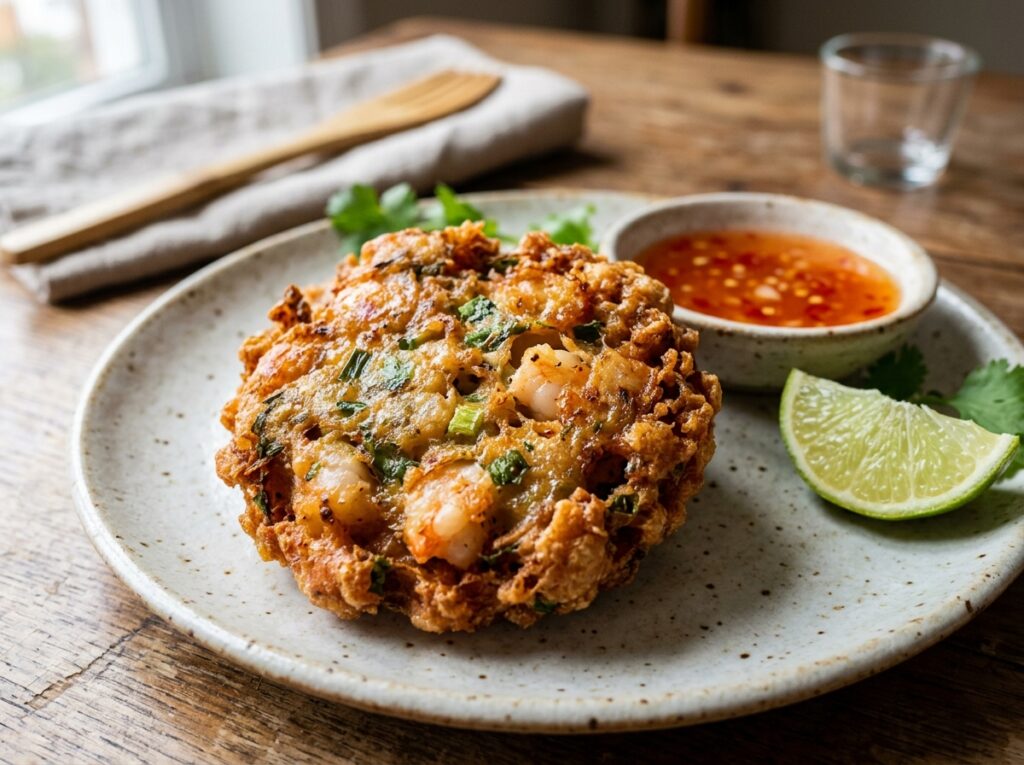
The first time I truly understood a fried shrimp cake, I wasn’t in a restaurant. I was perched on a tiny plastic stool on the banks of the Mekong Delta, watching a woman work over a wok filled with shimmering oil. She wasn’t just cooking; she was performing a ritual. She’d take a small ball of pale pink paste, flatten it into a disc, and slide it into the hot oil. It would hiss, bubble, and transform into a glorious golden-brown disc, puffed up and impossibly crisp.
She handed me one, fresh from the fryer. It was hot, fragrant with garlic and shrimp, and the sound of the first bite was a symphony—a delicate, shattering crunch giving way to a bouncy, chewy, and profoundly savory interior filled with sweet pops of actual shrimp. It wasn’t just a fried snack; it was the soul of the Mekong in a single bite.
After years of working in professional kitchens and traveling through Southeast Asia, I’ve come to realize that most recipes for this dish miss the point entirely. They treat it like a crab cake or a fish patty. It’s not. A great Vietnamese fried shrimp cake is a masterpiece of texture engineering. It’s a study in contrasts. This guide is my attempt to give you the real secrets—the philosophy, the techniques, and the cultural nuances that will elevate your shrimp cakes from good to unforgettable.
The Trinity of Texture: Deconstructing the Perfect Cake
Before we talk about a single ingredient, you need to understand the three distinct textural components that define a perfect shrimp cake. This is the fundamental framework that separates the amateurs from the pros. I call it the Trinity of Texture.
- The Chunk: This is the heart and soul. You must be able to taste and feel distinct pieces of shrimp. This is what provides the sweet, juicy “pop” and reminds you that you’re eating shrimp, not just some anonymous seafood paste.
- The Bind: This is the architectural framework. It’s the bouncy, springy, slightly chewy matrix that holds the chunks together. It’s what gives the cake its signature “Q” texture—a term used in Asia to describe that pleasant, al dente mouthfeel.
- The Crust: This is the final transformation. It’s the shatteringly crisp, golden-brown exterior that provides the initial sensory explosion and protects the tender interior.
A failed shrimp cake is one where these three elements are out of balance. A cake with no chunks is just a processed shrimp nugget. A cake with a weak binder falls apart in the fryer. A cake with a soggy crust is just a sad, greasy disappointment. Every decision you make—from the shrimp you buy to the way you fry it—is in service of this trinity.
The Foundation: Choosing and Handling Your Shrimp
The Chunk is the most important part of the trinity, so it stands to reason that your shrimp selection is paramount. This is not the place to save money.
Forget the tiny, pre-cooked, farm-raised shrimp from the frozen aisle. You want fresh or high-quality frozen, wild-caught shrimp if you can find them. The size matters. You want medium-large shrimp (like 31/40 count). Big enough to provide a substantial bite, small enough to chop easily.
Now, for the insider technique that makes all the difference: the 80/20 rule and the salt-sugar treatment.
- The 80/20 Rule: Take your cleaned, peeled, and deveined shrimp. Set aside about 20% of the best-looking ones. These will become your “chunks.” The other 80% will become your “bind.”
- The Salt-Sugar Treatment: Toss all the shrimp with a little bit of salt and a tiny pinch of sugar. Let them sit for 15 minutes. The salt draws out excess moisture, concentrating the shrimp flavor. The sugar helps with the eventual browning and provides a subtle balance. Pat them completely dry after this step. This is crucial for a good fry.
Now for the chopping. Do not, I repeat, do not use a food processor for the 80% that will become your paste. A food processor pulverizes the shrimp into a mushy, emulsified paste. You want a rough chop. Use a heavy cleaver or a chef’s knife and mince the 80% by hand until you have a coarse paste. It should still have some texture. Then, roughly chop the reserved 20% into pea-sized pieces. You will fold these in at the very end. This two-step process is the secret to getting both the bind and the chunk in perfect harmony.
The Architectural Framework: The Art of the Binder
This is where we explore the cultural nuances and hit those keywords like Vietnamese and Cambodian fried shrimp cake. The binder is what gives each regional style its unique “Q” texture.
| Regional Style | Primary Binder | Characteristic Texture & Flavor |
|---|---|---|
| Vietnamese (Chạo Tôm) | Tapioca Starch, Garlic, Shallot, Fish Sauce | A very snappy, springy, and almost rubbery “Q” texture. Pungent and savory. |
| Cambodian (Num Krouk) | Rice Flour, Coconut Milk, Turmeric | A softer, more tender, and slightly custardy crumb. Aromatic and slightly sweet from the coconut. |
| Thai (Tod Mun Goong) | Red Curry Paste, Fish Sauce, Lime Leaves, Coconut Milk | A complex, spicy, and herbal flavor. The curry paste acts as a binder and flavor base. |
As you can see, the choice of starch is everything. For a classic fried shrimp cake vietnamese style, tapioca starch is non-negotiable. When cooked, it becomes translucent and incredibly chewy, creating that signature bouncy bite. Rice flour, by contrast, creates a softer, more cake-like crumb.
Let’s focus on the Vietnamese master binder. To your 80% shrimp paste, you’ll add:
- Tapioca Starch: About 1-2 tablespoons per pound of shrimp. This is your structural glue.
- Aromatics: Finely minced garlic and shallots are the base. Sauté them gently in a little oil to soften them before adding them to the shrimp. This blooms their flavor and removes any harsh raw bite.
- Seasoning: A dash of high-quality fish sauce for umami, a pinch of sugar for balance, and some white pepper for a gentle heat.
- The Binder Liquid: A single egg white. It adds protein and lightness without making the mixture too heavy or eggy.
Mix this all together with your hands until it forms a cohesive, sticky paste. Then, and only then, gently fold in your reserved shrimp chunks. Don’t overmix. You want them to be suspended in the matrix, not pulverized into it.
The Final Transformation: Mastering the Fry
This is the final act of the play. You’ve built the perfect cake; now you must cook it perfectly. The method you choose—deep fried, pan fried, or even air-fried—will dramatically affect the final crust.
Method 1: The Classic Deep Fry
This is the gold standard for a reason. It creates the most uniform, shatteringly crisp crust.
- The Oil: Use a neutral, high-smoke-point oil like canola, grapeseed, or peanut. You want at least 2 inches of oil in a heavy-bottomed pot or Dutch oven.
- The Temperature: This is key. Heat the oil to 350°F (175°C). Use a thermometer. Don’t guess.
- The Two-Stage Fry: This is a professional secret for extra-crispiness. Fry the cakes for 2-3 minutes until they are pale golden and cooked through. Remove them and let them rest for 5 minutes. Then, crank the heat to 375°F (190°C) and fry them again for another 30-60 seconds until they are a deep, dark gold. This drives off all the remaining surface moisture, creating an incredibly light and crunchy crust.
Method 2: The Practical Pan Fry
Not everyone wants to deep fried. A pan fried shrimp cake is a fantastic home-cook alternative.
- The Pan: Use a heavy-bottomed, non-stick or cast-iron skillet.
- The Oil: You need less oil, about ¼ inch. Heat it over medium heat.
- The Technique: The key here is managing the heat. The pan is less forgiving than a deep fryer. Cook the cakes for 3-4 minutes per side. Because the heat only comes from one direction, you might need to cover the pan for the first few minutes to help steam and cook the interior through without burning the exterior.
Method 3: The Modern Air Fry
This is the healthier alternative, but we need to be realistic. It will not replicate the texture of a true deep fry. It will be “crispy,” but not shatteringly so.
- Prep: Preheat your air fryer to 375°F (190°C).
- The Oil: Lightly spray the shrimp cakes with oil on all sides. This is essential for browning.
- The Cook: Air fry for 8-10 minutes, flipping them halfway through. They will be golden and cooked, but the crust will be more of a dry crisp than a fried crunch.
The Master Recipe: Vietnamese-Style Fried Shrimp Cake
This blueprint brings together all the principles we’ve discussed.
Ingredients:
- 1 lb fresh or frozen-thawed medium shrimp, peeled and deveined
- 1.5 tbsp tapioca starch
- 2 cloves garlic, minced
- 1 shallot, minced
- 1 egg white
- 1 tsp fish sauce
- ½ tsp sugar
- ¼ tsp white pepper
- Neutral oil for frying