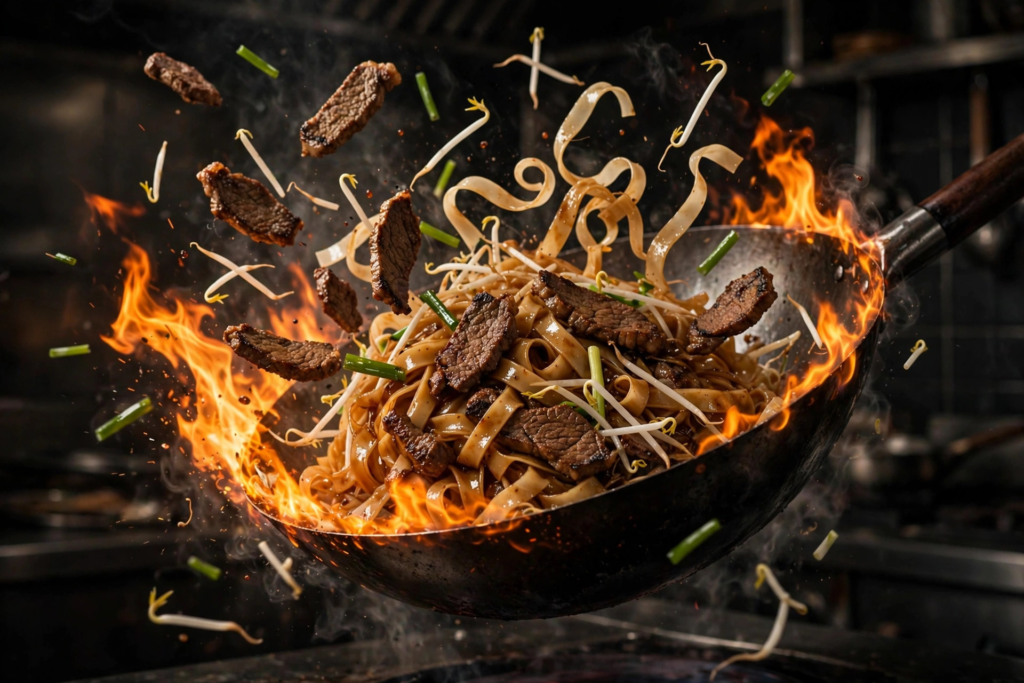
They sound like the same dish said two ways. They share a menu section, a wok, and half their ingredients. But order chow fun expecting chow mein — or the reverse — and the plate that lands will surprise you. One is built on wide, silky ribbons of rice noodle with a smoky breath of the wok. The other is thin wheat noodles, fried until golden and crackling, or tossed soft and savory. Same family, different personalities. Here’s how to tell them apart, what makes each one special, and which to order depending on your mood.
The 30-Second Answer
If you’re in a hurry: chow fun uses wide, flat rice noodles (ho fun), stir-fried fast over screaming heat. Chow mein uses thin wheat-and-egg noodles, which can be stir-fried soft or pan-fried until crispy. Rice vs. wheat — that single difference drives everything else: texture, flavor, even whether the dish is gluten-free. Now, the details.
What Is Chow Fun?
Chow fun (炒粉, chao fen) is a Cantonese classic from Guangdong province in southern China, where rice — not wheat — is the staple grain. The star is ho fun: wide, flat noodles made from rice flour and water, steamed into sheets, then cut into ribbons about an inch wide. Fresh ho fun is soft, slippery, and almost delicate; it tears if you look at it wrong, which is exactly why cooking it well takes real skill.
The benchmark version is beef chow fun (干炒牛河, gon chow ngau ho): marinated beef, bean sprouts, scallions, and those wide noodles, flash-fried in a blazing wok with soy sauce. Done right, it has wok hei — the elusive smoky “breath of the wok” that no home burner quite reproduces and every Cantonese cook chases. The noodles should be chewy and slick, kissed with char at the edges, never mushy, never broken into sad little pieces.
Chow fun variations run wide: shrimp chow fun, chicken, char siu pork, plain vegetable, and the luxurious “wet” version where the noodles are drowned in a savory gravy. It’s also a dim sum-restaurant regular, where you might find it stir-fried simply with soy and scallions as a supporting act to the dumplings.
What Is Chow Mein?
Chow mein (炒面, chao mian — literally “fried noodles”) starts from the opposite grain. The noodles are thin, wheat-based, made with egg, and the dish comes in two personalities that barely resemble each other:
- Soft chow mein: parboiled noodles tossed in the wok with vegetables, protein, and sauce until tender and savory. Closest to what most American takeout menus mean by “chow mein.”
- Crispy (Cantonese-style) chow mein: the noodles are pan-fried into a golden, crunchy nest, then topped with a saucy stir-fry of meat and vegetables. You pour, it sizzles, the edges stay crisp while the center softens. Theater and dinner in one plate.
The name traces to Taishan, near the Pearl River Delta, and the dish traveled the world with Cantonese immigrants — which is why chow mein became the global ambassador of Chinese noodles while chow fun stayed closer to home. This detailed breakdown walks through both dishes’ ingredients and methods side by side, and it’s a solid second opinion on everything below.
Head to Head: Chow Fun vs. Chow Mein
| Chow Fun | Chow Mein | |
|---|---|---|
| Noodle | Wide, flat ribbons (ho fun) | Thin strands |
| Made from | Rice flour + water | Wheat flour + egg |
| Texture | Chewy, slippery, silky | Soft-tossed or crispy-crunchy |
| Cooking | Flash stir-fried at extreme heat | Blanched then stir-fried, or pan-fried crisp |
| Signature flavor | Smoky wok hei, deep soy savoriness | Toasty fried-noodle flavor, lighter sauce |
| Gluten-free? | Yes, if the sauce is (use tamari) | No — wheat noodles |
| Roots | Guangdong, southern China | Taishan / Cantonese diaspora, worldwide |
| Order it when | You want comfort with a smoky edge | You want crunch or a crowd-pleaser |
Wok Hei: The Flavor You Can’t Fake
Here’s the thing that separates good chow fun from great chow fun — and the thing most comparison articles gloss over. Wok hei (鑊氣, “breath of the wok”) is the faintly smoky, almost charred aroma that great stir-frying imparts. It’s not “burnt.” It’s the flavor of oil and sauce vaporizing at 600°F+ and settling back onto the food as the cook tosses.
Chow fun needs wok hei the way a steak needs a sear. The wide rice noodles have a mild flavor on their own; the dish’s soul is that smoky kiss. This is why chow fun is the ultimate test of a Cantonese kitchen — and why mediocre versions taste flat and greasy instead of thrilling. Home cooks: your burner probably can’t hit restaurant wok temperatures, but a properly seasoned wok, small batches, and the hottest heat you’ve got will get you surprisingly close.
Chow mein, by contrast, is more forgiving. Soft chow mein is about the sauce coating tender noodles; crispy chow mein is about the textural drama of the nest. Both are delicious, and neither lives or dies on a single breath of smoke.
The American Chow Mein Confusion
A quick public service announcement for anyone who grew up in the US: those crunchy golden noodles that come in a can or a little bag with the salad? That’s an American invention — deep-fried wheat noodles meant as a topping — and it has almost nothing to do with real chow mein. Real crispy chow mein is made fresh, fried to order, and served hot under sauce. If your only reference is the can, you’re in for a very pleasant surprise.
The confusion runs the other direction too. Many American “chow mein” takeout dishes are really closer to lo mein — soft noodles tossed in sauce, never seeing a hot enough pan to fry. This three-way comparison untangles chow fun, chow mein, and lo mein together, which helps if your local menu blurs the lines.
Which Should You Order? (And How to Cook Them at Home)
No wrong answers — but the right answer depends on the night:
- Craving smoky comfort? Beef chow fun. Ask for it “dry-fried” (干炒) if you want the classic wok hei version rather than the gravy one.
- Feeding picky eaters or a group? Soft chow mein — familiar, customizable, hard to dislike.
- Want drama? Crispy Cantonese chow mein. Order it for the table and watch everyone go quiet when it arrives.
- Eating gluten-free? Chow fun with tamari instead of soy sauce. Always confirm the sauce — this nutritional comparison notes the noodles are only half the story.
- Feeling adventurous? Chow fun with black bean sauce, or the “wet” gravy version — both are less common outside Cantonese neighborhoods and worth hunting down.
Cooking at home? Two tips the recipe blogs often bury. First: fresh ho fun tears. If you buy the fresh sheets from an Asian market, warm them gently (a minute in the microwave under a damp towel) before separating the ribbons — cold ho fun shatters. Dried flat rice noodles work too; soak, don’t boil them to death. Second: don’t crowd the wok. Chow fun for two is two batches, not one. Crowding steams the noodles instead of searing them, and steamed ho fun is gummy sadness.
A final touch worth stealing from the restaurants: a few drops of black vinegar over either dish right before eating. The acidity cuts the richness and wakes everything up. And if you’re still mapping the cuisines these dishes come from, our tour of China’s five major regional cuisines puts Cantonese cooking — chow fun’s home — in context, while the flavor principles behind Chinese cooking explain why that smoky-salty-savory balance hits so hard.
Fresh vs. Dried Ho Fun: What to Buy
The single biggest variable in homemade chow fun isn’t your wok — it’s the noodle, and specifically whether you buy it fresh or dried. This is the practical detail most recipes skip.
Fresh ho fun is the gold standard: soft white sheets, usually sold folded in plastic bags in the refrigerated section of Asian markets. It’s what the restaurants use. The catch: it’s fragile, perishable (a few days refrigerated), and it must never go in the fridge-cold wok — cold fresh ho fun shatters into ribbons and crumbs. Warm the whole bag for a minute in the microwave, or let it sit at room temperature for an hour, then separate the sheets gently with oiled hands before cutting. If the sheets resist, they’re too cold. Patience.
Dried flat rice noodles (sometimes labeled “rice sticks” or banh pho-style) are the shelf-stable fallback. Soak them in hot — not boiling — water for 20–30 minutes until pliable but still firm, then drain thoroughly. They’ll never be quite as silky as fresh, but in a hot wok with good sauce, the difference shrinks to almost nothing. Avoid the very thin dried “rice vermicelli” — that’s a different noodle entirely and will disintegrate.
One more buying tip: check the ingredients. Good ho fun — fresh or dried — lists rice and water, maybe a little tapioca starch. If the label reads like a chemistry exam, put it back.
Frequently Asked Questions
Is chow fun healthier than chow mein?
It depends entirely on preparation, not the noodle. A lean beef chow fun loaded with bean sprouts can be lighter than a greasy soft chow mein — or the reverse. The biggest lever is oil: restaurant stir-fries use more than you’d think. Ask for “less oil” (少油) if it matters to you.
Can I substitute one noodle for the other?
Technically yes, spiritually no. The dishes are built around their noodles — wide rice ribbons behave nothing like thin wheat strands in a hot wok. Swap them and you’ll get an edible stir-fry, but it won’t be chow fun or chow mein anymore.
Why is my homemade chow fun mushy?
The three usual suspects: noodles overcooked before they hit the wok, a crowded pan steaming instead of searing, or stirring too aggressively and shredding the ribbons. Hot wok, small batch, confident tossing, minimal stirring.
What’s the difference between chow fun and pad see ew?
Great question — they’re cousins. Pad see ew is the Thai take on the same idea: wide rice noodles, soy sauce, Chinese broccoli, usually chicken or pork. The seasoning leans sweeter (Thai sweet soy) where chow fun leans smoky-savory. If you love one, try the other.
So: chow fun for the smoky, chewy, Cantonese soul; chow mein for the versatile, crispy-or-soft crowd-pleaser. Next time the menu offers both, skip the coin flip — pick the texture you’re craving and order with confidence. And if a restaurant does a proper dry-fried beef chow fun with real wok hei? That’s a kitchen worth going back to.