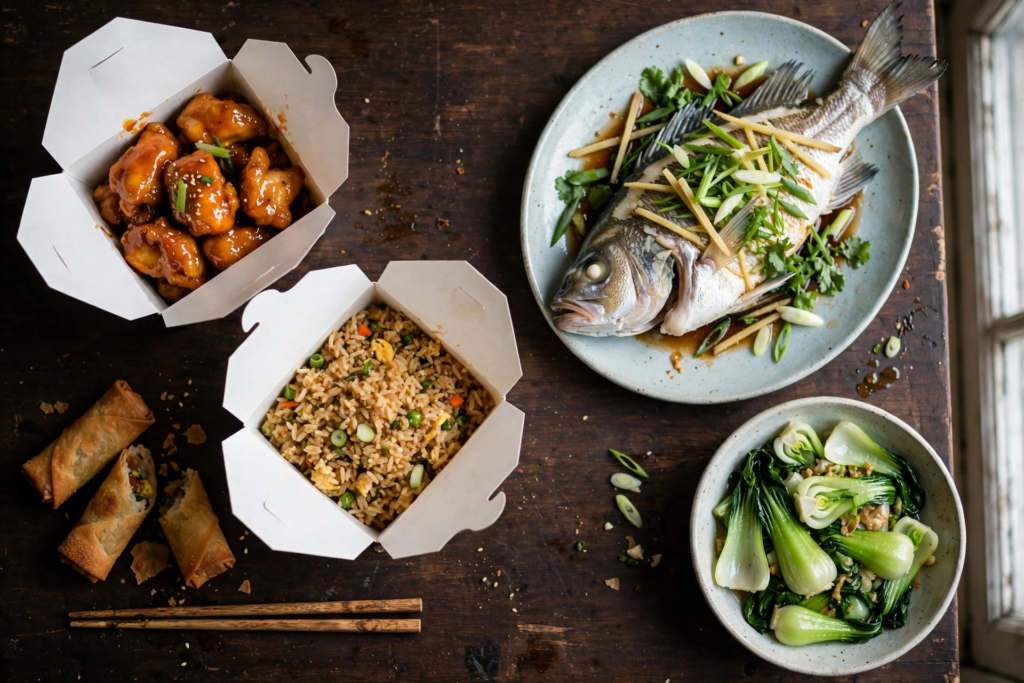
Order General Tso’s chicken in New York and you’ll get glossy, deep-fried chunks of chicken in a sweet, sticky sauce. Order it in Changsha — the Hunan city the dish is named for — and the waiter will stare at you blankly. The dish barely exists there, and the version that does looks nothing like what you know.
That gap, between the Chinese food most Americans grew up with and the food actually eaten across China, is the whole story. American Chinese food isn’t a bad copy of the real thing. It’s a separate cuisine with its own history — born in California mining camps and railroad towns, shaped by immigration laws, ingredient shortages, and 150 years of cooking for American tastes.
How American Chinese Food Was Born
Chinese food arrived in America in the mid-19th century with laborers who came for the California Gold Rush and stayed to build the railroads. They cooked the food of home — mostly Cantonese food, since nearly all of them came from Guangdong province — but home ingredients were often impossible to find. So they substituted. Bok choy became cabbage. Ingredients nobody in America stocked got left out entirely.
Then the law stepped in. The Chinese Exclusion Act of 1882 shut down most job options for Chinese immigrants, but restaurants and laundries were among the few businesses they were still allowed to run. Cooking for Americans became a survival strategy, not just a business. The earliest Chinese restaurants served adapted Cantonese dishes — chow mein, chop suey — simplified and sweetened for customers who had never tasted anything like them.
Chop suey is the perfect example of the era. It wasn’t a traditional dish at all; it was invented in America from cheap, available ingredients — bean sprouts, celery, bits of meat in a starchy sauce. One popular story claims it was thrown together for the Chinese diplomat Li Hongzhang during his 1896 visit to New York. True or not, the dish became such a sensation that “chop suey joints” were America’s default Chinese restaurant for decades. The Daily Meal traces this whole transformation from Gold Rush improvisation to a cuisine of its own.
The second big wave came after 1965, when US immigration law changed and newcomers arrived from Sichuan, Hunan, Taiwan, and Fujian. That’s when Americans started meeting mapo tofu and soup dumplings. But American Chinese food was already a century-old tradition of its own — and it wasn’t going anywhere.
The Flavor Gap: Bold and Sweet vs Layered and Balanced
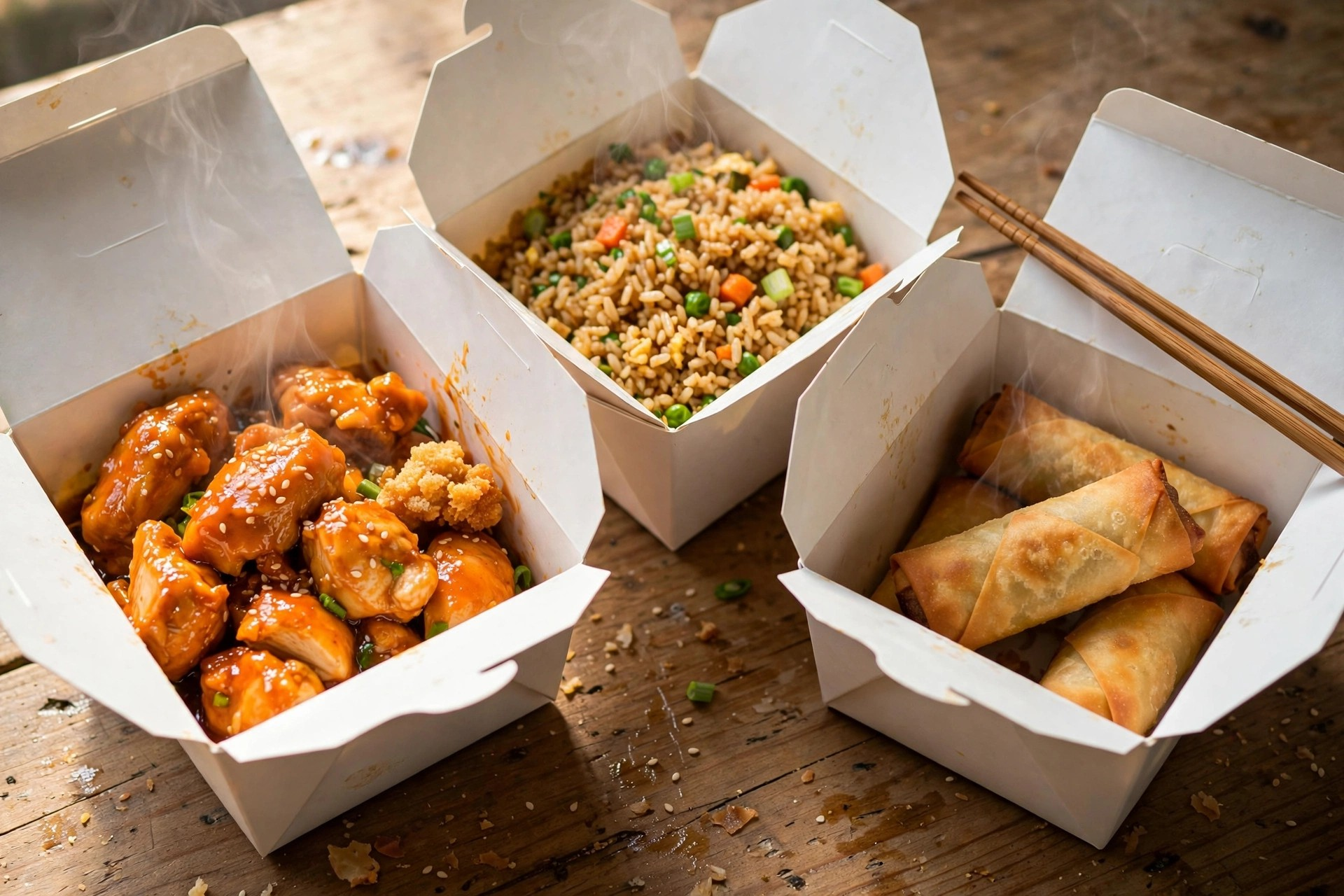
Taste an American Chinese dish next to its closest Chinese relative and the first thing you notice is the volume knob. American Chinese food turns everything up: sweeter sauces, saltier seasoning, thicker glazes. A Boston restaurant owner put it plainly — American diners want sweet, sour, salty, and bold, plus a solid crunch. Chinese palates look for layered flavors and softer, more yielding textures.
Authentic Chinese cooking works from a different flavor map. The old idea of the “five tastes” — sweet, sour, bitter, salty, savory — is supposed to balance inside a single meal, sometimes a single dish. A Sichuan dish might be numbing, spicy, savory, and faintly sweet all at once. A Cantonese steamed fish might taste of almost nothing but the fish itself, ginger, and scallion — and that’s the point.
Sugar tells the story in miniature. In American Chinese cooking, sugar goes into savory sauces constantly — General Tso’s, orange chicken, sweet and sour pork. In China, it’s used sparingly in savory cooking and mostly saved for desserts and snacks like red bean buns.
Here’s the side-by-side:
| American Chinese food | Authentic Chinese cuisine | |
|---|---|---|
| Flavor profile | Sweet, salty, bold; one or two big notes per dish | Layered; sweet, sour, bitter, salty, and savory in balance |
| Sauces | Thick, glossy, cornstarch-heavy; the star of the dish | Lighter; seasoning frames the main ingredient |
| Vegetables | Broccoli, carrots, bell peppers, baby corn | Bok choy, gai lan, water spinach, bitter melon |
| Protein | Chicken breast, beef, shrimp; boneless and easy to eat | Pork, duck, whole fish; bones, feet, and offal prized |
| Cooking methods | Deep-frying and fast stir-frying dominate | Steaming, braising, red-cooking, boiling alongside stir-frying |
| Texture | Crunchy and crispy above all | Crisp, slippery, bouncy, gelatinous — texture is a whole vocabulary |
| Dairy | Shows up (crab rangoon’s cream cheese) | Almost entirely absent |
| Dessert | Fortune cookies; sweet endings expected | Often skipped; fresh fruit or sweet soups instead |
Famous Dishes You Won’t Find in China
Some of America’s most beloved “Chinese” dishes were born on American soil — a few have distant Chinese relatives, and some have none at all.
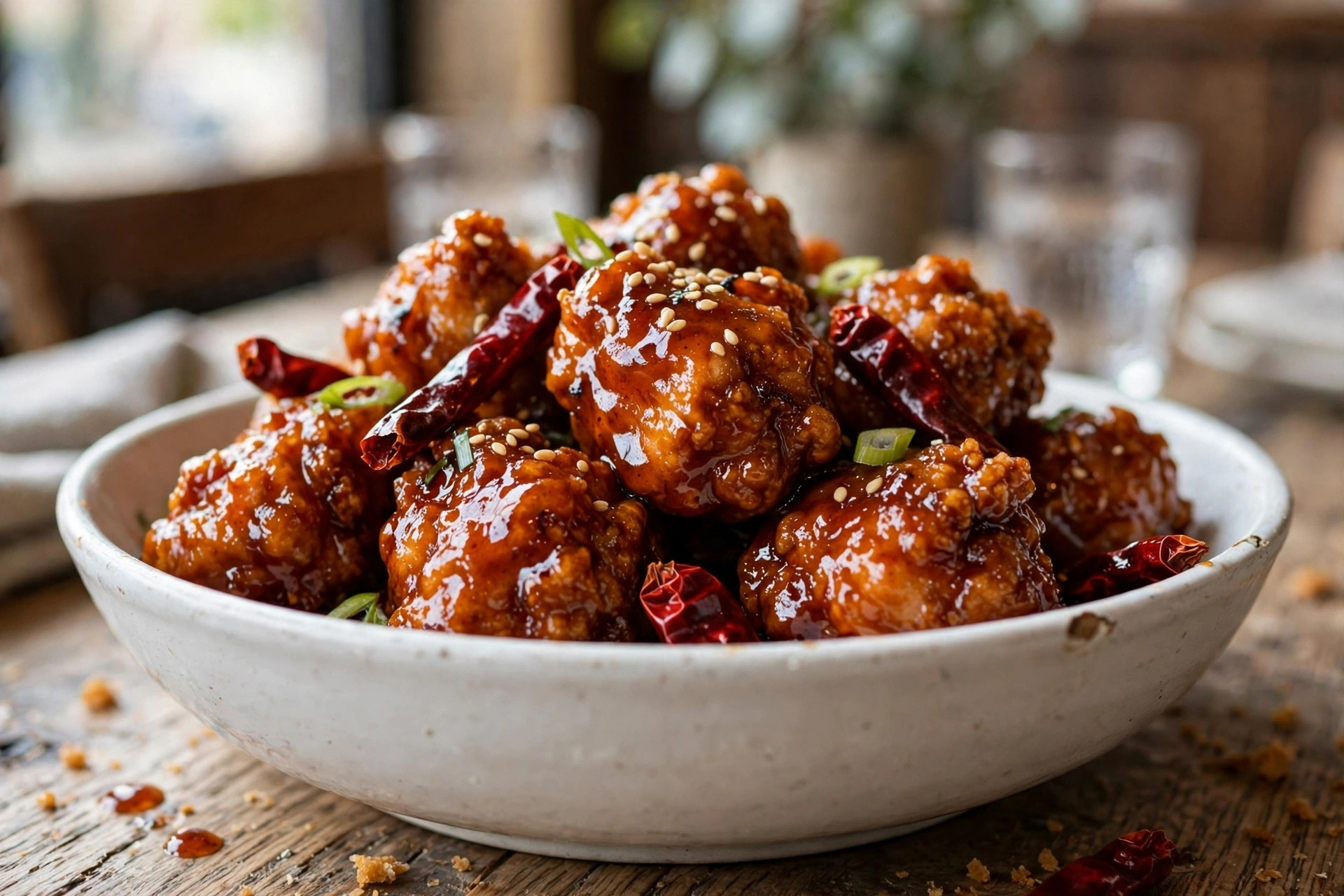
- General Tso’s chicken. Hunan-born chef Peng Chang-kuei created a version in Taiwan in the 1950s, then brought it to New York in the 1970s, where it got sweeter, crispier, and deep-fried. The Hunan original was savory and spicy, not candy-coated. Our guide to General Tso’s chicken traces the whole journey.
- Orange chicken. Invented at Panda Express in Hawaii in 1987 by chef Andy Kao. You will not find it in China, full stop.
- Chop suey. The original American Chinese invention — a Gold Rush-era stir-fry of bean sprouts, celery, and meat that became so famous it defined Chinese food for generations of Americans.
- Crab rangoon. Cream cheese inside a fried wonton. Dairy is nearly absent from Chinese cooking, and this one was likely invented at Trader Vic’s tiki restaurant in San Francisco in the 1940s. Delicious; Chinese it is not.
- Fortune cookies. Probably Japanese in origin, popularized by Chinese-run bakeries in California in the early 1900s. Nobody in China has ever gotten a fortune with dinner. The real history is stranger than you’d guess.
- Beef with broccoli. A straight ingredient swap: Cantonese cooks used gai lan (Chinese broccoli), which was hard to find in America, so Western broccoli took its place and never left.
None of this makes these dishes fake. They’re authentic artifacts of the Chinese-American immigrant experience — just not of China.
The Ingredient Swaps That Changed Everything
Early Chinese restaurants in America cooked with what they could get, and the substitutions stuck around long after the shortages ended. Western broccoli replaced gai lan. Carrots, bell peppers, and baby corn — rare in Chinese cooking — became standard because they were cheap and familiar. Frozen vegetables and pre-made sauces kept costs down and flavors consistent.
Two swaps matter more than the rest. The first is dairy. Traditional Chinese cuisine uses almost no milk, cheese, or butter, and the cuisine simply developed without it. Crab rangoon’s cream cheese filling would baffle a cook in Guangzhou.
The second is sugar and cornstarch. American Chinese sauces lean on both: sugar for the sweetness Americans expect, cornstarch for the thick, glossy coating that clings to deep-fried meat. In China, sauces are usually thinner — a splash of soy, a spoonful of oyster sauce, the natural juices of the ingredients.
MSG deserves an honest mention. It shows up in American Chinese cooking more openly, and it picked up an unfair reputation in the 1960s from a single letter to a medical journal. Used normally, it’s no different from the glutamates in tomatoes and parmesan — and plenty of Chinese home cooks use it too.
Cooking Methods, Texture, and the Bone Question
Walk into an American Chinese kitchen during dinner rush and you’ll hear the deep fryer. It delivers the crunch American diners love, and it cooks fast — which matters when customers eat quicker than Chinese diners typically do. Slow methods like red-braising (hóng shāo), which can take hours, barely appear on American Chinese menus.
In China, the wok is only the beginning. Steaming, braising, boiling, roasting, and fermenting all get heavy use, and each region leans on different ones — Cantonese cooks steam and roast, Sichuan cooks braise and dry-fry, northern cooks boil and stew. CaterCow’s breakdown of the cooking-style divide puts it well: an American Chinese menu built around the fryer and the wok is cooking with half the toolbox.
Then there’s texture, which the Chinese take more seriously than almost any other food culture. The Chinese language has hundreds of words for texture; English has a few dozen. Gelatinous, bouncy, and slippery textures that Americans often find challenging — jellyfish, sea cucumber, chicken feet — are prized in China. As food writer Fuchsia Dunlop has noted, if you can’t enjoy food for its texture, a whole wing of Chinese gastronomy stays closed to you.
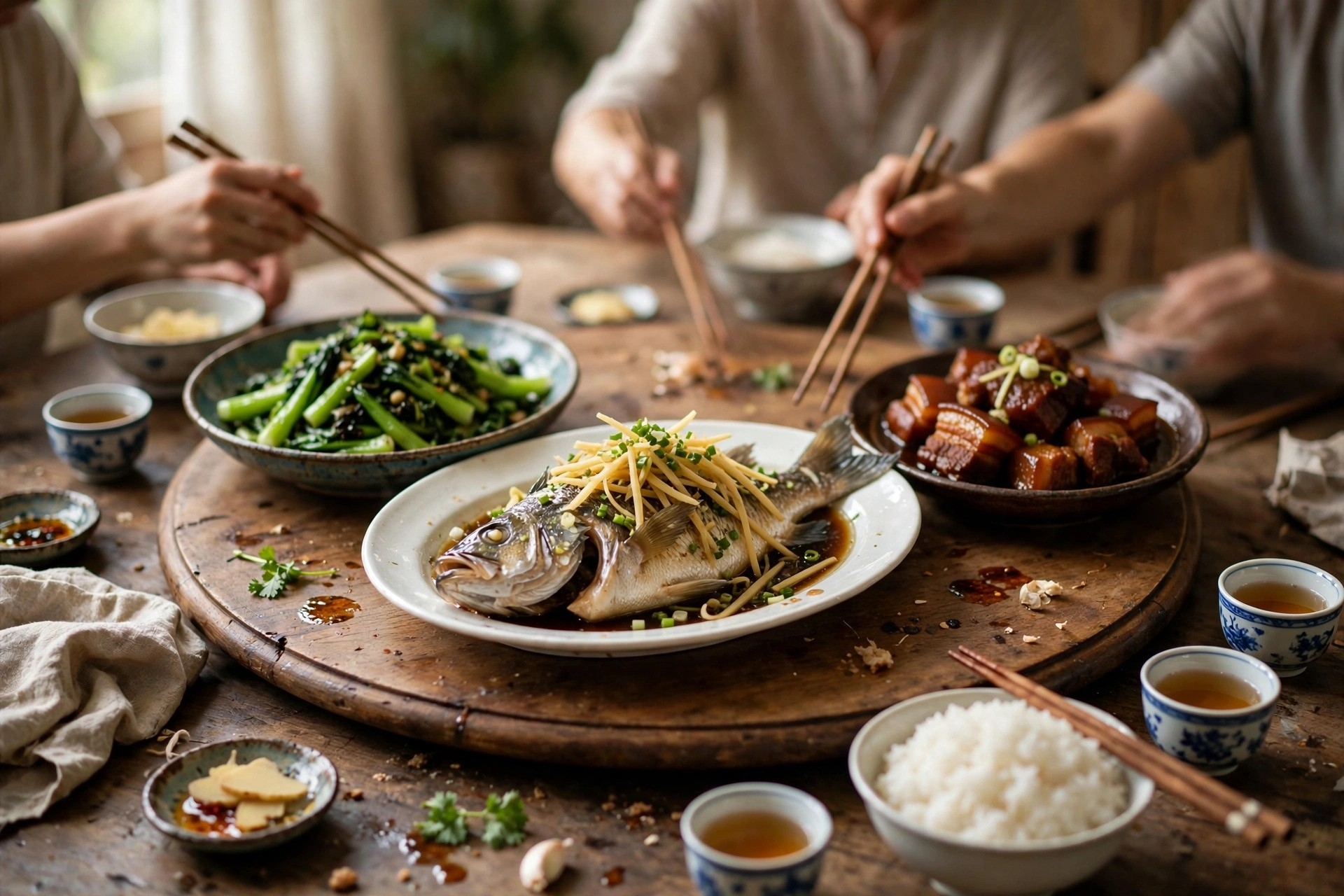
Bones are the quickest tell. In China, the tastiest meat is often still on the bone — whole steamed fish with head and tail, bone-in pork ribs, duck feet. A whole fish symbolizes completeness and abundance. American Chinese food fillets the fish and juliennes everything into easy, fork-friendly pieces. Nothing wrong with convenience — but it changes what the food can be.
How to Tell Which One You’re Eating
You don’t need a culinary degree. The menu gives it away in about thirty seconds.
- Check for the greatest hits. If the menu leads with General Tso’s, orange chicken, sweet and sour pork, and crab rangoon, you’re in an American Chinese restaurant. If it leads with mapo tofu, twice-cooked pork, steamed whole fish, or soup dumplings, you’re somewhere more regional.
- Look for a second menu. Many restaurants keep a Chinese-language menu — or a “traditional” section — with the dishes the staff actually eats. Ask for it. The English menu might have lo mein; the Chinese menu might have eel with black bean sauce.
- Scan for offal and bones. Chicken feet, duck tongue, pork intestine, whole fish with the head on — these are authenticity markers. Their absence doesn’t prove anything, but their presence proves a lot.
- Watch the room. A dining room full of Chinese families, especially older ones, is the most reliable review there is. So is the roar of a real wok burner from the kitchen.
- Count the cuisines. A menu that mixes Sichuan spice, Cantonese roast meats, and American sweet-and-sour under one roof is cooking for everyone. A restaurant that commits to one region — a Sichuan place, a Cantonese barbecue shop — is usually cooking for people who know the difference.
Where to Find the Real Thing in America
Here’s the good news: you don’t need a plane ticket. The post-1965 immigration wave built genuine regional Chinese food scenes across the US — you just have to know where to look.
New York’s Flushing, Queens is the heavyweight: block after block of Sichuan, Hunan, Dongbei, and Taiwanese spots where English is optional. Los Angeles has the San Gabriel Valley, arguably the best Chinese food outside Asia. San Francisco’s Richmond and Sunset districts carry the torch beyond the tourist version of Chinatown.
A practical approach: search for the region, not the country. “Sichuan restaurant near me” beats “Chinese restaurant near me” every time. Home Dining Kitchen’s look at the cuisine’s evolution makes the same point — the most interesting Chinese food in America today lives in regional kitchens, not takeout boxes. And when you sit down, try one dish you’ve never heard of alongside one you have. The soup dumplings will still be there — but so will the cold skin noodles, the water-boiled fish, and the things that never made it onto a takeout menu.
It also helps to know the major regional cuisines of China before you go. The early immigrants were almost all Cantonese, which is why America met sweet-and-mild Cantonese food first — and the gap between Sichuan and Cantonese cooking alone shows how much was missing from the picture.
Frequently Asked Questions
Is American Chinese food “fake” Chinese food?
No — it’s a real cuisine, just not a Chinese one. It was created by Chinese immigrants adapting to America over 150 years, and dishes like General Tso’s chicken and chop suey are genuine artifacts of that history. Calling it fake misses the point; calling it Chinese misses the geography.
Do they eat General Tso’s chicken in China?
Essentially no. Chef Peng Chang-kuei’s original Hunan dish exists in a very different, savory-spicy form, but the sweet, deep-fried American version was developed in New York in the 1970s and never traveled back in that form.
Is authentic Chinese food healthier than American Chinese food?
Often, but not automatically. Authentic cooking uses more steaming, more vegetables, and less sugar — but Sichuan food can be extremely oily, and sodium runs high in both.
Why is American Chinese food so sweet?
Because sweetness sells in America. Early restaurateurs learned that sweet-and-savory flavors won over unfamiliar customers, and the formula stuck. In China, sugar is used sparingly in savory dishes and saved mostly for desserts and snacks.
Can you find authentic Chinese food in a small American town?
Sometimes, and it’s worth looking. College towns and cities with international populations often hide one excellent Sichuan or Taiwanese spot. The tells are the same everywhere: a Chinese-language menu, regional specialties, and a dining room full of people who grew up with the food.
Your next step: skip the usual takeout order once and try a regional restaurant instead — then order the dish you can’t pronounce. That’s usually where the real cooking is hiding.
Leave a Reply