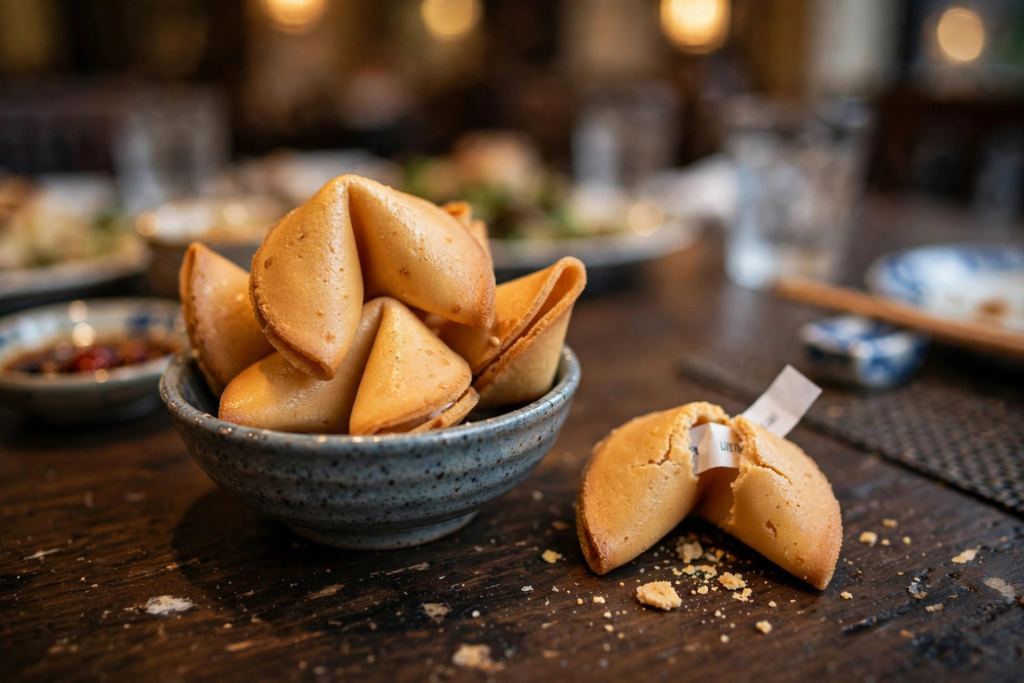
You know the ritual. The plates are cleared, the check is on its way, and someone slides the little plastic-wrapped cookie across the table. You crack it open — that clean, crisp snap — fish out the tiny slip of paper, and read your fortune out loud while everyone else does the same. Someone always gets “You will find great fortune,” someone always jokes about adding “in bed” to the end, and someone pockets the lucky numbers.
It’s the most familiar ending to a Chinese meal in America. There’s just one problem: the fortune cookie isn’t Chinese. Not even a little. Its real story runs through Japan, two California cities, a courtroom, a world war, and one man’s subway-inspired poetry — and it’s far more interesting than anything you’ll find inside the cookie.
The Short Answer: Fortune Cookies Aren’t Chinese
Let’s get this out of the way first, because it surprises almost everyone: you will not find fortune cookies in China. When people in Beijing were handed fortune cookies on camera, most had never seen one before — and several said they tasted like egg rolls. The cookie is about as Chinese as chop suey, which is to say it’s a genuine piece of Chinese-American culture that China itself never ordered.
So where did it come from? The honest answer is Japan — and then California. Specifically, the trail leads to a 19th-century Japanese cracker, a wave of Japanese immigrants, and a decades-long argument over which California city invented the modern version. Here’s how it all unfolded.
The Real Roots: A Japanese Cracker Called Tsujiura Senbei
Long before anyone folded a fortune into a vanilla cookie in San Francisco, bakeries on the outskirts of Kyoto were selling tsujiura senbei — “fortune crackers.” These were larger, darker, savory crackers flavored with sesame and miso, with a slip of paper tucked into the fold. Instead of prophecies, the slips often carried lines of poetry.
The tradition connects to omikuji, the written fortunes dispensed at Japanese temples and shrines, where worshippers draw random slips predicting their luck. Someone had the bright idea of baking the concept into a snack.
How do we know? Food researcher Yasuko Nakamachi spent years digging through Japan’s National Diet Library and found the smoking gun: an 1878 book, Moshiogusa Kinsei Kidan, containing an illustration of an apprentice making tsujiura senbei with round iron grills — nearly three decades before anyone in California claimed to have invented the fortune cookie. The grills in that 140-year-old drawing look strikingly like the ones later used to shape American fortune cookies.
Here’s the old and the new, side by side:
| Tsujiura Senbei (Japan, 1800s) | American Fortune Cookie (today) | |
|---|---|---|
| Size | Much larger, palm-sized | Small, two-bite |
| Flavor | Savory — sesame and miso | Sweet — vanilla and sugar |
| Color | Dark, deeply browned | Pale gold |
| Message | Lines of poetry | Fortunes, advice, lucky numbers |
| Message placement | Tucked in the exterior fold | Folded inside the cookie |
Same skeleton, completely different personality. The American version kept the fold and the surprise, then sweetened everything for American tastes.
Three Men, Two Cities, One Cookie
The Japanese crackers arrived in America with immigrants who settled in Hawaii and California in the late 1800s. By the early 1900s, fortune cookies were popping up in Japanese bakeries in San Francisco and Los Angeles — and that’s where the story turns into a genuine whodunit, because three different men all claimed to have invented the modern cookie.
- Makoto Hagiwara (San Francisco). A Japanese immigrant who ran the Japanese Tea Garden in Golden Gate Park, Hagiwara said he served the modern fortune cookie there in the early 1900s. Family lore says that after an anti-Japanese mayor fired him and a later mayor reinstated him, he tucked thank-you notes into cookies for supporters who’d stood by him. His cookies were actually baked by a San Francisco confectioner, Suyeichi Okamura of Benkyodo.
- David Jung (Los Angeles). A Chinese immigrant who founded the Hong Kong Noodle Company, Jung claimed he invented the cookie just before World War I. His version of the story is the most charming: he supposedly handed the cookies out free to poor and homeless people near his shop — feeding them while slipping in an encouraging word, literally. His fortunes carried Bible verses.
- Seiichi Kito (Los Angeles). Founder of the Fugetsu-do confectionery in Little Tokyo, Kito also claimed early-1900s invention. His grandson points to a 1927 California magazine article crediting a Japanese-American in Los Angeles.
San Francisco and Los Angeles have been arguing about this ever since. In 1983, San Francisco’s Court of Historical Review — a real, if theatrical, institution — held a mock trial to settle it. Evidence included antique round iron grills the Hagiwara family had used to cook the cookies. A federal judge ruled for Hagiwara and San Francisco. Plenty of Angelenos still disagree, and honestly, the truth is probably that several bakers were making similar cookies at once. As Eat This, Not That’s deep dive into the dispute puts it, the origin story is complicated — and that’s putting it mildly.
The Twist Nobody Saw Coming: World War II
Here’s the turn that explains why you associate fortune cookies with Chinese restaurants instead of Japanese ones.
Before the war, Japanese bakeries dominated fortune cookie production. Benkyodo supplied the Japanese Tea Garden and countless other spots. Then came Executive Order 9066, and Japanese Americans — including the bakers — were forced into incarceration camps. Okamura had to shut Benkyodo down.
At exactly the same moment, Chinese restaurants were booming across America. Chinese entrepreneurs stepped into the gap: they started baking and serving fortune cookies themselves. When Japanese confectioners returned after the war and tried to reclaim the trade, they found the market had moved on. The cookie was now, in the American imagination, Chinese.
It’s one of those historical accidents that reshaped a whole cuisine’s image. A Japanese cracker, Americanized by immigrants, handed to Chinese restaurateurs by wartime injustice — and today most people on earth assume it came from Beijing. If you’d like the fuller version of how Japanese food scholarship traced all this, National Geographic’s account of Nakamachi’s research is the definitive short telling.
How Fortune Cookies Are Actually Made
The recipe is almost comically simple: flour, sugar, vanilla, a little oil, water. The original Japanese crackers used sesame and miso; the American version swapped in vanilla and sugar. That’s it. The magic is all in the timing.
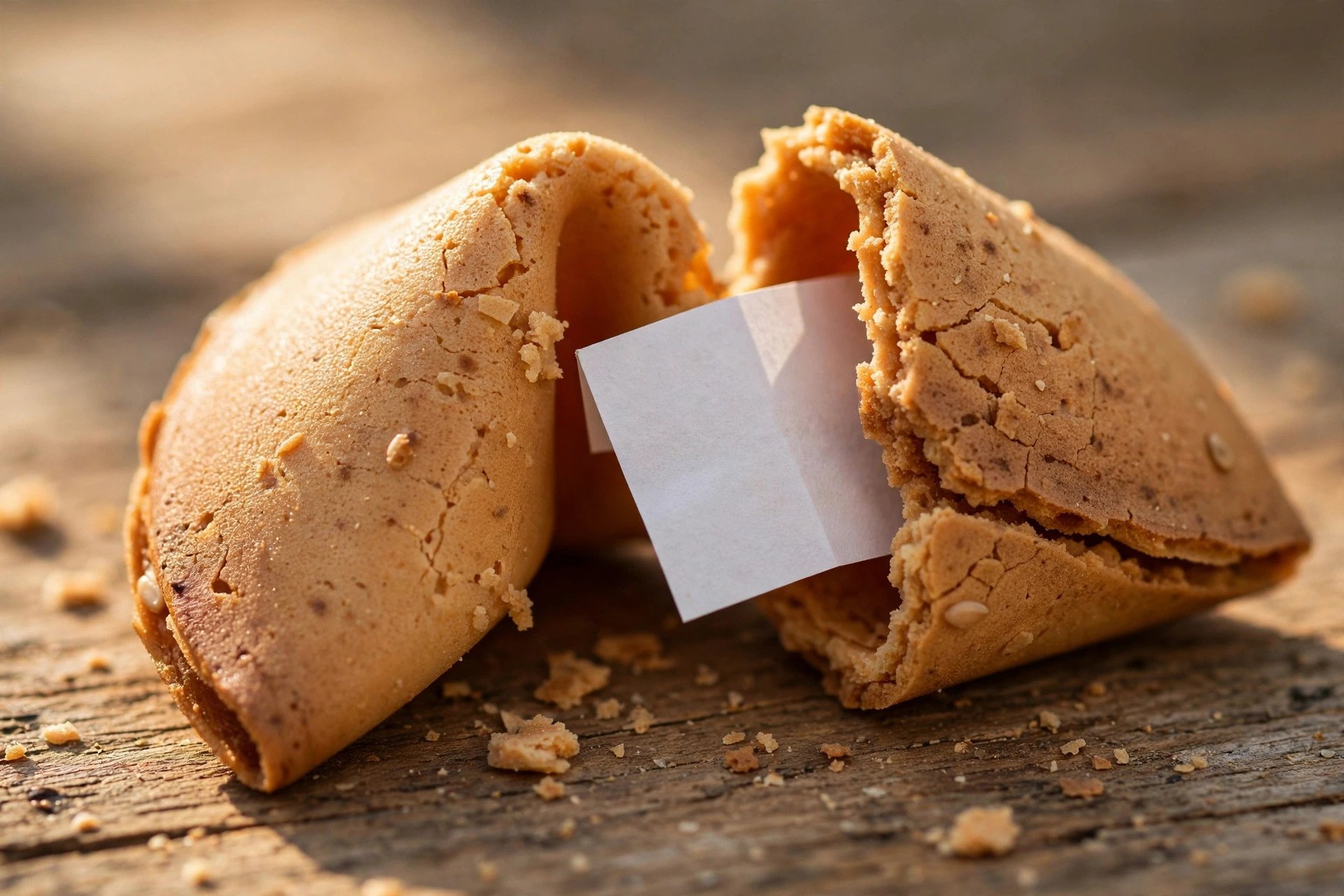
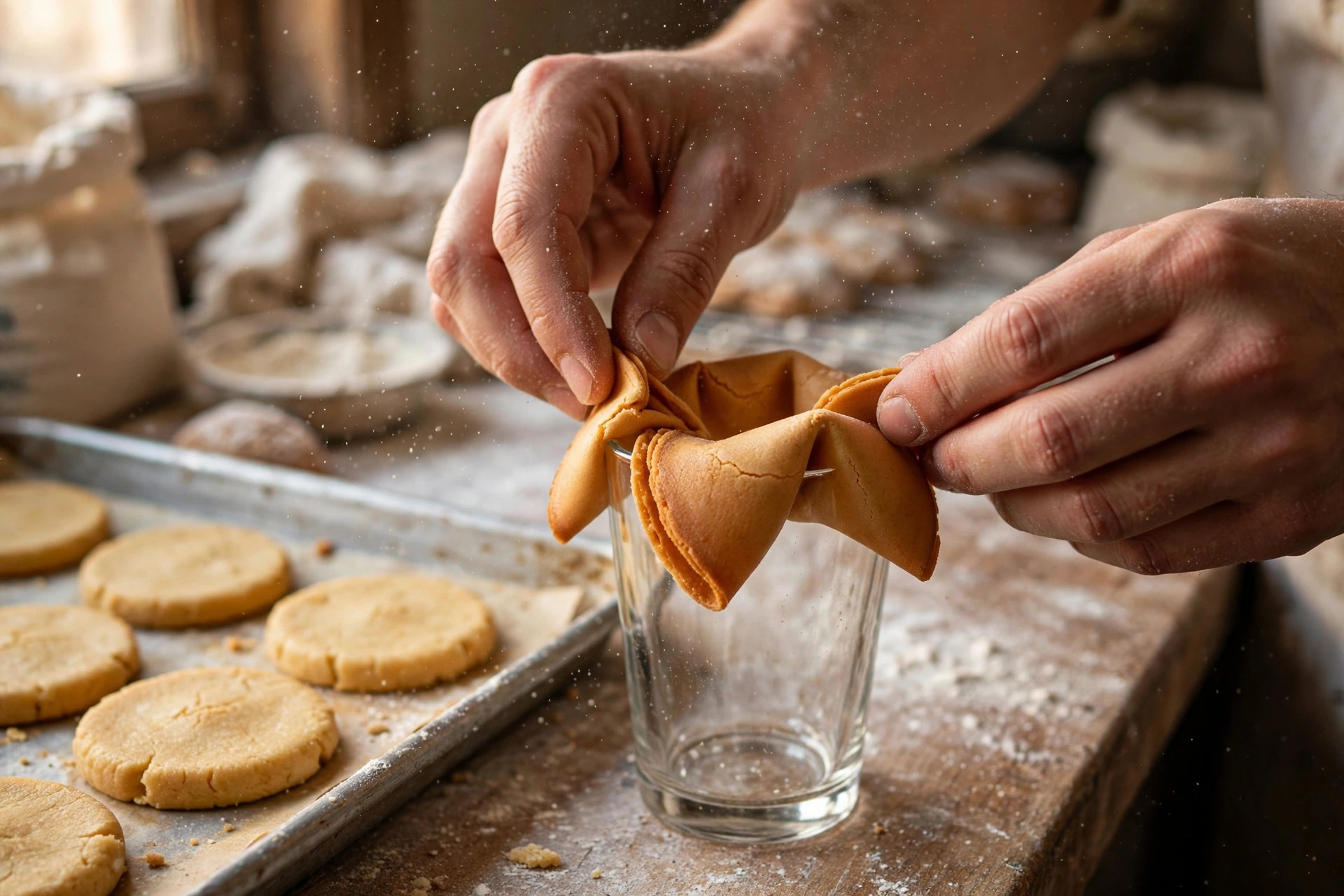
Batter gets spread into thin circles and baked for just a few minutes. Then comes the part that defeated every home baker: the hot discs come out of the oven soft and pliable, and someone has about fifteen seconds to lay the fortune on top, fold the cookie in half, then bend it over the rim of a cup or glass into that iconic shape — before it cools, hardens, and locks forever. Hesitate and you’ve got a flat, sad cracker with a fortune sitting on top of it.
For decades, every cookie was folded by hand, which is why production stayed small. Then in the late 1960s, Edward Louie of San Francisco’s Lotus Fortune Cookie Company built a machine that could place the fortune and fold the cookie automatically. Output jumped to 90,000 cookies a day, and the industry never looked back.
Want to watch it done the old way? The Golden Gate Fortune Cookie Factory on Ross Alley in San Francisco’s Chinatown still folds cookies by hand in front of visitors — flat griddles, quick fingers, fortunes flying. It’s one of the last places you can see the pre-machine craft.
By the numbers, the scale today is staggering:
- ~3 billion fortune cookies are produced worldwide every year, by one widely cited estimate.
- Wonton Food Inc., founded in a Brooklyn basement in 1973 by immigrant Ching Sun Wong, is the largest manufacturer on earth — its plants turn out around 4 million cookies a day.
- The U.S. leads the world in both production and consumption, though you’ll now find the cookies in Chinese restaurants across the globe — everywhere, it seems, except China.
Who Writes the Fortunes?
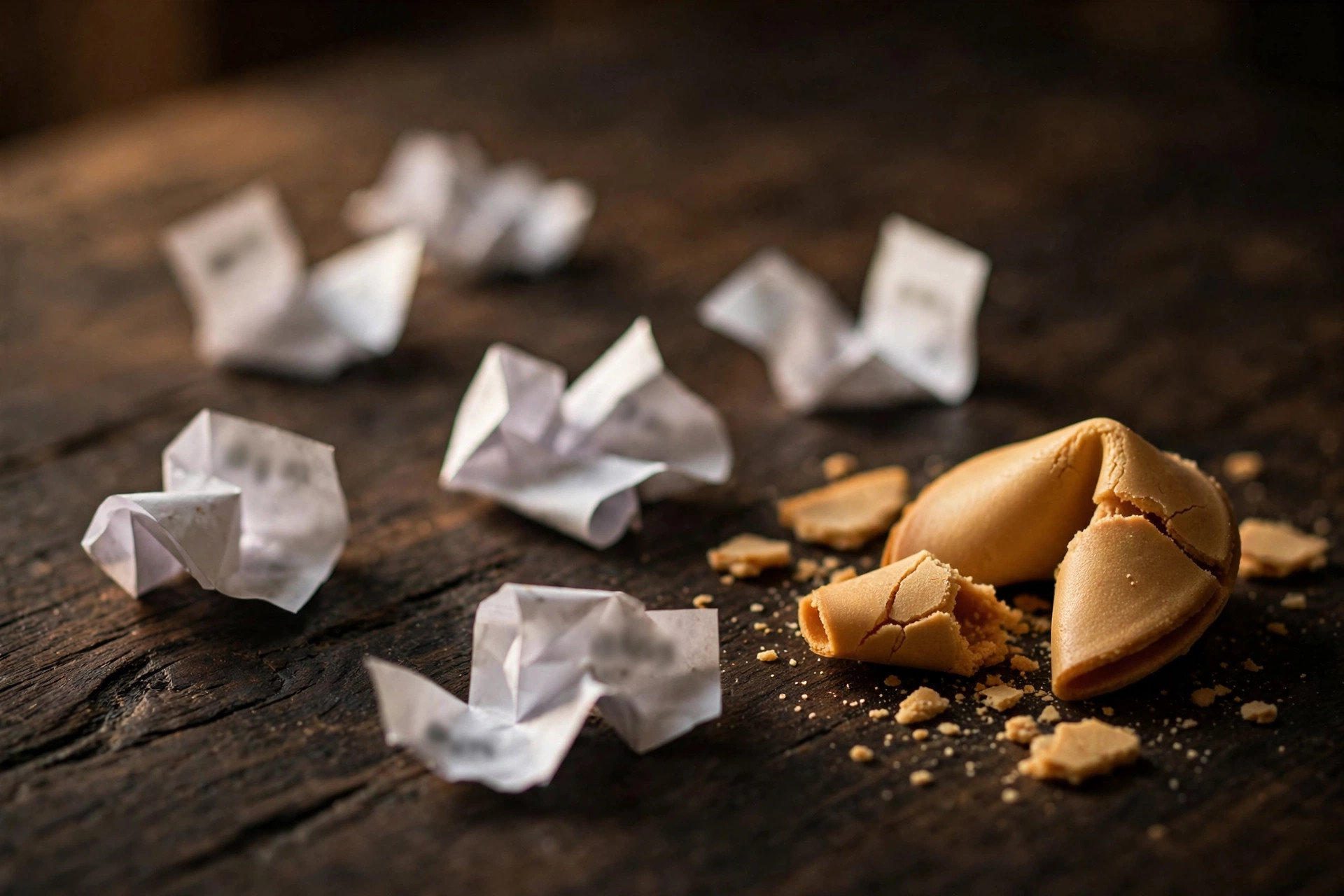
Someone has to write them, and for decades at Wonton Food that someone was Donald Lau. Hired as a vice president and CFO, Lau got the fortune-writing gig, by his own account, simply because his English was the best in the office — “not because I’m a poet.”
He wrote most of the company’s roughly 15,000-fortune database himself: two or three a day at his peak, jotted in a notebook from subway signs, newspaper headlines, overheard conversations. He kept at it for decades, tapering to a few a month before retiring in 2017. His goal was modest: “When they eat their fortune cookie, I want the customers to open the fortune, read it, maybe laugh, and leave the restaurant happy. So that they come back again next week.”
Since Lau stepped back, the company hires freelance writers every couple of years to freshen the database. It’s real, paid, absurdly fun-sounding work — and the gigs are never advertised, so fortune-cookie writer remains one of those jobs you can only get by knowing someone. Mental Floss rounds up these and other cookie facts, including the writer-for-hire pipeline, in its fact-by-fact breakdown.
The Cookie’s Wildest Moments
A dessert this odd was bound to generate strange headlines. A few favorites:
The Powerball incident. In March 2005, 110 people across America won second-place Powerball prizes — $100,000 to $500,000 each — playing the same set of numbers. Lottery officials suspected fraud and investigated. The explanation was better than fraud: every winner had played the “lucky numbers” printed on the back of a fortune cookie slip. Same batch, same numbers, 110 very happy dessert eaters.
The presidential campaigns. Both Robert F. Kennedy in 1968 and Robert F. Kennedy Jr. in 2024 used custom fortune cookies as campaign swag. It’s hard to think of a more American political handout.
The Beijing taste test. When a video crew brought fortune cookies to Beijing and offered them to locals, the reactions were pure confusion — especially the moment of biting into paper. Multiple tasters guessed the cookie itself tasted like an egg roll wrapper. Which, given the shared wheat-flour DNA, isn’t the worst guess anyone’s ever made.
Frequently Asked Questions
Are fortune cookies actually Chinese?
No. They were inspired by a Japanese cracker (tsujiura senbei), developed into their modern sweet form by Japanese immigrants in California in the early 1900s, and only became associated with Chinese restaurants after World War II. You won’t find them in China.
Who invented the fortune cookie?
Three people claimed it: Makoto Hagiwara of San Francisco’s Japanese Tea Garden, David Jung of LA’s Hong Kong Noodle Company, and Seiichi Kito of LA’s Fugetsu-do. A 1983 mock trial ruled for Hagiwara, but historians think several bakers were likely making similar cookies around the same time.
What’s actually in a fortune cookie?
Flour, sugar, vanilla, oil, and water — that’s the whole recipe. The original Japanese version used sesame and miso instead. The “fortune” is just a slip of paper folded in while the cookie is still hot and pliable.
Why do fortune cookies have lucky numbers?
The numbers were added as a playful extra — a set of “lucky numbers” printed on the back of the fortune slip, which many people play in lotteries. In 2005, 110 people won Powerball second prizes using numbers from the same batch of cookies.
Can you visit a fortune cookie factory?
Yes — the Golden Gate Fortune Cookie Factory on Ross Alley in San Francisco’s Chinatown still makes them by hand and lets visitors watch (and taste). Most of America’s cookies, though, come from industrial plants like Wonton Food’s factories in Brooklyn, Tennessee, and Texas.
The next time you crack one open, take a second before you read the slip. You’re holding a Japanese cracker, reinvented in California, industrialized in Brooklyn, and mistaken for Chinese by most of the planet — a dessert with a more dramatic life story than any fortune it contains. Then read it out loud, add “in bed” if you must, and play the lucky numbers. Some traditions are worth keeping, wherever they came from.
[…] full of people shaking iced tea with something. (Disputed food origins are practically a genre — the fortune cookie’s history is just as contested.) Before pearls ever entered the picture, Taiwan already had “bubble […]
[…] bakeries in California in the early 1900s. Nobody in China has ever gotten a fortune with dinner. The real history is stranger than you’d […]