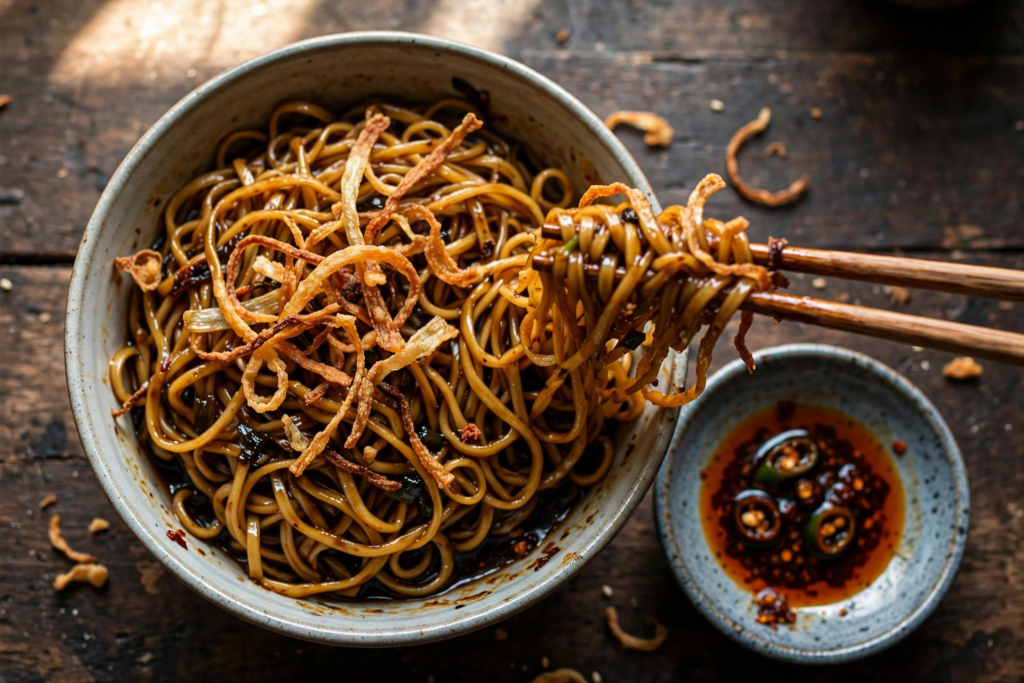
Some dishes show off. Scallion oil noodles don’t. A bowl of wheat noodles glossed with soy, crowned with a tangle of fried scallions — it looks almost too plain to be famous. Then you toss it, take a bite, and wonder how four ingredients managed to taste like this.
Cong you ban mian (葱油拌面), or scallion oil noodles, is Shanghai’s quiet masterpiece: chewy wheat noodles tossed in a savory-sweet sauce built on scallions slow-fried in oil until they turn fragrant and crisp. It’s cheap, it’s fast once you know the moves, and it’s the dish Shanghainese cooks make when they want comfort without fuss. Here’s what it is, where it came from, and how to get it right.
What Are Scallion Oil Noodles, Exactly?
The name tells you almost everything. 葱油 (cong you) means scallion oil; 拌面 (ban mian) means tossed noodles. Put them together and you get noodles tossed in scallion oil — except the “oil” part undersells it. This isn’t a drizzle of flavored oil. It’s a full sauce: scallions fried low and slow in neutral oil until deeply golden, then light soy sauce, dark soy sauce, and sugar simmered right in that same oil until glossy.
The result clings to every strand. The noodles taste savory from the soy, faintly sweet from the sugar and caramelized scallions, and rich in a way that has nothing to do with meat — the classic version is vegetarian. A handful of the crispy fried scallions goes on top for crunch and color, and that’s dinner. Or breakfast. In Shanghai, honestly, it’s whenever.
If you’re new to Shanghai’s food culture, this dish sits at the humble end of one of China’s great regional cuisines — the everyday cooking that locals actually eat, not the banquet stuff.
Where Do Scallion Oil Noodles Come From?
Shanghai, without dispute. Cong you ban mian is a staple of the city’s noodle shops and home kitchens alike — the kind of dish every Shanghai family has a version of, and every family insists theirs is the right one.
Its roots are working-class. This was never imperial food or banquet food. It grew out of the small noodle stalls and breakfast counters where laborers needed something filling, cheap, and fast. Scallions cost almost nothing. Oil, soy sauce, sugar, noodles — pantry stuff. The genius was in the technique, not the shopping list: someone figured out that scallions fried patiently in oil release a deep, savory sweetness that tastes like far more than the sum of its parts.
That origin still shows. You’ll find cong you ban mian at hole-in-the-wall noodle shops across Shanghai, often eaten standing up or elbow-to-elbow at shared tables, and it’s a fixture of the city’s breakfast culture alongside soy milk and fried dough. The Woks of Life’s tour of Shanghai cuisine calls out the city’s noodle shops as essential eating — and this dish is why.
Why Four Ingredients Taste Like So Much More
Here’s the thing most quick recipes skip: the magic isn’t in the ingredient list, it’s in the heat control. Scallions contain sulfur compounds that taste sharp and raw when fresh. Fried slowly in oil, those compounds mellow and sweeten, and the scallions take on a toasty, almost meaty depth. Rush it and you get bitter, burnt bits. Give it fifteen unhurried minutes and you get liquid gold.
A few things the best versions all do:
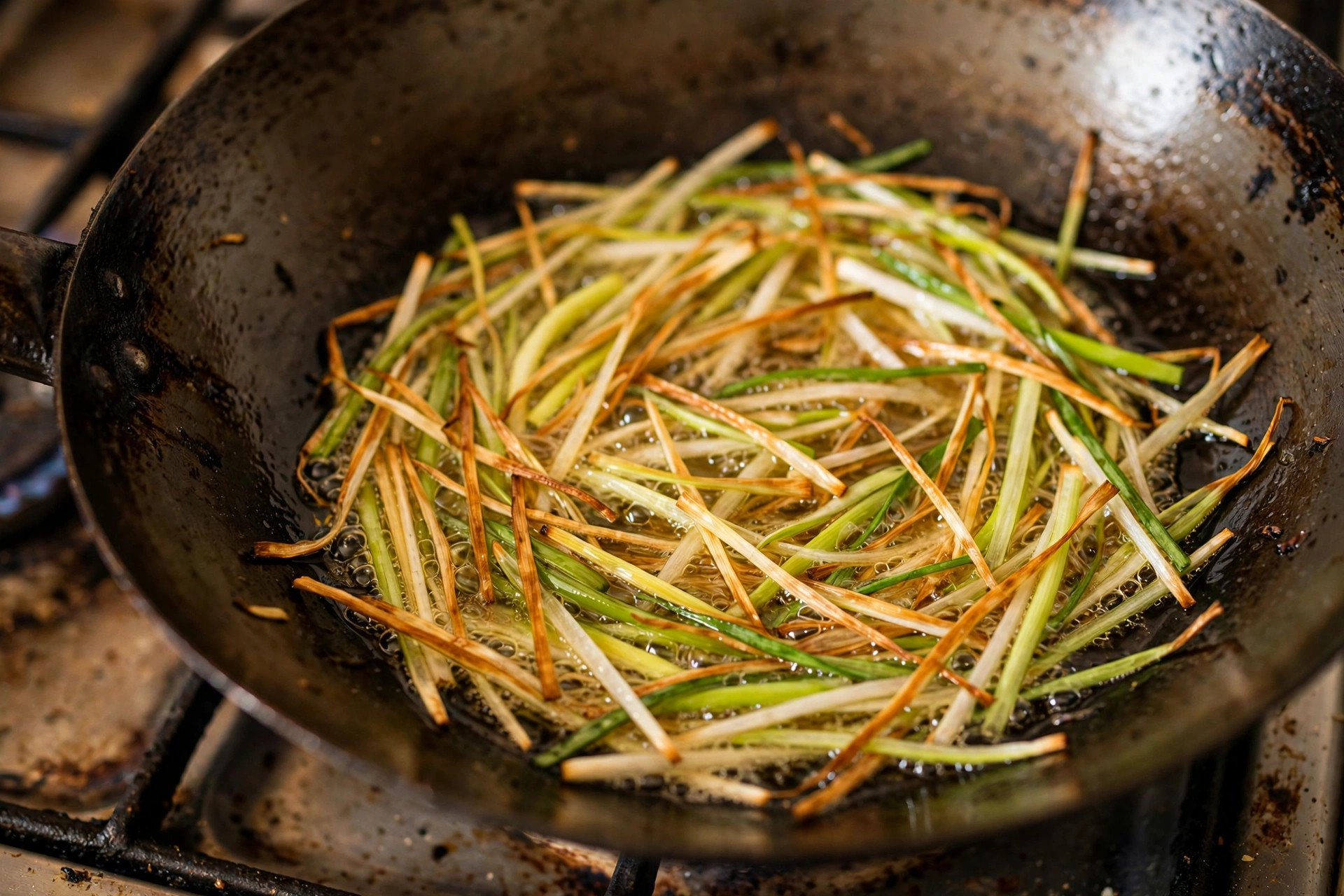
- Whites first, greens second. The white parts are denser and need a head start. Add the green tops once the whites soften and turn pale gold — the greens cook faster and burn sooner.
- Julienne, don’t chop. Long thin strips fry evenly and crisp into the tangle that tops the bowl. Thick chunks steam instead of frying.
- Dry your scallions. Water in the pan means splattering oil and soggy scallions. Pat them thoroughly dry after washing.
- Pull them before they look done. Scallions keep browning off the heat. Take them out at deep gold, not dark brown.
- Simmer the soy in the oil. Adding both soy sauces and the sugar to the hot scallion oil and letting it bubble for a minute or two cooks off the raw edge of the soy and melts everything into one glossy sauce.
That last step is the one that separates good from great. Raw soy sauce splashed on noodles tastes flat and salty. Soy sauce that’s spent two minutes bubbling in scallion oil tastes round, caramelized, almost smoky. Same bottle, different universe.
Anatomy of the Perfect Bowl
Four components, each with a job to do:
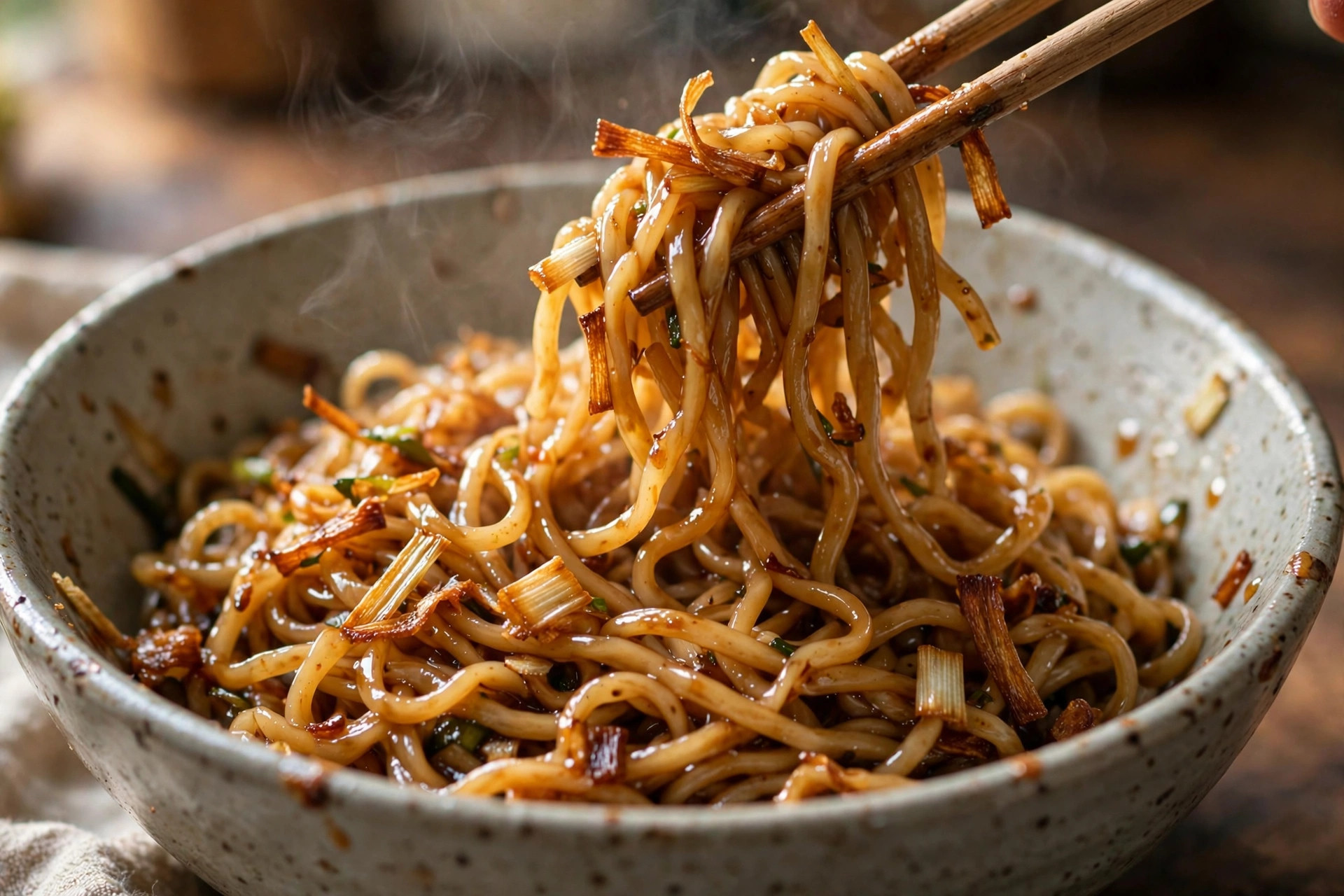
The noodles. Thin Chinese wheat noodles, cooked just past al dente — they should be tender with a slight chew, never mushy. Dried noodles the width of thin spaghetti work perfectly. Cook them in well-salted water, drain them well (watery noodles dilute the sauce), and toss while hot so the sauce clings.
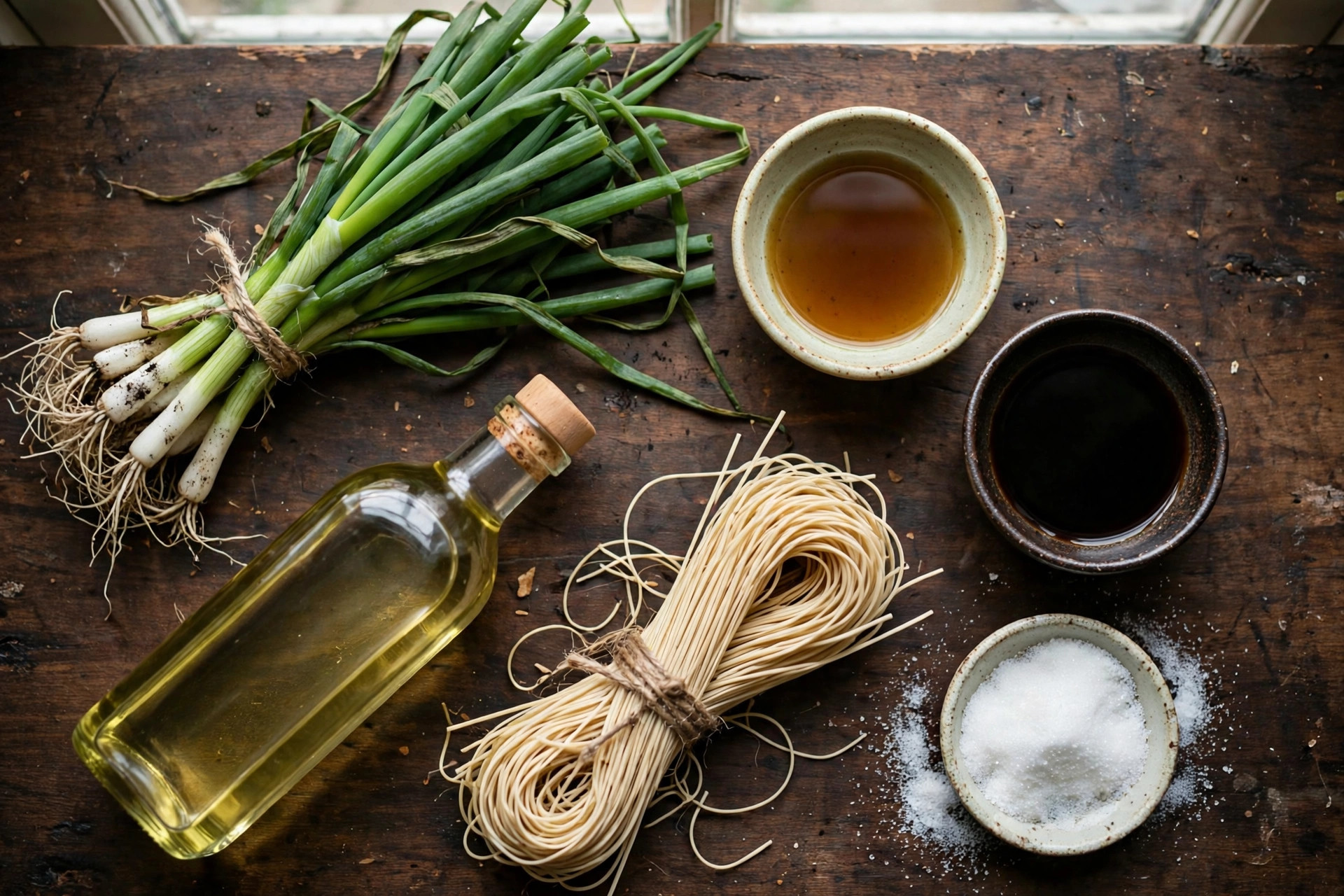
The scallion oil. Neutral oil — peanut, vegetable, or grapeseed — infused over low heat with a frankly extravagant amount of scallions. You’re looking at roughly a 2-to-1 ratio of scallions to oil by volume. It seems like too many. It’s not.
The sauce. Light soy for salt and savor, dark soy for color and a hint of molasses-like depth, sugar to round the edges. The Shanghai palate leans a touch sweet, so don’t skip the sugar or skimp on it.
The topping. Those crispy fried scallions, piled on top. They soften slightly against the hot noodles but keep enough crunch to matter. Some shops add a spoonful of chili oil or a scattering of fresh scallion slivers for color.
Shanghai has a whole family of simple tossed noodles, and it helps to know how this one fits in:
| Noodle dish | Sauce base | Signature topping | Flavor profile |
|---|---|---|---|
| Cong You Ban Mian (scallion oil) | Scallion-infused oil + soy + sugar | Crispy fried scallions | Savory-sweet, toasty, rich |
| Yang Chun Mian | Hot broth + soy + lard or sesame oil | Chopped scallion | Clean, light, comforting |
| Ma Jiang Mian | Sesame paste thinned with soy and water | Cucumber shreds, bean sprouts | Nutty, creamy, cooling |
| La Jiang Mian | Spicy fermented soybean paste | Varies by shop | Bold, spicy, funky |
Cong you ban mian is the richest of the bunch without any meat involved — which is exactly why vegetarians in Shanghai guard it fiercely.
How to Make Cong You Ban Mian at Home
The whole thing takes about 25 minutes, and most of that is standing at the stove watching scallions. The Woks of Life’s canonical version nails the ratios: a third of a cup of oil, 8 ounces of scallions, 3 tablespoons each of dark and light soy, 4 teaspoons of sugar, a pound of noodles.
1. Prep the scallions. Wash them, pat them completely dry, and julienne into long thin strips. Separate whites from greens.
2. Fry low and slow. Heat the oil in a wok or wide pan over medium heat — a well-seasoned wok is ideal here. Add the scallion whites first. Let them fry gently, stirring occasionally, until they soften and start turning gold. Add the greens and keep going until everything is fragrant, deeply golden, and lightly crisp, 10 to 15 minutes total. Fish out about half the scallions and set aside for topping.
3. Build the sauce. Lower the heat. Add both soy sauces and the sugar straight into the scallion oil. Let it bubble gently for about two minutes, stirring, until the sugar dissolves and the sauce turns glossy and smells caramelized.
4. Cook the noodles. Meanwhile, boil the noodles until just tender with a bite. Drain thoroughly — shake the colander, let the steam rise off. Wet noodles are the enemy of a glossy coating.
5. Toss and serve. Put the hot noodles in a big bowl, spoon over a few tablespoons of sauce to start (it doesn’t take much — you can always add more), and toss until every strand shines. Top with the reserved crispy scallions. Eat immediately.
Mistakes that ruin the dish
- Too much heat. Burnt scallions taste bitter and there’s no fixing it. When in doubt, go lower.
- Wet scallions. They’ll splatter and steam instead of frying. Dry them like you mean it.
- Drowning the noodles. Start with less sauce than you think. You can add; you can’t subtract.
- Cold noodles, cold sauce. Everything should be hot when it meets. Lukewarm assembly gives you greasy, separated noodles.
- Skipping the sugar. It doesn’t make the dish sweet — it balances the salt and rounds out the soy. Leave it out and the sauce tastes harsh.
Variations Worth Trying
The plain version is the classic, but Shanghai noodle shops rarely leave well enough alone:
With pork. The most common upgrade — ground pork browned in a little oil with chopped scallions, spooned over the top. It turns a snack into a meal. This vegetarian-friendly take keeps the base meat-free but the structure is identical if you want to add pork.
With dried shrimp. Some old-school shops simmer a spoonful of tiny dried shrimp in the sauce. It adds a briny depth that plays beautifully against the sweetness — very Shanghai, very worth trying if you can find good dried shrimp.
With a fried egg. A crispy-edged fried egg on top, yolk still runny, mixed through the noodles. Not traditional, but nobody at the table will complain.
Scallion oil as a condiment. Make a double batch of the oil and sauce and keep it in a jar in the fridge. It keeps for weeks and upgrades plain rice, steamed vegetables, or a bowl of jasmine rice in seconds. Try1Taste’s step-by-step is a good reference for the whites-then-greens technique if you want to master the oil on its own.
Frequently Asked Questions
Can I use regular spaghetti instead of Chinese wheat noodles?
You can, and plenty of people do — the dish is forgiving. Italian pasta has a firmer bite, which actually works. But thin Chinese wheat noodles absorb the sauce better and give you the authentic chewy-tender texture. If you only have spaghetti, go for it; just don’t tell a Shanghainese grandmother.
Why did my scallions turn bitter?
They burned, even slightly. Scallions go from golden to bitter fast at high heat, and the line is thinner than you’d think. Next time, lower the heat, pull them earlier, and remember they keep browning after you take them out.
Is scallion oil the same as the green onion oil for other dishes?
Related but not identical. Plain scallion oil (just scallions fried in oil, strained) is a general-purpose aromatic used across Chinese cooking. Cong you ban mian’s version keeps the crispy scallions in play and adds the soy-sugar simmer — it’s a finished sauce, not just an infused oil.
How long does leftover scallion oil keep?
Strain out the solids and refrigerate it in a clean jar, and it’ll keep for two to three weeks. The crispy scallion topping is best fresh, though — it loses its crunch within a day.
What’s the difference between cong you ban mian and you po mian?
Both are oil-based noodle dishes, but you po mian (hot oil noodles, from Shaanxi) pours smoking-hot oil directly over raw aromatics, chili, and vinegar in the bowl — it’s spicy, tangy, and dramatic. Cong you ban mian cooks the aromatics slowly in the oil first, so the flavor is deeper, sweeter, and mellower. Different regions, different philosophies.
Scallion oil noodles are proof that technique beats ingredients. Five humble things from any pantry, fifteen patient minutes at the stove, and you get a bowl that has anchored Shanghai mornings for generations. Make the oil this weekend — and while you’re at it, double it. You’ll find uses for that jar all week. If you want to keep exploring Shanghai’s noodle shops from your own kitchen, the city’s famous soup dumplings are the natural next project.
[…] the city’s food beyond the famous soup dumplings, chao nian gao belongs on the same list as scallion oil noodles — simple, chewy, and deeply Shanghainese. It is a proud product of China’s regional cooking […]