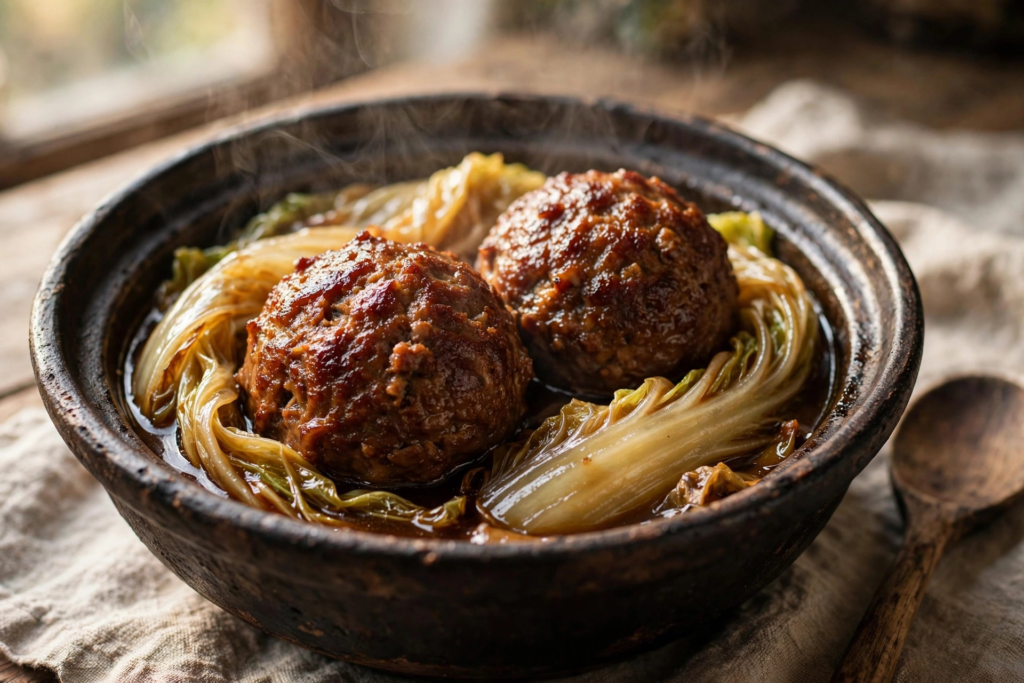
The meatballs arrive at the table still bubbling. Each one is the size of a tennis ball, burnished mahogany from the fryer, nestled into a bed of silky braised cabbage that has spent two hours soaking up porky broth. You press your spoon in and it gives way like custard.
This is shizi tou (狮子头), lion’s head meatball — one of the great braised dishes of Chinese cooking, and proof that a meatball can be a delicacy. Born in the imperial kitchens of ancient Yangzhou, perfected over a thousand years in the Jiangnan region, it’s tender, savory, and deeply comforting. Here’s what it is, where the name comes from, and how to make it properly.
What Is Lion’s Head Meatball?
Strip it down and a lion’s head is a very large pork meatball — typically 8 to 10 centimeters across, about the size of a tennis ball — that’s first browned in oil, then braised low and slow with Chinese cabbage until meltingly tender. The cabbage isn’t a sidethought; it cooks down into the braising liquid and becomes half the dish, sweet and saturated with pork flavor.
The meatballs are enormous on purpose. A small meatball would fall apart or dry out over a two-hour braise. At this size, the outside forms a firm, savory crust in the fryer while the inside stays soft and juicy through the long simmer. When you cut one open, the texture should be spoon-tender — no chewing required.
The classic pork mixture includes fatty ground pork, minced water chestnuts for a subtle crunch, ginger, scallion, Shaoxing wine, soy sauce, and egg or cornstarch as a binder. The fat matters enormously: lean pork makes a dense, dry meatball. You want pork with real fat content — shoulder or belly mince — because the fat is what keeps the meatball succulent through hours of braising.
Where Does Lion’s Head Come From?
The origin story is a good one, and unusually specific. Grantourismo’s deep dive into the dish traces it to the palace of Emperor Yang of the Sui dynasty (589–618), in ancient Yangzhou — then called Yangchow — in what is now Jiangsu province. The emperor, spending his final days in the south, asked his chef for a dish that reminded him of sunflowers he’d seen in the countryside. The chef answered with enormous meatballs ringed by frilly cabbage leaves: the golden meatball as the flower’s heart, the cabbage as its petals.
Whether or not the sunflower story is literally true, the geography checks out. Yangzhou is the historic heart of Huaiyang cuisine, the refined Jiangnan tradition famous for knife work, delicate braising, and making the most of freshwater and pork. Lion’s head is Huaiyang cooking at its most characteristic: humble ingredients, imperial technique, patience as the main seasoning.
So why “lion’s head”? Look at the finished dish: the big round meatball is the lion’s head, and the wilted, frilly cabbage leaves around it are the mane. In Chinese culture the lion symbolizes strength and protection — temple guardian lions, lion dances at New Year — so the name carries a charge of good fortune. That’s why lion’s head shows up at celebration meals and Chinese New Year feasts: you’re literally serving prosperity.
Red vs White: The Two Faces of Lion’s Head
Here’s something most English-language recipes skip: there are two distinct versions, and locals have opinions about both.
| Red-Braised (Hong Shao) | White / Clear-Stewed (Qing Dun) | |
|---|---|---|
| Color | Deep mahogany from dark soy | Pale, almost white — no dark soy |
| Braising liquid | Stock with dark and light soy, sugar | Clear stock, sometimes with crab meat |
| Flavor | Rich, savory-sweet, caramelized | Delicate, clean, porky |
| Signature addition | Napa or celery cabbage | Often crab meat and winter bamboo |
| When to serve it | Everyday comfort, family dinners | Banquets, honored guests, New Year |
The red-braised version is the one most people know — it’s heartier, easier, and more forgiving. The white version is the connoisseur’s choice: without dark soy masking anything, the quality of the pork and stock has nowhere to hide. Some white versions add crab meat, which makes the dish luxurious in a completely different register.
Both start the same way — fried, then braised — and both demand the same foundation: fatty pork, handled right.
What Makes It Different From a Regular Meatball
A lion’s head isn’t just a big meatball. The technique is specific, and every step exists for a reason:
- Fatty pork, coarsely ground. Shoulder or a shoulder-belly mix, never lean. Some cooks hand-chop for a looser texture, but good fatty mince works.
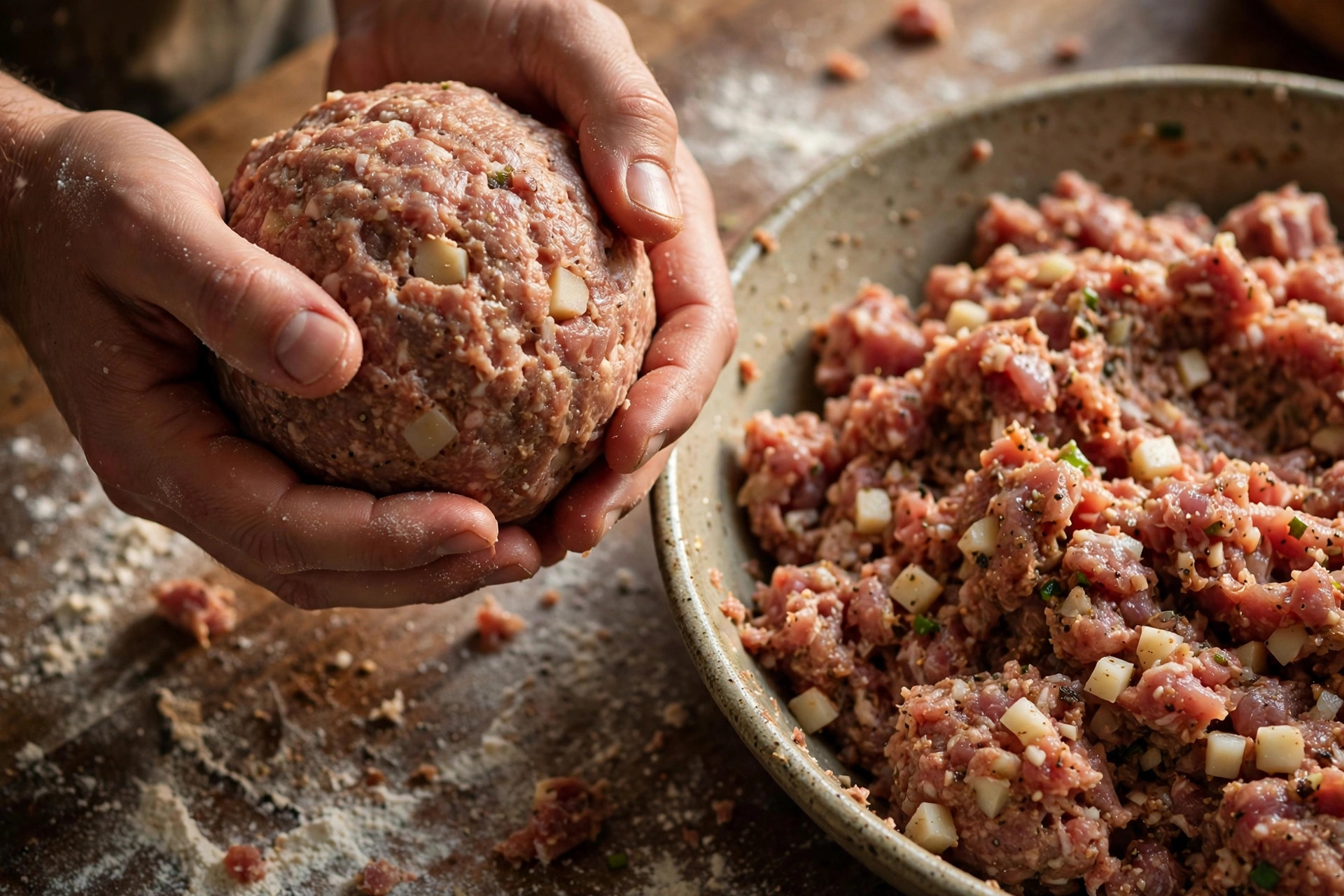
- Stir in one direction. The pork is stirred vigorously in a single direction — with water added a spoonful at a time — until it turns into a smooth, sticky paste. This develops the protein network that holds the giant meatball together.
- Throw it. Literally pick up the meat and slap it back into the bowl, 20 to 30 times. This classic Chinese technique knocks out air pockets and firms the texture so the meatball slices cleanly instead of crumbling.
- Water chestnuts, not breadcrumbs. Finely minced water chestnuts give little pops of crisp contrast inside the soft meat. It’s the textural signature of the dish — don’t skip them.
- Flour or cornstarch coating. Each meatball gets rolled in flour before frying, which helps build that firm, browned exterior.
- Fry, then braise. The fry sets the crust and adds color and flavor; the long braise does the tenderizing. Skipping the fry gives you a pale, fragile meatball that falls apart.
Saveur’s version from home cook Eatty Du shows the technique beautifully — ginger and garlic in the mix, napa cabbage underneath, a gentle 25-minute simmer for smaller meatballs. Scale that patience up for the full-size classic.
How Lion’s Head Is Made, Step by Step
Plan for an afternoon. The active work is under an hour; the braise does the rest.
1. Build the paste. In a large bowl, stir the fatty ground pork in one direction, adding a tablespoon of water at a time, for about two minutes until smooth and sticky. Then pick it up and throw it back into the bowl 20 to 30 times. You’ll feel it firm up.
2. Season and mix. Add salt, dark and light soy sauce, Shaoxing wine, a little sugar, minced ginger, chopped scallion, and the minced water chestnuts. Stir well in the same direction until fully incorporated.
3. Shape big. Divide into 4 to 6 portions — yes, really that few — and roll each into a large ball between wet hands. Roll lightly in flour. These should feel alarmingly large. That’s correct.
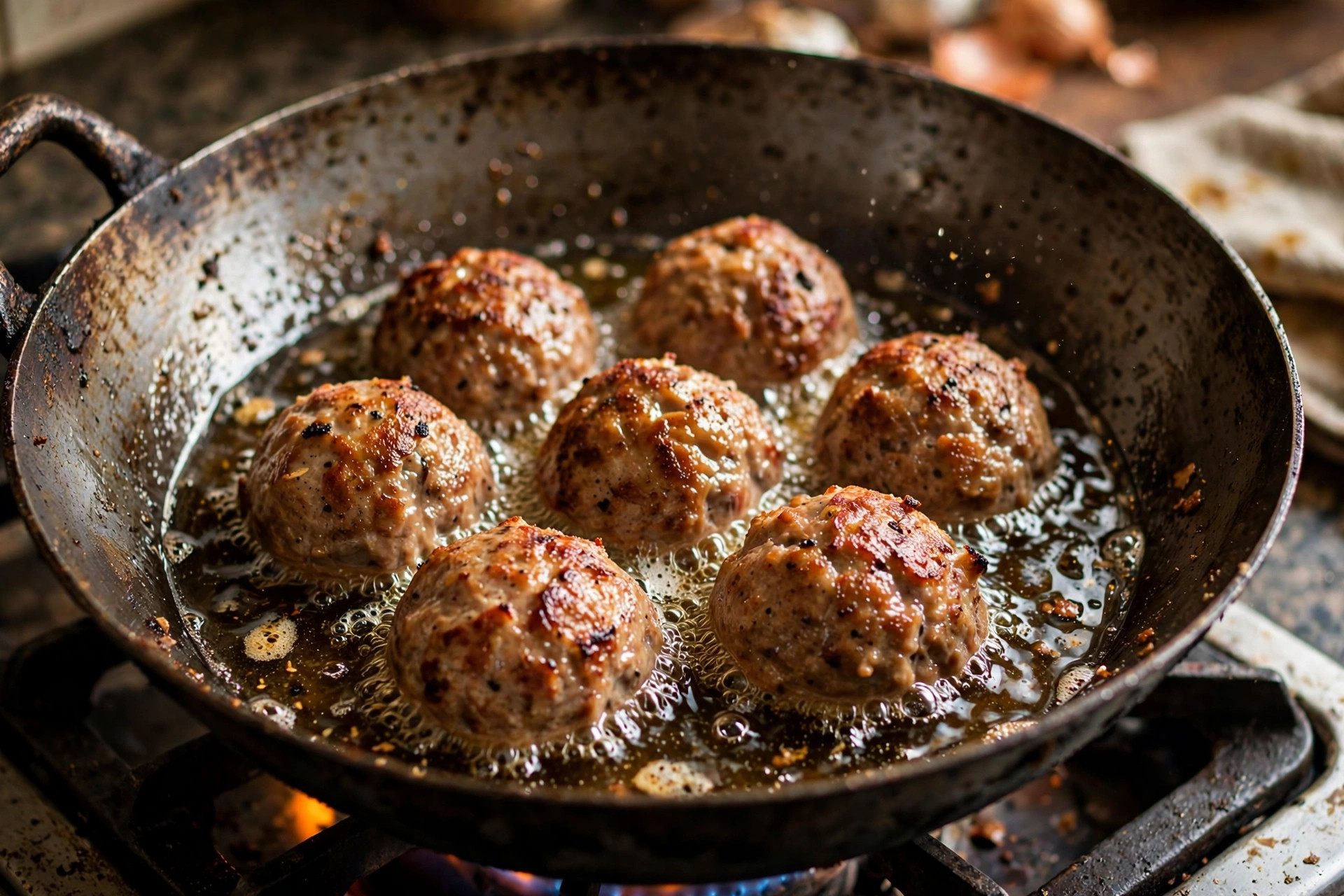
4. Fry until browned. Heat neutral oil in a wok or deep pan over medium heat and brown the meatballs on all sides, a few minutes per batch. You’re building color and a crust, not cooking through. Drain on a rack or paper towels.
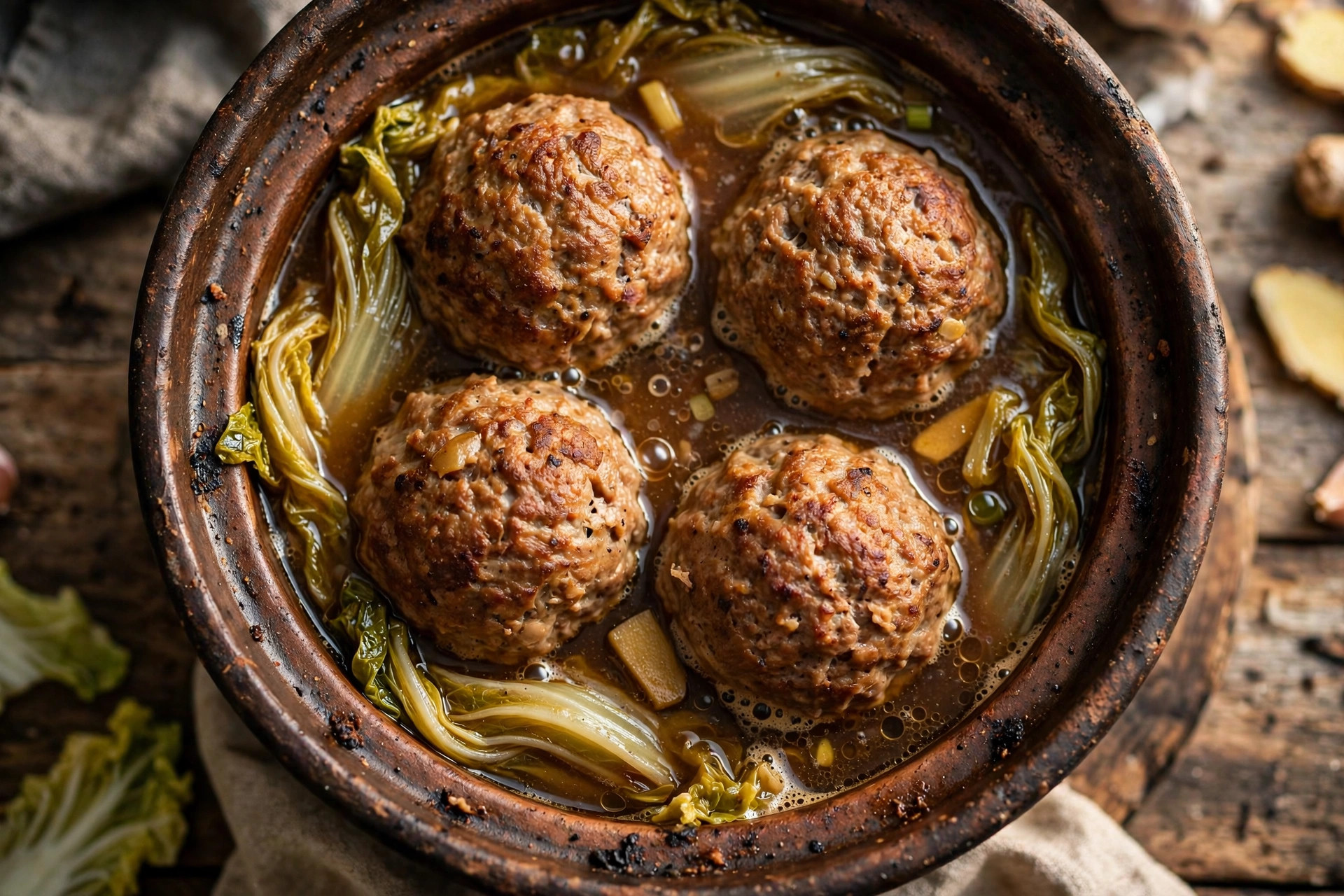
5. Bed the cabbage. In a heavy Dutch oven or clay pot, lay down a thick layer of cabbage leaves — napa or Chinese celery cabbage — with a drizzle of sesame oil and a splash of soy. Set the meatballs on top, tuck more leaves around and over them, and pour in enough stock to come halfway up.
6. Braise low and slow. Cover and simmer on the lowest heat for about 2 hours, until the meatballs are spoon-tender and the cabbage has melted into silk. Check halfway and add a little water or stock if it’s getting dry.
7. Serve in the pot. Arrange cabbage on a warmed platter, set the meatballs on top, and spoon over the braising liquid. It should be rich and glossy — if it’s thin, reduce it quickly over high heat first.
How to Serve and Eat It
Lion’s head is a centerpiece, not a side. In a Chinese meal it anchors the table the way a roast does at a Western holiday dinner — everything else arranges itself around it.
Serve it with steamed jasmine rice to soak up the braising liquid, which is honestly half the pleasure. The traditional move: break the meatball apart with your spoon (a knife is unnecessary and slightly sad), take meat with cabbage and a spoonful of broth in each bite. The broth can be sipped as a soup after, or saved to cook noodles in the next day — a cook’s treat.
It pairs naturally with other Jiangnan classics on the table: something fresh and green to cut the richness, like blanched bok choy, and something delicate like soup dumplings if you’re going full Shanghai-Jiangnan. And because the dish reheats beautifully — arguably better the next day — it’s ideal for feast cooking. Make it the day before, refrigerate, and warm it gently; the flavors settle and deepen overnight.
Frequently Asked Questions
Can I make lion’s head with lean ground pork or turkey?
You can, but you’ll lose the soul of the dish. The fat is structural — it keeps the giant meatball moist through a two-hour braise and carries the flavor. Lean meat gives you a dense, dry ball that no amount of braising will rescue. If you must go leaner, add a spoonful of sesame oil to the mix and shorten the braise, but expect a compromise.
Why did my meatballs fall apart in the braise?
Usually one of three things: the pork wasn’t stirred into a sticky paste (that protein network is the glue), the meatballs skipped the frying step (the crust holds everything together), or the braise boiled instead of simmered. Gentle heat, always — a rolling boil will shred even a well-made meatball.
What’s the difference between lion’s head and regular Chinese pork meatballs?
Size and method. Everyday Chinese meatballs (like the ones in sweet-savory pork dishes) are small, quickly cooked, and often just pan-fried or simmered briefly. Lion’s head are enormous, always fried first, then braised for hours with cabbage until spoon-tender. Different league entirely.
Can I make it ahead of time?
Absolutely — it’s one of the best make-ahead dishes in Chinese cooking. Braise fully, cool, and refrigerate overnight. The fat will rise and set on top (skim some if you like), and the flavors meld beautifully. Reheat gently on the stove until bubbling.
Is there really a white version with crab?
Yes — the white (qing dun) lion’s head skips dark soy entirely and often includes crab meat, giving a pale, delicate, luxurious result. It’s the banquet version. Food Network’s take sticks to the classic red-braised style most home cooks start with, which is the right place to begin.
Lion’s head rewards the cook who plans ahead and the eater who slows down. It’s not fast food and it was never meant to be — it’s a dish from imperial kitchens that somehow became family food, which might be the best possible trajectory for any recipe. Start your braise on a lazy Sunday afternoon, and by dinner you’ll understand why it’s survived a thousand years. Next, explore more of the region’s slow cooking with the flavors of Chinese cuisine that make dishes like this possible.
[…] at the delicate end of Chinese flavor philosophy — and if you enjoy the Jiangnan restraint here, lion’s head meatballs are its hearty pork cousin from the same […]