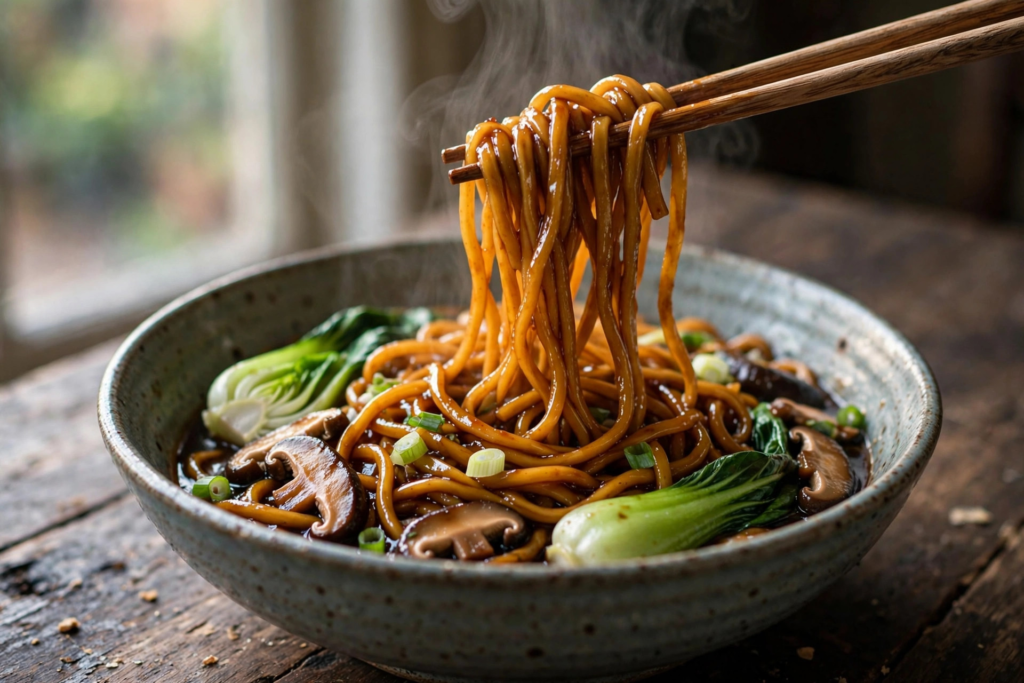
You’re staring at a takeout menu, and there they are, side by side: lo mein, chow mein. They look almost identical in the little photos — noodles, vegetables, some protein, glossy sauce. So what’s actually different? And does it matter which one you order?
It matters more than you’d think. These are two genuinely different dishes with different textures, different sauces, and different cooking methods — and the whole difference is hiding in the names. Lo mein (捞面) means “tossed noodles.” Chow mein (炒面) means “fried noodles.” That one verb changes everything on the plate.
The Short Answer: It’s All in the Verb
Here’s the fastest way to keep them straight: lo mein is tossed, chow mein is fried. Lo mein noodles get fully boiled, then tossed at the last minute with sauce and already-cooked vegetables and protein. The result is soft, slippery, and saucy. Chow mein noodles get par-boiled, then go into a hot wok where they’re fried — sometimes until golden and crisp at the edges. The result is drier, firmer, with a toasted, smoky character.
The names tell you this directly. As CiCi Li’s breakdown of the two dishes explains, mein (麵) means noodles in Cantonese, lo (撈) means to toss or scoop, and chow (炒) means to stir-fry. Once you know that, you can practically taste the difference before ordering.
Lo mein vs. chow mein at a glance:
- Lo mein = “tossed noodles” — soft, chewy, generously sauced
- Chow mein = “fried noodles” — drier, firmer, lightly crisped in spots
- Same foundation: both start with wheat-and-egg noodles
- Sauce: lo mein wears more of it; chow mein wears less
- Wok time: chow mein noodles spend longer in the hot wok
- Order lo mein when you want comfort; order chow mein when you want texture
Lo Mein, Up Close
Lo mein is the comfort-food option — the one you crave on a rainy night. The noodles, usually fresh and on the thicker side, are boiled until fully tender, just like pasta. Meanwhile, the vegetables, protein, and aromatics get stir-fried separately in the wok. Then everything meets at the end: noodles go in last, sauce gets poured over, and it’s all tossed together for a minute or two until every strand is glossy.
Because the noodles never take the full heat of the wok on their own, they stay soft and springy, with a pleasant chew. They’re also excellent sauce vehicles — fresh noodles soak up seasoning beautifully, which is why lo mein sauce tends to be thicker and more generous. The classic mix is soy sauce, oyster sauce, sesame oil, a pinch of sugar, and white pepper, sometimes loosened with a splash of stock.
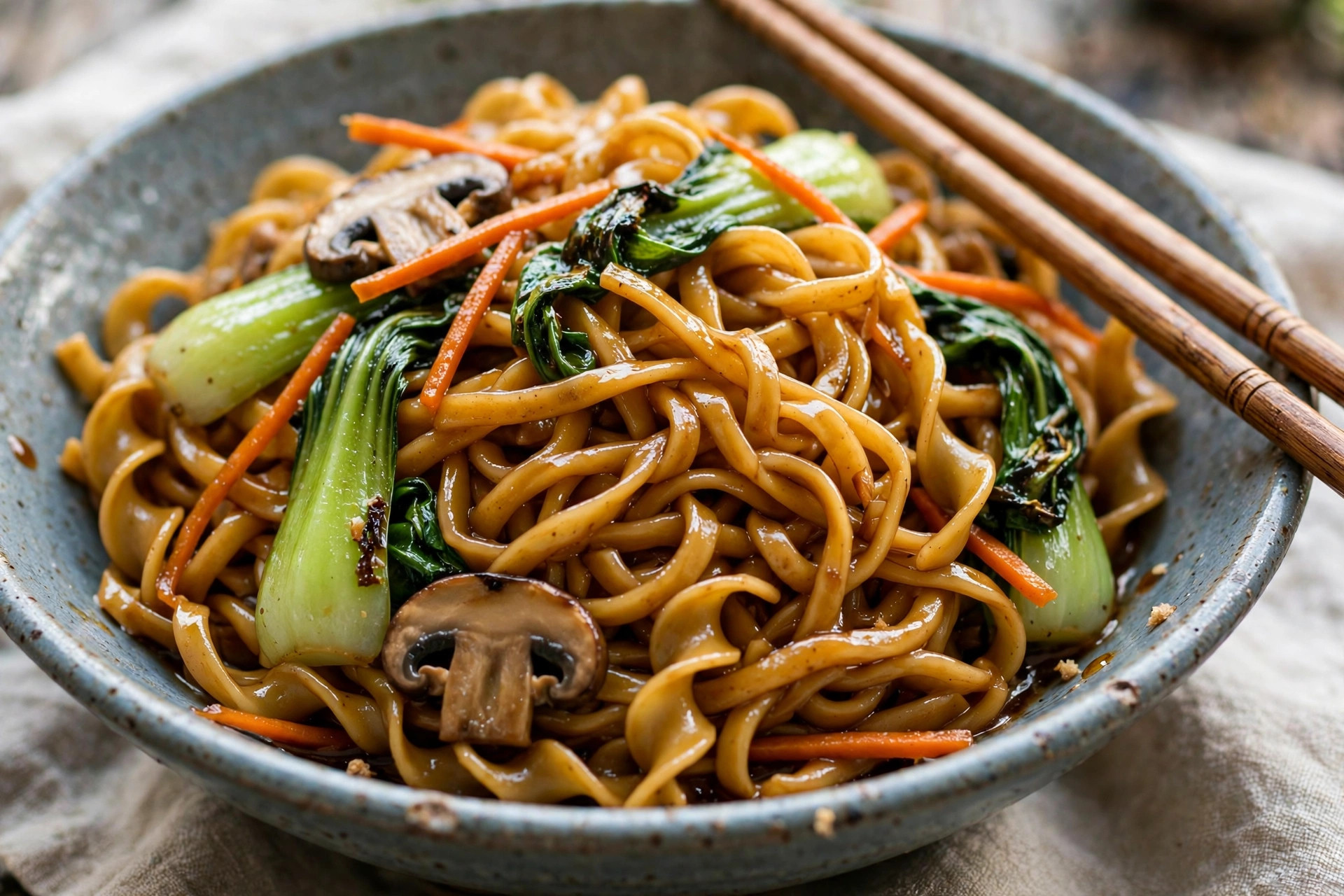
One thing that trips people up: what Americans call lo mein isn’t quite what you’d get in Guangdong. Traditional Cantonese lo mein is even simpler — boiled noodles tossed with sauce and toppings, sometimes served with a light soup on the side, like Hong Kong-style wonton lo mein. The American takeout version is saucier and stir-fried more aggressively. Both are delicious; they’re just different dialects of the same dish.
Chow Mein, Up Close
Chow mein is the texture lover’s pick. The noodles — typically thinner than lo mein noodles, and often dried — are par-boiled or soaked just until pliable, then they go straight into a hot, oiled wok. This is the crucial step: the noodles fry, picking up golden color, crisp edges, and that smoky wok hei flavor that only fierce heat and a seasoned wok can produce. Vegetables and protein join the party, everything gets tossed hard and fast, and it hits the plate drier and firmer than lo mein, with real bite.
Chow mein actually comes in two personalities. There’s the soft stir-fried kind, where the noodles stay loose and just kiss the hot wok, and the crispy kind — Hong Kong’s famous leung min wong (两面黄, “both sides golden”) — where the noodles are pan-fried into a crisp cake and a saucy stir-fry gets ladled over the top. If you’ve ever cracked through a golden noodle crust to the saucy tangle underneath, you know why people get evangelical about this version.
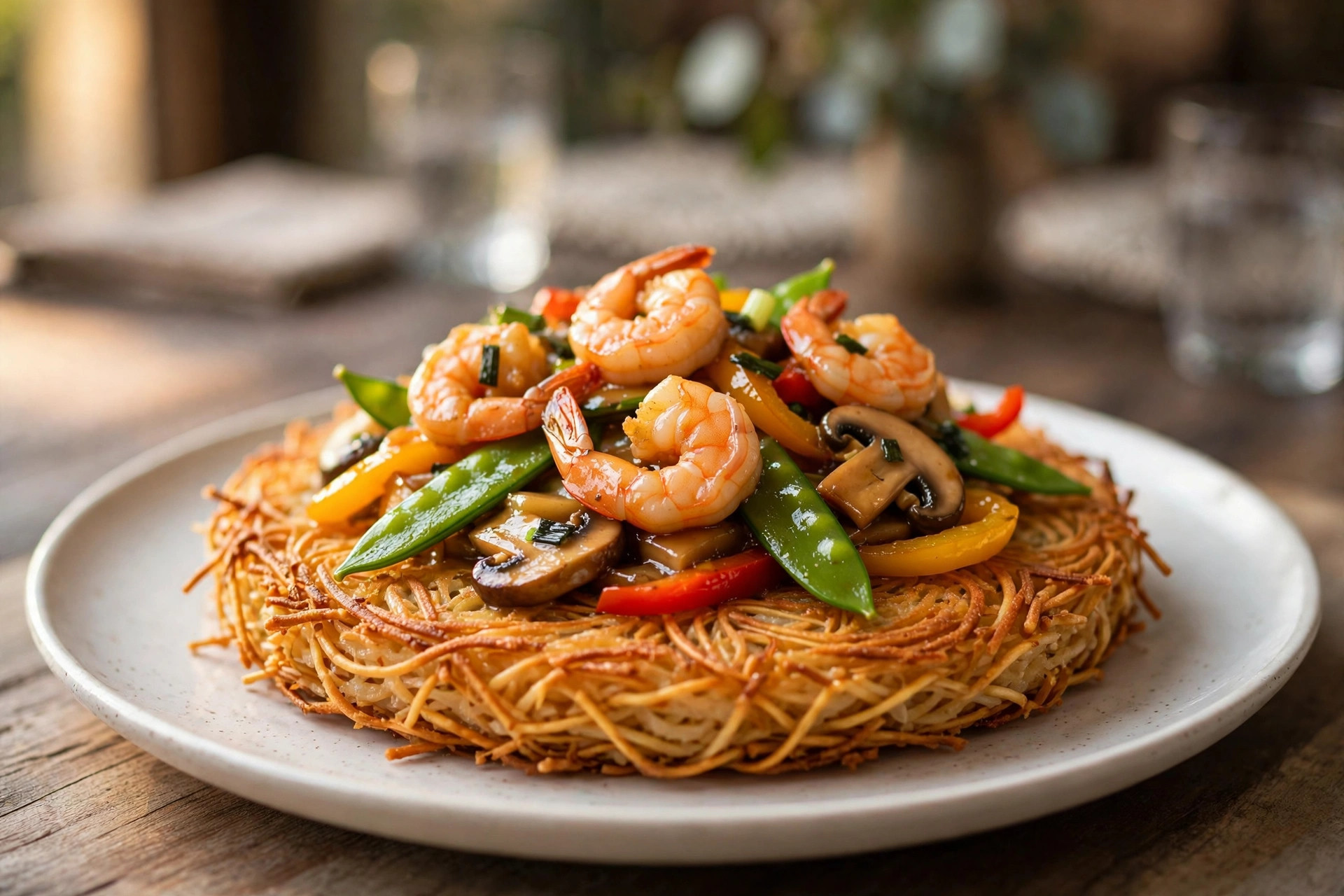
Because the noodles spend real time in hot oil, chow mein carries a distinct fried flavor through the whole dish — Tasting Table’s comparison notes how that longer fry drives off moisture and lets oil permeate the strands. Sauce plays a supporting role here: a splash of light soy, maybe some oyster sauce, just enough to season without undoing the crispness.
Side by Side: The Real Differences
Up close they’re clearly different animals, but it helps to see it all in one place:
| Lo Mein | Chow Mein | |
|---|---|---|
| Name means | “Tossed noodles” | “Fried noodles” |
| Noodle cooking | Fully boiled, added at the end | Par-boiled, then fried in the wok |
| Typical noodle | Fresh, thicker egg noodles | Thinner egg noodles, fresh or dried |
| Texture | Soft, slippery, chewy | Firm with crisped, golden spots (or fully crispy) |
| Sauce | Generous, thicker — a main event | Light — just enough to season |
| Oil | Less; noodles never fry alone | More; frying is the point |
| Wok hei | Subtle | Pronounced — the signature |
| Best served | In a bowl, twirled and slurped | On a plate, holding its shape |
The ingredients, funnily enough, are barely the point of difference. Both dishes welcome the same cast — chicken, pork, shrimp, beef, tofu, bok choy, mushrooms, bean sprouts, bell peppers — and both lean on the same sauce pantry of soy, oyster sauce, and sesame oil. The split is technique, not shopping list.
The Noodles: What to Buy at the Store
The noodle aisle at an Asian grocery can feel like a test you didn’t study for. Here’s what to grab:
- For lo mein: look for fresh egg noodles labeled “lo mein” — thick, pale-yellow, slightly chewy strands, usually in the refrigerated section. They cook in 3–4 minutes and drink up sauce.
- For chow mein: look for thin egg noodles labeled “Hong Kong style” or “pan-fried noodles” — these are often par-cooked already and fry up beautifully. Dried thin egg noodles work too; just soak or par-boil first.
- Thickness matters more than brand. Thick noodles stay soft and saucy (lo mein territory); thin noodles crisp (chow mein territory). Swap them and you’ll still get dinner, but the textures won’t be quite right.
- Skip the “chow mein” crunchy fried noodles in a can for cooking — those are a garnish, not an ingredient. Real chow mein crunch comes from frying the noodles yourself.
- In a pinch: fresh spaghetti or ramen-style wheat noodles can stand in for lo mein; thin dried egg noodles from any brand work for chow mein.
How to Make Each at Home
Both come together fast — under 30 minutes once your ingredients are prepped. The mise en place matters more than anything: slice everything before the wok gets hot, because there’s no pausing mid-stir-fry.
Lo mein (serves 4):
- Boil 1 lb fresh lo mein noodles until just tender; drain and toss with a teaspoon of sesame oil so they don’t stick.
- Heat your well-seasoned wok until smoking, sear your protein (sliced chicken, shrimp, or tofu), then add hard vegetables first — carrots, mushrooms — then quick ones like bok choy and bean sprouts.
- Stir the sauce into the wok: 2 tbsp light soy, 1 tbsp oyster sauce, 1 tsp dark soy for color, 1 tsp sugar, 1 tsp sesame oil, ½ tsp white pepper, and 2 tbsp stock or water. A splash of Shaoxing wine around the hot wok edge adds real depth.
- Add the noodles and toss everything for 1–2 minutes until glossy and heated through. Taste, adjust soy, and serve in bowls immediately.
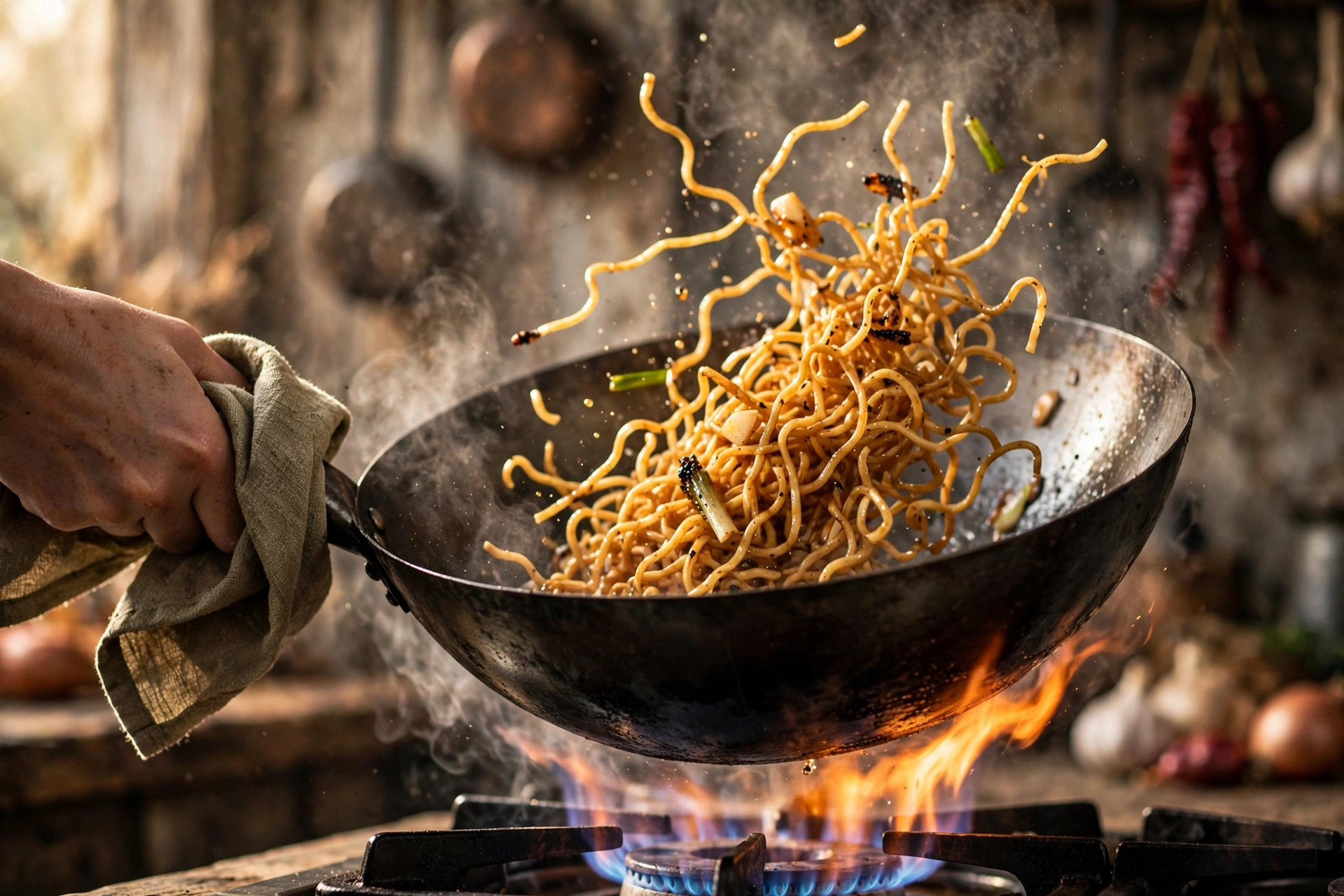
Chow mein (serves 4):
- Par-boil or soak thin egg noodles until just pliable — slightly underdone is perfect. Drain thoroughly; wet noodles steam instead of fry.
- Stir-fry your protein and vegetables in a smoking-hot wok; set aside. Wipe the wok, add fresh oil, and get it ripping hot again.
- Spread the noodles in a thin layer and let them sit undisturbed for a minute or two per side until golden and crisp in spots. Don’t crowd the wok — work in batches if you must. This is where the magic happens.
- Return everything to the wok, splash light soy and Shaoxing wine around the edge, toss hard for 30 seconds, and plate. For the crispy-cake version, pan-fry the noodle layer into a golden disc and ladle the stir-fry over the top instead of tossing.
The most common chow mein mistake at home is impatience: noodles that go in wet, or a wok that isn’t truly hot, give you soggy strands instead of crisp ones. Dry noodles, hot wok, don’t touch them — that’s the whole secret.
Ordering Without the Guesswork
Menus don’t always explain themselves, so here’s how to read the situation:
- American takeout: lo mein arrives as soft, thick, saucy noodles — the safe, crowd-pleasing pick. Chow mein is thinner and drier, sometimes with crispy bits. If the menu shows crunchy fried noodles heaped on top, that’s the crispy style — order it if you like crunch.
- Cantonese restaurant: expect lo mein to be lighter and more restrained than the takeout version, and chow mein to balance soft and crisp rather than going full crunch. This is also where you’ll find wonton lo mein with soup on the side.
- When in doubt, ask. “Is your chow mein the crispy kind or the soft kind?” is a completely normal question, and the answer tells you exactly what’s coming.
It’s worth remembering that both dishes change across China’s regions — China’s regional cuisines treat noodles very differently. A few local legends worth knowing:
- Hong Kong crispy chow mein (两面黄): the pan-fried noodle cake with saucy seafood or meat ladled over — the showstopper version.
- Shanghai cu chao mian (粗炒面): thick wheat noodles stir-fried dark with soy — hearty, chewy, deeply savory.
- Northern chao mian: wheat noodles with lighter, soy-based seasoning where wok hei does most of the talking.
And if you’re deep in the American-Chinese takeout world — the same world that gave us General Tso’s chicken — know that both dishes here are adapted for local tastes: saucier lo mein, crispier chow mein. PureWow’s take on traditional vs. American versions is a good reminder that neither is “wrong” — they’re just different branches of the same family tree.
Frequently Asked Questions
Which is healthier, lo mein or chow mein?
It’s closer than you’d guess. Lo mein noodles aren’t fried, so the dish is lower in oil — but it’s saucier, which usually means more sodium. Chow mein absorbs more oil from frying but uses less sauce. Either one gets meaningfully healthier with lots of vegetables and lean protein, and the difference between them is smaller than the difference between a vegetable-heavy and meat-heavy version of the same dish.
Can I use the same noodles for both?
You can, but thickness steers the outcome. Thick fresh noodles want to be lo mein — soft and sauce-soaked. Thin noodles want to be chow mein — they crisp instead of going gummy. Using one noodle for both works in a pinch; just expect the texture to lean toward whichever style the noodle suits.
Why is my homemade chow mein soggy instead of crispy?
Three usual suspects: the noodles went in too wet (drain them well), the wok wasn’t hot enough (it should be smoking), or you crowded the pan (steam is the enemy of crisp). Spread noodles thin, leave them alone for a minute per side, and work in batches.
Is chow mein always crispy?
No — and this confuses a lot of people. Soft stir-fried chow mein is just as traditional as the crispy kind; the “crispy” version (like Hong Kong’s leung min wong) is one regional style that got famous. American takeout menus vary wildly, so if crunch matters to you, ask which style they make.
What is wok hei, and does it matter here?
Wok hei — “the breath of the wok” — is the smoky, charred flavor that comes from tossing food over ferocious heat in a seasoned wok. It matters enormously for chow mein, where the fried noodles are the main event, and much less for lo mein, where sauce leads. It’s the hardest thing to replicate on a home stove, which is why restaurant chow mein often tastes a notch better.
Next time the menu presents the choice, you’ll know exactly what you’re getting into: soft and saucy, or fried and textured. My suggestion? Order one of each with a friend, put them side by side, and taste the verb difference for yourself. That’s the fastest education in Chinese noodles there is.
[…] noodles” covers a family: the thin round strands in wonton soup, the flat wide noodles in lo mein, the crispy nests in chow mein, and the dried bricks sold as “Chinese egg noodles” or […]
[…] same grand tradition as the stir-fried wheat noodles you already know — if you enjoy the chew of lo mein or the slippery comfort of dan dan noodles, these handmade styles are the next level up. And if you […]