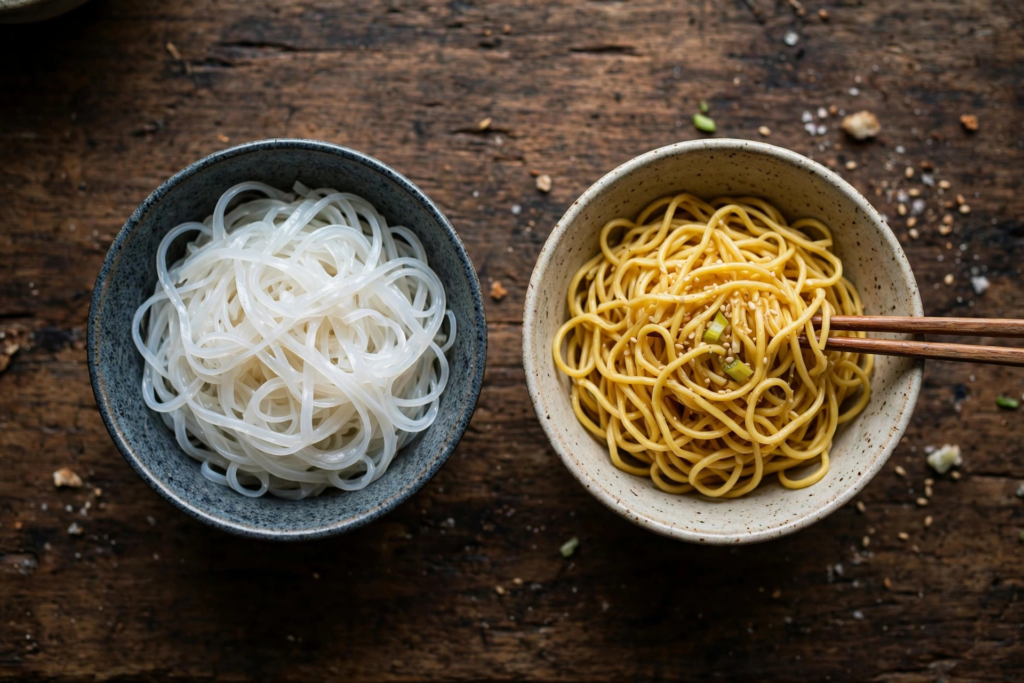
Stand in front of the noodle aisle at any Asian grocery store and you’ll feel the problem immediately. Dozens of packages, all vaguely labeled “noodles,” some translucent, some yellow, some flat, some round. Grab the wrong bag and your pad thai turns into a gummy mess, or your chow mein goes limp. The choice that matters most — and the one that trips up nearly every home cook — is between rice noodles and egg noodles.
They look similar in the package. They cook differently, taste different, and behave completely differently in the pan. Pick the right one and dinner practically makes itself. This guide breaks down exactly how rice noodles and egg noodles differ — in ingredients, texture, nutrition, cooking, and which dishes each one belongs in — so you stop guessing at the shelf.
The 10-Second Answer
Rice noodles are made from rice flour and water. They’re translucent-white, gluten-free, vegan, delicate, and nearly flavorless on their own — a blank canvas that carries whatever sauce or broth you pair them with. Egg noodles are made from wheat flour and eggs. They’re golden-yellow, chewy, a little richer tasting, higher in protein, and sturdy enough to survive a hot wok.
If that’s all you needed, you’re done. But the details matter when you’re cooking, so let’s get into them.
What Egg Noodles Actually Are
Egg noodles are exactly what the name promises: wheat flour mixed with egg (and usually a little salt and water), kneaded into a dough, rolled flat, and cut into strands. The eggs do three things at once — they turn the dough golden yellow, they enrich the flavor, and they give the finished noodle a dense, springy chew that plain wheat noodles don’t quite have.
This is an old idea. Wheat-and-egg noodles trace back to China around the Han dynasty, more than two thousand years ago, and they spread along with wheat cultivation across northern China, where wheat — not rice — was the staple grain. That’s why egg and wheat noodles dominate northern Chinese cooking, while rice noodles rule the south, where rice paddies stretch to the horizon. The noodle map of China is really a map of where each grain grows.
In practice, “egg noodles” covers a family: the thin round strands in wonton soup, the flat wide noodles in lo mein, the crispy nests in chow mein, and the dried bricks sold as “Chinese egg noodles” or “Hong Kong noodles” in supermarkets. They all share the same base — wheat plus egg — and the same forgiving, chewy character.
What Rice Noodles Actually Are
Rice noodles are simpler in one way and trickier in another. The base is just rice flour and water, sometimes with a little tapioca or cornstarch to improve the texture. No eggs, no wheat, no salt. The batter gets steamed in thin sheets on trays, then cut into whatever width the dish calls for — hair-thin vermicelli, medium rice sticks, or the wide ribbons of ho fun.
They’re around two thousand years old too, born in southern China and carried through Southeast Asia, where they became the backbone of Vietnamese phở, Thai pad thai, and countless noodle soups and salads. Raw, they’re usually translucent or glassy; cooked, they turn opaque white. That color change is your doneness cue — and it’s part of why they need watching, because the window between “perfectly tender” and “mushy” is short.
The wide flat rice noodles in chow fun are the same family as the thin strands in a bowl of pho. Same dough, different cut, different destiny.
Egg Noodles vs Rice Noodles: Side by Side
| Rice Noodles | Egg Noodles | |
|---|---|---|
| Made from | Rice flour + water (sometimes tapioca starch) | Wheat flour + eggs + salt + water |
| Color | Translucent raw, opaque white cooked | Golden yellow, raw and cooked |
| Texture | Delicate, silky, slightly slippery | Chewy, springy, sturdy |
| Flavor | Nearly neutral — carries the sauce | Mildly rich and savory on its own |
| Gluten | Naturally gluten-free | Contains gluten (wheat) |
| Vegan-friendly | Yes | No (contains egg) |
| Protein per cup cooked | ~1.6 g | ~7.3 g |
| Calories per cup cooked | ~192 | ~221 |
| Fat per cup cooked | ~0.4 g | ~3.3 g |
| Cooking | Soak in hot water, brief boil 2–3 min | Boil 4–7 min like pasta |
| Best for | Soups, light stir-fries, salads, spring rolls | Wok stir-fries, hearty soups, lo mein |
Nutrition: Where They Actually Differ
On paper the two look close — both are mostly carbohydrate, both land around 190–220 calories per cooked cup. The meaningful differences hide in the details:
- Protein: egg noodles win clearly — about 7.3 g per cup versus 1.6 g for rice noodles — because of the eggs. If the noodles are doing nutritional heavy lifting in your meal, that gap matters.
- Iron: egg noodles carry about 2.4 mg of iron per cup (13% of daily value); rice noodles have almost none (0.2 mg).
- Fat and cholesterol: rice noodles are the lighter choice — 0.4 g fat and zero cholesterol per cup, versus 3.3 g fat and about 46 mg cholesterol in egg noodles.
- Sodium: egg noodles are usually salted in the dough, though rice noodles can pick up a little sodium in processing — check the label if it matters to you.
- Glycemic index: both are medium-GI foods; egg noodles score slightly lower (around 57) than rice noodles (around 65), per commonly cited figures.
The honest take: neither is a health food and neither is junk. Pick egg noodles when you want more protein and staying power; pick rice noodles when you want something lighter, or when gluten and animal products are off the table. PlantBasedFAQs lays out the full per-cup nutritional comparison if you want every number side by side.
One caveat competitors rarely mention: nutrition numbers swing a lot between brands. Fresh egg noodles, dried bricks, and restaurant noodles aren’t the same product, so treat any table as approximate, not gospel.
How to Cook Each Without Ruining Them
This is where most people go wrong, because the two need opposite treatment. Egg noodles behave like pasta. Rice noodles don’t.
Egg noodles:
- Drop into plenty of rolling boiling water, salted.
- Boil 4–7 minutes depending on thickness (fresh ones cook faster than dried).
- They’re done when tender with a slight spring — then drain and use immediately, or toss with a little oil if they have to wait.
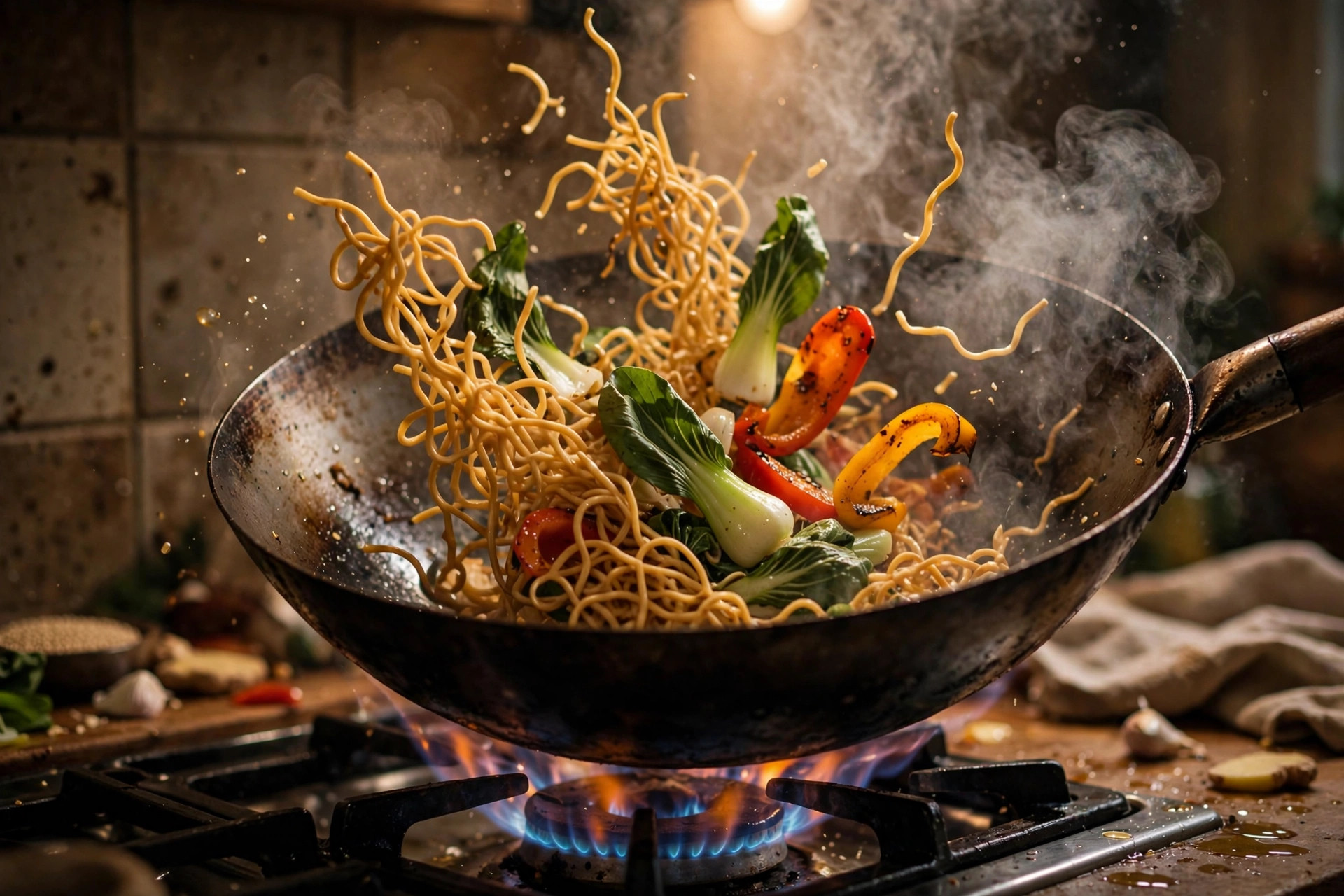
- They tolerate stir-frying well; the gluten structure holds up to wok heat.
Rice noodles:
- Soak first in warm or hot water until pliable — anywhere from a few minutes for thin vermicelli to 20–30 minutes for thick sticks.
- Then boil briefly, just 2–3 minutes, or even just pour boiling water over them and cover.
- Rinse in cold water to stop the cooking and wash off surface starch (this also keeps them from gluing together).
- For stir-fries, undercook them slightly — they’ll finish in the pan. Overcooked rice noodles turn to mush the second they hit a hot wok.
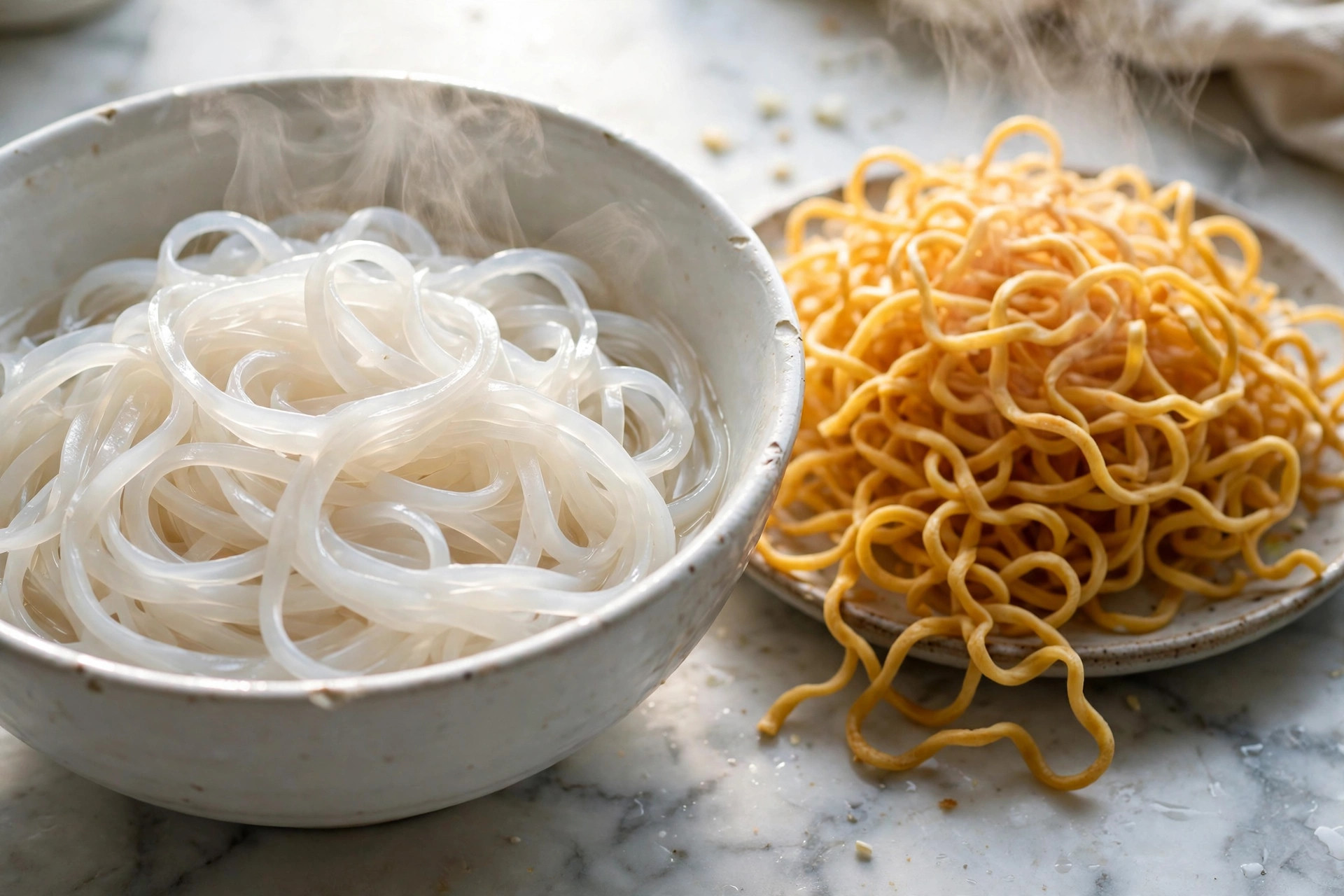
The number one rice noodle mistake: boiling them like pasta from dry. They’ll disintegrate. The soak-first method exists for a reason — it hydrates them gently before the short final cook.
Which Dishes Use Which
Tradition is a good guide here. Generations of cooks already solved this problem:
- Egg noodles: lo mein, chow mein, wonton noodle soup, dan dan noodles, sesame noodles, Cantonese crispy noodle nests.
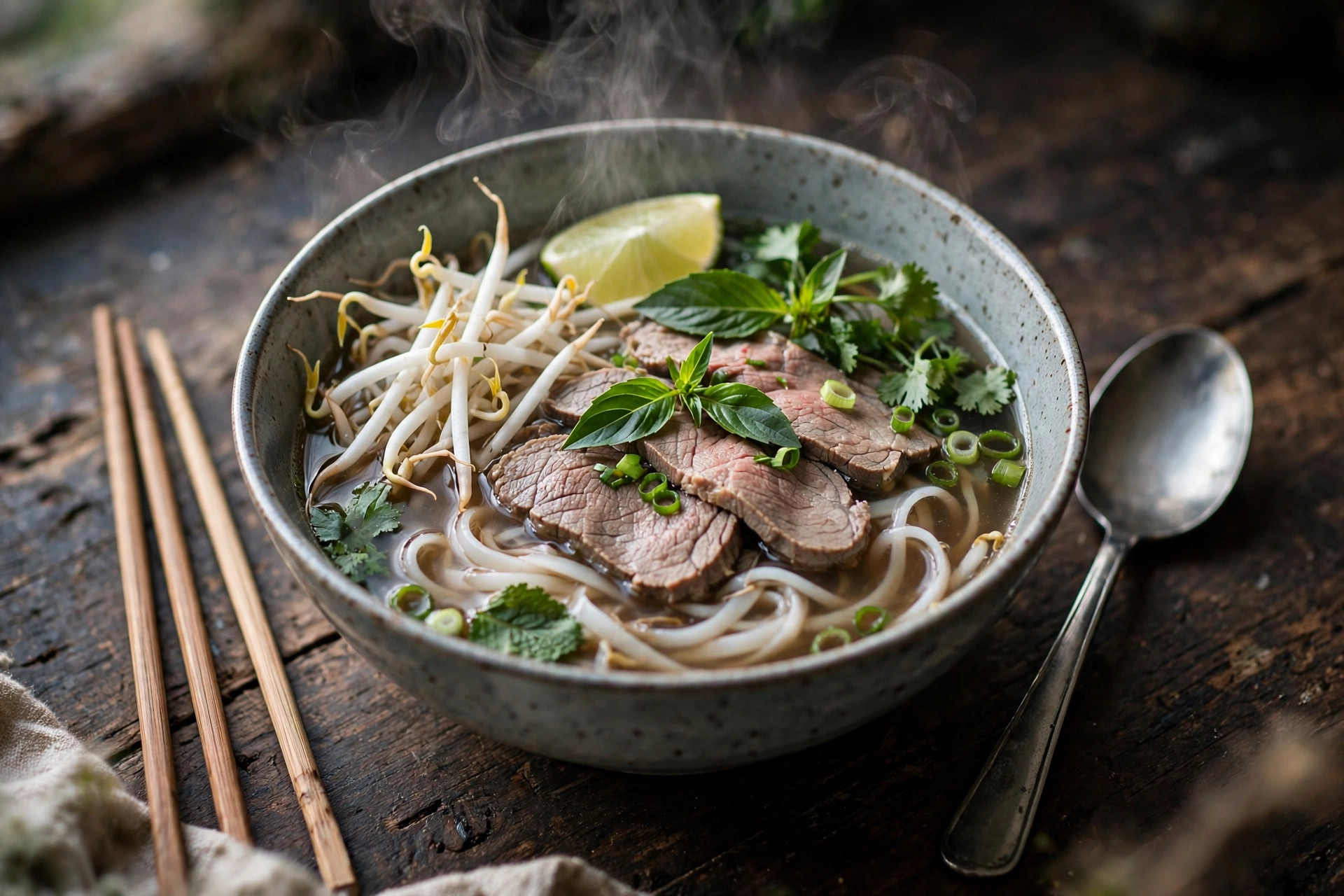
- Rice noodles: phở, pad thai, beef chow fun (wide ho fun), Singapore-style vermicelli, laksa, fresh spring rolls (rice paper), rice noodle rolls (cheung fun).
The pattern: rich, savory, wok-fired Chinese dishes lean toward egg noodles, because the noodles stand up to high heat and contribute flavor. Brothy Southeast Asian dishes and delicate preparations lean toward rice noodles, because the noodle steps back and lets the broth, herbs, and sauce take the spotlight.
That said, home kitchens are more flexible than tradition. Plenty of Chinese stir-fries use rice noodles, and nobody will arrest you for putting egg noodles in a soup that “should” have rice noodles. But when a dish is built around a specific noodle’s texture — chow fun’s wide silky ribbons, lo mein’s chewy strands — swapping changes the dish more than you’d expect.
Can You Substitute One for the Other?
Yes, with adjustments. In soups, they’re nearly interchangeable — the broth does most of the talking either way. In stir-fries, it’s trickier: rice noodles are fragile and absorb sauce fast, so they need a gentler hand and shorter wok time. Egg noodles are sturdier and soak up flavor more slowly, so they can handle aggressive tossing.
If you’re substituting, adjust in the noodle’s direction: use rice noodles a little undercooked and go easy in the pan; boil egg noodles fully and give them the full wok treatment. And if the reason is dietary — gluten intolerance, vegan cooking — rice noodles aren’t a substitute, they’re the answer. Egg noodles can’t do that job at all.
A practical tip for the grocery run: keep both in the pantry. Dried rice sticks and a pack of dried egg noodles last for months, cost almost nothing, and together they cover nearly every noodle craving. Buying tip — read the ingredient list, not the front of the package. “Rice sticks” should list rice and water (plus maybe starch). Anything with wheat flour in a rice noodle package isn’t what you think it is.
Frequently Asked Questions
Are rice noodles healthier than egg noodles?
They’re lighter in fat, cholesterol, and calories, and they’re gluten-free and vegan. But egg noodles have much more protein and iron. “Healthier” depends on what you’re optimizing for — neither is a nutritional powerhouse.
Are rice noodles gluten-free?
Yes, as long as they’re made purely from rice flour and water. Always check the label — some brands sneak in wheat flour or are made on shared equipment. Certified gluten-free packaging is the safe bet for celiac.
Why do my rice noodles always turn mushy?
Almost always overcooking. Soak them first, boil for only 2–3 minutes (or just steep in hot water), and rinse cold immediately. For stir-fries, pull them a minute early — they finish cooking in the pan.
Do egg noodles taste like egg?
Only faintly. They taste richer and a bit more savory than plain wheat noodles, but nobody bites into chow mein and thinks “omelet.” The egg’s main job is texture and chew.
Which noodle is best for stir-fry?
Egg noodles, usually. Their gluten structure survives high wok heat and vigorous tossing. Rice noodles work in stir-fries too — chow fun proves it — but they demand more care and a lighter touch.
The practical next step: next grocery run, buy one pack of each — dried rice sticks and dried egg noodles — and cook a small batch of both side by side. Taste them plain. Once you know what each one feels like on its own, you’ll never stand confused in the noodle aisle again.