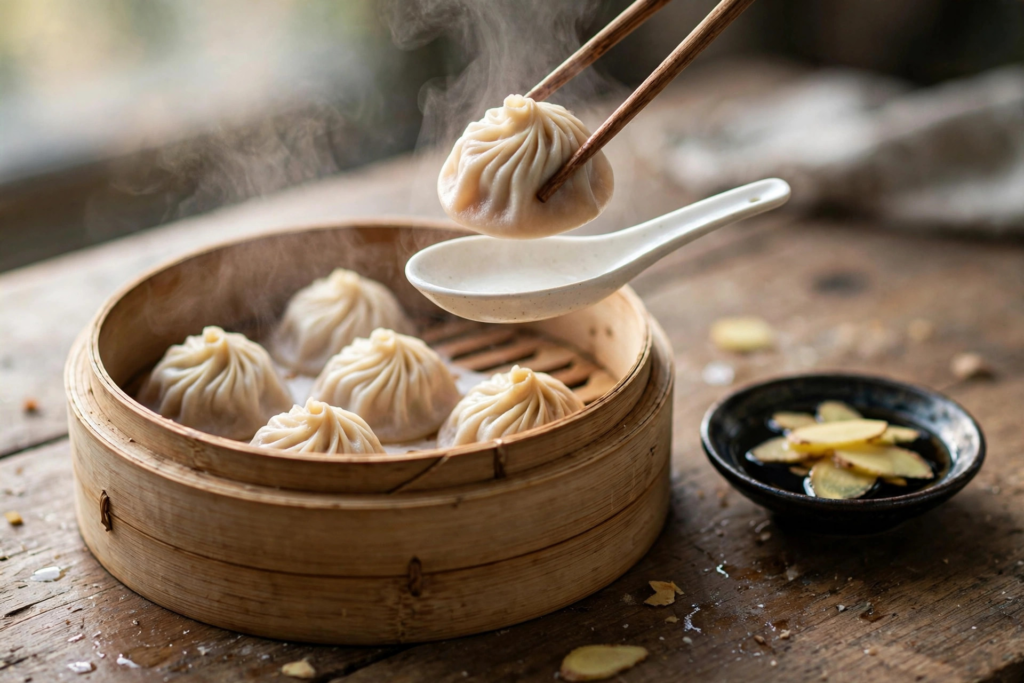
Everybody burns their mouth on a soup dumpling exactly once. It’s practically a rite of passage — the wrapper feels perfectly touchable, you pop the whole thing in, and then a tablespoon of lava-hot pork broth detonates on your tongue while everyone at the table pretends not to notice your eyes watering.
Here’s the unfair part: it’s not your fault. The dumpling is engineered to fool you. The thin wrapper cools down in seconds while the soup sealed inside stays scalding, so your fingers tell you “safe” while your mouth is about to learn otherwise. But once you understand why it burns and follow the actual technique — the one the chefs at places like Din Tai Fung teach — you’ll never get ambushed again.
If you’re still fuzzy on what these dumplings even are, start with what xiaolongbao are and how the soup gets inside. This guide is purely about the eating: the physics of the burn, the step-by-step method, the mistakes to dodge, and what to do when things go sideways.
Why the Burn Always Catches You Off Guard
A soup dumpling is a thermal trick. The wrapper is paper-thin unleavened dough — it sheds heat almost instantly once it leaves the steamer. Thirty seconds on the table and it feels merely warm to your chopsticks. But the broth inside is a different story: it’s a sealed pocket of liquid surrounded by insulating dough and pork, with nowhere for the heat to go. It can stay near-scalding for several minutes after the outside feels fine.
That’s the trap. Your hand checks the wrapper and reports back: all clear. Your mouth discovers the truth a second later. The soup is also deceptive in volume — a single xiaolongbao holds roughly a tablespoon of broth, which sounds small until it’s coating your entire palate at once.
The good news: the fix isn’t complicated. It just requires respecting the dumpling’s little lie and working around it. Every method below is built on one principle — release the heat before it reaches your mouth.
The Classic Method, Step by Step
This is the technique taught at Din Tai Fung and used across Shanghai — demonstrated by Din Tai Fung chefs everywhere from Taipei to a memorable MasterChef Australia segment, where the chef’s proper xiaolongbao method walks through each move. It looks fussy the first time. By your third dumpling it’s muscle memory.
- Wait a beat. Give the basket 1–2 minutes after it lands. You’re not waiting for the dumpling to go cold — you just want the initial blast of steam heat to settle. Use the time to mix your dipping sauce.
- Lift from the knot. Grip the twisted pleat at the top with your chopsticks. It’s the thickest, strongest part of the wrapper. Squeezing the thin sides is how dumplings tear and leak all over the table.
- Park it on your spoon. Set the dumpling in a Chinese soup spoon. This is non-negotiable: the spoon catches leaks, holds the dumpling steady, and — most importantly — becomes the vessel you sip from.
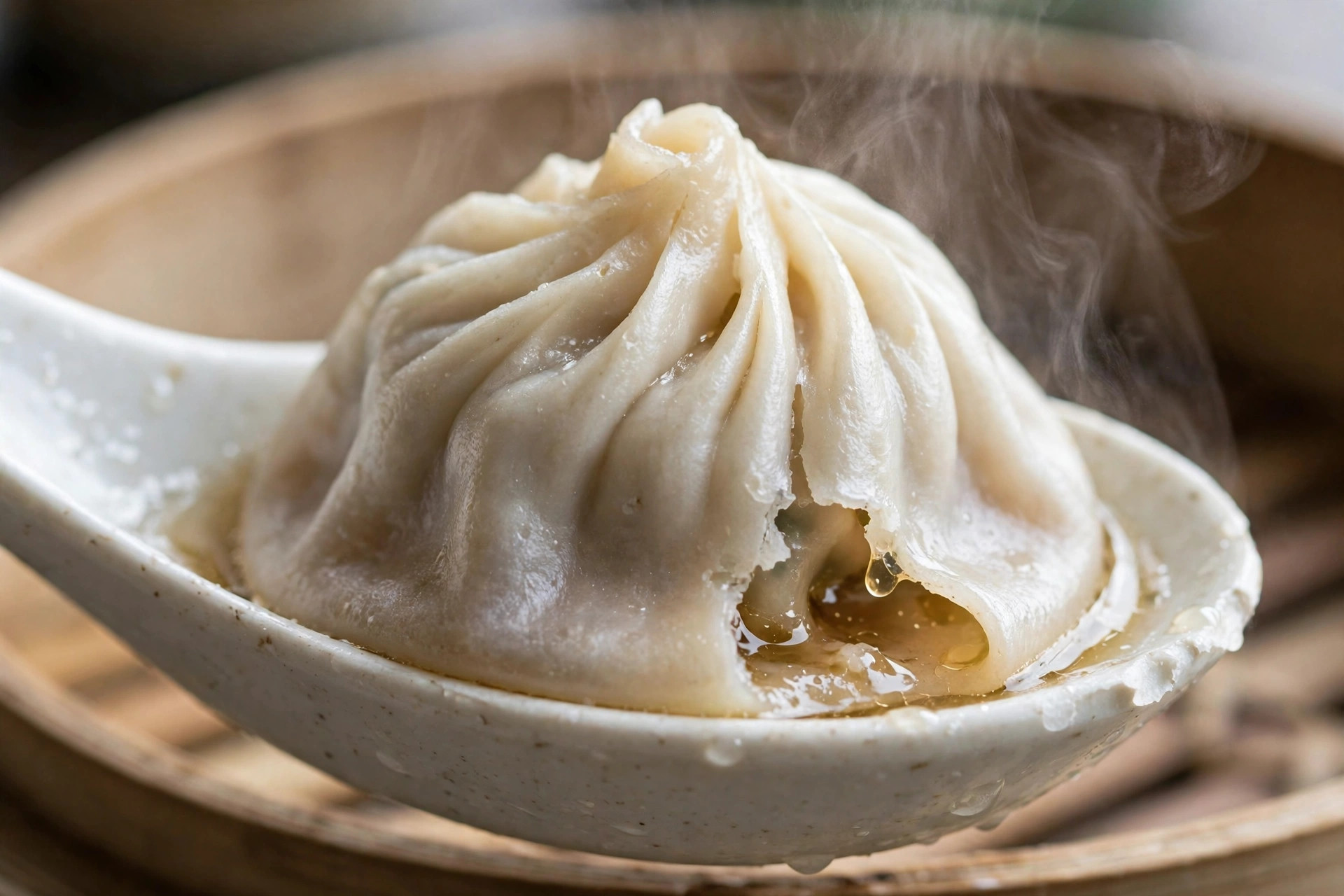
- Poke a small hole. Nibble or poke a tiny opening in the side of the wrapper with your teeth or a chopstick. You’ll see steam rush out. That escaping steam is heat leaving the building instead of your mouth.
- Sip the soup first. Tilt the spoon and drink the broth out through the hole. It’ll still be hot — blow on it, take it slow. This is the best part of the dumpling, so there’s no reason to rush it.
- Sauce it, then eat it. Now dip or drizzle the dumpling with black vinegar and shredded ginger, and eat the rest in one or two bites. The vinegar’s sharpness cuts right through the pork’s richness.
Three Ways to Eat a Soup Dumpling
The spoon method above is the gold standard, but it’s not the only approach. Here’s how the common techniques compare — pick the one that matches your confidence level and your hunger.
| Method | How it works | Burn risk | Best for |
|---|---|---|---|
| The spoon method | Poke a hole, sip the soup from a spoon, then eat the dumpling | Low — heat escapes before your mouth gets involved | First-timers and anyone who values their taste buds |
| The whole-bite gamble | Let it cool a few minutes, then pop the entire dumpling in at once | High — one wrong guess on temperature and it’s over | Confident regulars; never on the first dumpling of the basket |
| The straw (guantang bao) | Jiangsu’s oversized soup dumplings come with a straw — poke, insert, drink | Medium — the straw controls the flow but the soup is still molten | Guantang bao specifically; a fun regional experience |
Worth knowing: the whole-bite method does have defenders. Some argue you get skin, soup, and pork in perfect harmony in a single bite — and they’re right, when it works. The problem is the failure mode. A failed spoon-method dumpling dribbles soup into a spoon. A failed whole-bite dumpling detonates in your mouth or, just as bad, squirts broth across the table onto your dining companions — a hazard Mashed’s soup dumpling guide specifically warns about.
Mix the Dipping Sauce Right
The sauce won’t save you from a burn, but it does two useful things: the ritual of mixing it forces you to wait those crucial couple of minutes, and the vinegar-ginger bite is genuinely the dumpling’s best friend. The traditional pairing is simple:
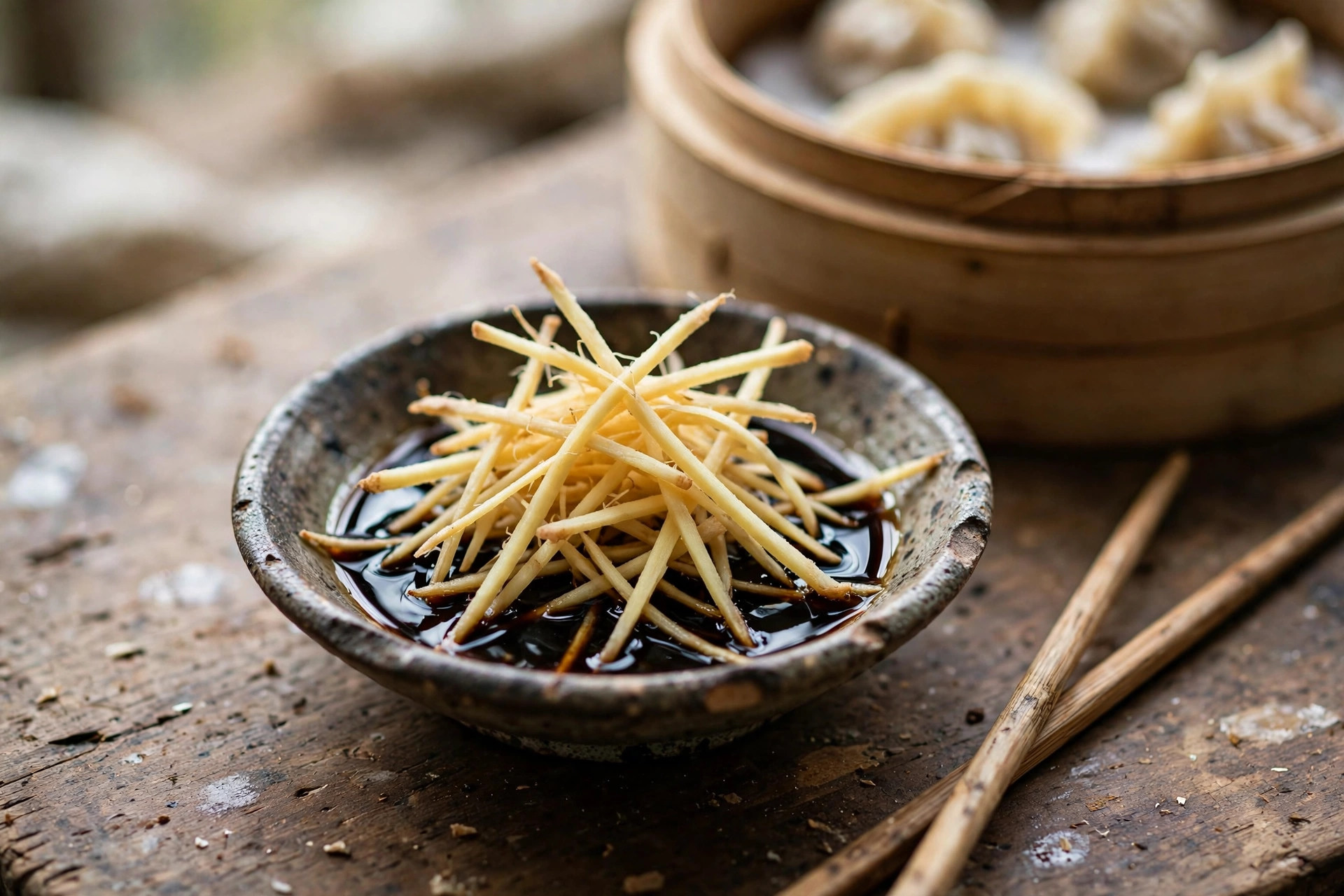
- Black vinegar (Chinkiang) as the base — malty, mellow, nothing like white vinegar
- Julienned fresh ginger — a small tangle of matchsticks, not minced, so it stays crunchy
- Optional: a few drops of light soy sauce, or a thread of chili oil if you want heat
Ratio-wise, think roughly two parts vinegar to a small splash of soy, with as much ginger as you like floating on top. Some regulars drizzle the sauce directly into the spoon under the dumpling; others dip after sipping. Both work. If you want a head start before your next dumpling outing, here’s an easy dumpling dipping sauce recipe to practice with at home.
Mistakes That End in a Burned Mouth
Almost every soup dumpling injury comes from the same short list. Run through it once and you’ll recognize every trap before it springs.
- Trusting the wrapper. It feels warm, not hot — but the soup inside is still scalding. The outside lies. Always.
- Skipping the spoon. Eating straight from chopsticks means any leak or burst goes straight down your chin or shirt. The spoon is your insurance policy.
- Biting the top knot first. The pleated knot is the thickest, chewiest part — bite there and the pressurized soup jets out the sides. Always open the thin side wall instead.
- Squeezing with chopsticks. Death-gripping the dumpling’s delicate sides tears the wrapper and dumps the soup. Grip the knot, lift gently, let the spoon do the work.
- Pouring soy sauce over the basket. Drowning dumplings in sauce before lifting them makes the wrappers soggy and prone to tearing — and you lose the vinegar-ginger balance. Sauce each dumpling individually.
- Letting them sit too long. Wait too many minutes and the aspic starts re-setting as the dumpling cools — you get lukewarm jelly instead of flowing soup. There’s a sweet spot: hot but sippable.
What to Do When It Goes Wrong Anyway
Even with perfect technique, things happen — a wrapper tears, a dumpling arrives over-steamed, you get distracted mid-basket. Here’s the damage control.
If the dumpling breaks in the basket: don’t mourn it, eat it anyway. Scoop up the pieces with your spoon, soup and all. A broken xiaolongbao still tastes like a xiaolongbao; it just skipped the ceremony. This is also your signal to lift the remaining dumplings more gently — they may be sticking to the basket.
If you scald your mouth: cold water or cold tea immediately, held in the mouth for 20–30 seconds. Dairy helps too — the fat coats and soothes. What you shouldn’t do is keep eating hot dumplings right away; a burned tongue plus more heat just extends the misery. Give it a few minutes, eat something cool, then return to the basket.
If the soup has gone lukewarm and jelly-like: the basket sat too long. You can still eat them — the flavor’s all there — but the magic sip is gone. Next round, eat faster or order a fresh basket. Restaurants steam to order, so a second basket is always better than a tired first one.
A Note on Frozen Soup Dumplings
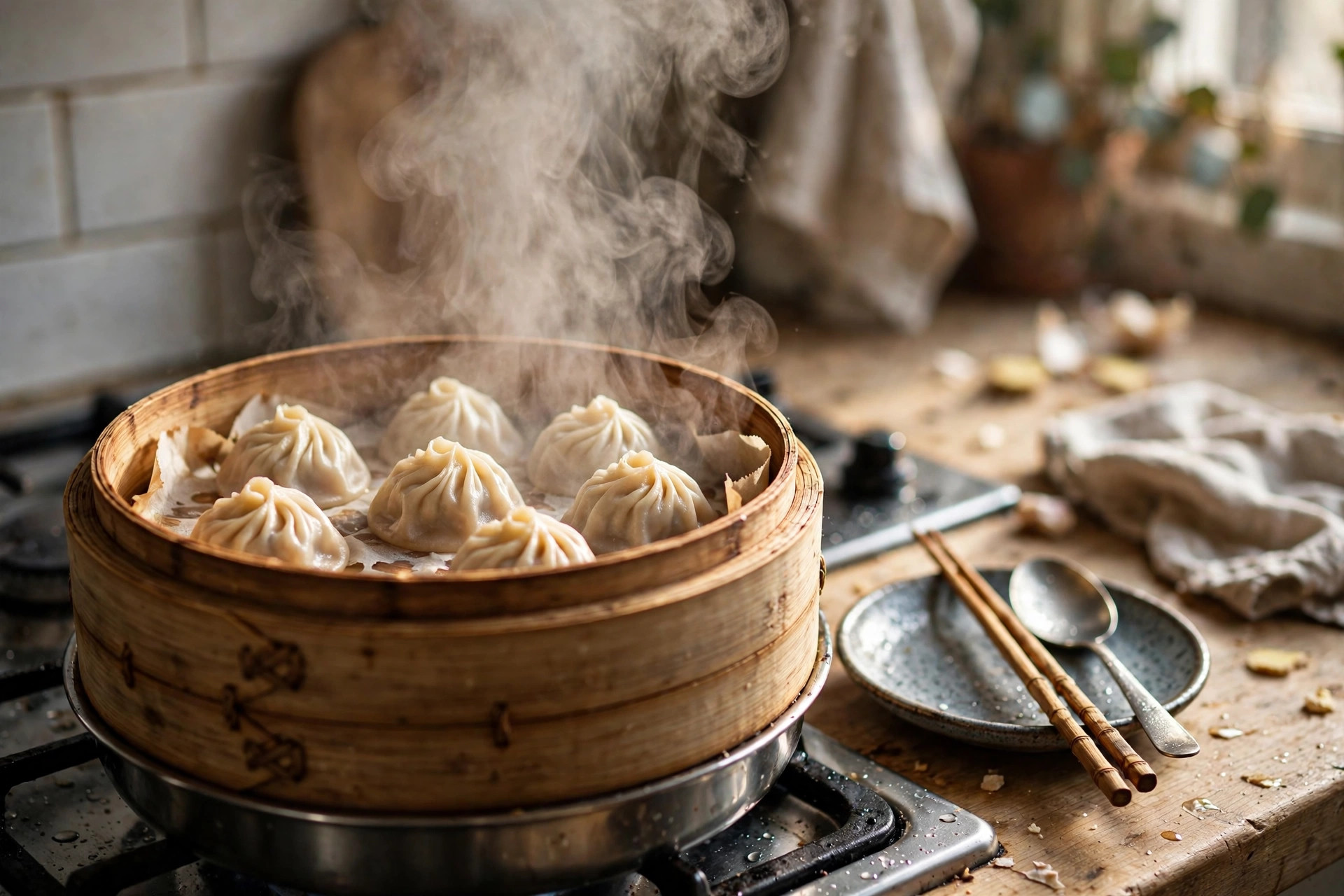
Frozen xiaolongbao from the Asian grocery freezer aisle deserve extra caution, for two reasons. First, quality varies enormously — some have a generous soup pocket, others barely any, so you can’t calibrate by habit. Second, home steamers often run hotter and less evenly than restaurant setups, which means the first dumpling out can be nuclear while the rest are merely hot.
Steam them in small batches, exactly as many as you’ll eat in five minutes. Line the basket with parchment or cabbage leaves so the delicate skins don’t tear on the bamboo. And give frozen dumplings a full two to three minutes of rest before the spoon — they hold heat even more stubbornly than fresh ones. The technique is identical; the patience requirement is just higher.
Frequently Asked Questions
How long should I wait before eating a soup dumpling?
About 1–2 minutes after the basket arrives — enough for the harshest steam heat to settle, not so long that the soup starts re-setting into jelly. Frozen dumplings need closer to 2–3 minutes since they hold heat longer.
Is it rude to bite a soup dumpling instead of using the spoon method?
Not rude, just risky. Nobody in Shanghai will scold you for popping one whole — plenty of locals do it once the basket has cooled a bit. The spoon method is about safety and getting the full soup-sipping experience, not etiquette.
Why does the soup sometimes squirt out sideways?
Pressure. The sealed dumpling is full of hot steam and liquid, so biting the top forces everything out the weakest point — usually a thin side wall. Poking a small vent hole first equalizes the pressure, which is the entire point of the technique.
Can kids eat soup dumplings safely?
Yes, with the spoon method and an adult handling the poking and first sip to check the temperature. The soup stays dangerously hot longer than kids expect, so don’t let them go whole-bite until they’ve got the ritual down.
What’s the difference between xiaolongbao and shengjian bao when eating?
Both hide hot soup, but shengjian bao are pan-fried buns with thicker yeasted dough — you poke a hole with a chopstick and slurp, no spoon required. Here’s the full xiaolongbao vs shengjian bao breakdown if you’re deciding between them.
That’s the whole playbook: respect the heat trap, park it on the spoon, vent the steam, sip before you bite. Among China’s dumplings this is the one that demands a technique — but it’s a technique you learn in a single basket. Next time the steamer lid lifts and the vapor rolls out, you’ll know exactly what to do. Your tongue will thank you.