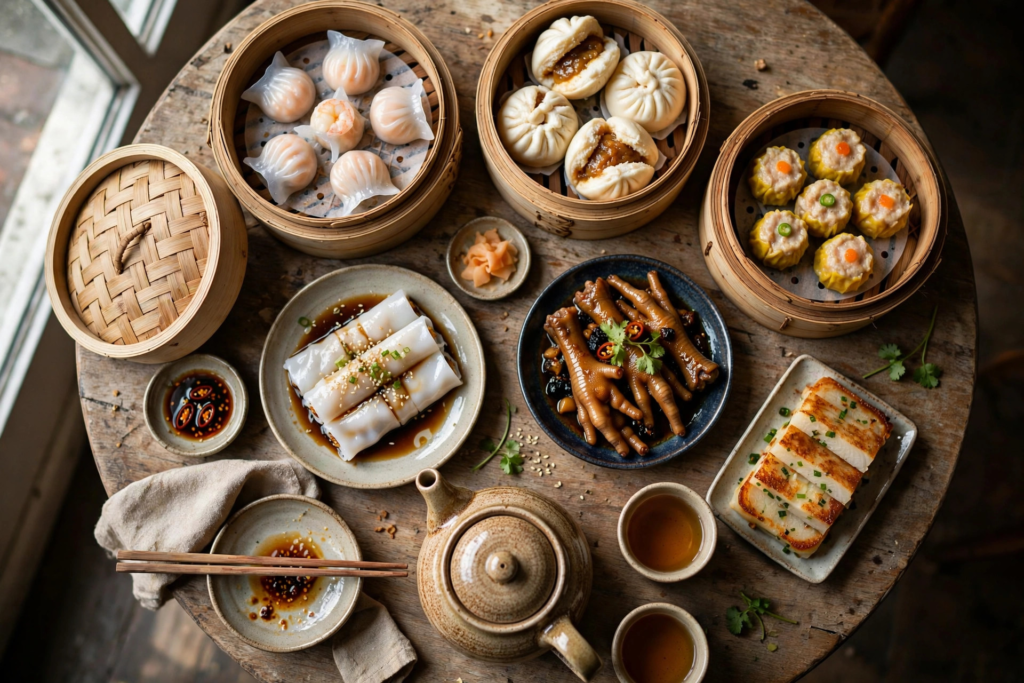
Walk into a restaurant with “dim sum” on the sign, and you’ll probably be handed a menu full of dumplings. Walk into a different restaurant that serves dumplings, and someone might call it a dim sum spot. So what’s the actual difference — or is there one?
There is, and it’s bigger than most people think. Mixing the two up won’t ruin your meal, but understanding the distinction will change how you order, how much you enjoy the food, and how well you navigate a Cantonese teahouse without that quiet panic of not knowing what you’re doing. This guide lays out exactly what dim sum is, what a dumpling is, where the two overlap, where they don’t, and how to order with confidence next time you’re staring at a cart full of bamboo steamers.
The Short Answer
Dim sum is a meal — a Cantonese tradition of small shared plates eaten with tea, usually in the morning. A dumpling is a food — a wrapper with filling inside. Some dumplings are served as dim sum. Many aren’t. And plenty of dim sum has nothing to do with dumplings at all.
If it helps, think of it this way: dim sum is to dumplings what a tapas bar is to a single dish. You’d never call a plate of patatas bravas “a tapas restaurant” — it’s one small plate in a much bigger spread. Same logic. A har gow is a dumpling. The two-hour weekend ritual of tea, carts, and twenty little plates? That’s dim sum.
Here’s the distinction at a glance:
| Dim Sum | Dumplings | |
|---|---|---|
| What it is | A way of eating — a Cantonese meal | A food — a wrapper with filling inside |
| Where it’s from | Teahouses of Guangdong, southern China | All over China — and most of the world |
| When you eat it | Morning to early afternoon, with tea | Any meal, any time of day |
| How it’s served | Dozens of small shared plates, 3–4 pieces each | Plated or bowled as a dish — or a full meal |
| Examples | Har gow, siu mai, char siu bao, cheung fun, egg tarts | Jiaozi, wontons, xiaolongbao, potstickers |
| Tea | Essential — it’s yum cha, “drink tea” | Optional |
What Dim Sum Actually Is
The words themselves tell you a lot. In Cantonese, dim sum (點心) means something like “touch the heart” — small bites meant to delight rather than fill. And the meal is inseparable from yum cha (飲茶), which literally means “drink tea.” You don’t really do one without the other.
The tradition grew out of the teahouses of Guangdong province in southern China, where travelers and merchants would stop for tea and pick at small snacks. Over generations it evolved into a full-blown weekend institution: big round tables, rolling carts, pots of oolong or pu-erh, and a parade of dishes arriving in bamboo steamers and on small plates. As Chowhound puts it, dim sum is a ritual, not just a meal — closer in spirit to an afternoon tea than to an ordinary lunch.
A few things define the dim sum experience, wherever you find it:
It’s small and shared. Dishes arrive in portions of three or four pieces, and the whole point is that everyone at the table tastes a bit of everything. Ordering dim sum for one is possible, but it misses the point — the variety is the meal.
It’s a morning thing. Traditionally dim sum runs from morning into the early afternoon. Plenty of modern restaurants serve it all day now, but the classic move is a late-morning gathering that stretches toward lunch. In Cantonese food culture, it’s one of the great morning eating traditions.
Tea is mandatory. Not optional, not a nice extra — the tea is half the experience. You’ll typically pick a pot for the table (chrysanthemum, jasmine, oolong, and pu-erh are the usual suspects), and it gets refilled all meal long. Here’s a custom worth knowing: when someone pours tea for you, tap two fingers on the table. It’s a silent thank-you, a little bow made with your hand, and using it marks you as someone who gets it.
How Ordering Works (and Why It Intimidates People)
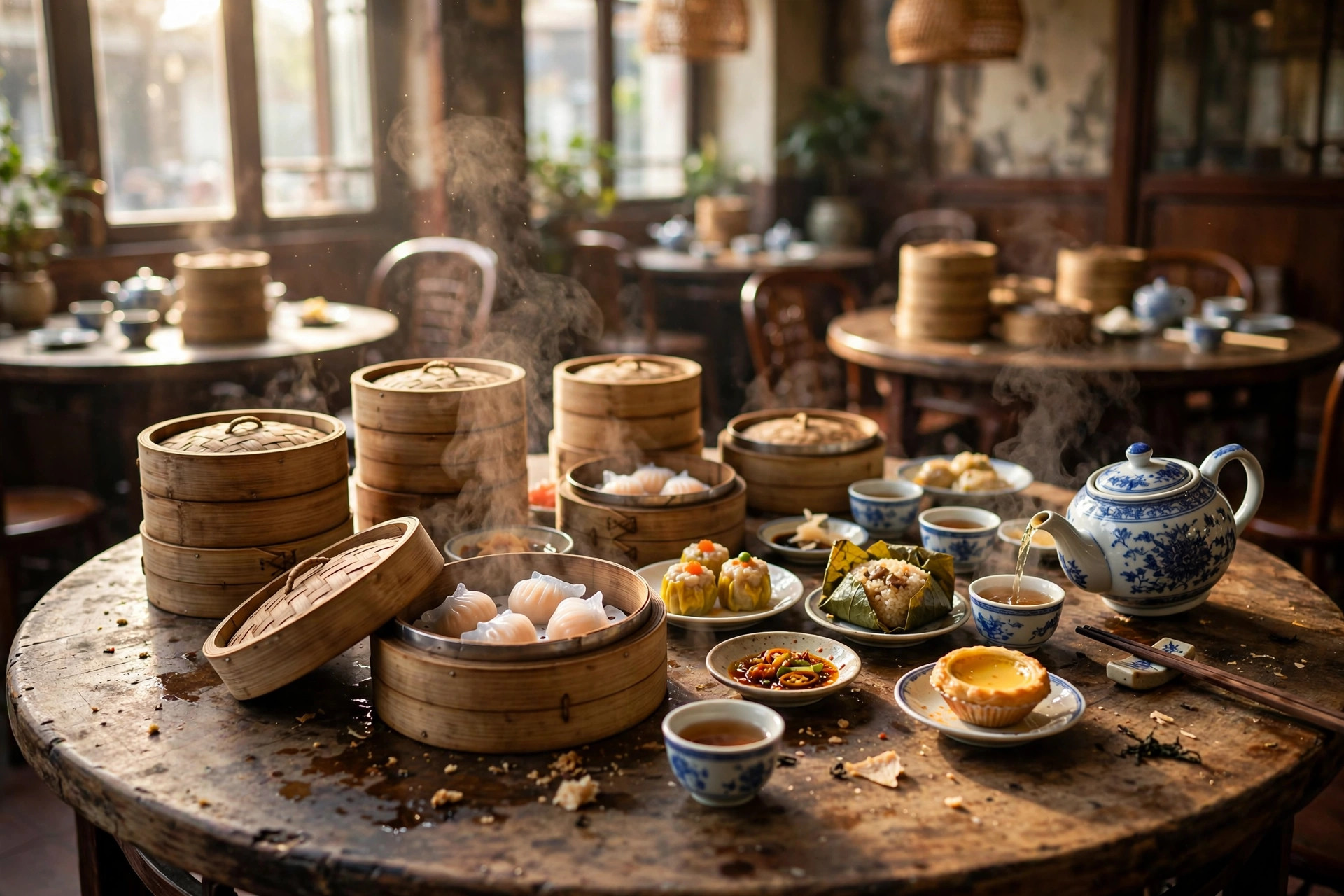
The old-school dim sum hall runs on push carts. Attendants wheel steamers and trays between the tables, calling out what’s on board, and you point at whatever looks good. It can feel chaotic if you’ve never done it — everyone else seems to know the drill, the carts keep moving, and you’re still deciding.
Here’s the secret: nobody minds if you point. Watching what other tables grab is a completely legitimate strategy, and cart attendants will happily lift lids to show you what’s inside. The Manual’s dim sum guide notes that newer restaurants have mostly switched to paper check-off menus, which takes the pressure off entirely — you just tick boxes and the kitchen sends dishes out as they’re ready.
Either way, a few rules will carry you through your first visit:
- Point without shame. Watching what other tables grab and copying them is a completely legitimate strategy.
- Order one dish per person, plus tea — and add one thing that scares you a little.
- Cover the range: one steamed classic, something fried, and something sweet. The variety is the meal.
- Tap two fingers on the table when someone pours your tea — it’s a silent thank-you.
What a Dumpling Actually Is
Now the other half. A dumpling is one of the oldest and most universal foods on earth: some kind of dough or wrapper, some kind of filling, sealed up and cooked. That’s it. Nearly every food culture has a version — Italian ravioli, Polish pierogi, Japanese gyoza, Georgian khinkali. The Chinese versions are just an especially deep branch of a very big family.
Within China alone, the variety is enormous, and it splits roughly along regional lines. Northern China is dumpling country: wheat-growing country, where jiaozi — boiled or pan-fried, stuffed with pork and cabbage — are a staple meal and the centerpiece of Lunar New Year dinner, when families gather to fold hundreds of them by hand. Southern China leans toward rice-based wrappers and smaller, more delicate parcels. If you want the full tour of the family tree, our guide to Chinese dumplings walks through the major types.
The key point: a dumpling is defined by what it is, not by when or how you eat it. A plate of boiled jiaozi eaten alone at midnight is still dumplings. A bowl of wonton soup is dumplings. A basket of soup dumplings devoured as a full meal is dumplings. None of those are dim sum — they’re just dumplings, doing their own thing.
Where They Overlap — and Where They Don’t
This is where it gets interesting, because the overlap is real and it’s delicious.
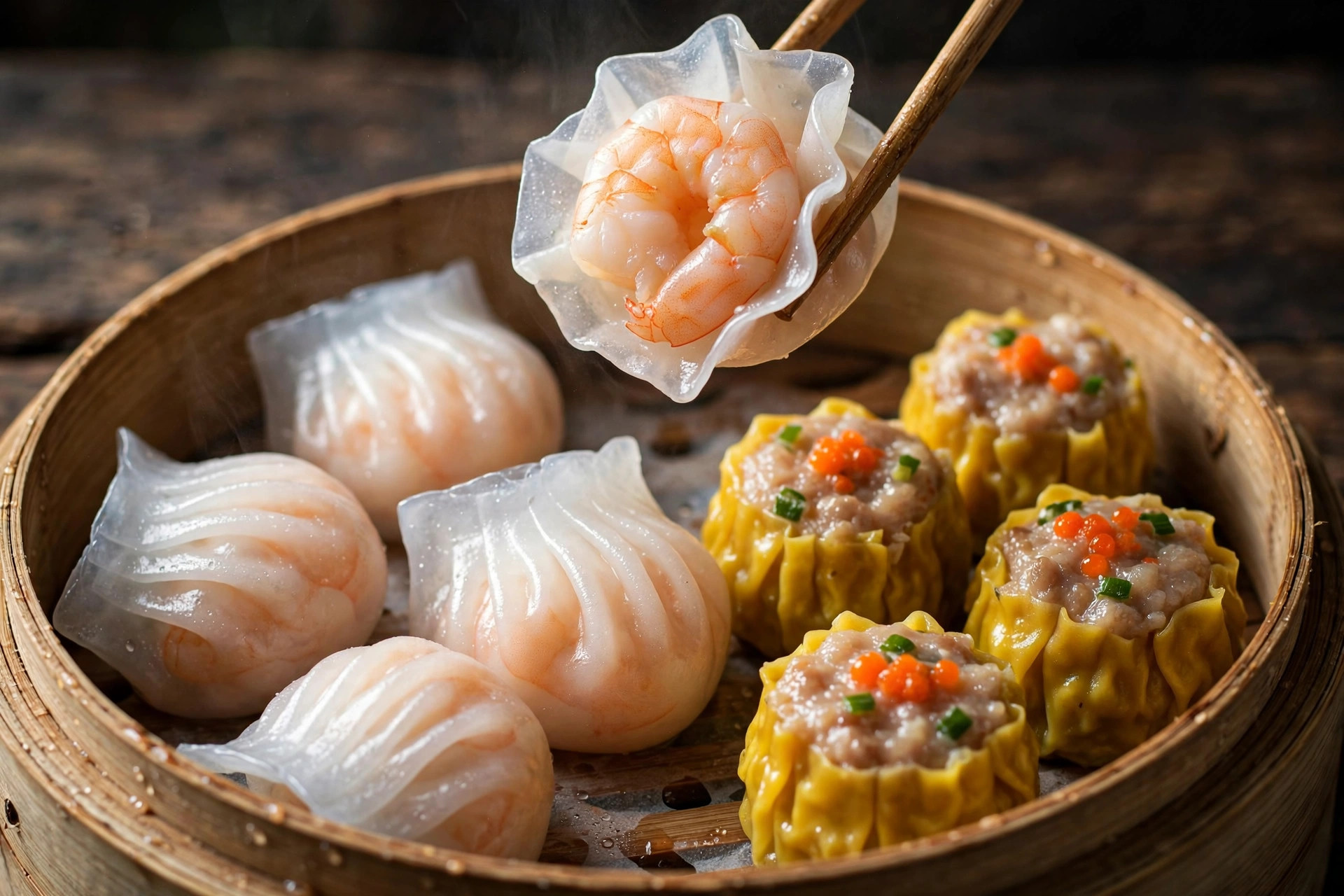
The superstars of the dim sum table are dumplings. Har gow — those translucent shrimp dumplings with the pleated wheat-starch wrapper — are the benchmark dish; a dim sum kitchen is judged by them. Siu mai, the open-topped pork-and-shrimp cups often dotted with crab roe, are the other headliner. These are dumplings and dim sum, both at once, and they’re the reason the confusion exists.
But walk past the dumpling steamers and the dim sum menu keeps going into territory that has nothing to do with dumplings:
Steamed buns. Char siu bao — fluffy white buns stuffed with sweet barbecue pork — are dim sum royalty. They’re buns, not dumplings: leavened dough, baked or steamed, a totally different architecture. (More on the bao family here.)
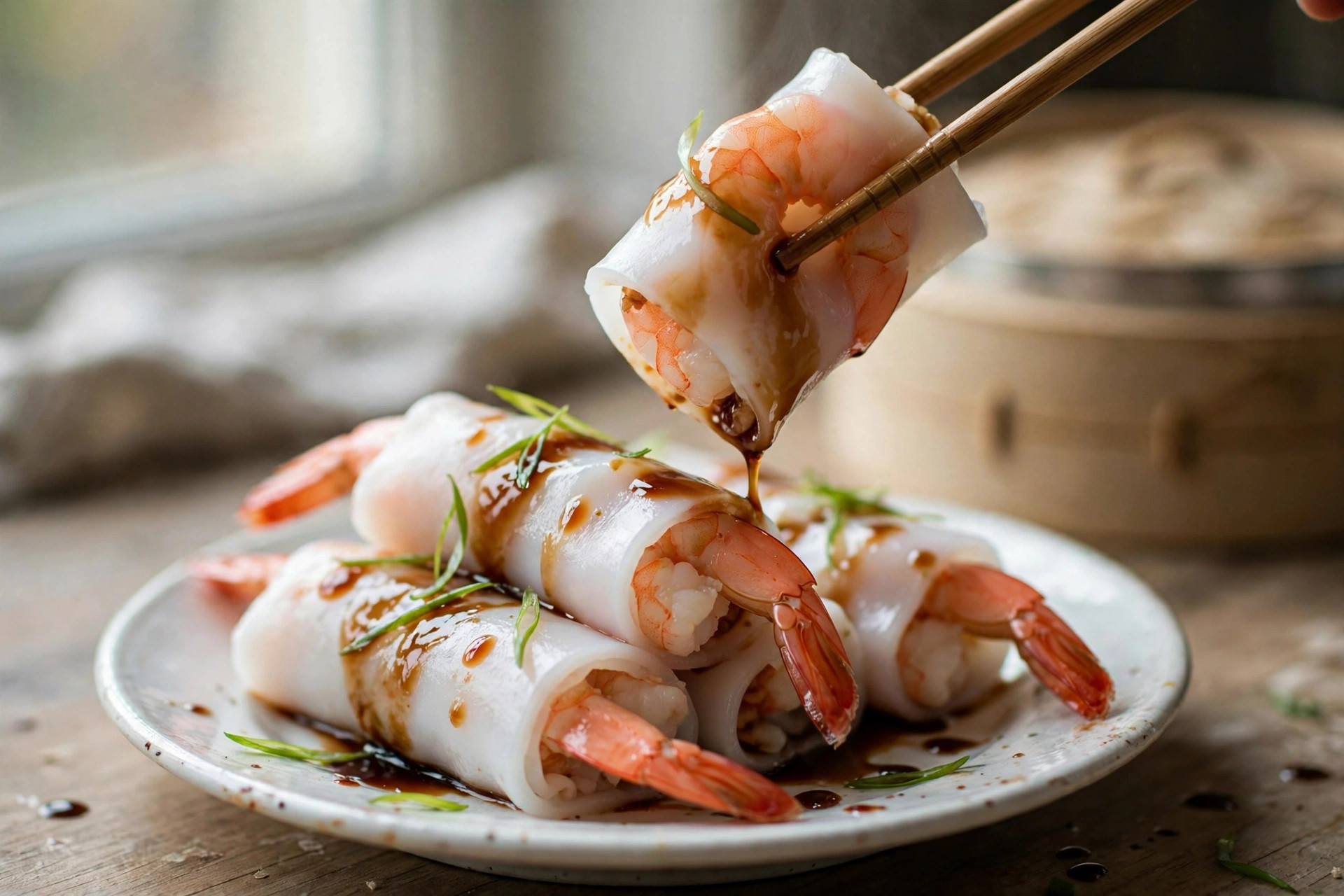
Rice rolls. Cheung fun are silky sheets of steamed rice noodle rolled around shrimp, beef, or char siu, slicked with sweet soy sauce. No wrapper, no pleating, no dumpling — and absolutely essential.
The savory oddities. Chicken feet braised until the skin turns silky (“phoenix talons” on poetic menus), spare ribs steamed with black beans and chili, turnip cake pan-fried crisp. None of these are dumplings. All of them are dim sum.
The sweets. Egg tarts with their flaky shells and wobbling custard, sesame balls, mango pudding — dessert shows up right alongside the savory dishes, which still surprises first-timers.
And the traffic runs the other way too. Plenty of dumplings never appear at dim sum: northern-style boiled jiaozi served as dinner, wonton soup, potstickers at a neighborhood shop, and — the trickiest one — xiaolongbao. Soup dumplings are Shanghai’s pride, from the Jiangnan region far from Cantonese dim sum country. You’ll sometimes spot them on a dim sum menu, and nobody will arrest you for ordering them there. But traditionally they’re their own meal, eaten their own way, in their own context.
Why Everyone Gets Confused
A few forces keep blurring the line. First, language: in English, “dim sum” gets used loosely as a synonym for “Chinese dumplings,” especially on frozen-food packaging and takeout menus. A box labeled “dim sum assortment” in a supermarket freezer is usually just dumplings — no tea, no carts, no ritual.
Second, menus. Plenty of restaurants call themselves dim sum spots while serving what is essentially a dumpling menu, because “dim sum” sounds fancier and more marketable than “dumpling house.” And plenty of dumpling houses serve a few dim sum-style small plates. The categories bleed in real life.
Third, honest regional difference. What counts as dim sum in Guangzhou might raise eyebrows in Hong Kong, and the American-Chinese version has its own quirks. Food traditions aren’t legal codes — they’re habits, and habits drift.
None of this means the distinction is fake. It means it’s a living distinction: dim sum describes a way of eating, dumplings describe a thing you eat. Keep that sentence in your pocket and you’ll never be confused again, no matter what the menu says.
The Classics Worth Knowing by Name
You don’t need to memorize a whole menu — these names will carry you through any dim sum outing:
- Har gow — translucent shrimp dumplings. Judge the whole kitchen by these.
- Siu mai — open-topped pork-and-shrimp cups, often dotted with crab roe.
- Crystal dumplings — clear wrappers, often vegetarian.
- Char siu bao — fluffy barbecue pork buns, steamed or baked.
- Cheung fun — silky rice noodle rolls with shrimp, beef, or char siu.
- Lo bak go — pan-fried turnip cake, crisp outside and soft inside.
- Fung zao — “phoenix talons” (chicken feet), for the brave.
- Dan tat — egg tarts, for the finish.
Notice the balance: steamed, fried, sweet, savory, delicate, funky. A good dim sum order has range. If your table is all dumplings, you’re eating well but you’re only getting half the story — reach for the rice rolls and the turnip cake and see what the fuss is about.
One more practical note: dumplings at dim sum are usually served with light soy, chili oil, or nothing at all — the fillings are seasoned to stand alone. Save the elaborate dipping sauces for your homemade batch, where our easy dumpling dipping sauce will serve you well.
Frequently Asked Questions
Is dim sum the same as dumplings?
No. Dim sum is a Cantonese style of eating — small shared plates served with tea. Dumplings are individual food items (wrapper plus filling). Some dumplings, like har gow and siu mai, are served as dim sum, but the two terms describe different things.
Are xiaolongbao considered dim sum?
Traditionally, no. Xiaolongbao are a Shanghai/Jiangnan specialty, usually eaten as their own meal rather than as part of the Cantonese yum cha spread. Some restaurants list them on dim sum menus anyway, so don’t be surprised to see them — just know their roots are elsewhere.
What does dim sum mean in English?
In Cantonese, dim sum (點心) translates roughly to “touch the heart” — small morsels meant to delight. The meal itself is tied to yum cha (飲茶), meaning “drink tea,” which tells you how central the teapot is.
Can you eat dim sum alone?
You can, and nobody will stop you. But the format — three or four pieces per dish, dozens of dishes on offer — is built for sharing. Dim sum with two to four people is the sweet spot: enough appetites to cover real variety.
What’s the difference between dim sum and yum cha?
They’re two sides of the same coin. Yum cha means “drink tea” and refers to the social outing; dim sum refers to the small dishes eaten during it. In practice, people use the terms interchangeably — “let’s go yum cha” and “let’s get dim sum” mean the same Saturday plan.
So the next time someone says “let’s get dim sum” and you picture a plate of dumplings, picture bigger: the tea, the carts, the table full of small plates, the friends arguing over the last har gow. Order one dish you know, one you’ve never tried, and tap your fingers when the tea arrives. That’s the whole tradition in one gesture — and now you’re part of it.
[…] about the broader dumpling universe, our guide to Chinese dumplings maps the whole family, and dim sum vs dumplings sorts out the other common […]
[…] mai gai (糯米鸡): the lotus-leaf-wrapped sticky rice with chicken you get at dim sum — a dim sum classic. The rice steams in the leaf, absorbing chicken juices into one savory […]
[…] sum: har gow (shrimp dumplings), siu mai, cheung fun rice rolls — the whole dim sum tradition is Cantonese, built for lingering morning […]
[…] deep-fried wonton or spring roll shares the zha technique. If the distinction matters to you, our dim sum versus dumplings guide sorts out the […]
[…] assumes a standard dinner — banquet-style meals and dim sum brunches play by different rules (at dim sum, you just keep pointing at carts until morale improves). Second, when in doubt, round up. Leftover […]