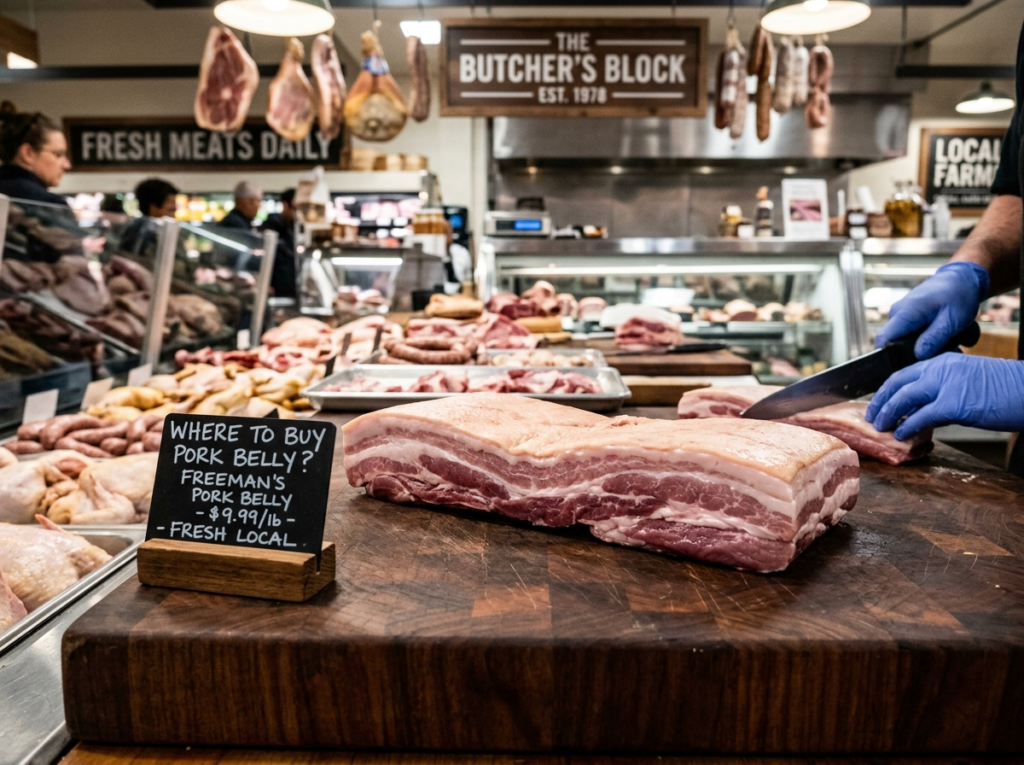
You’ve found a recipe for crispy pork belly, Vietnamese caramelized pork, or maybe char siu — and now you’re staring at the ingredient list thinking, “Wait, where do I actually buy pork belly?” You’re not alone. Despite being one of the most flavorful cuts of pork on the planet, pork belly isn’t always sitting in the meat case at your neighborhood grocery store. It takes a little know-how to track it down, and the source you choose can make a real difference in quality, price, and how your dish turns out.
Let’s walk through every practical option so you can find the right pork belly for your next meal.
Why Pork Belly Can Be Tricky to Find
Pork belly is the boneless, fatty slab cut from the underside of the pig. It’s the same cut that gets cured and smoked to make bacon — which is exactly why it sometimes feels hard to find in its whole, uncured form. Most of the pork belly produced in the United States goes straight to bacon processors. What’s left for retail sale is a fraction of the total supply.
That said, things have changed over the past decade. Pork belly’s popularity has exploded thanks to food TV, the rise of Asian cuisine in mainstream cooking, and the restaurant trend of braised or roasted pork belly as a menu centerpiece. More retailers are stocking it now than ever before. You just need to know where to look.
The other reason people struggle is that pork belly goes by different names depending on where you shop. Some butchers label it “fresh side pork.” At Asian grocers, you might see it listed as “samgyeopsal” (Korean) or “五花肉” (wǔ huā ròu) in Chinese. Knowing these terms saves you from walking right past what you’re looking for.
Grocery Stores and Supermarkets
Your regular grocery store is the most convenient starting point, and depending on where you live, it might be the only stop you need.
Big-Chain Grocery Stores
Major chains like Costco, Walmart, Kroger, Safeway, Publix, and Whole Foods all carry pork belly — though availability varies by location and season. Costco tends to be the most reliable option among big-box stores. They typically sell whole pork belly slabs, often skin-on, in vacuum-sealed packs ranging from 8 to 12 pounds. The price per pound at Costco usually falls between $3 and $5, which is significantly cheaper than most specialty shops.
Walmart carries pork belly in some locations, but it’s not universal. You’re more likely to find it at a Walmart Supercenter with a full-service meat department than at a smaller Neighborhood Market. Whole Foods stocks pork belly fairly consistently, and their cuts tend to come from pigs raised without antibiotics, though you’ll pay a premium — sometimes $8 to $12 per pound.
Pro Tip: If you don’t see pork belly in the display case, ask the butcher behind the counter. Many stores keep it in the back or can order it for you within a day or two. Most meat departments will do special orders at no extra charge.
What to Expect at the Meat Counter
Grocery store pork belly usually comes in one of two forms: a whole slab (typically 8–12 lbs) or pre-cut smaller portions (1–3 lbs). Whole slabs give you more flexibility — you can cut them into strips for Korean BBQ, cube them for braising, or roast the entire piece — but they require more freezer space if you’re not cooking it all at once.
Some stores also sell pre-sliced pork belly, cut thin for grilling or stir-frying. This is becoming more common as Korean BBQ gains popularity across the US.
One thing to watch for: not all grocery store pork belly comes with the skin on. If your recipe calls for crackling or crispy skin (like Chinese roast pork belly), you’ll want to specifically ask for skin-on cuts. Many American retailers remove the skin before packaging.
Asian Grocery Stores
If there’s an Asian supermarket anywhere near you, that’s probably your best bet for buying pork belly. Period.
Asian grocery stores stock pork belly as a staple item, not a specialty product. It’s used constantly across Chinese, Korean, Japanese, Vietnamese, Filipino, and Thai cooking, so the turnover is high and the selection is typically excellent. Stores like H Mart, 99 Ranch Market, Mitsuwa, Seafood City, and local independent Asian markets almost always have multiple pork belly options available.
You’ll often find whole slabs, pre-sliced strips (thin-cut for Korean samgyeopsal or Japanese yakitori), cubed pieces for braising, and sometimes even marinated or seasoned options ready to cook. The skin is usually left on, which is a big plus if you’re making something like Chinese char siu pork or crispy roasted belly.
Why Prices Tend to Be Lower
Asian markets often sell pork belly for $2.50 to $4.50 per pound — less than most conventional grocery stores and significantly less than specialty butchers. The reason is straightforward: pork belly is a high-demand, high-volume item in these stores. They move a lot of product, which keeps prices competitive.
Another advantage is freshness. Because pork belly sells quickly at Asian grocers, the product in the case tends to be fresher than what you’d find at a store where it sits for days waiting for someone to buy it.
Tips for Shopping at Asian Markets
If you’re new to Asian grocery stores, don’t be intimidated. The meat sections are usually well-organized, and staff are generally happy to help. If you want a specific thickness for slicing or need the butcher to remove the skin, just ask.
Look for pork belly with an even ratio of meat to fat — you want roughly alternating layers, which is why the Chinese name 五花肉 translates to “five-flower meat,” referring to those beautiful layers. Avoid pieces that are mostly fat with very little lean meat, as they’ll render down too much during cooking.
If you’re planning to make a dish like easy Vietnamese caramelized pork, Asian markets often carry the exact cut and size you need without any extra trimming on your end.
Local Butcher Shops and Meat Markets
A good butcher is worth their weight in gold when it comes to buying pork belly. You’ll pay more than at a grocery store or Asian market — usually $6 to $12 per pound — but the trade-off is quality, customization, and expert advice.
What a Butcher Can Do That a Grocery Store Can’t
A butcher will cut your pork belly to your exact specifications. Want a 3-pound slab, skin-on, scored in a crosshatch pattern for roasting? Done. Need it sliced into 1/4-inch strips for grilling? No problem. Want the skin removed and saved separately so you can make chicharrones? They’ll do that too.
Butcher shops also tend to source from smaller farms, which often means heritage breeds like Berkshire (Kurobuta), Duroc, or Red Wattle. These breeds carry more intramuscular fat and tend to produce pork belly with richer flavor and better texture than conventional commodity pork. If you’ve ever wondered why the pork belly at a nice restaurant tastes so much better than what you make at home, the breed and sourcing often play a big role.
Finding a Butcher Near You
Independent butcher shops have made a strong comeback in recent years, especially in urban and suburban areas. Apps like Google Maps and Yelp make it easy to search for “butcher shop near me.” Farmers’ market vendors who sell meat often operate butcher shops during the week as well, so that’s another lead worth following.
Quick Fact: According to the USDA, the United States produced over 27 billion pounds of pork in 2023. Plenty of that makes its way to independent butchers, but you may still need to call ahead for pork belly since it’s not always in the daily display case.
Online Retailers and Meat Delivery Services
Online ordering has opened up pork belly access for people who live in areas without Asian markets or quality butcher shops. Several reputable online meat companies ship pork belly directly to your door, packed on dry ice to keep it frozen during transit.
Popular Online Sources
Snake River Farms is one of the best-known options for premium pork belly. They sell Kurobuta (Berkshire) pork belly, which is prized for its marbling and tenderness. Expect to pay around $12–$18 per pound, plus shipping. It’s a splurge, but the quality is hard to beat.
ButcherBox is a subscription meat delivery service that occasionally includes pork belly in its curated boxes or offers it as an add-on. Their pork is raised without antibiotics or added hormones, and pricing is competitive when bundled with other cuts.
Crowd Cow connects you directly with small farms and ranches. Their pork belly selection changes based on availability, but you can often find heritage breed options and read about exactly which farm raised the animal.
Porter Road focuses on pasture-raised meats from small farms in the Southeast US. Their pork belly is consistently well-reviewed.
Amazon and Walmart.com also sell frozen pork belly from various vendors. Quality can be hit-or-miss, so read reviews carefully and check the seller’s reputation before ordering.
Shipping Considerations
Frozen pork belly shipped on dry ice typically arrives in excellent condition, but there are a few things to keep in mind. Most companies ship Monday through Wednesday to avoid packages sitting in a warehouse over the weekend. Shipping costs can be steep — sometimes $10 to $30 depending on location and order size — so it often makes sense to buy in bulk to offset the delivery fee.
Once your pork belly arrives, move it to the freezer immediately if you’re not cooking it right away. Properly wrapped pork belly keeps well in the freezer for up to six months, though it’s best used within three months for peak quality.
Farmers’ Markets and Direct-From-Farm Sales
Buying pork belly at a farmers’ market connects you with the people who raised the animal, and that’s not just a feel-good thing — it genuinely affects what ends up on your plate.
Small-farm pork belly often comes from pigs raised outdoors on pasture, fed a more diverse diet than factory-farmed hogs. The result is darker-colored meat, firmer fat, and a more complex, “porky” flavor that you simply don’t get from commodity pork. Heritage breeds are also more common at farmers’ markets.
Prices at farmers’ markets usually run $8 to $15 per pound, making this the most expensive option on the list. But if you’re making a special-occasion dish — say, a slow-roasted pork belly for a dinner party — the quality justifies the cost.
How to Buy Smart at a Farmers’ Market
Not every meat vendor at a farmers’ market will have pork belly on hand every week. It’s a relatively small cut compared to the whole animal, so supply is limited. Your best strategy is to talk to the vendor, tell them what you want, and ask if they can bring it the following week or set one aside for you.
Many small farms also sell directly through their websites or farm stores. If you find a farmer whose pork you love, ask about buying a whole belly or half belly directly. You’ll often get a better price than the per-pound farmers’ market rate.
Did You Know? A whole pork belly from a standard market-weight hog weighs roughly 10 to 15 pounds. That’s a lot of meat, but it freezes beautifully — so buying a whole belly and portioning it out yourself can save you serious money over time.
What to Look for When Buying Pork Belly
No matter where you buy pork belly, knowing how to pick a good piece makes all the difference. Here’s what separates a great slab from a mediocre one.
The Meat-to-Fat Ratio
The best pork belly has clearly defined alternating layers of lean meat and fat. Hold the piece up and look at the cross-section from the side — you should see distinct stripes. If it’s almost entirely fat with just a thin layer of meat, it’ll shrink down to almost nothing during cooking. If it’s too lean (rare, but it happens), you’ll miss out on the rich, melt-in-your-mouth texture that makes pork belly special.
Skin On or Skin Off?
This depends entirely on your recipe. Skin-on pork belly is essential for dishes where you want crispy crackling, like Chinese roast pork or Filipino lechon kawali. Skin-off is fine for braising, slow cooking, or making Dongpo pork where the skin gets silky-soft anyway. Most Asian and many braised preparations actually benefit from skin-on belly, as the skin adds body and richness to the sauce.
Freshness Indicators
Fresh pork belly should be pinkish-red with white (not yellowish) fat. It shouldn’t have any off-putting smell — fresh pork has a very mild, neutral scent. If the meat looks gray or the fat has started to turn yellow, it’s past its prime.
For packaged pork belly, check the sell-by date and look for excessive liquid in the packaging. A little moisture is normal, but a lot of liquid suggests the meat has been sitting around too long or was previously frozen and thawed.
How Much Pork Belly to Buy
One of the most common questions people have is how much pork belly they actually need. The answer depends on what you’re making, but here’s a useful rule of thumb:
For braised or roasted pork belly served as a main dish, plan on about half a pound (8 ounces) of raw pork belly per person. Pork belly loses roughly 30–40% of its weight during cooking as fat renders out, so that half pound cooks down to about 5–6 ounces of finished meat — a generous portion.
For sliced pork belly used in Korean BBQ or stir-fries, you can get away with a bit less per person since it’s served alongside rice, vegetables, and other banchan. About 5–6 ounces of raw pork belly per person works well in that context. If you’re cooking a big batch of something like grilled lemongrass pork and want leftovers, round up.
When in doubt, buy more than you think you need. Raw pork belly freezes well, and leftover cooked pork belly reheats better than almost any other cut of meat.
Storing Pork Belly After You Buy It
Once you’ve got your pork belly home, proper storage keeps it safe and fresh.
In the fridge: Raw pork belly lasts 3 to 5 days in the refrigerator, stored in its original packaging or wrapped tightly in plastic wrap. Keep it on the lowest shelf to prevent any juices from dripping onto other foods. The USDA recommends keeping your fridge at 40°F (4°C) or below for safe meat storage.
In the freezer: Wrap pork belly tightly in plastic wrap, then again in aluminum foil or a freezer-safe bag, pressing out as much air as possible. It’ll keep for up to 6 months, though quality is best within 3 months. For even better results, vacuum-seal it if you have the equipment.
Thawing: The safest way to thaw frozen pork belly is in the refrigerator overnight. A full slab can take 24 to 48 hours to thaw completely, so plan ahead. If you’re in a rush, you can submerge the sealed package in cold water, changing the water every 30 minutes. Never thaw pork belly on the counter at room temperature — that puts it in the bacterial “danger zone” (40°F to 140°F) for too long.
If you’ve cooked rice in the fridge and have leftover pork belly, the two pair together for quick meals throughout the week.
⚠️ Food Safety Note: Always cook pork belly to an internal temperature of at least 145°F (63°C), followed by a 3-minute rest, as recommended by the USDA. Use a meat thermometer — don’t guess. For braised or slow-roasted preparations where you want the connective tissue to break down fully, cooking to 195–205°F internal is typical and safe.
Price Comparison: What You’ll Typically Pay
Pork belly prices vary wildly depending on where you buy and what you buy. Here’s a general snapshot of what to expect in 2024:
| Source | Price Per Pound | Skin On? | Notes |
|---|---|---|---|
| Costco | $3 – $5 | Usually yes | Whole slab, vacuum sealed |
| Asian grocery store | $2.50 – $4.50 | Yes | Various cuts available |
| Regular grocery store | $4 – $8 | Varies | May need to special order |
| Local butcher | $6 – $12 | Your choice | Custom cuts, heritage breeds |
| Farmers’ market | $8 – $15 | Usually yes | Pasture-raised, heritage breeds |
| Online (standard) | $6 – $10 + shipping | Varies | Frozen, shipped on dry ice |
| Online (premium/Kurobuta) | $12 – $18 + shipping | Usually yes | Snake River Farms, Crowd Cow |
These prices fluctuate with the pork market, seasonal demand, and regional differences. Pork belly prices tend to spike a bit during the summer grilling season and around the holidays.
FAQ
Can I buy pork belly at Costco?
Yes. Costco is one of the most reliable big-box retailers for pork belly. They typically sell whole slabs, skin-on, in vacuum-sealed packages weighing 8 to 12 pounds. Prices generally range from $3 to $5 per pound, making Costco one of the most affordable options. Availability can vary by location, so check with your local store or look in the refrigerated meat section near the other pork cuts.
Is pork belly the same thing as bacon?
Not exactly. Pork belly is the raw, uncured cut of meat. Bacon is pork belly that has been cured (with salt, sugar, and nitrates) and usually smoked. They come from the same part of the pig, but they taste and cook very differently. When a recipe calls for pork belly, it means the fresh, uncured version — not a pack of bacon from the breakfast aisle.
How do I ask for pork belly at a butcher or grocery store?
Just ask for “pork belly” — most butchers and meat department staff will know exactly what you mean. If they seem unsure, you can also say “fresh side pork” or “uncured pork belly.” Specify whether you want it skin-on or skin-off, and mention the weight you need. If they don’t have it in stock, ask if they can order it. Most butchers and grocery meat departments can get it within a day or two.
Can I buy pork belly already sliced?
Yes. Asian grocery stores commonly sell pre-sliced pork belly in various thicknesses — thin slices for grilling (Korean BBQ-style) and thicker slices for stir-frying or braising. Some conventional grocery stores and online retailers also offer pre-sliced options. If you’re buying from a butcher, just ask them to slice it to your preferred thickness.
What’s the best pork belly for crispy skin?
Look for a skin-on slab with an even thickness and dry, firm skin. The skin should be smooth, not wrinkled or overly thick. Before cooking, score the skin with a sharp knife, pat it completely dry, and rub it with salt. Starting at high heat (around 450°F) helps blister the skin before you lower the temperature to cook the meat through. If you’re already comfortable with a wok or high-heat cooking, knowing how to season your wok can complement your pork belly game in other recipes.
Your Next Step
Now that you know exactly where to look — from Costco and Asian markets to online retailers and local farms — finding pork belly is mostly about knowing your options and picking the source that fits your recipe, budget, and quality preferences. If you’re cooking for the first time with this cut, start with a small piece from an Asian grocery store. The price is forgiving, the quality is solid, and you’ll get a feel for how pork belly cooks without committing to a 12-pound Costco slab.
Once you’ve nailed your first pork belly dish, you’ll understand why cooks across Asia and around the world consider this one of the most rewarding cuts to work with. Whether you’re braising it low and slow with Chinese cooking wine or slicing it thin for a sizzling grill session, good pork belly is worth every bit of effort it takes to find.