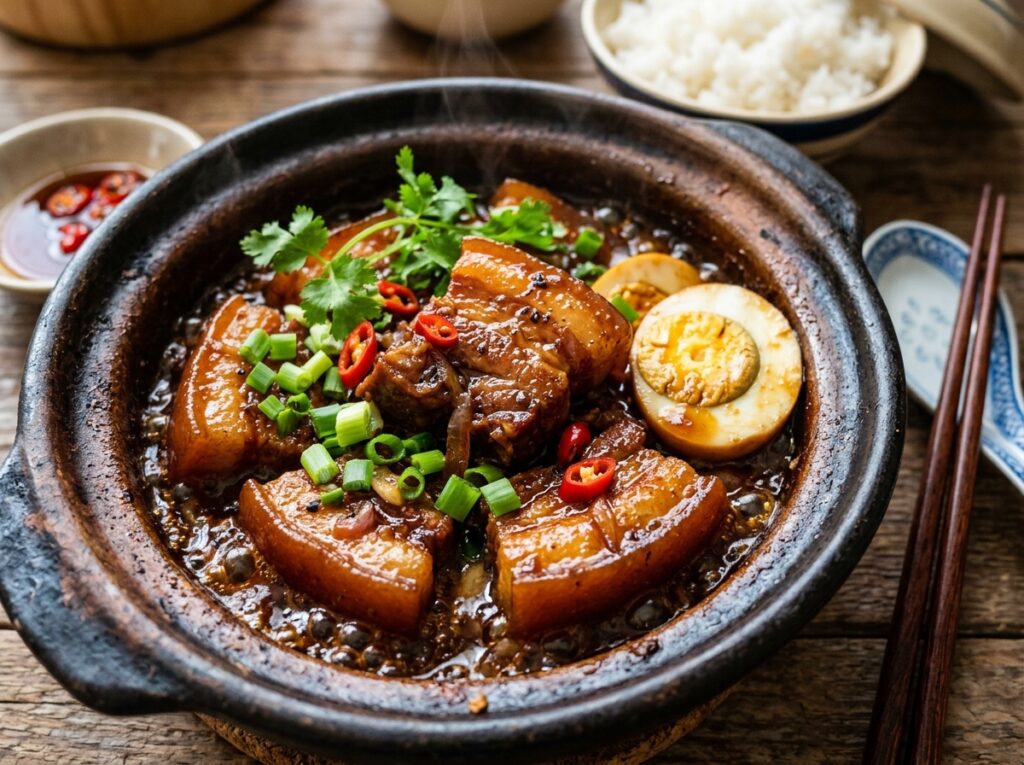
I’ll never forget the smell. It wasn’t in a restaurant. It was in a small, steamy kitchen in the Mekong Delta, during the chaotic, joyful days leading up to Tết, the Vietnamese Lunar New Year. I was staying with a friend’s family, and his grandmother, a woman whose hands told a century of stories, was presiding over a single, humble clay pot. It bubbled away on the stove for what felt like an eternity, filling the entire house with an aroma so profound, so complex, it felt like a physical presence.
It was sweet, salty, savory, and deeply, unctuously rich. That was my first encounter with true Vietnamese caramelized pork, or Thịt Kho. It wasn’t just a dish; it was the taste of family, of celebration, of home. After years of working in professional kitchens and studying Vietnamese cuisine, I’ve realized that most recipes you find online capture only a shadow of this dish. They give you a list of ingredients but miss the soul. They miss the alchemy.
This isn’t just another vietnamese caramelized pork recipe. This is an insider’s guide to the philosophy, the technique, and the heart of what makes this dish one of Vietnam’s most beloved culinary treasures. We’re going to deconstruct the magic, from the crucial caramel sauce to the specific cuts of pork, so you can create a dish that will transport you straight to that kitchen in the Delta.
Deconstructing “Caramelized”: The Soul of Nước Màu
Let’s start with the most misunderstood element: the “caramelized” part. Most Western cooks hear “caramel” and think of dessert. But in Vietnamese cooking, the caramel sauce, or nước màu, is something else entirely. It’s the foundation of color and deep, complex bitterness in countless savory dishes. It is not just sweet; it’s a dark, almost roasty, bitter note that balances the saltiness of the fish sauce and the richness of the pork.
There are two ways to make it, and understanding the difference is the first step to authenticity.
- The “Dry” Caramel Method: This is the traditional, high-wire act. You pour sugar into a heavy-bottomed pot (ideally clay or enamel) and melt it over medium-high heat without any water. You swirl it constantly until it melts, then turns a deep, mahogany brown, and smells slightly of toasted coffee. This process happens in seconds. Go too far, and it’s burnt and acrid. Stop too early, and it’s just sweet sugar. This method produces a nước màu with unparalleled complexity and a deep, dark color. It’s what the grandmothers do.
- The “Wet” Caramel Method: This is the safer, more modern approach. You melt the sugar with a bit of water. This prevents it from burning as easily and gives you more control. However, the resulting sauce is often one-dimensional—mostly sweet—and lacks that signature bitter edge.
The secret is to aim for the dry method. It teaches you to trust your senses—your eyes, your nose—over a timer. If you’re terrified, you can buy pre-made nước màu at any Asian market, but making it from scratch is a rite of passage. That dark, glossy liquid is the soul of your caramelized pork vietnamese dish.
The Trinity of Flavor: Engineering the Perfect Braise
Once you have your nước màu, the rest of the dish is about building a perfectly balanced braising liquid. This isn’t just “throw everything in a pot.” Every ingredient has a specific, scientific function.
| Flavor Component | Purpose | Key Ingredients |
|---|---|---|
| Bitter & Color | The foundational soul of the dish. Provides depth and that signature dark hue. | Nước Màu (Caramel Sauce) |
| Salty & Umami | The primary seasoning. Provides the savory, “meaty” backbone that defines Vietnamese cuisine. | Fish Sauce (Nước Mắm) |
| Sweet & Tenderizer | Balances the salt and bitterness. Crucial for caramelization and helps break down the pork’s connective tissues. | Sugar (Rock or White), Coconut Water/Soda |
| Aromatic & Pungent | Provides the top notes and fragrance. Rounds out the flavor profile. | Minced Shallots, Garlic, Black Pepper |
Notice I didn’t list soy sauce. While some modern or regional variations use it, a classic Thịt Kho relies solely on fish sauce for its saltiness. The combination of fish sauce and caramel is what creates that uniquely Vietnamese flavor profile—salty, sweet, and darkly bitter all at once.
And what about the liquid? This is another key secret. Many recipes call for water. That’s fine. But the best versions use fresh coconut water (the stuff straight from a young coconut, not the canned, sweetened stuff). The natural sugars and enzymes in the coconut water add a subtle, nutty aroma and work as a phenomenal tenderizer. If you can’t find it, a good quality, unsweetened coconut water from a carton works, or even a splash of plain soda water to help tenderize the meat.
The Two-Stage Cooking Method: Render, Then Braise
This is the technique that separates the good from the great. You do not just dump everything in a pot and simmer. That’s a recipe for boiled, grey pork. The magic happens in two distinct stages.
Stage 1: The Render and Sear.
Take your chunks of caramelized pork belly or shoulder and place them in a cold, heavy-bottomed pot with a dash of oil. Turn the heat to medium-low. As the pot heats up, the pork will begin to release its fat. This is liquid gold. Let the pork cook in its own rendered fat, stirring occasionally. The goal is to brown the meat on all sides. This process, known as the Maillard reaction, creates hundreds of new flavor compounds. You are building the first, most crucial layer of flavor before you even add any liquid. This step is non-negotiable.
Stage 2: The Braise and Reduce.
Once the pork is beautifully browned and swimming in its own fat, you add the aromatics (shallots, garlic) and cook for another minute until fragrant. Then, you add the nước màu, fish sauce, and sugar. Stir to combine, coating every piece of pork. Finally, add your coconut water or soda, enough to come about halfway up the pork. Bring it to a boil, then immediately reduce the heat to the lowest possible setting. Cover the pot and let it braise. For pork belly, this can take 1.5 to 2 hours. For leaner cuts, less time.
The final secret is the uncovering. For the last 20-30 minutes of cooking, remove the lid. This allows the liquid to reduce and thicken, concentrating the flavors into a glossy, syrupy glaze that clings to every piece of meat. The fat will have rendered out completely, leaving behind meltingly tender meat.
The Canvas: Choosing Your Pork and The Holy Trinity of Eggs
The classic, undisputed king for this dish is piet belly (thịt ba chỉ). Its high fat content renders down during the long braise, basting the meat from the inside out and creating an unctuous, silky sauce. The cubes of belly become tender, jewel-like morsels of meat and fat.
But you can adapt the master technique:
- Pork Shoulder/Butt: A leaner, more budget-friendly option. It won’t be as rich, but it will be meaty and delicious. It requires less time to braise, maybe 60-90 minutes.
- Pork Ribs: For vietnamese caramelized pork ribs, use meaty country-style ribs. The cooking time will be shorter, around 45-60 minutes. The goal is for the meat to be pulling away from the bone. The high surface area means the sauce will glaze them beautifully.
- Pork Chops: This is less traditional. If you want to make caramelized pork chops, use thick-cut bone-in chops. You’ll need to adjust the method significantly. A full braise will make them fall apart. Instead, use the marinade ingredients as a braising liquid, but only braise for 15-20 minutes until just cooked through. Then remove the chops, reduce the sauce like crazy, and spoon it over the chops. It’s a different dish, but a delicious one.
And now, the most iconic variation: Caramelized Pork and Eggs (Thịt Kho Trứng). This is the quintessential Tết dish. The eggs symbolize completeness and new beginnings. The method is simple. Hard-boil some eggs, peel them, and nestle them into the pot during the last 40 minutes of braising. The eggs will absorb the glorious, salty-sweet-bitter sauce, the whites turning a beautiful tan color and the yolks becoming incredibly rich and creamy. A bowl of rice, a piece of pork, and a halved braised egg is, for many Vietnamese people, the definition of comfort.
Your Blueprint: Master Thịt Kho Recipe
Now you have the knowledge. Here is the blueprint to bring it all together.
Ingredients:
- 2.5 lbs pork belly or shoulder, cut into 1.5-inch cubes
- 1/4 cup sugar (for nước màu)
- 3 tbsp fish sauce (or more, to taste)
- 2 tbsp rock sugar (or white sugar)
- 2 cups fresh coconut water (or unsweetened)
- 4 shallots, minced
- 4 cloves garlic, minced
- 1 tsp black pepper
- 6-8 hard-boiled eggs (optional, for Thịt Kho Trứng)
- 2 tbsp vegetable oil
Instructions:
- Make the Caramel Sauce: In a heavy-bottomed pot, heat the 1/4 cup of sugar over medium-high heat. Swirl constantly until it melts and turns a deep amber, like a copper penny. Immediately and carefully, add about 1/4 cup of hot water (it will spatter!). Stir to dissolve. Set aside.
- Render and Sear: In the same pot (or a clay pot), add the oil and pork over medium-low heat. Cook slowly for 15-20 minutes, rendering the fat and browning the pork on all sides.
- Build the Flavor Base: Add the minced shallots and garlic. Cook for 1 minute until fragrant. Add the fish sauce, rock sugar, black pepper, and your reserved nước màu. Stir to coat the pork.
- Braise: Pour in the coconut water. Bring to a boil, then reduce heat to low. Cover and simmer for 1.5 hours for pork belly (less for shoulder). If using eggs, add them now.
- Reduce and Glaze: For the last 20-30 minutes, uncover the pot. The sauce should reduce and thicken to a beautiful, syrupy glaze. Skim any excess fat from the surface if desired (though some fat is glorious).
- Serve: Serve hot, over a bed of steamed jasmine rice. Garnish with chopped scallions or cilantro.