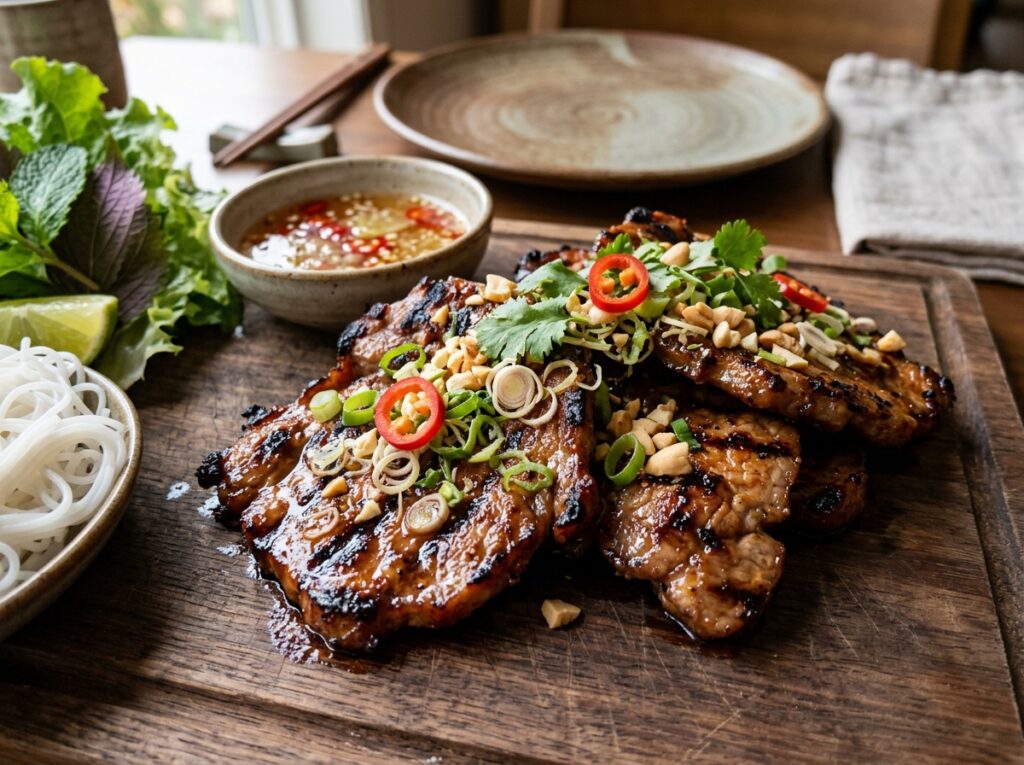
I can still smell it. It’s a scent that’s been seared into my memory more deeply than any recipe. It was the humid, electric air of a Hanoi night, a decade ago. I was with a chef friend, Tuan, navigating a labyrinth of alleyways lit by the faint glow of street food stalls. We stopped at one unassuming cart where an elderly woman was tending a small, fierce charcoal brazier. She was grilling thin, scarlet-hued pork skewers, the air thick with an intoxicating perfume of citrus, smoke, and caramelizing sugar.
Tuan turned to me, a look of pure reverence on his face. “This,” he said, “is the smell of home. This is thịt nướng sả—grilled lemongrass pork.” He explained that every family, every region, every stall has its own version, its own secret ratio of fish sauce to sugar, its own method for bruising the lemongrass. In that moment, I understood. This wasn’t just a dish; it was a cultural touchstone, a culinary fingerprint.
That single skewer was a revelation. It was sweet, savory, smoky, and impossibly fragrant, with a char that gave way to tender, juicy meat. After years of working in professional kitchens and traveling extensively through Vietnam, I’ve come to realize that most Western attempts at grilled lemongrass pork are pale imitations. They get the ingredients right but miss the soul. This guide is my attempt to give you that soul. It’s not just a recipe; it’s a masterclass in the philosophy, technique, and sensory experience that makes this dish one of the world’s greatest grilled foods.
The Lemongrass Trinity: Aroma, Marinade, and Assembly
Before we even touch a grill or a cutting board, you need to understand the three-part system that defines authentic Vietnamese grilled lemongrass pork. Miss one of these pillars, and you’re just making pork with lemon-scented seasoning.
- The Aromatic Soul (Preparation): This is about understanding your hero ingredient: lemongrass. Most Western recipes tell you to chop it. That’s a mistake. You need to unlock its essential oils.
- The Flavor Engine (The Marinade): This is not just a soak. It’s a carefully balanced chemical and biological process designed to tenderize, season, and create the perfect crust.
- The Final Canvas (The Assembly): The grilled meat is only one act in a five-act play. The final dish is a symphony of textures and temperatures, built with fresh herbs, cool noodles, and pungent sauces.
Master these three pillars, and you can stop following recipes forever. You’ll be able to create your own signature versions, whether you’re making grilled lemongrass pork skewers, a hearty grilled lemongrass pork chop, or a full-on noodle bowl.
Pillar 1: Unlocking the Aromatic Soul of Lemongrass
Lemongrass is not a soft herb like cilantro or basil. It’s a fibrous, woody grass. If you just toss the whole stalk into a food processor, you’ll end up with tough, stringy bits that are unpleasant to eat. The secret is in the preparation.
First, you must isolate the good part. Take a stalk and whack it with the back of your knife. The bottom, pale, and pliable section is what you want. The upper, green, and woody part can be used to infuse soups or stocks, but it has no place in a marinade. Peel off the tough outer layers of the bottom section, much like you would with a shallot. What you’re left with is a soft, fragrant core.
Now, the most critical step: you must bruise it. Lay the flat of your knife on the piece of lemongrass and give it a firm whack with the heel of your hand. This ruptures the cellular walls and releases the aromatic oils. You’ll be able to smell the difference immediately. Only after bruising should you finely mince it. The goal is a paste, almost a purée. This is the non-negotiable secret to getting that profound lemongrass flavor infused into every bite of the pork, rather than just chewing on a fibrous piece.
Pillar 2: Engineering the Perfect Marinade
A great marinade is a study in balance and function. Every ingredient has a job to do. Understanding these roles allows you to tweak recipes to your own taste.
| Functional Role | Purpose | Key Ingredients |
|---|---|---|
| Umami Base | Provides the deep, savory, “meaty” foundation. This is the soul of Vietnamese flavor. | Fish Sauce (Nước Mắm), Soy Sauce |
| Sweetness & Caramelization | Balances the saltiness and is essential for creating a beautiful, charred crust on the grill. | Brown Sugar, Rock Sugar, Honey |
| Tenderizer & Brightness | The acid helps break down tough muscle fibers and cuts through the richness of the fat. | Rice Vinegar, Lime Juice |
| Fat & Moisture Retention | Acts as a carrier for fat-soluble flavors and prevents the lean pork from drying out over high heat. | Vegetable Oil, Annatto Oil (for color) |
| Aromatic Powerhouse | Provides the signature fragrance and complexity. | Bruised/minced Lemongrass, Garlic, Shallots, Turmeric |
Now, let’s talk about technique. The best marinades aren’t just dumped into a bowl. You bloom the aromatics. Gently heat a couple of tablespoons of oil in a small pan. Add the minced lemongrass, garlic, and shallots and cook for just 1-2 minutes until they are fragrant and soft. This “wakes them up,” mellowing their raw bite and deepening their flavor before they even hit the pork. Let this mixture cool completely before adding your wet ingredients like fish sauce and sugar.
For grilled lemongrass pork chops, which are thicker, you might want to add a bit more oil and maybe a touch of baking soda (a tiny pinch, seriously) to the marinade. The baking soda raises the pH of the meat’s surface, helping it brown more quickly and retain moisture. It’s a classic restaurant trick for achieving a superior crust.
Marinate for at least 4 hours, but overnight is better. The flavor penetration and tenderization will be far superior.
Pillar 3: The Art of Assembly – Building the Bowl
This is the step that elevates the dish from “grilled meat” to an unforgettable meal. The grilled pork is the star, but it needs a supporting cast. This is how you create those legendary grilled lemongrass pork noodle bowls you see in Vietnamese restaurants.
- The Base: A bed of cool, vermicelli rice noodles (bún). Their neutral flavor and soft texture are the perfect canvas.
- The Pickle: Quick-pickled daikon and carrots (đồ chua). This is not optional. They provide a crucial crunchy texture and a sharp, sweet-tangy counterpoint that cuts through the richness of the pork and marinade.
- The Herb Garden: A massive pile of fresh herbs. I’m talking a handful, not a sprinkle. Mint, cilantro, Thai basil, and perilla leaves are classic. They provide freshness, aroma, and a cleansing palate effect between bites.
- The Garnish: Sliced cucumber, crushed peanuts, and fried shallots for extra texture and nuttiness.
- The Unifier: The Dipping Sauce. A classic nước chấm is what ties it all together. It’s a perfectly balanced sauce of fish sauce, lime juice, sugar, water, and fresh chili and garlic. It’s salty, sweet, sour, and spicy all at once.
When you assemble the bowl, you’re not just tossing things together. You’re creating a balanced bite in every spoonful—a bit of charred pork, a slurp of cool noodle, the crunch of a pickle, the hit of fresh herb, all brought together by the magical sauce.
The Blueprints: Putting It All Together
Now that you understand the philosophy, here are the blueprints to execute it.
Blueprint 1: The Classic – Grilled Lemongrass Pork Skewers (Thịt Nướng Sả)
This is the street food classic that started it all.
- The Pork: Use pork shoulder or butt. It has the perfect fat-to-meat ratio and becomes incredibly tender. Cut it into thin, bite-sized strips against the grain.
- The Marinade: Use the master marinade recipe. Since the pieces are small, they only need 4-6 hours to marinate.
- The Grill: Use charcoal if you can. Get it screaming hot. Thread the pork onto flat, wide skewers (this prevents them from spinning and ensures even cooking). Grill for 2-3 minutes per side, turning frequently, until deeply charred and cooked through. The sugar in the marinade will burn quickly, so stay vigilant.
- The Assembly: Serve the skewers with a bowl of nước chấm for dipping, alongside a massive platter of lettuce, herbs, and rice noodles for wrapping.
Blueprint 2: The Hearty Feast – Grilled Lemongrass Pork Chops
This adapts the flavor profile for a more substantial main course.
- The Pork: Use thick-cut (1.5-inch), bone-in rib chops. The bone will protect the meat and add flavor.
- The Marinade: Adapt the master marinade, perhaps adding a teaspoon of turmeric for color and earthiness. Marinate overnight.
- The Grill: Set up a two-zone fire. Sear the chops for 2-3 minutes per side over the hot zone to get a deep crust. Move them to the cooler zone, close the lid, and cook for another 8-12 minutes, or until they reach an internal temperature of 140°F (they will rise to 145°F while resting). This prevents the sugar-heavy marinade from burning before the chop is cooked through.
- The Assembly: These are fantastic served simply with steamed jasmine rice and a side of pickled vegetables and herbs.
Blueprint 3: The Ultimate Experience – The Grilled Lemongrass Pork Noodle Bowl (Bún Thịt Nướng)
This is the full, glorious assembly.
- Prep the Components: Cook your vermicelli noodles according to package directions and rinse with cold water. Make your pickles. Wash and dry your herbs. Whisk together your nước chấm.
- Grill the Pork: Use the skewer method from Blueprint 1. Once grilled, let the pork rest for a few minutes, then chop it into bite-sized pieces.
- Build the Bowl: Start with a generous nest of noodles in the bottom of a large bowl. Arrange the chopped grilled pork over the top. Artfully place piles of pickled carrots, cucumber, and herbs around the meat. Sprinkle with crushed peanuts and fried shallots.
- Serve: Serve the bowl with a small pitcher of nước chấm on the side, allowing each person to dress their own bowl to their liking.