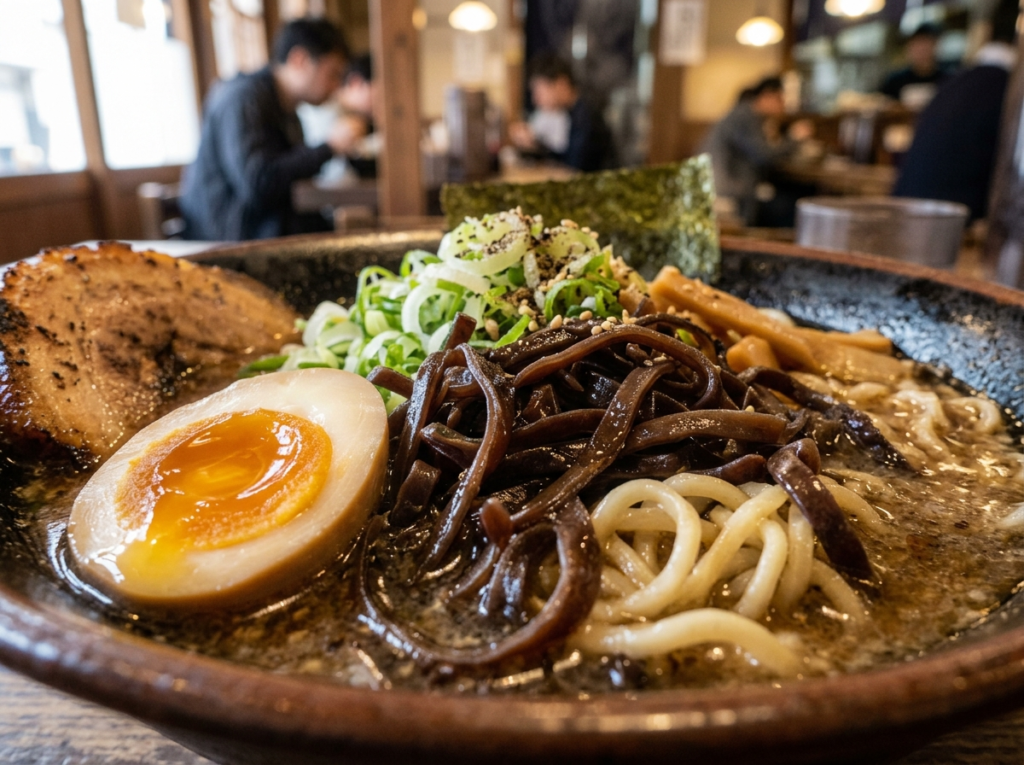
That little pile of dark, glossy, crunchy-yet-chewy mushrooms sitting on top of your ramen bowl? It has a name, and it’s one of the most underrated toppings in the entire ramen universe. Ajitsuke kikurage — seasoned wood ear mushrooms — might not get the spotlight that chashu pork or a jammy soft-boiled egg does, but once you understand what it brings to a bowl, you’ll never want ramen without it again.
If you’ve ever sat at a ramen counter in Tokyo, Sapporo, or even your favorite local ramen shop and wondered what those slippery, almost jelly-like strips were, this is your answer. And the best part? Making ajitsuke kikurage at home is surprisingly simple. You just need a few pantry staples, some dried wood ear mushrooms, and about 20 minutes of active cooking time.
Let’s get into everything you need to know — what it is, why it matters, and exactly how to make it yourself.
What Exactly Is Ajitsuke Kikurage?
The name breaks down pretty cleanly. Ajitsuke (味付け) means “seasoned” or “flavored” in Japanese. Kikurage (キクラゲ) is the Japanese word for wood ear mushrooms — those dark, wavy, ear-shaped fungi you’ve probably seen in Chinese and Japanese dishes. Put them together and you’ve got seasoned wood ear mushrooms, a staple topping in Japanese ramen shops, particularly in tonkotsu (pork bone broth) and shoyu (soy sauce) ramen styles.
What makes ajitsuke kikurage different from plain wood ear mushrooms is the marinade. The mushrooms get simmered or soaked in a savory-sweet mixture — usually soy sauce, mirin, sesame oil, and sometimes a touch of chili — that infuses them with deep umami flavor. They keep their signature crunch even after marinating, which is exactly the point.
Wood ear mushrooms on their own are pretty neutral in taste. They’re really more about texture than flavor. The ajitsuke treatment gives them a reason to exist on your palate beyond just being something interesting to chew. That salty-sweet glaze clings to their crinkly surface, and every bite delivers a little burst of seasoning that plays beautifully against rich broth.
Why Wood Ear Mushrooms Matter in Ramen
You might be thinking: with all the heavy hitters already in a ramen bowl — the silky broth, the springy noodles, the fatty pork — why bother with a mushroom topping? The answer comes down to something ramen chefs obsess over: texture contrast.
A great bowl of ramen isn’t just about flavor. It’s about how each component feels in your mouth. You’ve got soft noodles, tender chashu, a creamy egg yolk. Everything is smooth, rich, and yielding. Ajitsuke kikurage breaks up that softness with a completely different sensation — a satisfying crunch that’s not quite crispy, not quite rubbery, but somewhere uniquely in between.
If you’ve ever had a perfectly built chashu pork ramen bowl, you know how important each element is. The mushrooms do the same kind of work that bean sprouts or bamboo shoots do, except they bring a darker, earthier visual element and a more concentrated flavor hit from the marinade.
Did you know? Wood ear mushrooms (Auricularia auricula-judae) have been used in Chinese cuisine for over a thousand years. They appear in ancient herbal texts as both a food and a medicinal ingredient, valued for their high iron content and believed benefits for blood circulation. They spread to Japanese cuisine centuries ago and became a natural fit for ramen culture as it developed in the 20th century.
Choosing and Preparing Dried Wood Ear Mushrooms
You’ll almost always find wood ear mushrooms in their dried form. Fresh ones exist, but they’re harder to source outside of Asia, and dried ones actually work perfectly for this recipe. You can pick them up at any Asian grocery store — look in the dried goods aisle near the shiitake mushrooms and dried seaweed. Online retailers carry them too, often labeled as “dried black fungus” or “dried wood ear mushrooms.”
What to Look For
Good-quality dried wood ear mushrooms should be dark brown to black, fairly uniform in size, and free of any musty or off smells. They’ll look small and shriveled in the bag, but don’t let that fool you — they expand dramatically when soaked. A small handful of dried mushrooms will easily double or triple in volume once they hydrate.
There are two main varieties you might encounter. The smaller, thinner type (sometimes called cloud ear) has a more delicate texture. The larger, thicker variety gives you a heartier chew. Either works for ajitsuke kikurage, but the thicker ones hold up a bit better to slicing and marinating, and they deliver more of that signature crunch.
Rehydrating the Mushrooms
Soak the dried mushrooms in room-temperature water for at least 30 minutes, or until they’re fully soft and pliable. Some people use warm water to speed things up — that can cut your soaking time to about 15 minutes — but avoid boiling water, which can make the outer surface mushy before the inside fully hydrates.
Once they’ve plumped up, drain and rinse them thoroughly. You’ll sometimes find a small, tough spot where the mushroom was attached to the wood it grew on. Trim that off with a knife. Then slice the mushrooms into thin strips, roughly the width of your ramen noodles. This makes them easy to pick up with chopsticks and ensures they distribute evenly across the bowl.
⚠️ Food safety note: Dried wood ear mushrooms should always be soaked in cold or lukewarm water and used promptly. Don’t leave them soaking at room temperature for many hours, as rehydrated mushrooms left out too long can develop harmful bacteria. If you need to soak them for an extended time, refrigerate the bowl. Once rehydrated and cooked, store leftovers in the fridge and use within 3-5 days.
How to Make Ajitsuke Kikurage at Home
Here’s where it all comes together. This recipe is forgiving and adaptable, so don’t stress about exact measurements — taste as you go and adjust to your preference.
Ingredients
- 30g dried wood ear mushrooms (roughly a large handful)
- 2 tablespoons soy sauce
- 1 tablespoon mirin
- 1 teaspoon sesame oil
- 1 teaspoon rice vinegar
- 1 teaspoon sugar (white or brown)
- 1 clove garlic, minced
- Optional: ½ teaspoon chili flakes or la-yu (Japanese chili oil), thinly sliced scallion
Step-by-Step Method
Soak and prep the mushrooms. Place the dried wood ear mushrooms in a bowl and cover with room-temperature water. Let them sit for 30 minutes until fully expanded. Drain, rinse, trim any hard bits, and slice into thin strips.
Make the seasoning liquid. In a small bowl, whisk together the soy sauce, mirin, sesame oil, rice vinegar, and sugar until the sugar dissolves. If you’re using chili flakes, add them here. This mixture should taste a little stronger than you’d want on its own — the mushrooms will absorb and mellow it out.
Cook the mushrooms. Heat a small splash of neutral oil (vegetable or grapeseed) in a pan over medium heat. Add the minced garlic and cook for about 30 seconds, just until fragrant. Toss in the sliced mushrooms and stir-fry for 2-3 minutes. Having a well-seasoned wok makes this step even better, though a regular skillet works fine.
Add the seasoning. Pour the soy sauce mixture over the mushrooms and stir well. Let everything simmer on medium-low heat for about 5-7 minutes, until most of the liquid has been absorbed or evaporated. The mushrooms should look glossy and deeply colored.
Cool and store. Let the ajitsuke kikurage cool to room temperature, then transfer to an airtight container. They’ll keep in the refrigerator for up to 5 days. In fact, they taste even better after sitting overnight, as the flavors continue to develop.
🔥 Pro Tip: Make a double or triple batch. These keep well in the fridge and you can add them to ramen, rice bowls, stir-fries, or even cold noodle salads throughout the week. Once you have them ready to go, you’ll find yourself reaching for them constantly.
Variations and Flavor Twists
The basic recipe above gives you the classic ramen-shop style ajitsuke kikurage, but there’s plenty of room to play around. Here are a few directions you can take it.
Spicy Ajitsuke Kikurage
Add a tablespoon of Japanese chili oil (la-yu) or Korean gochugaru to the seasoning mixture. A splash of fish sauce can deepen the umami even further. This version works especially well on spicy miso ramen or tantanmen.
Ginger-Scallion Version
Swap the garlic for a thumb-sized piece of fresh ginger, grated or minced. Finish the cooked mushrooms with a generous handful of sliced scallions. The brightness of the ginger cuts through rich pork-based broths nicely.
Chinese-Inspired Seasoning
Lean into the Chinese roots of wood ear mushrooms by using Chinese cooking wine (Shaoxing wine) instead of mirin, and add a pinch of white pepper and five-spice powder. This version pairs well with tantanmen or mazesoba.
Sweet-Savory with Oyster Sauce
Replace half the soy sauce with oyster sauce and add a tiny drizzle of honey. The result is a slightly sweeter, thicker glaze that clings to the mushroom strips beautifully. Great on thick-broth tonkotsu bowls.
Where Ajitsuke Kikurage Fits in a Ramen Bowl
Building a proper ramen bowl is a lot like composing music. Every topping plays a specific role, and the best bowls have harmony between rich, light, crunchy, soft, salty, and acidic elements.
Ajitsuke kikurage fills the crunchy-savory slot. It sits alongside other toppings that each bring something different. Here’s how a well-rounded bowl might come together:
The broth provides the foundation — all the depth, fat, and body. Noodles deliver substance and carry the broth to your mouth. Chashu pork gives you richness and protein. A soft-boiled egg (ajitsuke tamago) adds creaminess. Scallions and nori bring freshness and a hint of brininess. And the kikurage? It’s your textural wildcard — that unexpected crunch and umami pop that keeps every bite interesting.
Some ramen styles feature kikurage more prominently than others. Tonkotsu ramen from Kyushu (the southern island of Japan, and the birthplace of the style) almost always includes it. If you order a bowl at a classic Hakata-style shop, those dark mushroom strips will be sitting right there next to the thin, firm noodles and milky pork broth. Shoyu ramen often includes them too, while shio (salt-based) and miso ramen might feature them less consistently.
Nutritional Benefits Worth Knowing
Wood ear mushrooms aren’t just a textural garnish — they actually pack a decent nutritional punch for something so low in calories.
A 100-gram serving of rehydrated wood ear mushrooms contains roughly 40 calories, almost no fat, and about 10 grams of carbohydrates (much of which is dietary fiber). They’re notably high in iron — some studies suggest they contain more iron per serving than most vegetables, which made them a traditional food recommendation for people with anemia in both Chinese and Japanese folk medicine.
They also contain polysaccharides — complex carbohydrates that some research has linked to immune function support and gut health benefits, though most of this research is still in early stages and shouldn’t be taken as medical advice.
The seasoning adds some sodium from the soy sauce, so if you’re watching your salt intake, you can reduce the soy sauce slightly and compensate with more sesame oil and vinegar for flavor.
Quick fact: Wood ear mushrooms are naturally vegan and gluten-free (assuming you use tamari instead of regular soy sauce). That makes ajitsuke kikurage a great topping for plant-based ramen bowls that sometimes struggle to offer interesting textures beyond soft tofu.
Beyond Ramen: Other Ways to Use Ajitsuke Kikurage
Once you’ve got a batch in your fridge, don’t limit yourself to ramen. These seasoned mushrooms are incredibly versatile.
Toss them into a rice bowl with a fried egg, some pickled vegetables, and a drizzle of sesame oil — you’ve got a 10-minute meal. Knowing how to cook perfect jasmine rice makes this combo even more satisfying.
They also work well in cold soba or somen noodle dishes during summer. The chilled mushrooms add substance and flavor without making the dish feel heavy. Mix them into a stir-fry alongside other vegetables, or pile them onto a bao bun with some sliced pork belly and pickled daikon for an easy appetizer.
You can even chop them finely and fold them into dumpling filling. Combined with ground pork, cabbage, and ginger, they add little pockets of crunch inside each dumpling that’ll make everyone ask what your secret ingredient is.
Troubleshooting Common Issues
Even though this recipe is straightforward, a few things can trip people up.
The mushrooms taste bland. This usually means not enough seasoning or too short of a cooking time. The mushrooms need time to absorb the liquid. Make sure you’re simmering long enough for most of the sauce to be soaked up. You can also let them marinate in the fridge overnight — they’ll intensify.
The texture is too rubbery or tough. You might have under-soaked the dried mushrooms. They need to be completely soft before cooking. If you cut into a soaked mushroom and the center still feels stiff, give them more time.
The mushrooms fell apart. This is less common with wood ear mushrooms (they’re pretty sturdy), but if you’re using the very thin cloud ear variety, they can break down with aggressive stir-frying. Use medium heat and gentle tossing rather than high heat and vigorous stirring.
Too salty. An easy fix — add a little more rice vinegar and a pinch of sugar to balance things out. You can also dilute by tossing in a few more plain soaked mushrooms to absorb the excess seasoning.
FAQ
What does ajitsuke kikurage taste like?
Ajitsuke kikurage has a mild earthy flavor from the wood ear mushrooms, layered with savory-sweet notes from the soy sauce and mirin marinade. The texture is the real star — a springy, jelly-like crunch that’s completely unique. Think of it like a chewier, more satisfying version of cooked seaweed, but with a deeper umami taste.
Can you buy pre-made ajitsuke kikurage?
Yes. Many Asian grocery stores sell pre-seasoned kikurage in the refrigerated section, often near the tofu and fresh noodles. Japanese brands like Momoya and Takaokaya make shelf-stable versions too. They’re convenient, but homemade versions let you control the sweetness, salt level, and spice to match your preference.
Are wood ear mushrooms safe for everyone to eat?
Wood ear mushrooms are generally safe for most people, but they do contain a mild anticoagulant compound. If you’re taking blood-thinning medication, talk to your doctor before eating them regularly. Pregnant women should also consult a healthcare provider, as some traditional guidance recommends limiting intake during pregnancy. Always cook or properly rehydrate them before eating — raw or improperly soaked wood ear mushrooms have been linked to foodborne illness in rare cases.
Can you freeze ajitsuke kikurage?
You can, though the texture may soften slightly after thawing. Freeze them in a single layer on a baking sheet first, then transfer to a freezer bag. They’ll keep for up to two months. Thaw in the refrigerator overnight before using. They won’t be quite as snappy as fresh, but they’ll still work well in ramen and stir-fries.
What’s the difference between wood ear mushrooms and shiitake mushrooms?
They’re completely different fungi. Shiitake mushrooms have a meaty, rich flavor and a soft, spongy texture. Wood ear mushrooms are much more about crunch than taste — they’re thin, gelatinous, and almost neutral in flavor until seasoned. In ramen, shiitake might appear in the broth itself (for umami), while wood ear mushrooms serve as a textural topping.
Your Next Bowl Just Got Better
Ajitsuke kikurage is one of those toppings that separates a good homemade ramen bowl from one that genuinely rivals what you’d get at a ramen shop. It takes almost no effort to prepare, keeps in the fridge all week, and adds a dimension of texture and flavor that nothing else quite replicates.
Start with the basic recipe, nail the technique, and then experiment with spice levels and seasoning variations until you find your personal favorite. Your next step? Grab a bag of dried wood ear mushrooms, set aside 30 minutes, and make your first batch. Once those glossy, crunchy strips hit your bowl, you’ll wonder how you ever ate ramen without them.