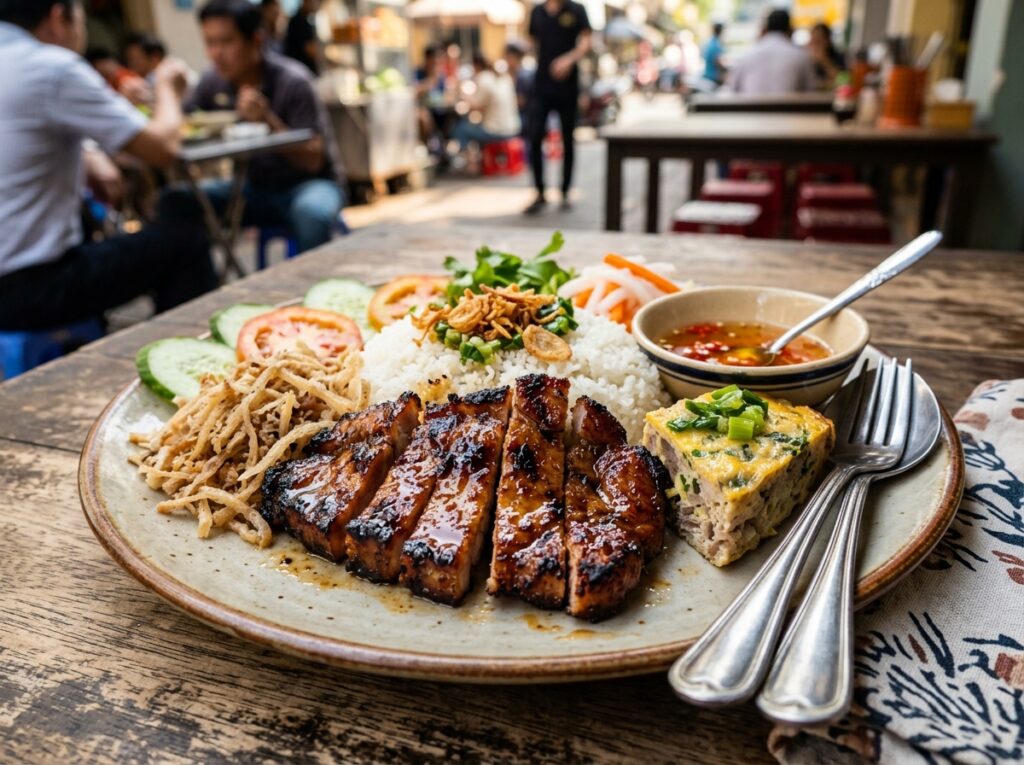
Let me take you back to 2016, when I first stepped into the chaotic kitchen of a tiny broken rice joint in Saigon’s District 3. The air was thick with the scent of caramelizing pork and fish sauce, and the head chef—a grizzled veteran with 30 years of experience—was berating a young cook for not fanning the rice properly. “This isn’t just food,” he told me later, “it’s a symphony where every note must be perfect.” That day changed how I viewed what many consider a simple street food. Eight years and countless broken rice plates later, I’m going to share the secrets most chefs would never reveal.
What Exactly Is Vietnamese Broken Rice?
Let’s clear up the biggest misconception first: broken rice isn’t about being “broken” in quality. In fact, it’s quite the opposite. These are the fractured grains that get separated during the milling process of premium jasmine rice. Historically, these fragments were considered less desirable and were often sold at a discount to working-class families. But here’s where the magic happened: resourceful Vietnamese cooks discovered that these fractured grains absorbed flavors differently—better, some would argue—and had a uniquely satisfying texture when cooked properly.
The Vietnamese broken rice dish, or “com tam” as it’s known locally, represents one of the most brilliant examples of turning culinary limitations into strengths. The broken grains create a slightly sticky yet fluffy texture that holds sauces beautifully. But here’s what most food bloggers won’t tell you: not all broken rice is created equal. The best broken rice actually comes from high-quality long-grain rice that’s fractured during processing, not from low-grade rice. This is why you’ll find significant price variations in broken rice at Asian markets.
The Anatomy of a Perfect Broken Rice Plate
A traditional Vietnamese broken rice plate is a carefully orchestrated composition of flavors and textures. Let me break down each component from an insider’s perspective:
1. The Rice
- Texture is Everything: The ideal broken rice should be cooked to be slightly sticky but still individual grains. The secret? Rinsing until the water runs almost clear, then letting it drain for 30 minutes before cooking.
- The Water Ratio: Unlike whole grain rice, broken rice requires less water. My golden ratio is 1:1.1 (rice to water) when using a rice cooker. For stovetop, 1:1.25 works better.
- Steaming Technique: After cooking, we always fluff the rice with chopsticks and let it rest for 10 minutes with the lid slightly ajar. This prevents mushiness.
2. The BBQ Pork (Thit Nuong)
This is where most home cooks go wrong. The perfect BBQ pork for broken rice needs three elements:
- The Cut: Shoulder or pork butt with a good fat cap (about 20% fat). Don’t even think about using lean cuts—they’ll dry out.
- The Marinade: More on this in a moment, but it’s all about the balance of sweet, salty, and umami.
- The Cooking Method: Charcoal is non-negotiable. The smoky flavor is essential.
3. The Supporting Cast
- Bi (Shredded Pork Skin): Often overlooked but crucial for texture contrast
- Cha Trung (Steamed Egg Meatloaf): Adds richness
- Pickled Vegetables: For acidity and crunch
- Nuoc Cham: The ubiquitous fish sauce dressing that ties everything together
The BBQ Pork: Secrets They Don’t Want You to Know
Let’s get into the real meat of the matter (pun intended). The BBQ pork for Vietnamese broken rice is what separates the amateurs from the pros. Here’s what I’ve learned from years of trial and error:
The Marinade Formula (per 2 lbs pork):
- 3 tbsp fish sauce (Three Crabs brand if you can find it)
- 2 tbsp honey (heated slightly to thin)
- 1 tbsp molasses (the secret weapon for color and depth)
- 1 tbsp minced lemongrass (white part only)
- 2 cloves garlic, minced
- 1 shallot, minced
- 1 tsp five-spice powder
- 1/2 tsp black pepper
- 1 tbsp vegetable oil
Insider Tip: Most recipes call for marinating 2-4 hours. That’s rookie timing. For maximum flavor penetration without breaking down the meat’s texture, marinate for exactly 8 hours. Any longer and the acid in the fish sauce starts to “cook” the pork.
The Grilling Technique:
- Bring pork to room temperature before grilling (30 minutes out of the fridge).
- Sear over high heat to create a crust, then move to indirect heat to cook through.
- Baste with a 50/50 mix of honey and water during the last 5 minutes for that signature glossy finish.
- Rest for 10 minutes before slicing—against the grain, always.
Common Mistake Alert: Don’t slice the pork too thin. You want pieces thick enough to maintain juiciness but thin enough to eat comfortably with chopsticks (about 1/4 inch).
The Rice: More Than Just Broken Grains
Now, let’s talk about the star of the show. Cooking perfect broken rice is both science and art. Here’s what most recipes won’t tell you:
Sourcing Quality Broken Rice
Look for rice labeled “com tam” specifically. The best broken rice should have grains that are fractured but still relatively large. Avoid anything that looks like powder—that’s the bottom of the barrel.
The Cooking Process
- Rinsing: This isn’t just about removing starch. It’s about removing the talc-like coating that prevents proper water absorption. Rinse until the water runs clear, then rinse two more times.
- Soaking: 30 minutes minimum. This ensures even cooking.
- Cooking: Use less water than you think. The ratio I’ve perfected over the years is 1 cup rice to 1.1 cups water in a rice cooker. For stovetop, 1:1.25.
- Steaming: After cooking, fluff with chopsticks and let it steam with the lid slightly ajar for 10 minutes. This is non-negotiable for the perfect texture.
Pro Tip: Add a pandan leaf to the rice cooker if you can find it. It adds a subtle, almost vanilla-like fragrance that elevates the entire dish.
The Complete Vietnamese Broken Rice Recipe
Let’s put it all together. This is my tried-and-true recipe that’s been tested in both professional and home kitchens:
Ingredients:
For the Pork:
- 2 lbs pork shoulder, sliced 1/2 inch thick
- (Marinade ingredients as listed above)
For the Rice:
- 2 cups Vietnamese broken rice
- 2.2 cups water
- 1 tsp salt
- 1 pandan leaf (optional)
For the Nuoc Cham:
- 3 tbsp fish sauce
- 2 tbsp lime juice
- 1 tbsp rice vinegar
- 2 tbsp sugar
- 1/2 cup water
- 1 clove garlic, minced
- 1 bird’s eye chili, sliced (optional)
Accompaniments:
- Shredded pork skin (bi)
- Steamed egg meatloaf (cha trung)
- Pickled carrots and daikon
- Cucumber slices
- Scallion oil
Instructions:
- Marinate the Pork (8 hours before cooking):
- Combine all marinade ingredients in a bowl.
- Add pork slices and massage well.
- Cover and refrigerate for 8 hours.
- Cook the Rice:
- Rinse broken rice until water runs clear.
- Soak for 30 minutes, then drain.
- Add to rice cooker with water, salt, and pandan leaf.
- Cook according to rice cooker instructions.
- When done, fluff with chopsticks and let rest for 10 minutes.
- Prepare the Nuoc Cham:
- Dissolve sugar in warm water.
- Add remaining ingredients and stir well.
- Let sit for at least 30 minutes for flavors to meld.
- Grill the Pork:
- Bring pork to room temperature.
- Grill over medium-high heat for 3-4 minutes per side, basting with honey water in the last minute.
- Let rest before slicing.
- Assemble the Plate:
- Place a generous portion of rice on one side of the plate.
- Arrange sliced pork, bi, and cha trung around the rice.
- Add pickled vegetables and cucumber slices.
- Drizzle with scallion oil.
- Serve with nuoc cham on the side.
Where to Find Authentic Vietnamese Broken Rice
The “vietnamese broken rice near me” search is more complicated than it seems. Here’s what to look for:
- The Rice Test: Authentic places will have rice that’s slightly sticky but still individual grains. If it’s mushy or dry, walk away.
- The Pork Check: Look for that perfect caramelization with slightly charred edges. It should be tender but not falling apart.
- The Accompaniments: A proper broken rice plate comes with all the trimmings—pickled vegetables, bi, cha trung, and fresh herbs.
Insider Tip: Some of the best broken rice spots don’t look like much. In fact, the more basic the decor, the more likely they’re focusing on the food rather than the ambiance.
Common Mistakes to Avoid
After years of eating and making broken rice, here are the pitfalls I’ve identified:
- Overcooking the Rice: This isn’t congee. The grains should be tender but still have some bite.
- Skipping the Resting Time: Both the rice and the pork need to rest. It makes a world of difference.
- Using the Wrong Cut of Pork: Lean cuts will become tough and dry. Embrace the fat—it’s where the flavor is.
- Rushing the Marinade: Those 8 hours matter. The sugar needs time to penetrate and caramelize properly.
- Serving Temperature: The rice should be hot, the pork warm, and the accompaniments at room temperature. Temperature contrast is part of the experience.
The Cultural Significance
What many people don’t realize is that broken rice tells the story of Vietnamese resilience and ingenuity. Born from necessity during times of scarcity, it’s become a beloved national dish that transcends social classes. In Saigon, you’ll find everyone from construction workers to business executives enjoying broken rice at all hours of the day.
I remember one particular vendor in Cho Lon who’d been selling broken rice for 40 years. Her secret? She never changed her recipe, even when food trends came and went. “Good food doesn’t need to be fancy,” she told me. “It just needs to be made with care.” That philosophy has stayed with me throughout my career.
Final Thoughts
Vietnamese broken rice with BBQ pork is more than just a meal—it’s a perfect example of how limitations can breed creativity in the kitchen. The next time you sit down to a plate of com tam, take a moment to appreciate the history and technique that goes into every bite.