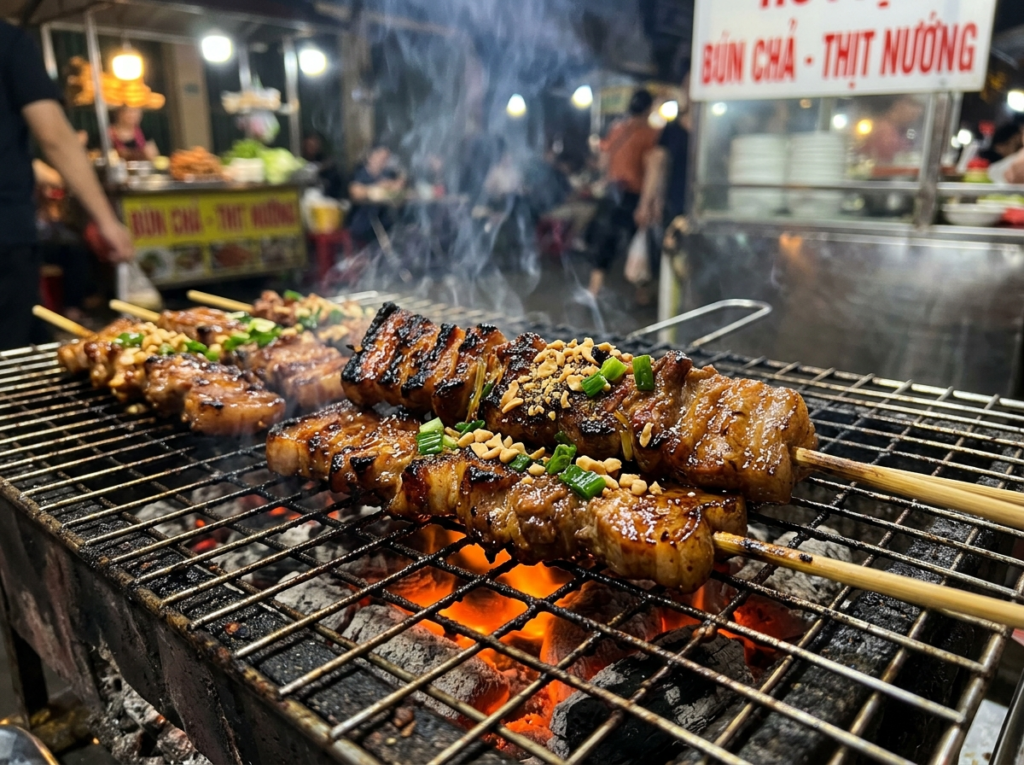
The first time I truly understood Vietnamese BBQ, I wasn’t in a restaurant. I was on the back of a scooter, weaving through the chaotic, phosphorescent streets of Saigon after midnight. My guide, a local chef named Linh, pulled over to a nondescript curb where a woman was tending a small, fierce charcoal brazier. The air hung thick with the intoxicating perfume of lemongrass, caramelizing sugar, and smoky meat. She was grilling thin, marinated pork skewers known as nem nướng. She’d pull them off, wrap them in rice paper with a fistful of herbs and a smear of pungent sauce, and hand them to us in exchange for a few thousand dong.
In that single, perfect bite, I understood everything. This wasn’t just “grilling.” It was a complete culinary system. A symphony of high-heat char, impossibly complex marinades, and a riot of fresh, raw herbs and pickles that cut through the richness. It was the ultimate balance of yin and yang on a single plate. That experience rewired my brain. After two decades in professional kitchens, I can tell you that most of what the West calls “Vietnamese BBQ” is a flattened, one-dimensional version of this vibrant art form. It’s time to fix that. This is your insider’s guide to the fire, the flavor, and the fresco that makes this cuisine one of the world’s most thrilling.
Deconstructing the Trinity: Marinade, Grill, and Assembly
Before we dive into specific Vietnamese BBQ recipes, you need to understand the foundational philosophy. Unlike American BBQ, which is often a single-note obsession with smoke and low-and-slow cooking, Vietnamese BBQ is a trinity. All three pillars must be present and in harmony for the experience to be authentic.
- The Marinade: This is the soul. It’s a complex, multi-layered flavor bomb that does more than just season; it tenderizes and creates the signature crust.
- The Grill: This is the heart. It’s almost always a charcoal grill, hot and fast. The goal is a deep char and smoky kiss, not hours of rendering.
- The Assembly: This is the mind. It’s the final, crucial step where the grilled meat is combined with a universe of textures and flavors—fresh herbs, pickled vegetables, rice noodles, and dipping sauces.
Miss any one of these three pillars, and you’re not eating Vietnamese BBQ; you’re just eating grilled meat with an Asian-inspired sauce. My goal is to give you the deep knowledge of all three, so you can stop following recipes and start cooking with intuition.
The Soul of the Sizzle: Mastering the Vietnamese BBQ Marinade
The difference between good and great Vietnamese BBQ lies in the marinade. This is where the real secrets are hidden. A generic soy-ginger-garlic marinade won’t cut it. The classic marinade is a study in balance, built on a few key pillars. Understanding their function is more important than memorizing a recipe.
| Flavor Pillar | Function | Key Ingredients |
|---|---|---|
| Savory/Umami (The Depth) | Provides the fundamental “meaty” and complex flavor base. This is non-negotiable. | Fish Sauce (Nước Mắm), Soy Sauce, Fermented Tofu/Shrimp Paste (for specific dishes) |
| Sweet (The Balance & Caramelization) | Balances the saltiness of the umami and is crucial for creating a beautiful, caramelized crust on the grill. | Granulated Sugar, Rock Sugar, Honey, Coconut Soda |
| Acid (The Brightness) | Cuts through the fat, tenderizes the meat, and adds a bright, high note that lifts the entire dish. | Rice Vinegar, Lime Juice |
| Fat (The Carrier) | Carries fat-soluble flavors, keeps the meat moist on a hot grill, and promotes even browning. | Vegetable Oil, Sesame Oil (for flavor, not high-heat cooking) |
| Aromatics (The Perfume) | Provides the unmistakable fragrance and signature flavor profile. | Lemongrass, Garlic, Shallots, Galangal |
Now, let’s talk about the superstar: lemongrass. Most people just chop it and throw it in. That’s a mistake. You need to bruise it with the back of your knife to release its aromatic oils. And you must remove the tough, fibrous outer layers. The tender, pale inner bulb is what you want. For a Vietnamese BBQ pork marinade, finely minced lemongrass is practically a religion. It imparts a citrusy, floral aroma that defines dishes like Thịt Nướng (grilled pork).
The other secret is layering. A great marinade isn’t just mixed in a bowl. Often, the aromatics are bloomed in a little oil first to soften them and release their flavors before the wet ingredients are added. This is a professional technique that makes a world of difference. This is also where the concept of a Vietnamese BBQ sauce comes in. It’s not a thick, slathering sauce like in American BBQ. It’s usually the marinade itself, reduced and possibly tweaked, or more commonly, a completely separate dipping sauce like nước chấm that’s served alongside.
The Heart of the Fire: The Grill is Not a Suggestion
I’m going to be blunt: if you’re using a gas grill, you’re compromising. You can get decent results, but you will never replicate the true flavor of Vietnamese BBQ. The soul of the fire is charcoal. Specifically, hardwood charcoal or, even better, the traditional Vietnamese charcoal briquettes made from compressed sawdust, which burn long and hot with minimal smoke, allowing the meat’s aroma to shine.
The technique is also different. We are not smoking a brisket for 12 hours. We are grilling. This means high heat and fast cooking. The goal is searing and charring the exterior to create a crust that locks in the juices, while the interior remains tender and moist.
Here’s how you set up your grill for success:
- Get it Hot: You want a two-zone fire. Pile your lit coals primarily on one side of the grill, creating a hot zone for searing and a cooler zone for finishing or for more delicate items like chicken.
- Clean and Oil: Once the grates are screaming hot, scrape them clean. Then, lightly oil them. This prevents sticking and promotes better grill marks.
- Don’t Crowd the Grill: Give your meat space. Crowding lowers the temperature of the cooking surface and steams the meat instead of searing it. Cook in batches if you have to.
- Know Your Doneness: Because the meat is often cut thin (especially for skewers), it cooks quickly. A Vietnamese BBQ pork chop might be 1-inch thick and need only a few minutes per side. An entire Vietnamese BBQ pork slab for bún chả will be cooked through but still juicy. Your best friend is your eyes and your touch. The meat should feel firm but with a little give.
The Mind of the Meal: The Art of Assembly
This is the step that 99% of home cooks miss, and it’s the biggest difference between a good meal and an unforgettable one. The grilled meat is just one instrument in the orchestra. The assembly is the conductor.
Imagine you’ve just grilled a perfect batch of Thịt Nướng. What do you do with it? You don’t just slap it on a plate. You build a dish around it.
- The Herb Plate: This is non-negotiable. In Vietnam, no grilled meal is served without a massive platter of fresh herbs. Think mint, cilantro, perilla leaf, Thai basil, lettuce leaves. This isn’t garnish; it’s a core component of the meal. The freshness cuts through the richness of the meat and marinade, cleansing the palate with each bite.
- The Pickles: Quick-pickled daikon and carrots (đồ chua) provide a crucial crunch and a tangy-sweet counterpoint to the savory meat.
- The Vehicle: This could be a bowl of cold rice noodles (bún), a sheet of rice paper for fresh spring rolls, or a crusty baguette for a Vietnamese BBQ pork banh mi.
- The Dipping Sauce: The final flourish. A classic nước chấm—a balanced sauce of fish sauce, lime juice, sugar, water, and chili with minced garlic—is the perfect accompaniment. It ties all the elements together.
When you assemble a Vietnamese BBQ pork sandwich, you’re not just putting meat on bread. You’re layering the smoky, charred pork with a garlicky mayo, crisp pickles, fresh cilantro and cucumber, and a drizzle of that savory sauce. The interplay of textures and temperatures—hot meat, cool veggies, crisp bread, creamy spread—is what makes it a masterpiece.
The Blueprints: Insider Recipes to Get You Started
Now that you understand the trinity, these recipes are not just instructions; they are applications of the principles you’ve just learned.
Blueprint 1: The Master – Vietnamese BBQ Pork (Thịt Nướng)
This is the quintessential Vietnamese BBQ pork recipe. Use it for skewers, for a Vietnamese BBQ pork chop, or sliced thin over noodles (bún chả).
- The Marinade: For 2 lbs of pork shoulder or loin, thinly sliced:
- 4 stalks lemongrass (tender parts only, finely minced)
- 6 cloves garlic (minced)
- 3 shallots (minced)
- 3 tbsp fish sauce
- 2 tbsp sugar
- 1 tbsp honey
- 1 tbsp vegetable oil
- 1 tsp black pepper
- Insider Tip: Bloom the lemongrass, garlic, and shallots in the oil for 2 minutes over medium heat before adding the other ingredients. Let it cool completely, then marinate the pork for at least 4 hours, or overnight.
- The Grill: Thread onto skewers if sliced thinly, or grill as a whole slab. Cook over high, direct heat, turning occasionally, until deeply charred and cooked through.
- The Assembly: Serve with a heap of vermicelli noodles, a pile of fresh herbs, pickled carrots and daikon, and a bowl of nước chấm for dipping.
Blueprint 2: The Poultry – Vietnamese BBQ Chicken
Chicken benefits from the same flavor profile but needs a slightly different approach to stay moist.
- The Marinade: Adapt the master marinade by adding 1 tbsp of turmeric powder for color and earthiness, and the juice of one lime for extra tenderization. Marinate chicken thighs (bone-in, skin-on for best results) for at least 6 hours.
- The Grill: Start the chicken skin-side down over the hotter part of the grill to render the fat and crisp the skin. After 5-6 minutes, move it to the cooler side of the grill, close the lid, and cook until the internal temperature reaches 165°F. This prevents the skin from burning while the meat cooks through. This is a fantastic Vietnamese BBQ chicken recipe that’s a guaranteed crowd-pleaser.
Blueprint 3: The Sandwich – Vietnamese BBQ Pork Banh Mi
This is where you combine all the elements into an iconic sandwich.
- The Pork: Use the master Vietnamese BBQ pork recipe. Grill it, then chop it into small, bite-sized pieces.
- The Sauce: Mix mayonnaise with a little minced garlic and a dash of Maggi seasoning.
- The Assembly: Slice a crispy baguette lengthwise. Spread the garlic mayo on both sides. Layer on the chopped grilled pork, followed by a generous amount of pickled daikon and carrots, slices of cucumber, and a huge handful of fresh cilantro. Drizzle with a little of the nước chấm or some Sriracha for heat. This is the ultimate Vietnamese BBQ pork sandwich, a world of flavor in every bite.