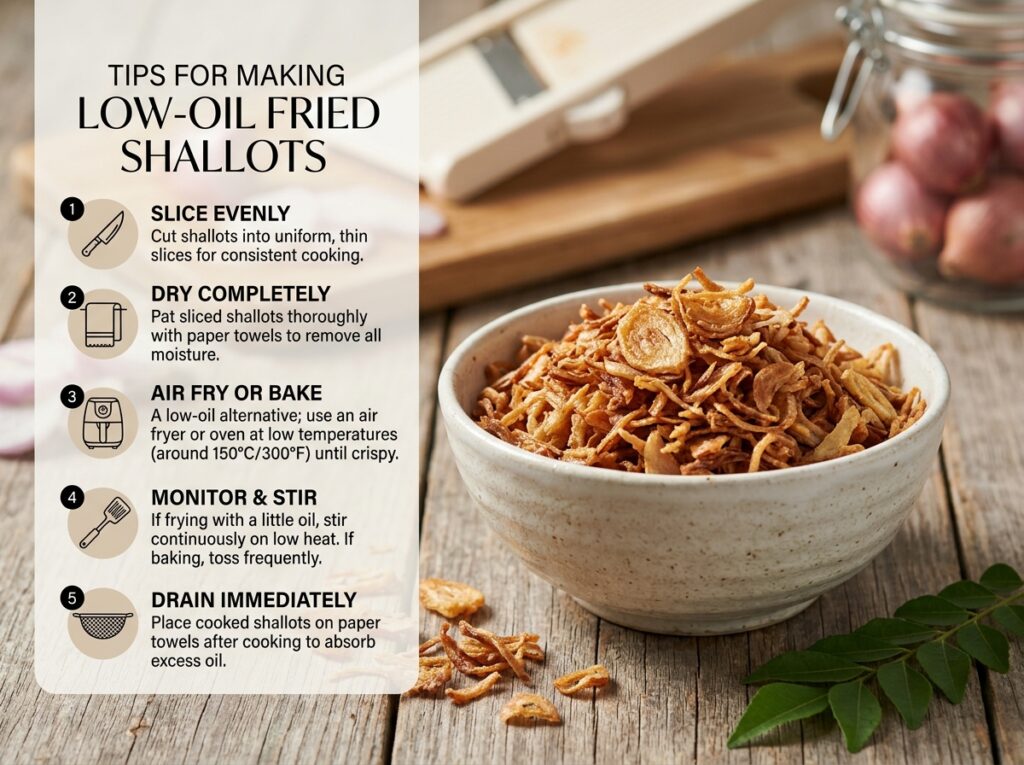
Every professional kitchen I’ve worked in—whether in Saigon, Bangkok, or New York—keeps one secret condiment within arm’s reach: a jar of crispy fried shallots.
They’re humble, silent, and transformative.
Toss them on noodles, fold them into salads, crumble them over rice—the dish wakes up instantly. But behind that casual crunch lies technique and science that few home cooks understand. Most people think of fried shallots as garnish. Insiders know better: they’re a foundational texture system and an aromatic enhancer that bridges fragrance, fat, and depth across cuisines from Southeast Asia to Europe.
I’ve spent 25 years watching cooks ruin shallots—turning them burnt, soggy, or bitter—because they didn’t respect their dual nature: sugar and sulfur. To make them right, you must balance caramelization against crisping, oil temperature against sugar release.
This guide pulls back the curtain on how to make fried shallots properly, then builds knowledge outward—how to store, reinvent, even compare them nutritionally to raw counterparts.
1. What Fried Shallots Actually Are (and Why They’re Not Just “Fried Onions”)
Many people confuse fried shallots with fried onions. Huge difference.
| Difference | Fried Shallots | Fried Onions |
|---|---|---|
| Variety | Made from Allium cepa var. aggregatum, smaller, sweeter, less watery | Made from regular bulb onions |
| Moisture Content | 23–25% (low) | 35–40% (high) |
| Sugar/Protein Ratio | Higher sugar; caramelizes faster | Lower sugar; slower browning |
| Flavor Profile | Delicate, nutty, perfume-forward | Bold, sharp, pungent |
| Culinary Use | Garnish, topping, umami accent | Ingredient or base flavor (e.g., French onion soup) |
For Vietnamese or Thai chefs, a single crumble of fried shallot adds not just texture but a familiar memory cue—street food stalls frying at dawn, the smell hitting humidity. You can’t fake that.
Professionally, I treat crispy fried shallots like seasoning salt; one pinch transforms broth, eggs, or noodles.
2. The Science of Perfectly Fried Shallots
To master fried shallots, you must understand three forces working simultaneously: dehydration, Maillard reaction, and caramelization.
- Dehydration: Removing internal water creates crunch. The key is slow moisture migration, not brute-force evaporation.
- Maillard Reaction: Between amino acids and sugars, develops savory notes once oil reaches ~285 °F (140 °C).
- Caramelization: Natural sugars brown at ~320 °F (160 °C), layering sweetness.
If temperature surpasses 340 °F (170 °C), caramelization turns acrid quickly. That’s where most fryers fail: too hot, too fast. Burnt shallots smell metallic because sulfur compounds oxidize.
Real-world tip from my years at a Vietnamese noodle kitchen: perfect shallots never darken in the oil. They finish their color change after removal. If they’re golden brown in the oil, you’ve gone too far.
3. Shallot Selection and Prep – The Professional Starting Line
Choosing the Shallots:
- Look for firm bulbs, dry outer skins, and deep purple hue (Asian shallots tend to be smaller and denser than Western ones).
- Avoid jumbo shallots—they contain more water, which prolongs frying and weakens crunch.
Slicing Technique:
- Use a sharp mandoline for 1–1.5 mm uniform slices. Irregular cuts ruin consistency—thin ones burn before thicker ones crisp.
- Keep root ends for slicing traction but remove fibrous tail threads.
Rinse Debate:
Old-school Vietnamese cooks rinse slices in cold water to remove sulfur harshness and excess starch. Modernists skip it to preserve surface sugars. Personally, I rinse quickly and spin dry—it’s insurance against off-odors, especially when using bulk Asian shallots.
4. Professional Fried Shallots Recipe (Pan Method)
Ingredients:
- 500 g shallots, thinly sliced.
- 750 ml neutral oil (rice bran, peanut, or canola).
- Fine salt, ½ tsp (optional for seasoning after frying).
Equipment:
- Medium-heavy saucepan or wok (wider surface area = better evaporation).
- Spider strainer or fine sieve.
- Paper towel–lined tray.
Step-by-Step:
- Oil Temperature (Start Cold):
Add shallots to cold oil. This slow-start technique ensures even dehydration before browning—industry standard across Thai and Vietnamese street kitchens. Raise heat gradually to medium. - Gentle Frying:
Stir frequently. The goal is consistent bubbling—never a rolling fry. Around 10–12 minutes, bubbling will slow (moisture mostly gone). - The “Window” Moment:
When 80% of slices turn light blond and edges take peach color, turn off the heat. Residual heat completes golden transformation. - Drain Quickly:
Strain shallots immediately; reserve oil (don’t discard—see Section 6). - Final Color & Seasoning:
Spread on paper towels in thin layers; sprinkle salt lightly while warm. Within 2–3 minutes, they stiffen into full crisp form.
Yield: About 120 g crispy shallots. Store cooled batch in airtight glass jar.
5. The Secret Second Treasure: Shallot Oil
Here’s what the average home cook misses: the leftover oil is superior to the shallots themselves.
This amber liquid hums with shallot aromatics—fundamental in Vietnamese phở or bún thịt nướng. We drizzle it over rice noodles, mix it into dipping sauces, even finish sautéed greens with it for a subtle nutty perfume.
Insider Ratio:
Every 100 ml of shallot oil enriches about 1 kg of cooked noodles or rice.
It’s the invisible glue that makes com tam Saigon or bánh cuốn taste “restaurant-good.” In professional broth kitchens, shallot oil is a stealth flavor enhancer.
You’ll often smell it in Thai boat noodles, Malaysian nasi lemak sambal toppings, or Chinese congee stalls in Kuala Lumpur—the kind of aroma that clings to memory.
6. The Air Fryer and Microwave Experiments
Consumers now search for “air fried shallots” or “microwave fried shallots,” so let’s be honest: they’re possible, but not equal.
Air Fryer Method:
- Toss thin shallot rings lightly coated in 1 tsp oil.
- Air fry at 140 °C (285 °F) for 12–15 minutes, shaking mid-cycle.
Caution: even at lower temps, heated air desiccates outer edges faster than centers, yielding unevenness. I found best results after soaking slices in salty water 10 minutes, drying, then air-frying—reduces scorching.
Microwave “Frying”:
Surprisingly effective for tiny convenience projects. Layer shallots between oiled paper towels, microwave on medium 5–6 minutes. Ends crisp before centers; rest them uncovered to complete drying.
Both methods trade complexity for convenience—fine for quick salads, weak for heritage dishes.
7. Crispy Fried Shallots: Troubleshooting Common Mistakes
| Problem | Cause | Professional Fix |
|---|---|---|
| Soggy texture | Oil too cool or overcrowded pot | Fry in smaller batches, pre-dry shallots thoroughly |
| Bitter taste | Over-frying; residual oil temperature too high | Turn off heat earlier; remove when pale gold |
| Uneven browning | Inconsistent slice thickness | Mandoline at fixed setting; flatten slices post-slicing |
| Dark residue in oil | Debris accumulation | Filter oil through fine mesh or paper coffee filter |
| Sticky clumps | Moisture + insufficient agitation | Stir constantly early in cook phase |
Professional trick: add ½ tsp rice flour to shallots before frying—it absorbs surface moisture and improves separation, especially helpful in humid kitchens.
8. Scaling Up: How Professional Kitchens Fry Shallots by the Kilo
Commercial noodle shops handle up to 10–15 kg shallots daily. Efficiency demands hot–cold stage cycling.
Bulk Method Workflow:
- Par-fry at 250 °F (120 °C) until translucent.
- Cool 20 minutes (moisture diffusion equilibrium).
- Re-fry at 325 °F (160 °C) for 2–3 minutes.
This two-stage process (similar to French fries double-frying) yields denser bubbles and stronger crunch resilience—essential when serving fried shallots that must stay crisp hours before service.
9. Storing Fried Shallots – Longevity & Preservation
Shelf life:
- Room temperature, airtight jar: 2 weeks max (humidity degrades texture).
- Refrigeration: 1 month, though slight softening occurs.
- Freezing: up to 3 months (revive in warm oven 5 minutes).
Pro tip: Line storage jar base with paper napkin—it absorbs residual oil volatiles and delays rancidity.
If you ever wonder why packaged store-bought fried shallots (“fried shallots near me” searches) taste stale, it’s often due to oxidation during transit. Nothing replaces fresh-fried aroma.
10. Where to Buy Fried Shallots (And How to Choose Good Ones)
In Asian markets, fried shallots in bags or jars line the condiments aisle. Not all are equal.
Quality indicators for fried shallots buy decisions:
- Color: consistent golden amber; dark brown means over-fried.
- Oil content: minimal visible pooling or stickiness.
- Aroma: fragrant, never acrid or metallic.
- Country of origin: Indonesia, Vietnam, or Thailand usually yield higher craftsmanship than mass U.S. repackaged brands.
Good pre-packaged options: Hai Binh (Vietnam), Crispy Joy (Thailand), or ABC (Indonesia). But treat these like pantry backup, not primary showpieces.
I run a rule in my restaurant kitchens: fried shallots for service are made weekly. The residual oil quality drops after day seven—its aroma dulls like overused paintbrush water.
11. Innovative Uses of Fried Shallots (Beyond Garnish)
Professional chefs treat fried shallots as flavor architecture.
Culinary Applications:
- Toppings: The obvious—Pho garnish, fried rice crown, salad crunch.
- Mix-ins: Crush finely and blend into spice rubs or coating crumbs. Shallot powder adds umami depth without MSG.
- Compound butter: Beat shallot crumbles into softened butter; rest overnight—spectacular on steak or roasted vegetables.
- Shallot salt: Grind 1 part crushed shallot to 3 parts flaky salt for finishing seafood or popcorn.
- Crispy crust: Roll soft-boiled eggs or tofu cubes in crumbs for textural coatings before air fry.
Fine-dining plating often hides them under foams or smears—tiny textural explosions mid-bite. I’ve even used powdered fried shallot dust sprayed over desserts with savory-sweet twist (black sesame pudding).
12. Are Fried Shallots Healthy?
The nutrition debate around are fried shallots healthy depends on portion and oil management.
Advantages:
- High in antioxidants (flavonoids, allicin—retained even post-fry).
- Lower calorie load per spoon compared to heavy condiments.
- Provides prebiotic fibers aiding digestion in small doses.
Concerns:
- Frying oxidizes vegetable oils; excess consumption = extra omega‑6 load.
- Commercial packets often packed with palm oil residue.
From my experience consulting in wellness-focused Vietnamese bistros, moderation is the pivot. Think tablespoon, not handful. Use shallot-infused oil separately for flavor without crunch calories.
13. Fried Shallots vs. Raw Shallots – Nutritional and Culinary Differences
| Comparison | Fried Shallots | Raw Shallots |
|---|---|---|
| Texture | Crunchy, porous | Snappy, juicy |
| Flavor | Sweet-savory roasted umami | Sharp, sulfurous, lightly sweet |
| Digestibility | Easier (cooked starches, less sulfur) | Harder for sensitive stomachs |
| Nutrient Density | Slight loss of vitamins C/B from heat | Higher vitamin retention |
| Culinary Function | Garnish, topping, texture booster | Base flavor in vinaigrettes, dressings, soups |
In short: raw shallots start conversation; fried shallots conclude it. One introduces sharpness, the other seals satisfaction.
14. The Global Cultural Footprint of Fried Shallots
When I travel, spotting fried shallots in a dish tells me exactly how a culture handles contrast.
- In Vietnam, they crown rice and noodle bowls—brightening herbs and cooling freshness.
- In Thailand, they rest on khao soi and pad thai—offsetting richness with crisp fragrance.
- In Indonesia and Malaysia, “bawang goreng” is a daily pantry staple; fried shallots define nasi goreng identity.
- In China, they inform you xiang (fragrant oil) seasoning blends.
- In modern Western gastronomy, chefs integrate them atop soups or purees for “retro crunch nostalgia.”
Any region that uses both heat and herb in one dish tends to embrace fried shallots naturally—they mediate contrast like punctuation in a sentence.
15. Experimental Frontier – Fermented & Seasoned Fried Shallots
Next-generation chefs ferment sliced shallots 3 days in 2% brine before frying (‘pre-aging’). This technique, which I studied under a Bali fermentation micro-lab, builds multi-dimensional umami akin to soy-aged sauces. The sugar and amino profile intensify caramel tones during frying.
Some mix shrimp powder, maltose syrup, or kombu salt post-frying—creating signature “fifth taste” versions. In upscale bars in Saigon, these umami-fried shallots even top cocktails (yes, cocktail rims dusted with savory shallot sugar). Culinary boundaries keep expanding.
16. Different Cooking Fats and Their Effects
| Oil Type | Smoke Point | Flavor Impact | Comments |
|---|---|---|---|
| Rice Bran Oil | 450 °F (232 °C) | Clean, nutty undertone | My go-to for Southeast Asian style |
| Peanut Oil | 440 °F (227 °C) | Slight sweetness | Common in Thailand, enhances aroma |
| Canola Oil | 400 °F (204 °C) | Neutral | Good for bulk fry; watch for oxidation |
| Coconut Oil | 350 °F (177 °C) | Sweet perfume | Too quick to brown; use for dessert applications |
| Palm Oil | 450 °F (232 °C) | Neutral heavy-bodied | Industrial use; stable for mass production |
Oil composition transforms aromatic carry. For instance, coconut oil accentuates shallot’s floral sugar but risk oversweet finish. Rice bran oil balances volatility and crisp texture—industry’s favorite for broadcast aroma but not heavy taste.