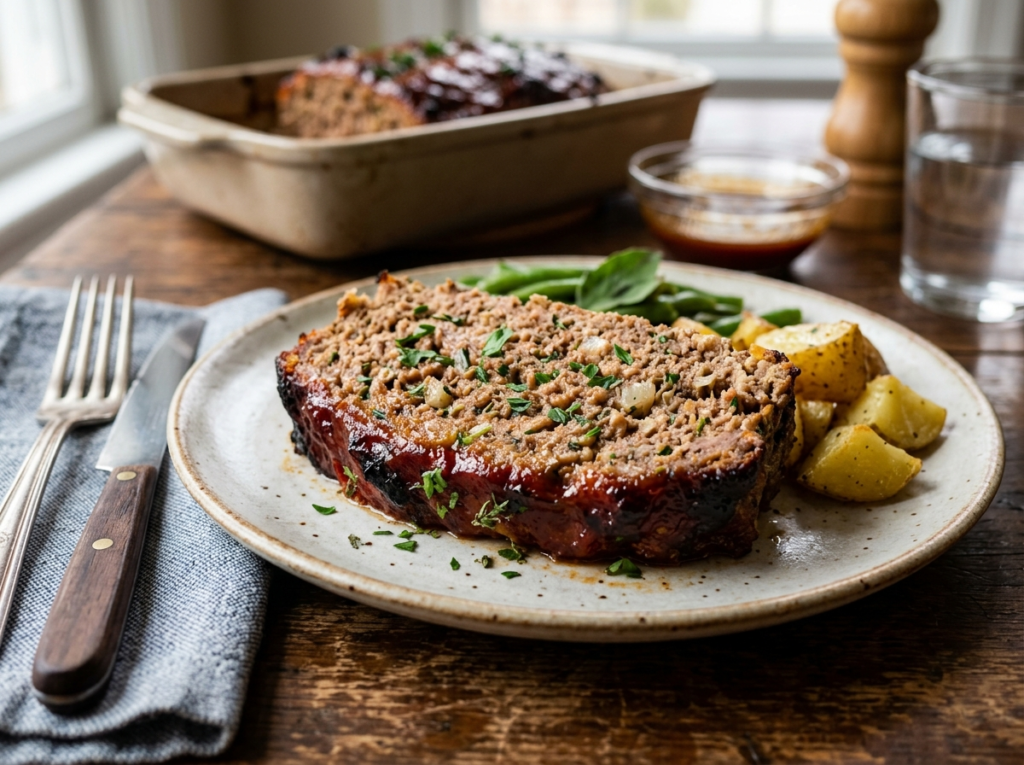
I’ll never forget the day I stopped using eggs in meatloaf. I wasn’t on a health kick or experimenting with veganism. I was a young line cook in a busy bistro, and we got a ticket for a table with a severe egg allergy. The standard recipe was a simple mix of beef, breadcrumbs, and a couple of eggs. Panic started to set in. The head chef, a grizzled old-timer named Gus, just looked at me and said, “An egg is a crutch. If you know how to build a structure, you don’t need a crutch.”
He then proceeded to show me how to make a panade—a mixture of starch and liquid. He explained that this was the real secret, the professional’s way to ensure a moist, tender meatloaf that never, ever falls apart. That single lesson changed my entire approach to ground meat preparations. It taught me that a no egg meatloaf isn’t a compromise; it’s often an improvement. It forces you to understand the fundamentals of structure and moisture, leading to a superior result.
For decades, I’ve watched home cooks struggle with this. They search for a no egg meatloaf recipe and find a list of one-to-one substitutes like “one flax egg equals one chicken egg.” This is bad advice. It misses the point entirely. This guide will not give you a list of substitutes. It will give you the Binder Matrix—a system for understanding how to build the perfect egg-free meatloaf from the ground up, regardless of what you have in your pantry. We’re going to deconstruct the science, explore the professional techniques, and finally address the confusing world of “egg meatloaf” variations you see online.
Deconstructing the Myth: What an Egg Actually Does (And Why It’s Overrated)
Before we can build a better system, we need to understand the one we’re replacing. Why do we put eggs in meatloaf in the first place? It’s not just for binding. An egg performs three distinct roles:
- The Binder (The Protein Coagulation): The proteins in the egg white (albumin) and yolk coagulate when heated. They form a network that physically traps the meat particles, fat, and liquid. This is the primary “glue” function.
- The Leavener (The Steam Power): The water content in the egg turns to steam in the oven. This creates tiny pockets, which can give the meatloaf a lighter, more tender texture, preventing it from becoming a dense brick.
- The Moisturizer (The Fat & Yolk): The fat and emulsifiers in the yolk add richness and moisture, contributing to a smoother mouthfeel.
Now, here’s the insider’s take: while an egg does all these things, it doesn’t do any of them perfectly for this application. The protein network it creates can be rubbery if overcooked. The leavening is minimal. And unless you’re using a lot of eggs, the moisturizing effect is negligible compared to other ingredients.
The biggest problem? Egg is a single point of failure. If you overmix the meat or overcook the loaf, the egg proteins tighten up and squeeze out all the moisture, resulting in a dry, tough texture. A professionally built structure, however, is more forgiving. This is where the Binder Matrix comes in.
The Binder Matrix: Your Toolkit for Egg-Free Structure
Forget single substitutes. Think in categories. Each category provides a different kind of structure and has its own unique effect on the final texture. Master these categories, and you’ll never be chained to a recipe again.
| Binder Category | How It Works | Best For | Insider’s Secret |
|---|---|---|---|
| The Panade (Starch & Liquid) | Starch granules absorb liquid, swell up, and create a gel that lubricates the meat particles. This prevents them from becoming dense and tight. | All-purpose, everyday meatloaf. Creates a very tender, almost fluffy texture. | Use Panko breadcrumbs. Their airy, flaky structure absorbs more liquid without turning mushy. Soak them in milk, buttermilk, or even yogurt for extra tenderness and a subtle tang. |
| The Protein Coagulator (Dairy/Fat) | Proteins in ingredients like cream cheese, ricotta, or even finely minced pork fat back coagulate when heated, creating a strong, tender, and moist internal structure. | Rich, decadent meatloaves. Creates a velvety, almost pâté-like texture. | A mix of cream cheese and finely grated Parmesan is a game-changer. The cream cheese provides moisture and a tender bind, while the Parmesan adds a salty, umami kick. |
| The Vegetable Fiber & Water (Grated Veg) | Grated vegetables like onion, zucchini, or carrot release water and fibers during cooking. The water creates steam (leavening), and the fibers act as a natural net to hold everything together. | Healthier, lighter meatloaves. Adds flavor and moisture. | Squeeze half the water out of the grated zucchini. You want enough water for steam, but not so much that it makes the loaf watery. The remaining moisture is a built-in tenderizer. |
The key is that you don’t have to choose just one. The best no egg meatloaf often combines elements from two or even all three categories. A panade for the base, a little cream cheese for richness, and some grated onion for flavor and extra binding. This is how you build a complex, foolproof structure.
The Blueprint: A Master Recipe for Any No-Egg Meatloaf
This isn’t a rigid recipe; it’s a blueprint. Think of the ratios as your guide.
Yields: One 9×5 inch loaf
The Ratio: For every 2 lbs of ground meat, you need about 1 cup of total binder.
The Components:
- The Meat (2 lbs): A blend is best. 80/20 ground beef is the classic, but try a mix of beef, pork, and veal for supreme flavor and moisture. The pork fat is a natural binder.
- The Panade (1 cup total):
- 1 cup Panko breadcrumbs
- ¾ cup milk, buttermilk, or plain yogurt
- Technique: Combine these in a bowl and let the Panko soak for at least 10 minutes until it’s a soft, sludgy paste.
- The Aromatics & Flavor Boosters (½ to 1 cup total):
- 1 large yellow onion, finely minced
- 2 cloves garlic, minced
- ½ cup grated Parmesan cheese
- 2 tbsp Worcestershire sauce
- 1 tbsp Dijon mustard
- Herbs (fresh parsley, thyme) or spices (smoked paprika, cumin)
- The Rich Binder (Optional, 4 oz):
- 4 oz full-fat cream cheese, softened
- The Glaze:
- Ketchup, brown sugar, and a splash of apple cider vinegar. Classic for a reason.
The Assembly (The Most Important Steps):
- Sauté the Aromatics: Gently cook the onion and garlic in a little bit of olive oil until soft and translucent. Don’t brown them. This removes their harsh bite and brings out their sweetness. Let them cool completely. This is a non-negotiable step for a refined flavor.
- Build the Base: In a large bowl, combine the ground meat and the cooled aromatics. Add the Worcestershire, mustard, and herbs.
- Incorporate the Panade & Binder: Add your soaked Panko panade and the optional cream cheese. Now, mix with your hands. But be gentle. Mix just until everything is combined. Over-mixing is the cardinal sin of meatloaf. It develops the proteins in the meat and makes the final texture tough and dense.
- Form and Bake: Form the mixture into a loaf shape on a rimmed baking sheet (don’t use a loaf pan, which steams the bottom). Bake at 375°F (190°C) for about 40 minutes.
- Glaze and Finish: Brush the glaze all over the loaf. Return to the oven for another 15-20 minutes, or until the internal temperature reaches 160°F (71°C).
- REST! Let the meatloaf rest for at least 15 minutes before slicing. This allows the juices to redistribute.
Decoding the Keyword Maze: Big Green Eggs, Scotch Eggs, and Vietnamese Meatloaf
Now, let’s clear up some confusion. If you’ve been searching for meatloaf recipes, you’ve undoubtedly stumbled upon some strange keyword combinations. Here’s the inside scoop.
Big Green Egg Meatloaf
This has nothing to do with the ingredients. A Big Green Egg is a brand of ceramic kamado-style grill and smoker. A big green egg meatloaf recipe is simply a recipe for cooking meatloaf on this specific type of cooker. It’s a fantastic idea. Smoking a meatloaf over wood chips (like hickory or apple) adds a layer of flavor that you can’t get in an oven.
To do it with our no egg meatloaf, simply form the loaf on a piece of foil, place it on the grill grate, and smoke it at 275°F (135°C) for about 2 hours, or until it reaches an internal temp of 150°F. Then, brush it with the glaze and crank the heat to 375°F for 15-20 minutes to set the crust. The egg-free panade is actually better for the low-and-slow environment of a smoker, as it holds moisture exceptionally well.
Hard-Boiled Egg Meatloaf / Scotch Egg Meatloaf
This is a different concept entirely. Here, the egg isn’t a binder; it’s a surprise filling. A scotch egg meatloaf is a brilliant twist where you form your meatloaf mixture around whole, hard-boiled eggs. As the meatloaf bakes, the eggs cook inside, creating a molten, jammy yolk center when you slice into it.
To make it, simply form a flat layer of your meatloaf mixture. Place two or three hard-boiled eggs in a row down the center. Gently wrap the meat mixture around the eggs, pinching the seams to seal it completely. Bake as directed. When you slice it, you get these beautiful, perfect cross-sections of meatloaf with a bright yellow circle in the middle. It’s a showstopper.