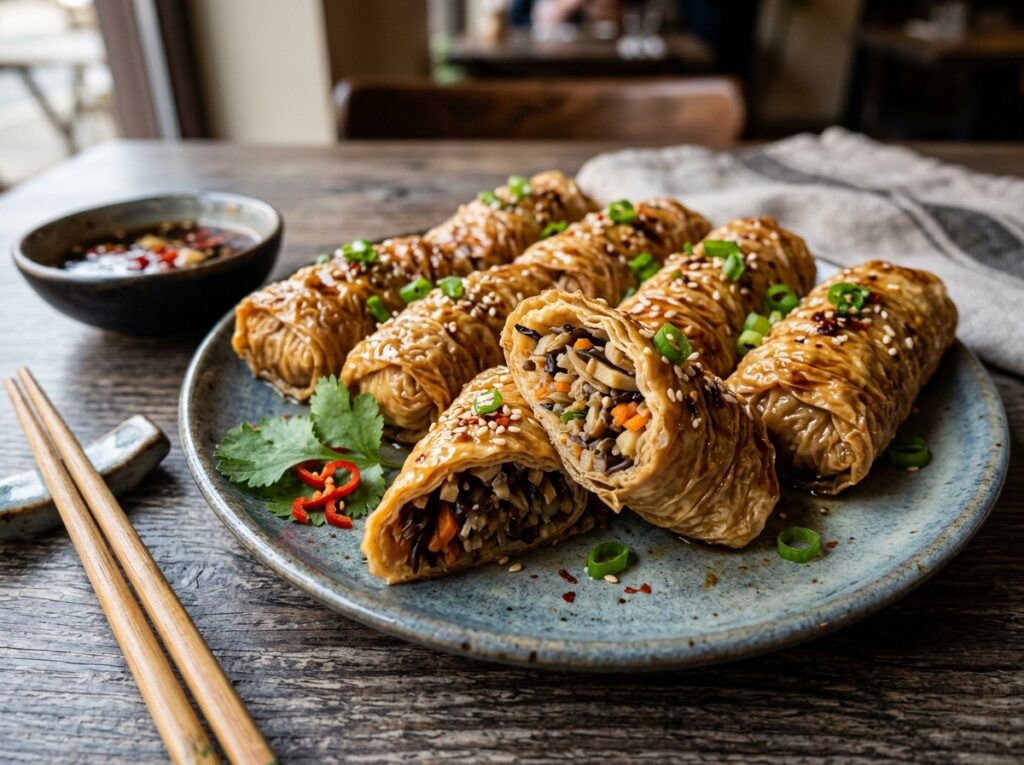
I was in a steamy, cramped dim sum kitchen in Kowloon, a place that was less a restaurant and more a well-oiled machine of culinary production. The master chef, a man whose hands moved with a speed and precision that defied logic, was working on the day’s peh gaai bok—the classic steamed chicken and mushroom tofu skin roll. I watched as he took what looked like a brittle, yellowish sheet of parchment paper from a tub of water. It was a dried tofu skin roll in its infancy.
He didn’t just plop it on a board. He handled it with the reverence of a calligrapher handling rice paper. He laid it on a damp cloth, gently spread his filling, and rolled it with a tension that was both firm and delicate. “The skin,” he said to me in Cantonese, without looking up, “has memory. You treat it wrong, it remembers. It becomes tough. You treat it right, it remembers softness.”
That single lesson has defined my understanding of this incredible ingredient. After decades in professional kitchens, I can tell you that most tofu skin roll recipes you find online are written by people who have never understood the skin’s memory. They treat it like a simple wrapper, a vehicle for filling. It’s not. It’s the soul of the dish. It’s a textural marvel that, when prepared correctly, provides a delicate chew that contrasts beautifully with a soft, savory filling. This is not just a recipe; it’s a masterclass in technique, sourcing, and philosophy.
Beyond the Soy: Understanding the True Nature of Tofu Skin
Before we even think about rolling, we need to deconstruct the ingredient itself. The name “tofu skin” is a misnomer that leads to endless confusion. It’s not the skin of a tofu block. It’s the film that forms on the surface of heated, fresh soy milk. It’s essentially the soy cream, rich in protein and fat, carefully lifted and dried.
This is the first secret: not all tofu skin is created equal. Walking into an Asian market can be bewildering. You’ll see fresh, wet, dried, knotted, and sticked versions. They are not interchangeable. For a classic roll, you need a specific type.
| Type of Tofu Skin | Appearance & Texture | Primary Use | The Insider’s Take |
|---|---|---|---|
| Fresh Yuba (or “Bean Curd Sticks”) | Delicate, creamy, sold refrigerated in folded sheets. | High-end salads, desserts, or eaten fresh. | A luxury product. Not suitable for classic rolls as it’s too fragile. |
| Dried Sheets/ Sticks | Brittle, translucent, yellowish sheets or long, hollow sticks. | The foundation for rolls, braises, and simulated meats. | This is what you need. The sheets are for classic rolls; the sticks are for braises (like Buddha’s Delight). |
| Knots & Flowers | Pre-tied dried tofu skin, often in decorative shapes. | Soups, stews, and hot pot. | A convenience product. Good for adding texture to broth, but not for rolling. |
For our purposes, we are focused on the dried sheets. This is your canvas. When you’re searching for tofu skin roll recipes, this is the raw material you must start with. The quality of this dried skin will dictate the final texture of your roll. Look for sheets that are a uniform pale yellow, not brown (which can indicate age or poor quality), and that are brittle, not pliable.
The Ritual of Rehydration: The Most Critical Step
This is where 99% of home cooks fail, and it’s the direct result of not understanding the skin’s “memory.” They toss the brittle sheet into a bowl of hot water and walk away. They come back to a mushy, disintegrating mess that has no structural integrity. The chef in Kowloon would be horrified.
The rehydration is a ritual, not an afterthought. It is a gentle, controlled process of coaxing the skin back to life without breaking its spirit.
Here is the correct, insider method:
- Start with Cold Water: Use a large, shallow tray or baking dish. Lay your brittle tofu skin sheet flat. Cover it with cool or lukewarm water. Never use hot water. Hot water shocks the proteins, causing them to seize and become tough and rubbery on the outside while the inside remains dry.
- The Patience of a Monk: Let it soak for 20-30 minutes. You will see it slowly transform from brittle and translucent to soft, pliable, and opaque. Don’t rush it.
- The Gentle Lift: Once it’s soft, carefully lift it from the water. It will be delicate. Lay it on a clean, damp kitchen towel (not a dry one, which will stick). The damp towel provides a non-stick surface and keeps the skin hydrated as you work.
- The Trim: You will notice a tougher, thicker edge along one side. Trim this off with scissors. It’s too chewy to roll and will create an unpleasant texture in the final dish.
Now you have a perfectly rehydrated sheet of tofu skin, ready for its filling. It’s soft, pliable, and full of potential. It remembers softness.
The Trinity of Filling: Building Flavor and Texture
A great filling is a symphony of textures and flavors. It’s not just a random mix of vegetables. It’s a carefully constructed system. I think of it in three parts: The Binder, The Texture, and The Flavor.
- The Binder: This is the creamy, cohesive element that holds the roll together. The traditional choice is taro root, steamed and mashed into a smooth paste. It has a subtle, nutty flavor and a perfect starchy consistency. A great substitute is mashed sweet potato or even Japanese yam (nagaimo).
- The Texture: This is the crunch. It’s what provides contrast to the soft binder and the chewy skin. Finely diced water chestnuts are the gold standard. They stay crunchy even after steaming. Other excellent options include diced jicama, finely shredded carrots, or rehydrated shiitake mushrooms (which also add a deep, umami flavor).
- The Flavor: This is the savory punch. This is where you can get creative, but a classic combination includes finely minced dried shrimp (soaked and rehydrated) for a potent brininess, and a bit of Chinese sausage (lap cheong) for a sweet, fatty depth. This is all seasoned with soy sauce, Shaoxing wine, a touch of sugar, and a whisper of five-spice powder.
When you combine these three elements, you get a filling that is complex, balanced, and holds its shape beautifully.
The Blueprints: Mastering the Classic Preparations
Now that you have the knowledge, you can execute the specific variations. These aren’t just recipes; they are applications of the principles you’ve learned.
Blueprint 1: The Dim Sum Classic (Steamed Tofu Skin Roll)
This is the quintessential dim sum tofu skin roll. It’s delicate, savory, and the ultimate test of your technique.
- The Roll: Lay your rehydrated tofu skin on a damp towel. Spread a thin, even layer of your binder paste over the entire surface, leaving a 1-inch border at the end farthest from you. Sprinkle your textural and flavor ingredients over the paste. Now, roll it up as tightly as you can without tearing the skin, like a jelly roll. Use the damp towel to help you get a tight grip.
- The Steam: Place the roll on a piece of parchment paper inside a bamboo steamer. The bamboo steamer is key—it absorbs excess moisture, preventing a soggy exterior. Steam over boiling water for 20-25 minutes, or until the filling is firm and cooked through.
- The Rest & Slice: Let the roll cool completely on a wire rack. This is a non-negotiable step. Slicing it while warm will cause it to fall apart. Once cool, use a sharp, wet knife to slice it into 1-inch thick pieces. Arrange on a plate and drizzle with your favorite sauce.
Blueprint 2: The Crispy Indulgence (Fried Tofu Skin Roll)
This addresses the fried tofu skin roll and crispy tofu skin roll keywords. The goal is a shattering exterior with a soft, creamy interior.
- Prepare and Steam: Follow the steps above to prepare and steam the roll. Steaming first is crucial; it ensures the filling is fully cooked.
- The Coat: Once the roll is completely cool, cut it into your desired pieces. Create a simple slurry of cornstarch and water. Lightly brush each piece with this slurry. This creates a light, crispy coating that won’t get heavy.
- The Double Fry: Heat about 2 inches of neutral oil to 325°F (160°C). Fry the pieces in batches for 3-4 minutes, until they are light golden and heated through. Remove and let them rest for 10 minutes. Then, increase the oil temperature to 375°F (190°C) and fry them again for another 1-2 minutes, until they are a deep, shattering gold. This double-fry method is the secret to extra-crispiness that doesn’t get soggy.
Blueprint 3: The Modern Fusion (Tofu Skin Roll Sushi)
This is a Western adaptation, but we can do it authentically. Here, the tofu skin replaces the nori.
- The “Sushi” Filling: Instead of a paste-based filling, think sushi rice. Season cooked sushi rice with a bit of rice vinegar, sugar, and salt. For the interior, use finely julienned cucumber, avocado, and maybe some cooked shrimp or crab stick.
- The Roll: Lay your rehydrated tofu skin on a bamboo sushi mat covered in plastic wrap. Spread a thin layer of seasoned sushi rice over the skin, leaving a border. Lay your fillings in a line across the center. Roll it up tightly using the mat.
- The Slice and Serve: Use a wet, sharp knife to slice the roll into 8 pieces. Serve with soy sauce, wasabi, and pickled ginger. It’s a fantastic tofu skin roll sushi that honors the texture of the skin while embracing a different flavor profile.