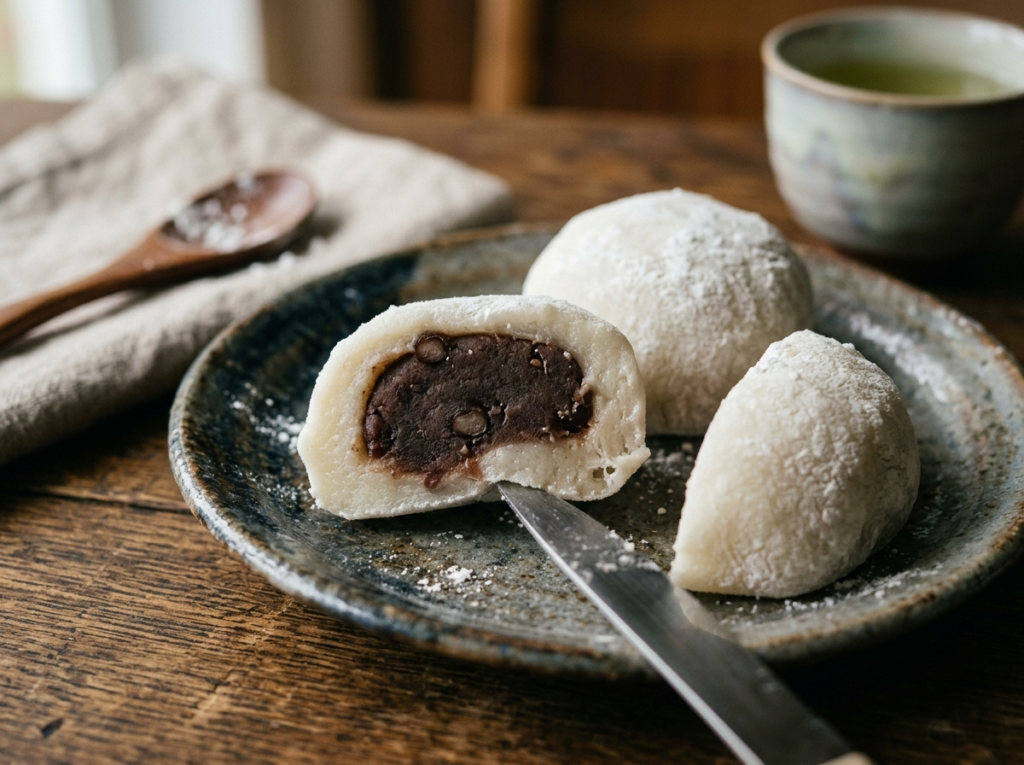
You’ve got a bag of rice flour in your pantry, a craving for mochi, and one burning question: can you just use what you already have? It’s the kind of thing that sounds like it should work. Rice flour. Mochi is made from rice. Simple enough, right?
Not exactly. The short answer is that regular rice flour won’t give you real mochi. You’ll end up with something gritty, crumbly, and nothing like the soft, stretchy treat you’re imagining. But don’t close that pantry door just yet — there’s more to the story, and you do have some options depending on what you’re trying to make.
Let’s break down why the type of rice flour matters so much, what actually happens when you swap one for the other, and how you can still get a good result at home.
What Makes Mochi… Mochi?
Before we talk about flour, it helps to understand what mochi actually is. At its core, mochi is a Japanese rice cake made from mochigome (もち米), a short-grain glutinous rice. The word “glutinous” trips people up because it sounds like it contains gluten — it doesn’t. It simply means the rice is sticky.
Traditional mochi is made by soaking mochigome overnight, steaming it, and then pounding it with large wooden mallets in a mortar (called an usu). This process, known as mochitsuki, transforms the cooked rice into a smooth, elastic dough that stretches without tearing. If you’ve ever watched videos of mochi pounding in Japan, you know how rhythmic and physical the whole thing is.
That distinctive chew — the hallmark of good mochi — comes from the starch composition of glutinous rice. And this is where the difference between regular rice flour and glutinous rice flour becomes critical.
The Science Behind the Stretch: Amylose vs. Amylopectin
Rice contains two types of starch: amylose and amylopectin. The ratio between these two starches determines the texture of anything you make with the rice.
Regular rice (the kind you’d cook for dinner) contains roughly 20–30% amylose. Amylose molecules are long, straight chains that don’t stick together easily. They give cooked rice its fluffy, separate-grain quality. When you mill this rice into flour and try to make a dough, the result is firm and crumbly. It holds a shape, but it doesn’t stretch.
Glutinous rice contains almost no amylose — often less than 1–5%. Instead, it’s nearly 100% amylopectin. Amylopectin molecules are highly branched, and when heated with water, they create a thick, sticky, gel-like network. That’s what gives mochi its signature pull and bounce.
Think of it this way: amylose is like straight sticks stacked together. They sit side by side but don’t interlock. Amylopectin is like tangled tree branches — they grab onto each other and create a web. That web is what makes mochi stretchy.
So when you use regular rice flour, you’re working with the wrong starch structure entirely. No amount of kneading, steaming, or hoping will turn it into real mochi.
What Happens If You Try It Anyway?
Let’s say you ignore the advice and go ahead with regular rice flour. Here’s what you’ll actually get.
The texture will be wrong. Your dough will feel dense and gritty rather than smooth and pliable. You might get it to hold a shape when warm, but as it cools, it’ll become hard and chalky. There’s no stretch to it, no chew. It’ll crack if you try to fold it around a filling.
The taste will be off. Mochi has a subtle, slightly sweet, almost neutral flavor with a pleasant rice aroma. Regular rice flour produces a different flavor profile — a bit more “raw” tasting, even after cooking. It also doesn’t develop that slightly translucent, glossy appearance that properly made mochi has.
It won’t hold fillings. One of the best things about mochi is its ability to wrap around fillings like red bean paste (anko), ice cream, or fresh strawberries. A dough made from regular rice flour won’t be elastic enough to stretch around anything. It’ll crumble and fall apart.
I’ve seen people describe the result as something closer to a stiff rice pudding disk than mochi. It’s edible, sure, but it’s not what you’re after.
Glutinous Rice Flour: The Right Stuff
The flour you actually need is glutinous rice flour, sometimes labeled as sweet rice flour or mochiko (the Japanese brand name that’s become almost generic). In Chinese cooking, it’s called nuomi fen (糯米粉), and in Korean cooking, you’ll see it as chapssal garu.
Mochiko is the most widely available brand in the United States, made by Koda Farms in California. It comes in a small white box and is stocked at most Asian grocery stores and increasingly at regular supermarkets too. You can also find Thai and Korean brands of glutinous rice flour that work perfectly well.
There’s also shiratamako, a Japanese glutinous rice flour that’s processed differently — the rice is soaked, stone-ground while wet, and then dried. This produces finer granules that dissolve more smoothly and create an even silkier mochi texture. Shiratamako tends to be pricier and harder to find outside of Japanese markets, but many home bakers swear by it.
Quick fact: Mochiko and shiratamako are both made from glutinous rice, but they’re not identical. Mochiko is dry-milled, so the texture is a fine powder. Shiratamako is wet-milled, resulting in small, coarse granules that look almost like tiny pebbles. Both work for mochi, but shiratamako generally produces a slightly softer, more refined result.
If you’re new to making Asian rice-based treats and want to understand the different flours available, it’s worth exploring recipes from various Asian cuisines to see how each culture uses glutinous rice in its own way.
Can You Blend the Two Flours?
Here’s where things get interesting. Some recipes do call for mixing a small amount of regular rice flour with glutinous rice flour. Why? Because sometimes you don’t want 100% stretch.
For example, certain Chinese and Korean rice cakes use a blend to achieve a chewier, slightly firmer bite rather than the ultra-soft, pull-apart texture of Japanese daifuku mochi. If you’re making tteok (Korean rice cakes) or some styles of Chinese nian gao, a small percentage of regular rice flour can add structure.
A typical ratio might be 80–90% glutinous rice flour to 10–20% regular rice flour. This gives you enough amylopectin for stretchiness while the amylose adds a bit of body.
But here’s the important part: this is a deliberate choice for specific recipes, not a workaround for not having the right flour. If you’re making classic Japanese mochi — especially daifuku or mochi ice cream — stick with 100% glutinous rice flour.
The Easy Microwave Mochi Method
You don’t need a wooden mallet and a stone mortar to make mochi at home. The most popular method for home cooks uses glutinous rice flour, sugar, water, and a microwave. It takes about 10 minutes.
Here’s how to do it:
Start with 1 cup of glutinous rice flour (mochiko), ¾ cup of water, and ¼ cup of granulated sugar. Mix everything together in a microwave-safe bowl until smooth. Cover the bowl loosely with plastic wrap and microwave on high for 2 minutes. Remove, stir well, then microwave again for another 1–2 minutes until the dough looks translucent and glossy.
Dust a clean surface generously with cornstarch or potato starch (not more rice flour — it’ll stick). Turn the hot mochi out onto the surface and let it cool just enough to handle. Pinch off small pieces, flatten them, add your filling, and pinch the edges closed.
⚠️ Warning: The mochi dough will be extremely hot right out of the microwave. Give it a minute or two before handling, or use lightly oiled hands and a spatula to work with it.
This microwave method is essentially what you’d get if you used one of those premade mochi flour mixes, just without the box. It works surprisingly well and produces genuinely good mochi.
If you’re the kind of cook who loves experimenting in the kitchen, you might also enjoy making homemade dumplings, which share that same satisfying process of wrapping dough around a filling.
What About Mochi Made from Whole Cooked Rice?
There’s actually another way to make mochi that skips flour altogether: the traditional method using whole glutinous rice.
You soak the glutinous rice for at least 6–8 hours (overnight is best), steam it for about 25–30 minutes, and then pound or knead it until smooth. Some people use a stand mixer with a dough hook, a food processor, or even a heavy rolling pin in a ziplock bag.
This is closer to how mochi has been made in Japan for centuries. The texture is slightly more rustic, with tiny bits of rice grain still visible if you don’t pound it long enough. But the flavor is deeper and more complex than the flour-based version.
Can you do this with regular short-grain rice instead of glutinous rice? You’ll get something, but again, it won’t be mochi. It’ll be more like a sticky rice clump that firms up quickly. The chew won’t be there.
If you happen to have leftover cooked rice in the fridge, don’t try to turn it into mochi. Regular cooked rice that’s been refrigerated undergoes starch retrogradation — the amylose chains reassociate and the rice becomes even firmer. That’s the opposite direction from mochi.
Other Things You Can Make with Regular Rice Flour
So you’ve got regular rice flour and no glutinous rice flour. All isn’t lost. Regular rice flour is a genuinely useful ingredient — just not for mochi.
Rice noodles are made from regular rice flour. Pho noodles, pad thai noodles, and fresh rice rolls (cheung fun) all rely on regular rice flour’s ability to set into a firm but tender sheet or strand.
Tempura-style batters benefit from regular rice flour because it creates a light, crispy coating without the chewiness of wheat flour. Many Vietnamese and Chinese recipes use it as a coating for fried items like crispy shrimp rolls.
Thickening sauces is another solid use. Regular rice flour works as a thickener much like cornstarch, and it’s a great option if you’re cooking gluten-free.
Rice cakes and steamed cakes in Southeast Asian cooking often use regular rice flour, sometimes in combination with coconut milk and sugar, to create firm, sliceable desserts that aren’t meant to be stretchy.
The point is: regular rice flour has its own strengths. It’s just playing a different game than glutinous rice flour.
Where to Buy Glutinous Rice Flour
Finding glutinous rice flour used to require a trip to a specialty Asian grocery store, but that’s changed a lot in recent years. Here’s where to look:
Your best bet is still an Asian supermarket — stores like H Mart, 99 Ranch, or any local Chinese/Japanese/Korean grocery. You’ll find multiple brands at lower prices than mainstream stores. Look in the baking aisle or near the rice section.
Mainstream grocery stores like Whole Foods, Kroger, and Walmart have started carrying Bob’s Red Mill Sweet White Rice Flour, which is essentially glutinous rice flour. Check the gluten-free baking section.
Online retailers including Amazon carry mochiko, shiratamako, and Thai brands of glutinous rice flour. If you’re buying online, double-check that the label says “glutinous” or “sweet” rice flour, not just “rice flour.”
Pro tip: The packaging can be confusing. “Sweet rice flour” and “glutinous rice flour” are the same thing. “Rice flour” by itself is the regular kind. If the bag just says “rice flour” with no other qualifiers, it’s not what you want for mochi.
Common Substitutions People Try (and Why They Fall Short)
Besides regular rice flour, people sometimes try other substitutions for glutinous rice flour. Let’s be honest about how these work.
Tapioca starch adds chewiness and is sometimes used alongside glutinous rice flour in recipes like bao buns. On its own, it creates a gummy, translucent dough — think tapioca pearls in bubble tea. It won’t taste like mochi, and the texture is slippery rather than stretchy.
Cornstarch doesn’t work at all. It creates a paste when heated but has zero elasticity. It’s great for dusting the outside of finished mochi, but that’s where its mochi-related usefulness ends.
All-purpose wheat flour gives you bread dough, not mochi. Completely different protein and starch structure. Plus, it contains actual gluten, which makes it a problem for anyone eating mochi because they think it’s gluten-free (which real mochi is).
Potato starch is another one people ask about. Like tapioca starch, it can add some chewiness to recipes, but it won’t produce mochi on its own. Japanese bakers sometimes use it in combination with glutinous rice flour for softer textures, but it’s a supporting player, not a substitute.
The bottom line: there’s really no good substitute for glutinous rice flour when making mochi. The starch composition is unique, and that’s what creates the texture. If you want mochi, you need the right flour.
Tips for Your Best Homemade Mochi
Once you’ve got the right flour, a few small details make a big difference in your results.
Use warm or hot water when mixing your dough. Cold water doesn’t hydrate the starch as effectively, and you’ll end up with a grainy texture. Some recipes call for boiling water, which kickstarts the gelatinization of the amylopectin right away.
Don’t skip the sugar. Sugar isn’t just for sweetness — it helps the mochi stay soft longer by interfering with starch retrogradation (the process that makes the mochi harden). Even if you’re making savory mochi, a tablespoon of sugar helps with texture.
Dust with starch, not flour. Cornstarch or potato starch (katakuriko) keeps the mochi from sticking to your hands and your work surface without affecting the flavor. If you dust with more glutinous rice flour, the outside becomes gummy.
Work quickly. Mochi dough is easiest to shape when it’s warm. As it cools, it gets stiffer and harder to stretch. If it firms up on you, pop it back in the microwave for 15–20 seconds.
Eat it fresh. Homemade mochi is best within a few hours. If you need to store it, wrap individual pieces tightly in plastic wrap and freeze them. They’ll keep for about a month. Thaw at room temperature for 15–20 minutes before eating.
⚠️ Food safety note: If your mochi contains perishable fillings like fresh fruit, custard, or ice cream, store it in the refrigerator or freezer and consume within 1–2 days. Don’t leave filled mochi at room temperature for more than 2 hours.
If you enjoy working with doughs and wrapping techniques, you might also like making jasmine rice as a base for other Asian dishes — it’s another one of those simple things that rewards a little attention to detail.
A Quick Note on Mochi Safety
This isn’t something most articles mention, but it’s worth saying: mochi can be a choking hazard, especially for young children and elderly adults. Its sticky, stretchy texture is exactly what makes it dangerous — it can block the airway if swallowed in too-large pieces.
In Japan, several deaths are reported each year during the New Year holiday season when mochi consumption spikes. The Japanese Fire and Disaster Management Agency regularly issues warnings about cutting mochi into small pieces and chewing thoroughly.
If you’re serving homemade mochi to kids or older family members, cut it into small, bite-sized pieces and make sure everyone chews carefully. It’s a simple precaution that’s easy to overlook.
FAQ
Can I use regular rice flour instead of glutinous rice flour for mochi?
You can technically use it, but the result won’t be mochi. Regular rice flour contains too much amylose starch, which produces a firm, crumbly texture instead of the soft, stretchy chew that defines mochi. For authentic mochi, you need glutinous (sweet) rice flour.
Is glutinous rice flour the same as regular rice flour?
No. They come from different types of rice. Glutinous rice flour is made from short-grain sticky rice that’s almost entirely amylopectin starch. Regular rice flour is milled from standard long-grain or medium-grain rice with a much higher amylose content. They behave very differently in recipes and aren’t interchangeable.
What’s the difference between mochiko and shiratamako?
Both are glutinous rice flours, but they’re processed differently. Mochiko is dry-milled into a fine powder, while shiratamako is wet-milled and dried into small, coarse granules. Shiratamako tends to produce a slightly smoother, softer mochi, but mochiko is more affordable and widely available. Either works well for homemade mochi.
Does mochi contain gluten?
No. Despite the name “glutinous rice flour,” mochi is naturally gluten-free. The word “glutinous” refers to the sticky, glue-like texture of the rice, not to the gluten protein found in wheat, barley, and rye. Always check the label to make sure no wheat-based ingredients have been added, but pure mochi is safe for people with celiac disease or gluten sensitivity.
How long does homemade mochi last?
Fresh homemade mochi is best eaten within a few hours, as it begins to harden at room temperature. You can extend its life by wrapping pieces individually in plastic wrap and freezing them for up to a month. Thaw at room temperature for about 15–20 minutes before eating. If the mochi has perishable fillings, keep it refrigerated and eat within 1–2 days.
Your Next Move
So, can you make mochi with regular rice flour? Technically you can put it in a bowl, add water, and heat it up. But what you’ll get isn’t mochi — it’s a disappointing rice dough that misses the entire point.
The good news is that glutinous rice flour is inexpensive, widely available, and simple to use. A single bag costs a few dollars and will give you enough flour for multiple batches. Once you try the microwave method with the right flour, you’ll see just how easy real mochi is to make at home.
Pick up a box of mochiko or a bag of sweet rice flour on your next grocery run, set aside 15 minutes, and give it a shot. You’ll probably never go back to store-bought. And if you’re looking for more kitchen projects that bring Asian flavors home, check out this easy dumpling dipping sauce — because once you’re making mochi, dumplings are usually not far behind.