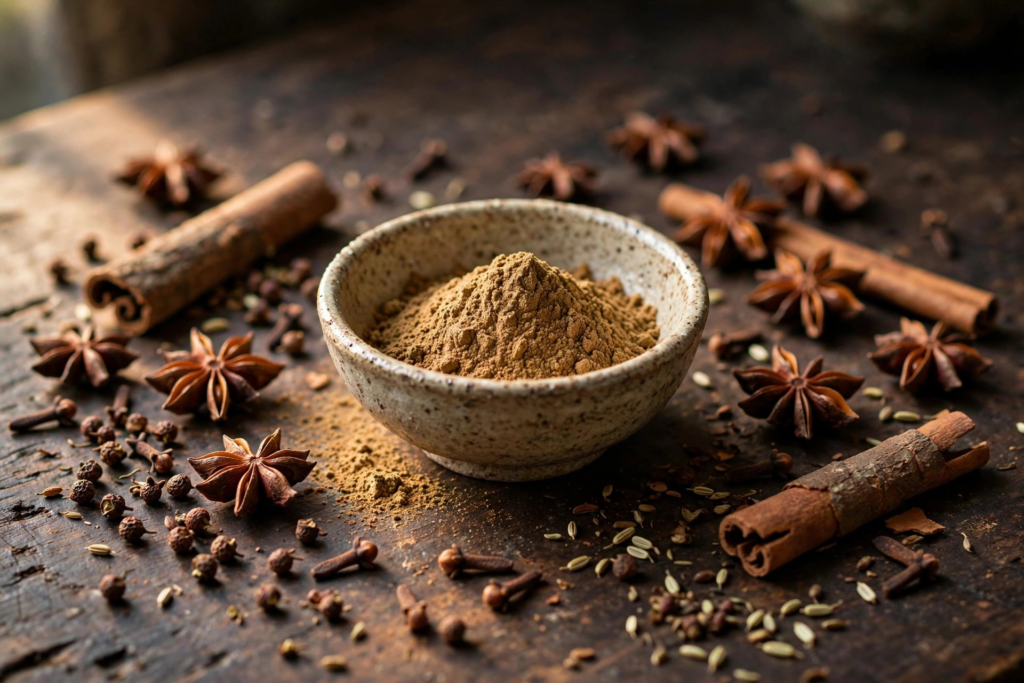
Open a jar of five spice powder and take a sniff. That smell — sweet, warm, a little mysterious, with something almost like licorice hiding underneath — is the smell of half the Chinese restaurant dishes you’ve ever loved. Char siu. Roast duck. Those glossy red-braised pork bellies. That aroma has a name, and it comes from five humble spices ground into one dusty, reddish-brown powder.
Five spice powder (五香粉, wǔxiāng fěn, literally “five fragrance powder”) is one of the foundational seasonings of Chinese cooking. It’s potent, so a little goes a long way — but once you understand what’s in it and why those five spices were chosen, you’ll reach for it constantly. Here’s the full story: the five spices, the philosophy behind the number, how to make it yourself, and how to cook with it without overdoing it.
What Five Spice Powder Actually Is
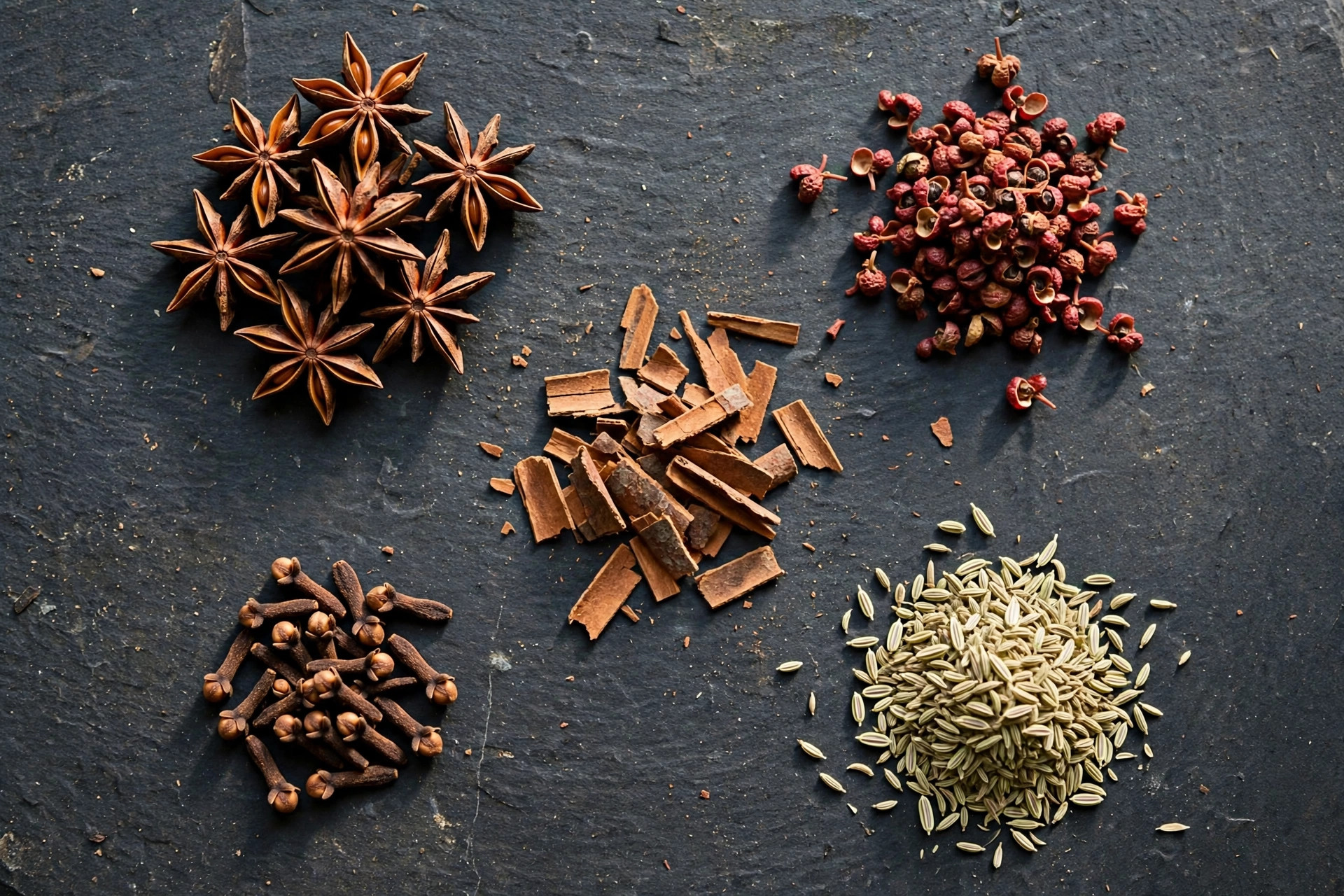
At its simplest, five spice powder is a ground blend of five spices — star anise, Sichuan peppercorns, cassia (Chinese cinnamon), cloves, and fennel seeds. Ground together, they form a fine powder with a warm, sweet-savory aroma dominated by anise.
Despite the name, it isn’t “spicy” in the chili-heat sense. There’s no burn. What you get instead is warmth: sweet, peppery, woodsy, with a faint tingling buzz on the tongue from the Sichuan pepper. Think of it less like cayenne and more like a moody, complicated cousin of pumpkin spice — except savory, and roughly a thousand years older.
You’ll find it in the spice aisle of most supermarkets and in every Asian grocery, usually in a small bag or jar. It’s cheap, it keeps for months, and it has an almost unfair ability to make simple food taste like restaurant food. But not all jars are equal — more on that below.
Five-spice at a glance:
- Chinese name: 五香粉 (wǔxiāng fěn) — “five fragrance powder”
- The classic five: star anise, Sichuan peppercorns, cassia, cloves, fennel seeds
- Taste: warm, sweet-savory, faintly numbing — not chili-hot
- Best with: fatty meats, braises, roast poultry, marinades
- How much: start with ½ teaspoon; a little goes a long way
- Shelf life: about 6 months ground, over a year as whole spices
The Five Spices, One by One
Every brand tweaks its ratios, and some recipes sneak in extras like ginger, licorice root, or dried orange peel. But the classic five each earn their place. Here’s what each one brings to the blend:
Star anise — the boss. Those pretty eight-pointed pods are the soul of the mix. They deliver the sweet, licorice-like aroma that hits your nose first — the compound anethole, the same one behind fennel and ouzo. Star anise usually makes up the largest share of the blend, and if your five spice smells mostly like anise, that’s exactly right.
Sichuan peppercorns — the tingle. These aren’t true peppercorns at all; they’re the dried husks of a prickly ash tree. They contribute a citrusy, floral aroma and that famous numbing buzz — ma — that makes your lips hum. Only a small amount goes in, but without it the blend would taste flat and one-dimensional.
Cassia — the warmth. What most of the world calls “cinnamon” in Chinese cooking is actually cassia, cinnamon’s bolder, slightly more bitter cousin. It gives the blend its woody backbone and rounds off the sharper edges. True cinnamon works in a pinch, but cassia’s assertiveness is what the blend was built around — The Kitchn’s spice-cabinet guide has a good note on the difference between the two.
Cloves — the loud one. Cloves are intensely aromatic, and a little goes an extremely long way. They’re the reason five spice can turn bitter or medicinal if a blend is heavy-handed — or if you use too much. In the right proportion, they add a deep intensity the sweeter spices need.
Fennel seeds — the lift. Sweet, bright, faintly green-tasting, fennel keeps the whole blend from getting too dark and heavy. It bridges star anise’s sweetness and the peppery elements, and it’s the quiet reason the blend tastes balanced rather than muddy.
| Spice | What it adds | Share of the blend |
|---|---|---|
| Star anise | Sweet, licorice-like base aroma | The largest share |
| Sichuan peppercorns | Citrusy tingle and numbing buzz | A small amount |
| Cassia | Warm, woody backbone | Moderate — turns bitter in excess |
| Cloves | Deep, pungent intensity | The least — overpowers fast |
| Fennel seeds | Sweet brightness that lifts the blend | Generous — balances the dark spices |
Ratios shift by brand and region. Northern blends tend to lean harder on star anise and fennel; Wikipedia’s breakdown of five-spice’s regional variations notes that in southern China, cooks often swap in a different cinnamon species and dried mandarin orange peel for a brighter, more aromatic profile. The “five” is more of a guiding idea than a strict rule — there’s even a thirteen-spice powder (十三香) for people who find five too restrained.
Why “Five”? The Philosophy Behind the Blend
The number isn’t random. Traditional Chinese cooking recognizes five fundamental flavors — sweet, sour, bitter, pungent, and salty — and maps them onto the five elements of Chinese cosmology: wood, fire, earth, metal, and water. The idea is that a well-constructed dish, like a well-constructed life, balances all five. Five spice powder is that philosophy in a jar: sweet from anise and fennel, bitter from cassia and cloves, pungent from Sichuan pepper and cloves, with saltiness supplied by whatever you’re seasoning.
The roots run deep. The theory of the five flavors is credited to Yi Yin, a chef and political figure from China’s Shang dynasty — over three thousand years ago — who argued that harmony in food mirrored harmony in governance. This account of the ancient five-flavors theory traces how those ideas shaped the blend’s traditional composition.
The five spices genuinely cover the whole flavor spectrum, which is why a pinch of the blend makes a dish taste complete in a way no single spice can. It’s the same reason Chinese cooking obsesses over balancing flavors rather than showcasing one — the blend is a shortcut to that balance.
Store-Bought vs. Homemade: Is It Worth the Five Minutes?
Store-bought five spice is perfectly fine — but ground spices start losing their volatile oils the moment they’re milled, and a jar that’s sat in a warehouse and on a shelf for a year tastes like a faded photocopy of the real thing. If yours smells dusty rather than intoxicating, it’s past its prime.
Making it yourself takes about five minutes and the difference is startling — sharper, brighter, more alive. All you need is a dry skillet and a spice grinder (a cheap coffee grinder reserved for spices works perfectly).
Small-batch five spice powder (makes about ¼ cup):
6 whole star anise pods
2 tablespoons fennel seeds
2 teaspoons Sichuan peppercorns
1½ teaspoons whole cloves
1 cassia or cinnamon stick (about 3 inches), broken into pieces
Toast everything in a dry skillet over medium heat for one to two minutes, shaking the pan, until it smells intensely fragrant. Don’t walk away — spices go from toasted to burnt in seconds, and burnt spices taste bitter. Let them cool completely, then grind to a fine powder and sift out any chunky bits. If you’re starting from pre-ground spices instead of whole, halve all the amounts.
Whole spices keep their flavor for a year or more, while ground blends fade in months. That’s the real argument for DIY — grind a fresh batch whenever the jar starts tasting tired, instead of buying a new one.
How to Cook With It
Five spice powder is assertive, so the golden rule is restraint: start with half a teaspoon, taste, and add more. You can always add; you can’t subtract. Too much turns a dish bitter and perfumey, which is the single most common mistake people make with it.
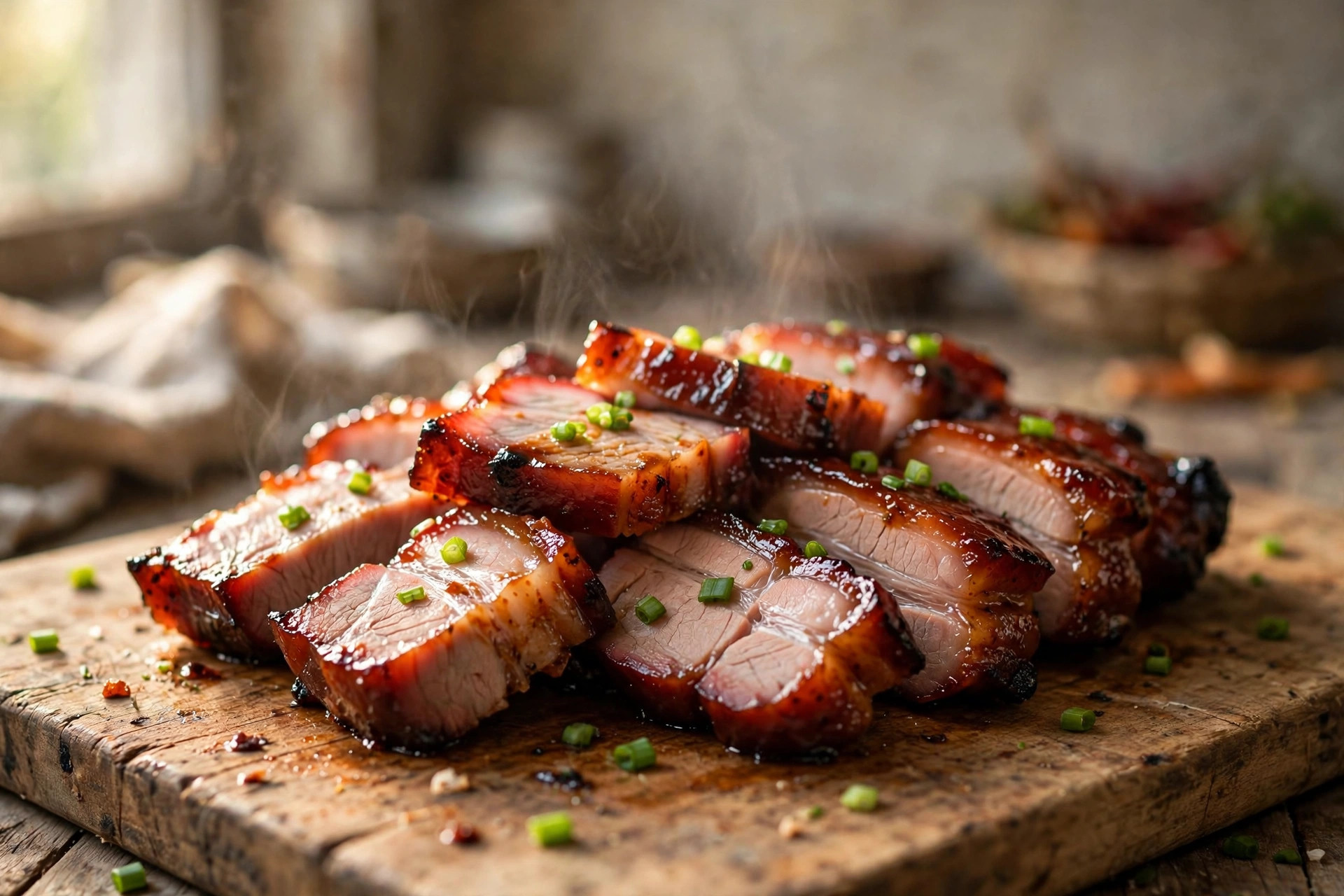
Char siu and roast meats. This is the blend’s home turf. Cantonese-style barbecue pork gets its haunting background sweetness from five spice in the marinade, alongside honey, soy, and Shaoxing wine — here’s how char siu comes together if you want the full method. Cantonese roast duck leans on it too, which makes sense given how central the blend is to Cantonese cooking traditions. Rub it under the skin of a roast chicken with salt a few hours before cooking and thank yourself later.
Braises and stews. Red-braised pork belly, beef stew, soy-sauce chicken — long, slow cooking is where five spice truly shines, because time mellows its edges into deep, savory warmth. Add it to the braising liquid early along with Shaoxing wine, soy, ginger, and a little sugar. Tea eggs (those marbled, savory-sweet snacks) get their flavor from a similar braising liquid.
Stir-fries and quick cooking. A pinch tossed into the wok with vegetables or sliced meat adds instant complexity — bloom it in the hot oil for a few seconds before the other ingredients go in, the way you’d treat any ground spice in a well-seasoned wok. It works beautifully with rich ingredients: pork, duck, mushrooms, eggplant.
Timing matters. In braises and marinades, add it early so the flavor melds. In dry rubs and stir-fries, it goes on right before or during cooking. Don’t dump a tablespoon into a delicate soup at the end and hope for the best — the raw spice taste will sit on top instead of blending in.
Beyond the Classics: Surprising Uses
Once you have good five spice in the house, it starts migrating into places you didn’t expect.
Five-spice salt might be the best thing you make this month. Stir a teaspoon of five spice into a few tablespoons of flaky sea salt in a dry pan over low heat until combined, and you have a finishing salt that’s outrageous on roast chicken, crispy pork belly, fried tofu, or even french fries. It keeps for ages and makes a great gift.
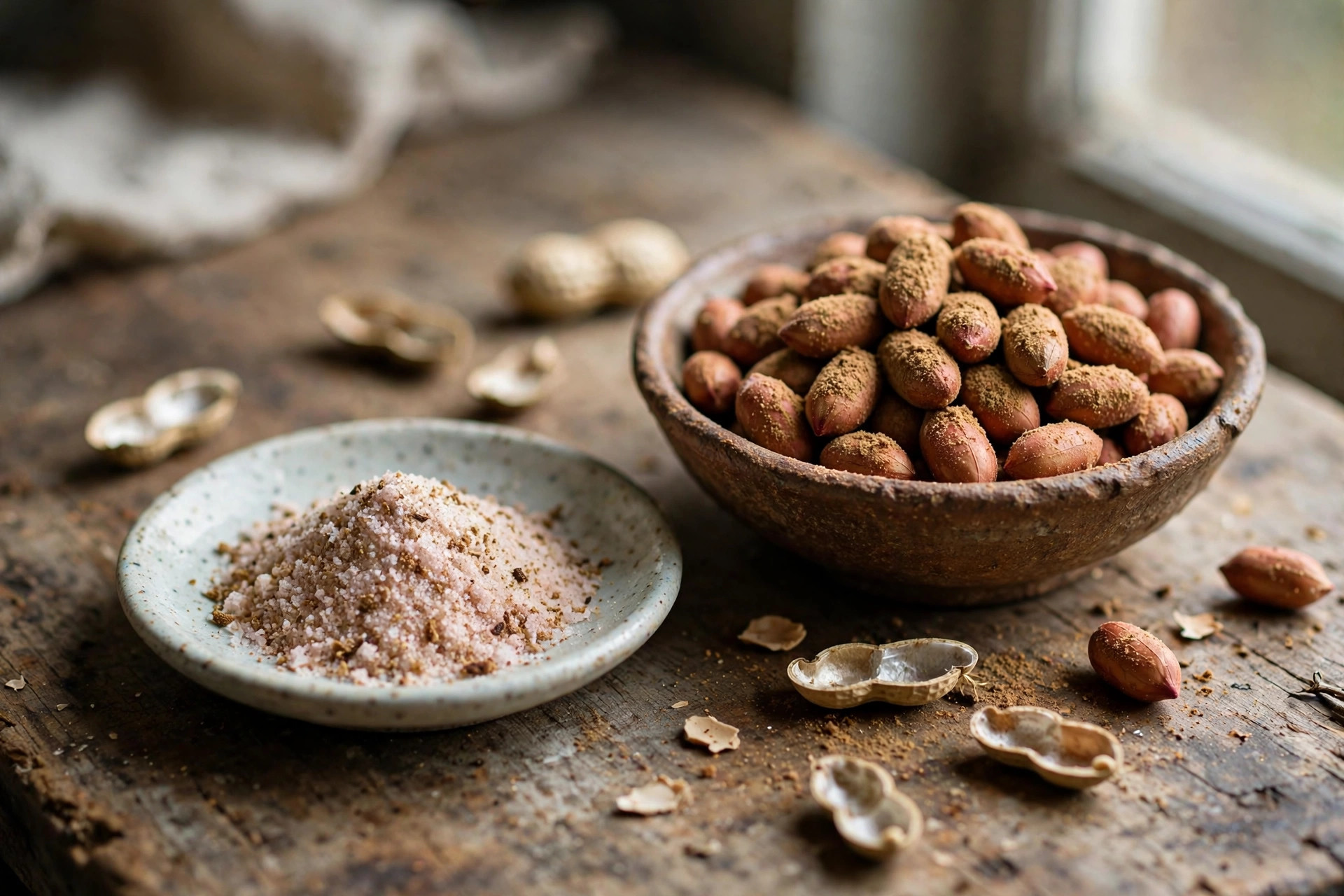
Roasted nuts and snacks are a natural fit. Toss peanuts, cashews, or almonds with a little oil, salt, sugar, and five spice, then roast until fragrant. They disappear fast, which is both the point and the problem.
Roasted vegetables love it too — sweet potatoes, squash, and carrots with five spice, oil, and salt taste like they came from a much fancier kitchen than yours. The blend’s sweetness plays beautifully with caramelized edges.
Baking is the sleeper hit. A pinch in spice cakes, gingerbread, or shortbread adds a mysterious warmth people can’t quite place. It won’t replace cinnamon one-for-one — it’s more assertive — but in small amounts it makes desserts taste deeper. Try it in banana bread once and you’ll understand.
Buying, Storing, and What to Use Instead
Buying: Asian grocery stores are your best bet — the turnover is faster, the bags are bigger, and the price is usually a fraction of the supermarket jar. Whatever you buy, open it and smell it before committing. Good five spice smells sweet, warm, and complex. If it smells like dust, leave it on the shelf. Check the ingredient list, too: it should be nothing but spices, no fillers or anti-caking agents doing the heavy lifting.
Storing: Airtight container, cool dark cupboard, away from the stove. Ground five spice holds its character for about six months; after that it fades gradually rather than going bad. If you buy in bulk, keep a small jar by the stove and stash the rest sealed in the freezer.
Substitutes: Nothing replicates the blend exactly, but you have options. The best substitute is a rough mix of what you have — cinnamon, a crushed star anise or two, a few cloves, and a pinch of black pepper gets you surprisingly close. In a real emergency, allspice works at a one-to-one ratio: it’s a single dried berry, not a blend, but it shares the warm, clove-cinnamon character. What it can’t give you is the Sichuan pepper tingle. Avoid single-spice swaps like plain cinnamon — you’ll get warmth with none of the complexity that makes the blend worth using.
And a fun footnote: the blend traveled with the Chinese diaspora and picked up local names — in Vietnam it’s ngũ vị hương, seasoning everything from broiled chicken marinades to noodle soups. Same five-spice soul, different accent.
Frequently Asked Questions
Is five-spice powder spicy hot?
Not in the chili sense — there’s no capsaicin burn. The “heat” is warmth from cassia and cloves plus a gentle numbing tingle from Sichuan peppercorns. Most people who fear spicy food handle five spice just fine.
Does it always contain exactly five spices?
No. Five is the traditional framework, but blends vary by region and maker — some add ginger, licorice, or orange peel, and southern Chinese versions swap in different aromatics. There’s even a thirteen-spice powder for the maximalists. Think of “five” as a philosophy, not a headcount.
Why does my five-spice taste bitter?
Usually one of three things: you used too much (cloves and cassia turn bitter in excess), the spices scorched during toasting, or the jar is old and the bright top notes have faded. Start with less, toast gently, grind fresh.
What’s the difference between five-spice powder and allspice?
Allspice is a single spice — one dried berry — that happens to taste like a mix of cinnamon, clove, and nutmeg. Five-spice is an actual blend of five spices with star anise and Sichuan pepper in the mix. Allspice makes a decent emergency substitute, but it can’t replicate the anise sweetness or the numbing tingle.
How long does five-spice powder last?
Ground, about six months at peak flavor in an airtight container away from heat and light. Whole spices last a year or longer, which is the best argument for grinding small batches yourself instead of buying big jars.
Five spice powder rewards the curious. Grind a small fresh batch this weekend, rub it with salt onto chicken thighs before roasting, and pay attention to what happens — that warm, sweet, faintly tingling background note is the sound of three thousand years of flavor theory doing its job.
[…] also one of the five spices in Chinese five-spice powder, though it plays a very different role there than it does in a bowl of mapo […]
[…] of whole husks. A few drops finish a dish the way sesame oil does — at the end, off the heat. And Sichuan pepper is also one of the five spices in five-spice powder, which is how many Western cooks meet it first without […]
[…] it with a mix of honey or maltose, Shaoxing wine, soy sauce, and five-spice powder. Save some for […]
[…] gently — never a rolling boil — for six to ten hours with charred onion, charred ginger, star anise, cinnamon, cloves, and sometimes black cardamom. The charring is the quiet genius: it adds […]