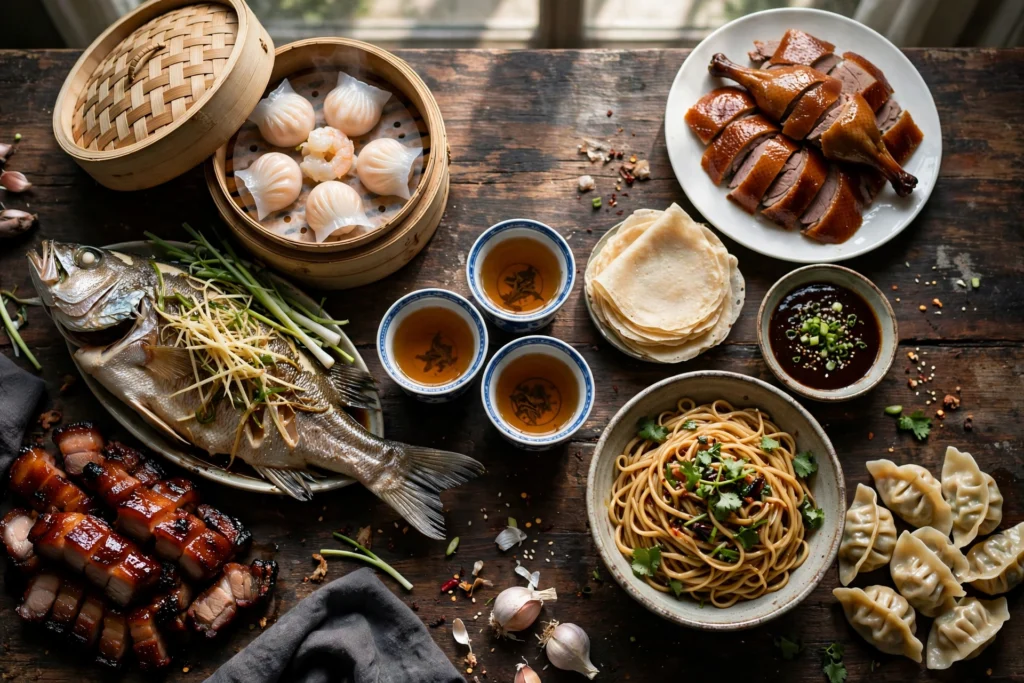
Ask for “Chinese food” in most Western cities and you’ll get something specific: sweet-and-sour pork, chop suey, fried rice, maybe dim sum on weekends. Ask the same question in Beijing and you’d get a blank stare — because “Chinese food” isn’t one cuisine, and the two names people throw around most, Mandarin and Cantonese, aren’t even the same kind of thing.
Here’s the twist most comparison articles skip: Cantonese is a real, precisely defined regional cuisine — one of China’s Eight Great Cuisines, from Guangdong province. “Mandarin cuisine” is a fuzzy umbrella term Westerners use for the food of China’s northern Mandarin-speaking regions: Beijing imperial cooking, Shandong’s refined traditions, Dongbei’s hearty fare. Comparing them is still useful — they really do eat differently — but you should know what the labels actually mean first.
The Terminology Problem Nobody Mentions
In China, nobody says “Mandarin cuisine” the way a menu in Ohio does. What exists is a family of northern traditions: Lu cuisine from Shandong (often called the most refined of the northern styles, and the historical root of Beijing imperial cooking), Beijing’s own palace-influenced dishes, and the hearty, filling food of the northeast (Dongbei). Mandarin is the language these regions share — the cuisine label got attached by outsiders as shorthand for “northern Chinese food.”
Cantonese — Yue cuisine (粤菜) — is the opposite: a single, coherent tradition with documented techniques, signature dishes, and a clear homeland in Guangdong. It’s one of the major regional cuisines of China, alongside Sichuan, Shandong, and Jiangsu styles. When someone says “Cantonese food,” every Chinese person pictures the same thing. When someone says “Mandarin food,” the picture is blurrier — which is exactly why this comparison needs the table below.
Where They Come From (Geography Is the Whole Story)
Guangdong sits on China’s southern coast, wrapped in a subtropical climate with year-round growing seasons and one of the world’s great natural harbors at Guangzhou (Canton). For centuries it was China’s window to the maritime Silk Road — Arab, Indian, and later European traders passing through. That coastal access means seafood is the soul of the cuisine, and the trading history explains both its cosmopolitan streak and why Cantonese emigrants carried it worldwide.
The north is a different planet: cold winters, wheat fields instead of rice paddies, and Beijing sitting at the political center of empire after empire. Imperial courts demanded elaborate banquet cooking. Harsh winters demanded calories, preservation (pickling, salting), and warming foods. The Mongol and Manchu dynasties layered in roasted meats and dairy-adjacent influences you won’t find in the south. This deep dive into the two cultures’ histories shows how trade routes and dynastic capitals shaped what ended up on the plate. China’s flavor map is really a climate map, and these two regions sit at opposite ends of it.
Two Opposite Food Philosophies
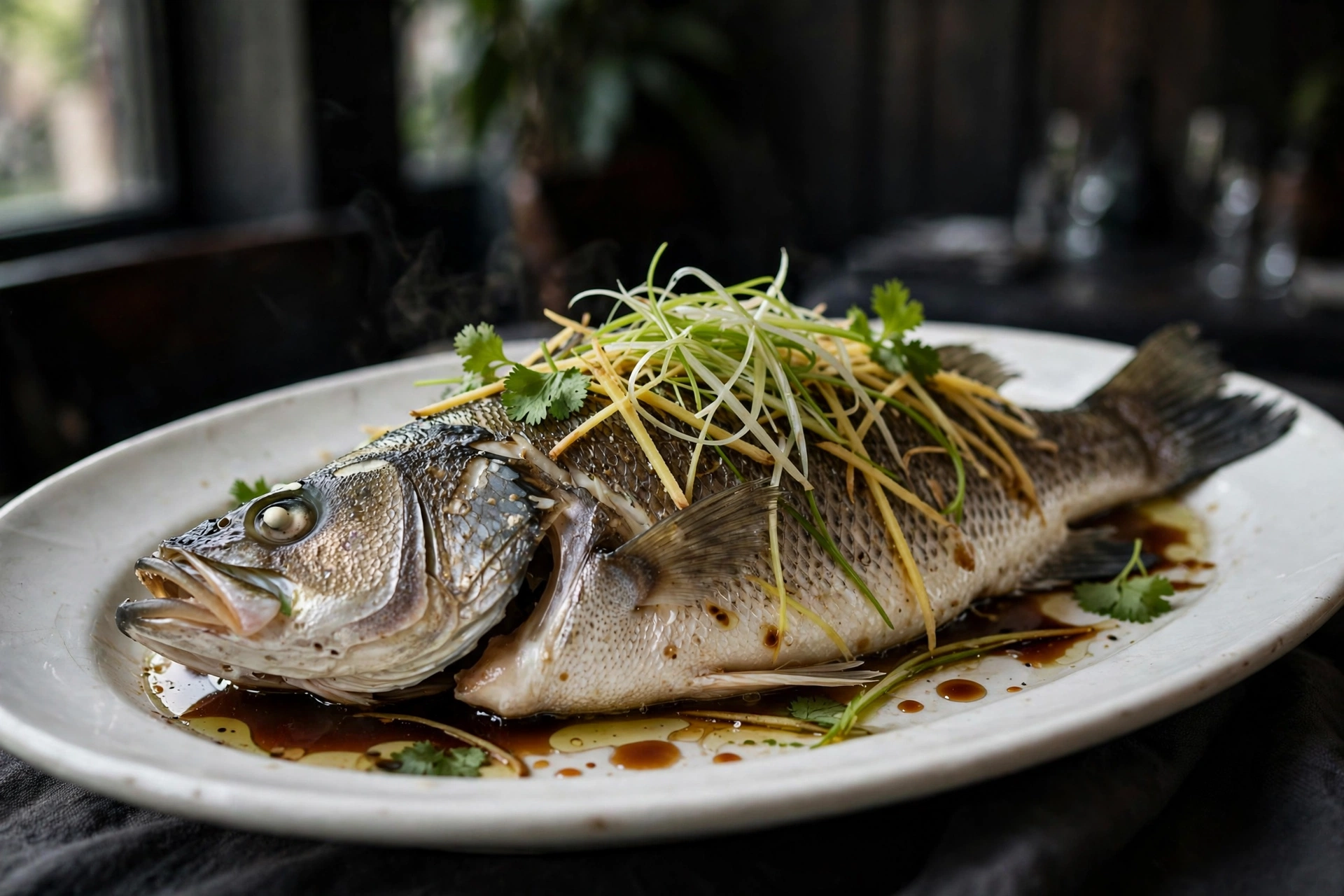
If you remember one sentence about Cantonese food, make it this: the best Cantonese dish tastes like its main ingredient, only more so. The cuisine has a near-moral commitment to freshness — live seafood tanks in restaurants aren’t theater, they’re the point. Seasoning is restrained: ginger, scallion, a whisper of soy, a drizzle of hot oil. The wok hei kiss on a stir-fry, the 20-second steam on a just-caught fish. Cantonese chefs talk about wok hei and timing the way French chefs talk about terroir. Heavy spicing is considered a failure — it means your ingredients weren’t good enough to stand alone.
Northern/Mandarin cooking starts from the opposite premise: food should warm, fill, and satisfy. Wheat is the staple — noodles, dumplings, buns, pancakes — because wheat grows where rice can’t. Flavors are bolder and saltier: black vinegar, fermented bean pastes, garlic by the handful, chili where the region allows. Braising and roasting build deep, layered sauces. A Dongbei stew doesn’t apologize for being heavy; the winter is the excuse. Where Cantonese food whispers, northern food talks with its hands. This head-to-head overview walks through the same contrast dish by dish if you want a second opinion.
There’s an old saying that Cantonese people will eat anything with four legs except the table, anything that flies except the airplane, and anything that swims except the submarine. It’s an exaggeration, but it captures the adventurous freshness-first spirit — the cuisine trusts the ingredient so completely that almost any ingredient qualifies. Northern cooking trusts the method instead: the braise, the roast, the ferment that turns humble wheat and cabbage into something worth gathering around.
Side-by-Side Comparison
| Cantonese (Yue) Cuisine | Northern / “Mandarin” Cooking | |
|---|---|---|
| Homeland | Guangdong province, Hong Kong, Macau | Beijing, Shandong, Dongbei (northeast) |
| Staple carb | Rice and rice noodles | Wheat: noodles, dumplings, buns, pancakes |
| Star proteins | Seafood, poultry, roast meats | Pork, lamb, beef |
| Core techniques | Steaming, quick stir-frying, double-boiling soups | Braising, roasting, deep-frying, pickling |
| Seasoning style | Light, subtle — ginger, scallion, oyster sauce, light soy | Bold, salty — bean pastes, black vinegar, garlic, chili |
| Spice level | Mild; heat is rare | Moderate; heartier and more pungent |
| Signature format | Dim sum — small plates, morning tea culture | Dumpling banquets, noodle bowls, imperial-style feasts |
| Soup culture | Slow double-boiled clear broths (老火汤) | Hearty stews and warming hot pots |
Signature Dishes: The Face-Off
Cantonese greatest hits — the food most of the West already knows, whether it realizes it or not:
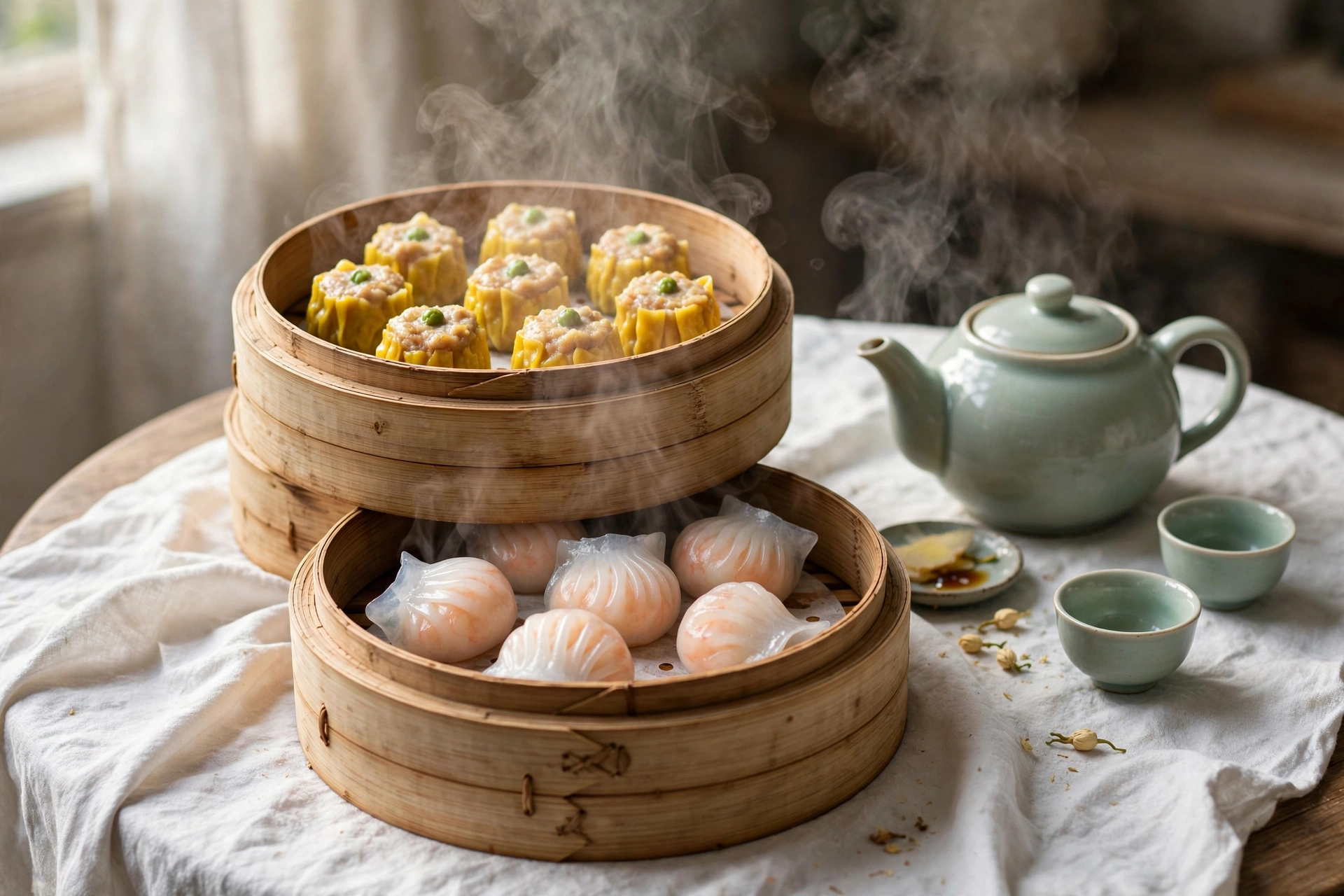
- Dim sum: har gow (shrimp dumplings), siu mai, cheung fun rice rolls — the whole dim sum tradition is Cantonese, built for lingering morning tea.
- Char siu: barbecued pork with that lacquered, caramelized edge — sweet, smoky, sliced over rice.
- Steamed whole fish: ginger, scallion, hot oil. Three ingredients plus a perfect fish. The ultimate freshness flex.
- White cut chicken (白切鸡): poached chicken served at room temperature with ginger-scallion sauce. Sounds plain; regulars will fight you over the best version in town.
- Wonton noodle soup: springy egg noodles in a light, deep broth — the Cantonese answer to ramen, centuries earlier.
Northern/Mandarin greatest hits — heavier, wheatier, built for cold weather:
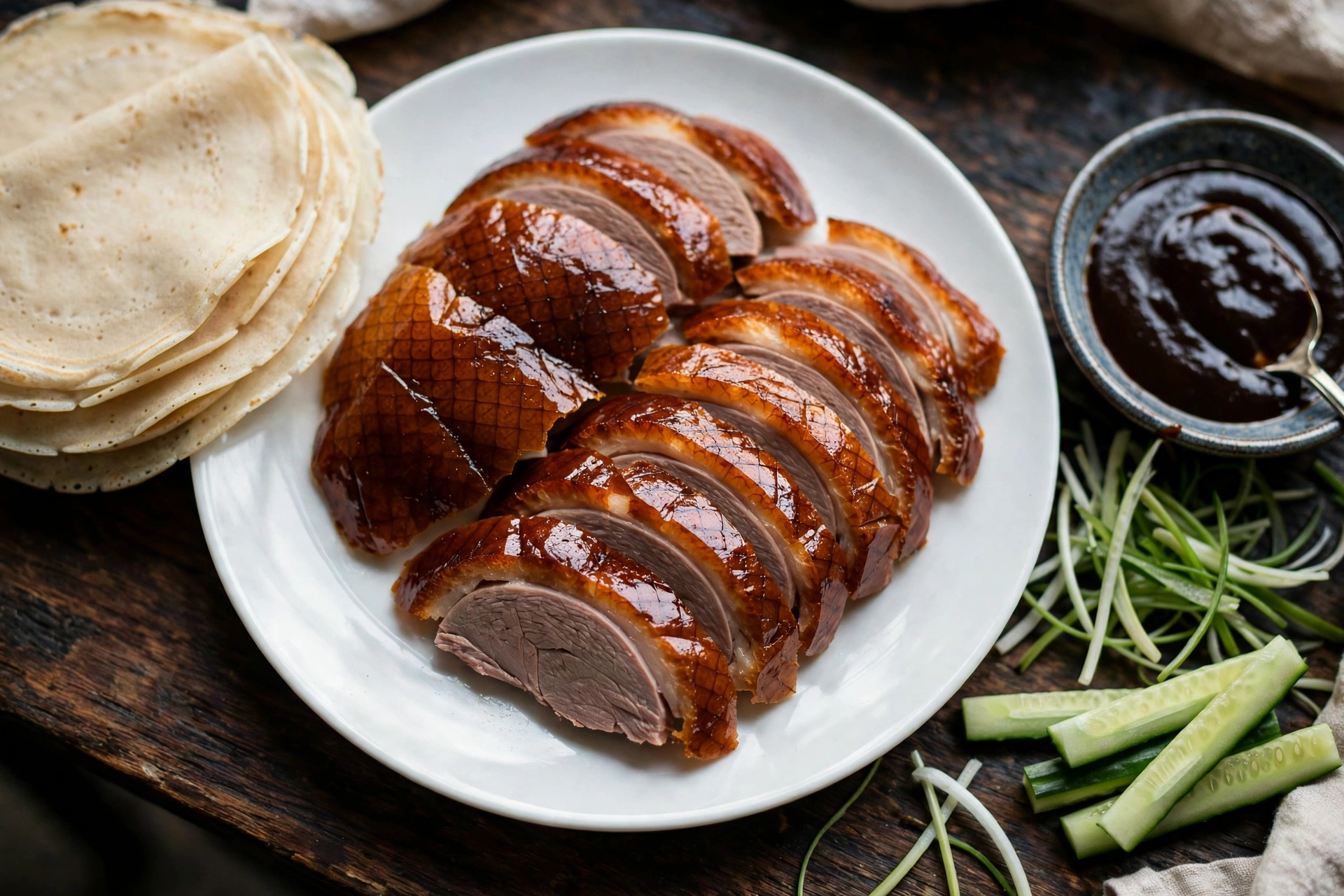
- Peking duck: the imperial showpiece — lacquered crisp skin, thin pancakes, hoisin, scallion. Born in Beijing’s courts.
- Jiaozi: the northern dumpling, pan-fried, boiled, or steamed — and the mandatory Lunar New Year food of the north.
- Zhajiangmian: thick wheat noodles under a salty fermented black-bean pork sauce. Beijing’s soul food in a bowl.
- Cong you bing: flaky scallion pancakes, shattering and savory — street food that ruins all other flatbreads.
- Mongolian-adjacent lamb: cumin lamb skewers and hearty mutton dishes from the northern and northwestern frontier influence.
Breakfast Is the Fastest Way to Taste the Divide
If you want the difference in one meal, eat breakfast in both regions. A Cantonese morning starts soft: a bowl of silky congee with century egg and pork, or cheung fun rice rolls slicked with sweet soy, or char siu bao from a bamboo steamer — ideally at a noisy teahouse where yum cha stretches for hours. It’s gentle food for a warm climate, eaten slowly, with tea doing half the work.
A northern morning hits harder. Jianbing — the savory crepe slathered with bean sauce, wrapped around a crispy cracker and egg — eaten one-handed on the way to work. Doujiang (fresh soy milk) with youtiao for dunking. Fat baozi stuffed with pork and cabbage. Everything wheat, everything filling, everything built to carry you through a cold morning. Same country, completely different start to the day — and one more reason Chinese breakfast deserves its own exploration.
Why Your Local “Chinese Restaurant” Is Probably Cantonese
This is the history most menus don’t print. The great waves of Chinese emigration to the West — the Gold Rush, the railroad era, the post-war decades — came overwhelmingly from Guangdong, especially the Taishan region. Those immigrants opened the restaurants, so “Chinese food” in America, Britain, and Australia became Cantonese food by default, then drifted into its own thing: chop suey, sweet-and-sour pork, egg foo young. Dishes invented abroad, cooked by Cantonese hands, for foreign palates.
That’s why the average Western takeout menu reads like a Cantonese greatest-hits album with the subtlety turned down and the sugar turned up. The delicate steamed fish and double-boiled soups — the food Cantonese people actually revere — rarely made the trip. What traveled was the adaptable, stir-fried, sauce-friendly side of the cuisine. If you’ve only had takeout, you’ve had Cantonese food’s loud cousin, not the cuisine itself.
Northern food arrived in the West much later and in smaller waves, which is why dumpling houses and hand-pulled noodle shops still feel like a discovery in many cities. The Sichuan vs Cantonese rivalry gets more attention, but the north-south divide is the older, deeper split.
How to Tell Which One You’re Eating
Next time you’re at a Chinese restaurant, run this quick menu test:
- Seafood tanks and roast ducks hanging in the window? Cantonese. The hanging roast meats (siu mei) are a dead giveaway.
- Menu leads with dumplings, noodles, and pancakes? Northern. Wheat is the tell.
- Dim sum carts or a dedicated morning-tea menu? Cantonese, full stop — yum cha is theirs alone.
- Dishes named with “dry-fried,” “cumin,” or lamb skewers? Northern or northwestern influence.
- Everything arrives with black vinegar and chili oil on the table? Northern-leaning. Cantonese tables offer soy and maybe white pepper.
- The flavors feel delicate and you can identify every ingredient? Cantonese philosophy on the plate. Rich, dark, makes-you-loosen-your-belt? Northern.
Frequently Asked Questions
Is Mandarin food the same as northern Chinese food?
More or less, in Western usage. “Mandarin cuisine” isn’t an official category in China — it’s shorthand for the wheat-based, hearty cooking of the Mandarin-speaking north (Beijing, Shandong, Dongbei). If you want precision, say “northern Chinese.”
Which is spicier, Cantonese or Mandarin food?
Northern/Mandarin cooking is bolder and more pungent — more garlic, more fermented flavor, occasional chili. Cantonese is famously mild. But neither touches Sichuan or Hunan for actual heat; spice was never the north-south dividing line.
Is dim sum Cantonese or Mandarin?
Cantonese, without question. Dim sum grew out of Guangzhou’s teahouse culture and Hong Kong’s yum cha tradition. A “Mandarin dim sum” menu is a contradiction in terms.
Why is Cantonese food more famous in the West?
Immigration history. The earliest and largest waves of Chinese emigrants to the US, UK, and Australia came from Guangdong, so they opened Cantonese restaurants. Western “Chinese food” is really Cantonese-emigrant food, evolved over a century abroad.
What should I order to taste the difference?
Order a Cantonese steamed whole fish and a northern zhajiangmian in the same week. One is the ocean barely touched by heat; the other is wheat and fermented bean paste built for winter. After that pair, you’ll never confuse the two again.
Start with the cuisine you haven’t tried. If takeout boxes are your whole experience, find a Cantonese teahouse for weekend dim sum — then hunt down a northern dumpling house for jiaozi and hand-pulled noodles. China’s oldest culinary argument is settled the same way every time: at the table, with chopsticks, ordering too much.