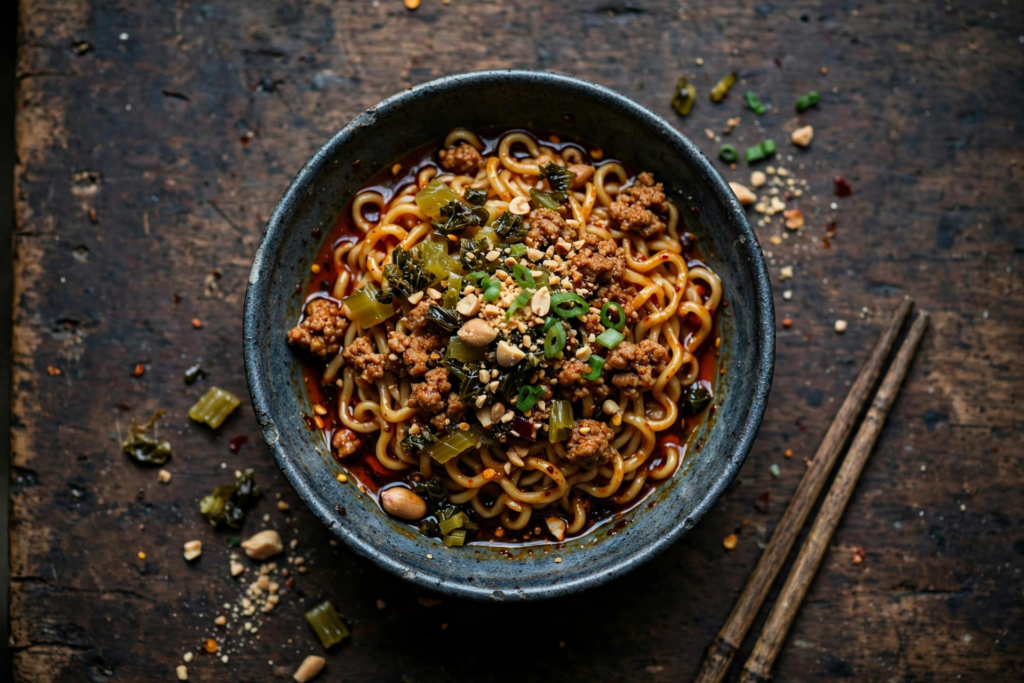
Some dishes are named after their ingredients, some after their inventors, and some after the piece of equipment used to sell them on the street. Dan dan noodles belong to that last, wonderful category. The name doesn’t describe what’s in the bowl — it describes the bamboo pole slung across a vendor’s shoulders, with baskets of noodles and cookware swinging at either end, as he walked the streets of 19th-century Sichuan shouting for customers.
Today dan dan noodles are one of the most famous exports of Sichuan cooking — a small bowl of wheat noodles slicked with chili oil, sesame paste, and preserved vegetables, humming with the numbing tingle of Sichuan pepper. But the version you get outside China is often a different animal from the original. Here’s the full story: where the dish comes from, what an authentic bowl contains, how it changed as it traveled, and how to recognize the real thing.
What Dan Dan Noodles Actually Are
At its core, dan dan mian (担担面) is street food — cheap, fast, and intensely flavored. In its birthplace of Chengdu, the classic serving is a small bowl of thin wheat noodles tossed in a spoonful of sauce: chili oil, sesame paste, soy sauce, black vinegar, garlic, and ground Sichuan pepper, topped with seasoned minced pork and chopped preserved mustard greens, finished with scallions and crushed peanuts.
Small is the operative word. The traditional Chengdu bowl is a snack-sized portion, not a meal — something you eat standing up or perched on a stool, in about five minutes, before getting on with your day. The size isn’t an accident. These were sold by walking vendors to workers and travelers who wanted something hot, cheap, and punchy. A small bowl kept the price low and the turnover fast.
The flavor is the famous ma la combination — numbing heat from Sichuan pepper plus burning heat from chili oil — rounded out with the nutty richness of sesame paste, the savory depth of the pork, and a sour-salty crunch from the pickled greens. Every bite should hit sweet, sour, salty, spicy, and numbing at once. If any one of those is missing, the bowl is off balance.
Why “Dan Dan”? The Carrying-Pole Story
Here’s the part most restaurant menus skip. In the 1800s, restaurants weren’t the default way to eat out in Sichuan — street vendors were. A vendor’s entire kitchen traveled on a dan, a bamboo carrying pole (扁担, biǎndàn) balanced across the shoulders, with two baskets hanging from the ends: one holding noodles and ingredients, the other a small stove and cookware. It was a mobile noodle shop, and it was cheap to run, which kept the noodles affordable.
Locals started calling the noodles after the pole: dan dan mian, “noodles carried on a pole” — or, less literally and more honestly, “peddler’s noodles.” The name stuck long after the poles disappeared.
Legend credits the dish’s rise to a vendor named Chen Baobao, who in 1841 walked from his village to the town of Zigong, saw hawkers selling cooked food along the roadside, and set up his own pole-carried noodle operation. Tasting Table traces how Baobao spread the dish with his two-compartment pot as he traveled, eventually reaching Chengdu and Chongqing. Whether every detail of that story is true is beside the point; it’s part of the collective memory of Sichuan, where celebrated writers like Ba Jin reportedly sought out dan dan noodles the moment they came home.
What’s in an Authentic Bowl
An authentic Chengdu-style bowl is built in layers, not tossed together at random. Each layer has a job:
- The sauce base: chili oil (the star), toasted sesame paste, light soy sauce, black vinegar, a pinch of sugar, minced garlic, and ground Sichuan pepper. This goes in the bowl first.
- The noodles: thin, round wheat noodles, cooked just to springy, laid over the sauce.
- The pork: minced pork seasoned and cooked until the liquid fully evaporates — slightly overcooked by Western standards — so it turns savory and a little crisp rather than steamy.
- The preserved greens: ya cai (Yibin preserved mustard greens), chopped fine. Salty, savory, faintly sweet, with a fermented funk that cuts through the richness. This is the ingredient most home versions skip, and the one that makes the biggest difference.
- The finish: chopped scallions and crushed roasted peanuts for freshness and crunch.
The order matters: sauce first, then noodles, then toppings. You mix everything at the table, right before eating, so every strand gets coated. The noodles go in hot and the mixing happens fast — this is a dish that doesn’t wait.
Two ingredients deserve special attention. The chili oil should ideally be homemade — oil bloomed with dried chilies, Sichuan pepper, star anise, and cinnamon — because the oil carries most of the dish’s flavor. And the sesame paste is Chinese-style, made from toasted sesame seeds; it’s more potent and nuttier than Middle Eastern tahini, and substituting tahini gets you close but not all the way there.
Chengdu Dry vs Hong Kong Soupy: Two Different Dishes
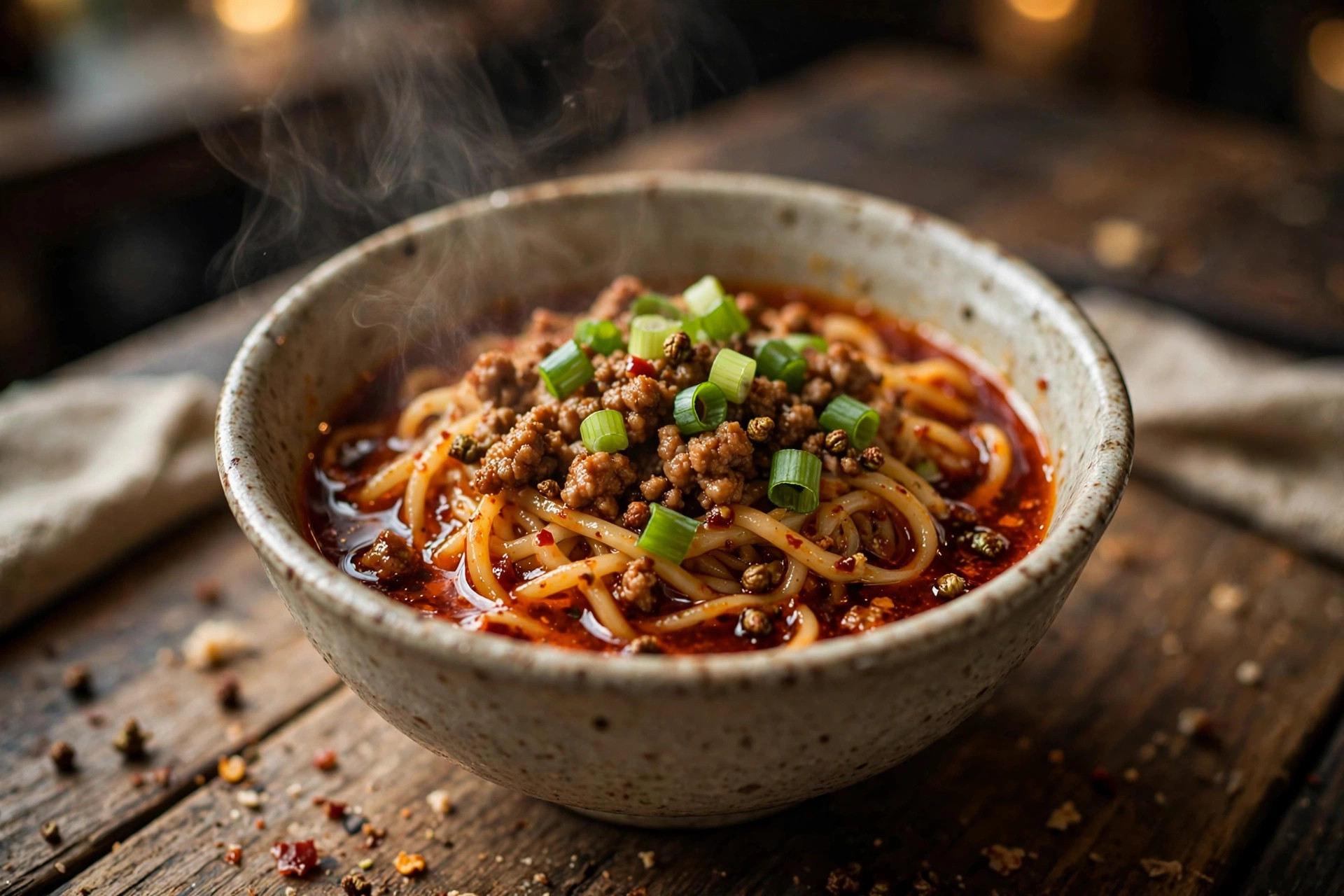
One of the most common points of confusion: order dan dan noodles in Chengdu and you’ll get a dry, intensely seasoned small bowl. Order them in Hong Kong — or in most American Chinese restaurants — and you might get a soupy bowl with peanutty broth. Both are called dan dan noodles. They’re barely the same dish.
| Chengdu (traditional) | Hong Kong / overseas | |
|---|---|---|
| Style | Dry — noodles tossed in sauce | Soupy — served in broth |
| Portion | Small snack bowl | Full meal-sized bowl |
| Heat level | Full ma la — numbing and spicy | Toned down, milder |
| Nutty element | Toasted sesame paste | Often peanut butter |
| Greens | Ya cai (Sichuan preserved mustard greens) | Often skipped or substituted |
| Where you find it | Sichuan, specialist restaurants | Hong Kong, the West, takeout menus |
The Hong Kong version traces back to Sichuan restaurateur Yeung Din-Wu, who introduced the dish to the city and adapted it for local tastes — less fire, more soup, peanut butter standing in for sesame paste. It spread from there into Western Chinese restaurants, which is why so many people outside China think of dan dan noodles as a soupy peanut noodle bowl.
Neither is “wrong,” but they’re different experiences. The dry Chengdu version is the original, and it’s the one worth seeking out if you want to understand what the fuss is about. The soupy version is comfort food — pleasant, but it files down the edges that make the dish distinctive.
How to Eat Them (Yes, There’s a Technique)
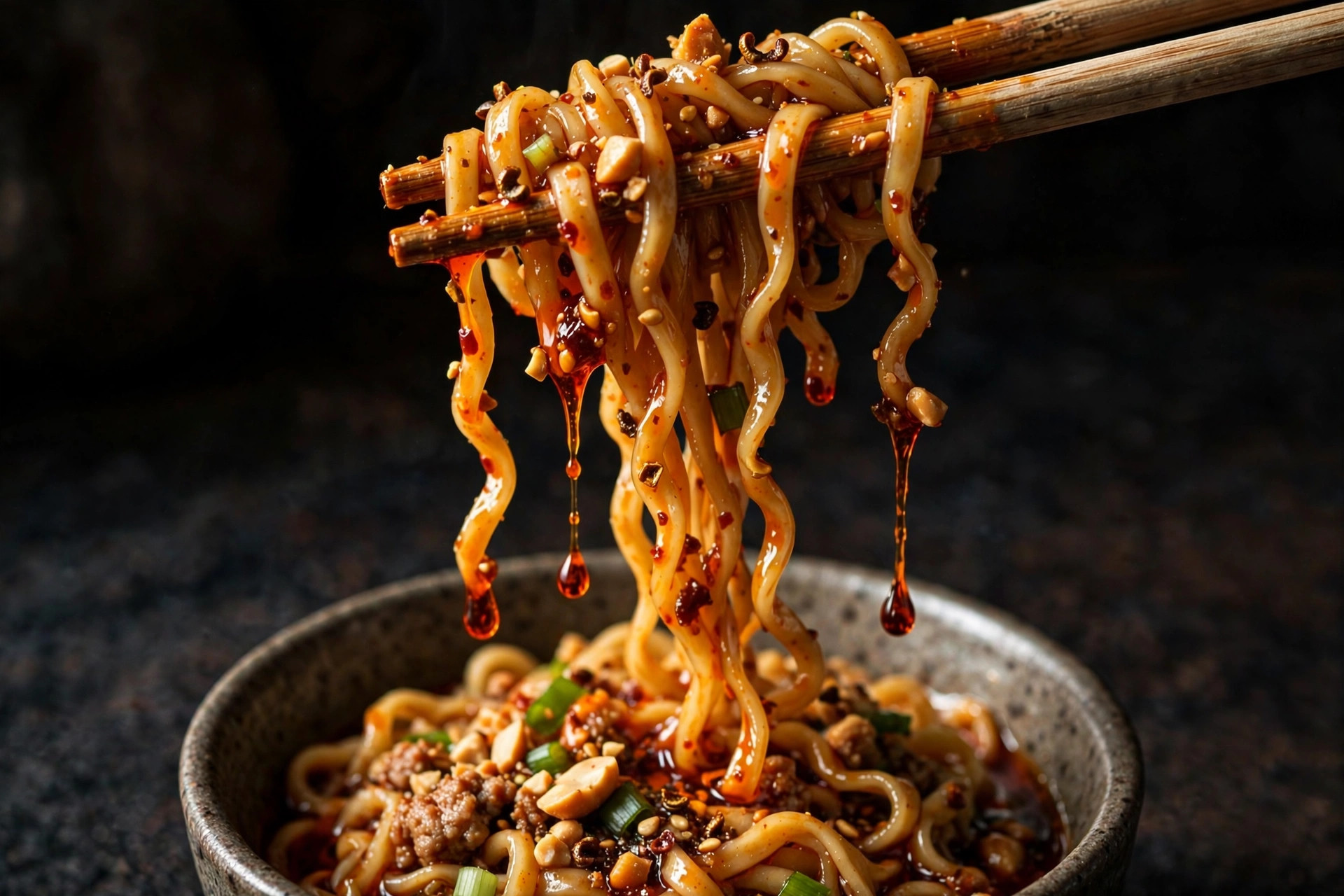
Dan dan noodles arrive layered, and the layering is part of the experience. Don’t just start eating from the top — you’ll get plain noodles first and a salt bomb at the end. Instead, take your chopsticks and mix everything thoroughly, lifting from the bottom, until every strand is coated in the red-gold sauce. Then eat quickly, while it’s hot.
A few things first-timers should know:
- The numbing is normal. Sichuan pepper produces a tingling, almost fizzy sensation on the lips and tongue — that’s the “ma” in ma la, and it’s the point. It fades within minutes.
- It will be oily. Chili oil is a main ingredient, not a garnish. A proper bowl glistens. If yours arrives dry and clean-looking, something’s off.
- Small bowl, fast eating. The traditional portion is a snack. Eat it hot and don’t let it sit — the noodles keep absorbing sauce and the texture goes soft.
- Order a cooling side. In Chengdu, people pair the heat with something mild — cucumber salad, a cold mung bean jelly, or just tea. Your palate will thank you.
If you’re sensitive to heat, ask for less chili oil rather than skipping the dish — dialing back the “la” while keeping the “ma” still gives you the signature experience.
Making Dan Dan Noodles at Home
This is one of the most home-cook-friendly Sichuan dishes, because there’s no wok hei to chase and no complicated technique — it’s assembly, not acrobatics. The whole thing comes together in about 20 minutes if your pantry is stocked. The shopping list is where people stumble, so here’s what actually matters:
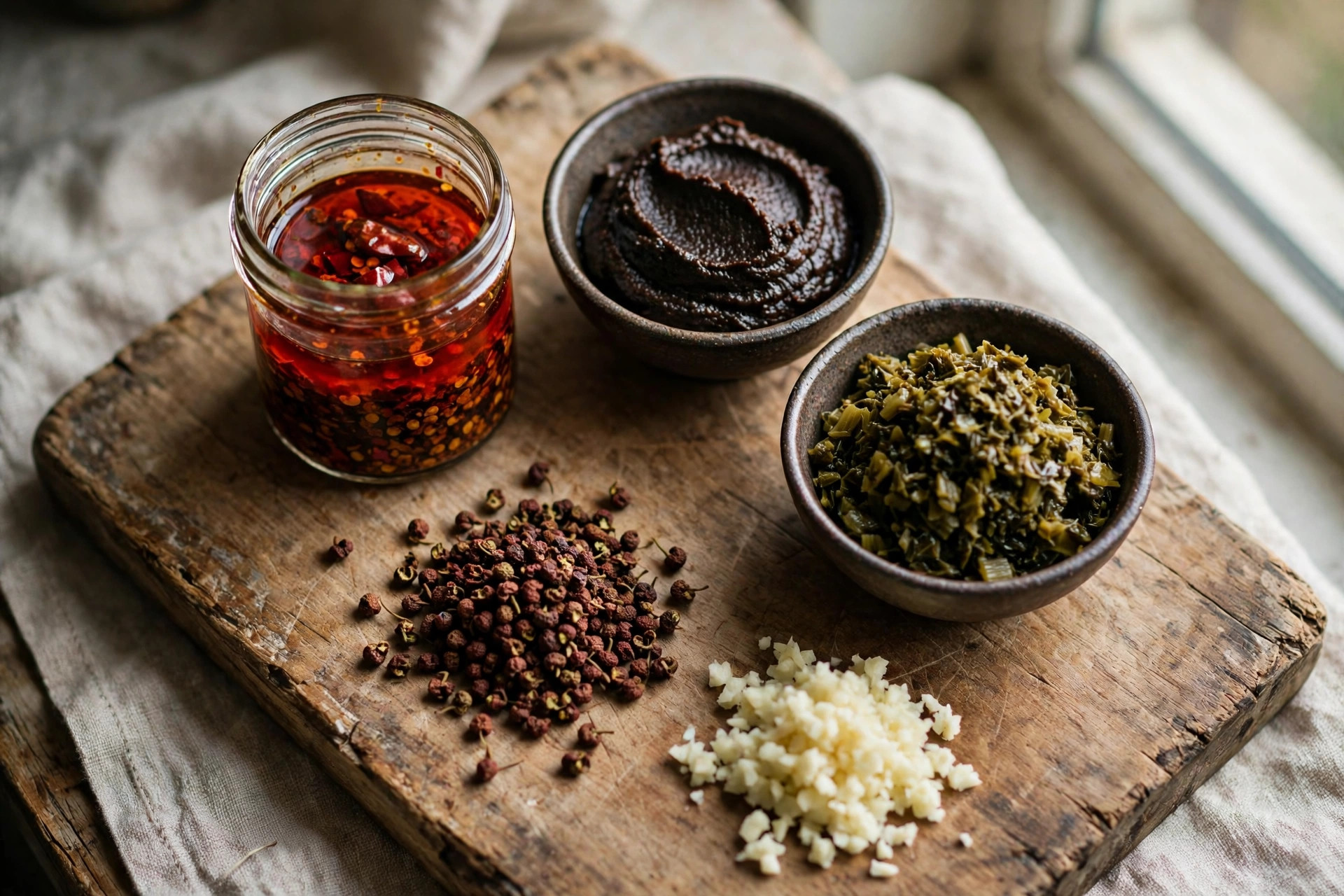
- Don’t skip the ya cai. Find Yibin preserved mustard greens at an Asian grocery (or online). Rinse, chop fine, and fry briefly. It’s the soul of the topping.
- Make your own chili oil. Store-bought works, but blooming your own with Sichuan peppercorns, star anise, and cinnamon takes ten minutes and transforms the dish.
- Toast and grind the Sichuan pepper fresh. Pre-ground loses its numbing punch fast. A small dry toast in a pan, then a spice grinder — that’s it.
- Cook the pork dry. Keep it in the pan past the point where it looks done, until the moisture evaporates and it starts to crisp. Mushy steamed pork is the most common home-cook failure.
- Use thin wheat noodles. Fresh is best, dried is fine. Skip the urge to use spaghetti or ramen — the texture isn’t right.
- Save some noodle water. A splash loosens the sesame paste into a sauce that actually coats instead of clumping.
For a vegetarian version, crumbled firm tofu or mushrooms stand in for the pork — add a spoonful of fermented black beans or mushroom soy sauce to replace the lost umami, and make sure your chili oil is vegan (some contain animal-derived ingredients).
Dan Dan Noodles and Sichuan Food Culture
Dan dan noodles make more sense once you see where they sit in Sichuan’s food culture. This is a cuisine built on small, intense flavors — the opposite of a big bland banquet plate. Alongside mapo tofu and hot pot, dan dan noodles are one of the dishes that define what “Sichuan flavor” means to the rest of the world: bold, numbing, unapologetic.
There’s also something quietly democratic about the dish. It was invented by a street vendor with a pole and two baskets, priced for workers, and it never really left those roots — even now, the best bowls in Chengdu come from tiny shops, not fine dining rooms. The Michelin Guide’s write-ups of the dish keep circling back to the same idea: this is comfort food that cures homesickness for Sichuanese living far from home. That’s a lot of emotional weight for a small bowl of noodles, and it tells you something about how food and memory work in Sichuan.
Frequently Asked Questions
What does “dan dan” mean?
It refers to the bamboo carrying pole (dan) that street vendors used to transport their noodles and cooking gear. Dan dan mian literally means “noodles carried on a pole” — a name for the vendor’s equipment, not an ingredient.
Are dan dan noodles supposed to be soupy or dry?
The original Chengdu style is dry — noodles tossed in sauce. The soupy version comes from Hong Kong, where the dish was adapted to local tastes. Both exist, but dry is the traditional form.
What is ya cai and can I skip it?
Ya cai is a preserved mustard green from Yibin, Sichuan — salty, savory, slightly sweet, with a fermented depth. You can make the dish without it, but you’ll lose the tangy counterpoint that balances the richness. It’s worth tracking down.
How spicy are dan dan noodles really?
The authentic version is properly hot — chili oil plus Sichuan pepper’s numbing tingle. But the heat is layered with sesame, vinegar, and sugar, so it reads as complex rather than punishing. Most home recipes let you dial the chili oil up or down.
What’s the difference between dan dan noodles and sesame noodles?
Sesame noodles are a milder, sweeter dish built around sesame paste with little or no heat. Dan dan noodles add the full Sichuan arsenal: chili oil, Sichuan pepper, preserved vegetables, and seasoned pork. Think of sesame noodles as dan dan’s gentle cousin.
The practical next step: find a Sichuan restaurant near you and order the dan dan noodles — then ask whether they’re served Chengdu-style (dry) or Hong Kong-style (soupy). Knowing which one you’re eating changes how you judge it, and once you’ve had the dry original, the pole-carrier’s legacy starts to make delicious sense.
[…] paste behind some of Chinese cooking’s most beloved flavors. It’s the creamy base of dan dan noodles, the namesake of sesame noodles (ma jiang mian), a key component of the dipping sauce at a Chinese […]