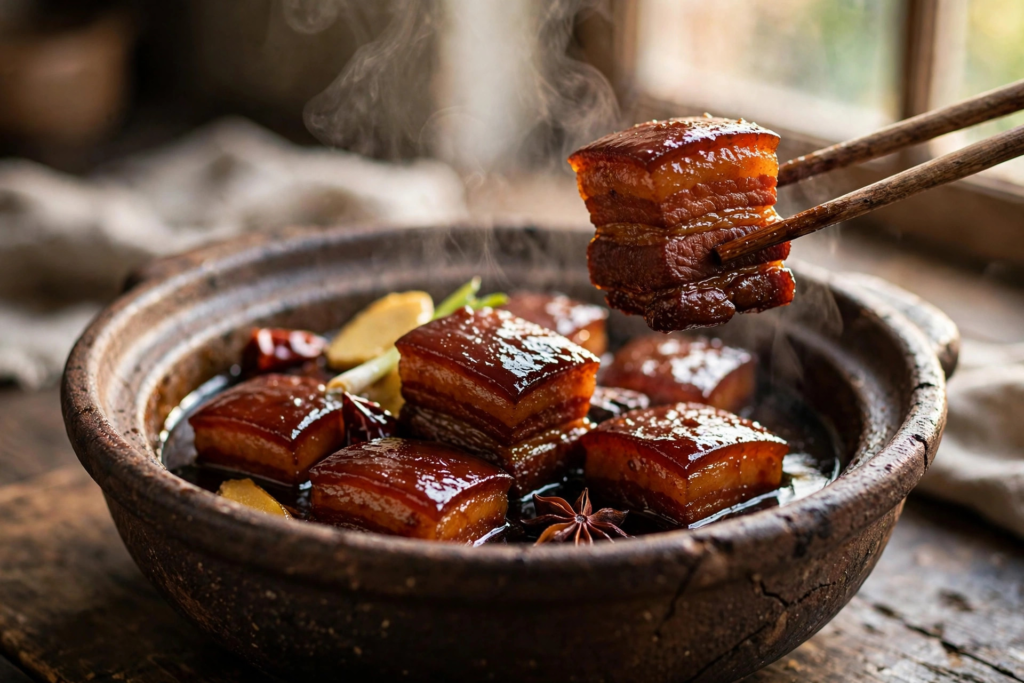
There’s a particular kind of silence that falls over a table when a clay pot of hong shao rou arrives. The cubes of pork belly sit there glowing — deep mahogany, lacquered, trembling slightly — and everyone reaches at once. One bite and you understand why this dish has survived dynasties, fed a chairman, and anchored a thousand family dinners: the fat has melted into silk, the sauce is salty-sweet and sticky, and it all begs for plain white rice.
Hong shao rou (红烧肉) is China’s most famous braised pork: belly pork slow-cooked in soy sauce, caramelized sugar, Shaoxing wine, and aromatics until it’s spoon-tender and glazed a gorgeous red-brown. Here’s what it is, why the “red” matters, the legend behind it, how the regions do it differently, and how to make it at home without the usual mistakes.
What Is Hong Shao Rou, Exactly?
Start with the name, because it tells you the technique. “Hong shao” (红烧) translates directly as “red cooking” — a whole family of Chinese braising methods where the food is cooked in soy sauce and caramelized sugar until it takes on a rich reddish-brown color. As one Shanghainese home cook explains in her family recipe, the “hong” isn’t decoration; it’s the signature of the method itself.
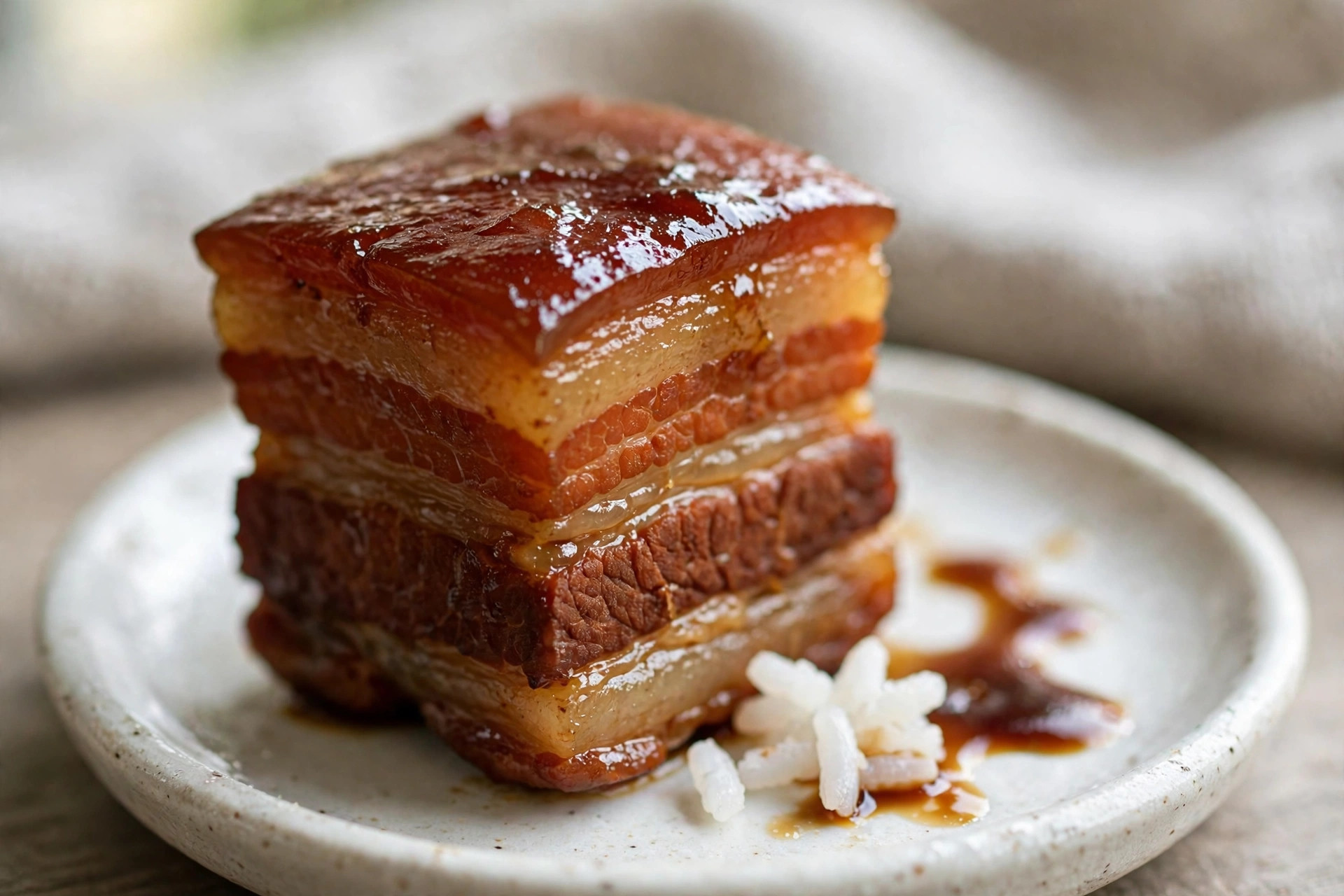
The “rou” just means meat — and in practice, it almost always means pork belly. Skin-on belly, cut into chunky cubes, each piece a little sandwich of fat and lean. That’s non-negotiable. Lean cuts dry out over the long braise; the belly’s fat is what melts down and bastes everything from the inside, turning the sauce glossy and the meat spoon-soft.
The flavor lands in a very specific place: savory from the soy, gently sweet from rock sugar, warm from star anise and ginger, with a mellow depth from Shaoxing wine. In the Jiangnan region they have a phrase for this exact profile — nong you chi jiang (浓油赤酱), “thick oil, red sauce” — and hong shao rou is its poster child. One regional cooking guide calls it the best example of this timeless flavor, and it’s hard to argue.
The Chairman’s Dish: A Legend Worth Knowing
Few dishes in China come with a story like this one. Hong shao rou was reportedly Mao Zedong’s favorite food — the Hunan-style version, specifically, made the way his home province makes it: bolder, spicier, less sweet than the Shanghai style. His personal chefs knew the recipe by heart, and the dish followed him through the Long March era stories and state banquets alike.
Whether or not you care about the politics, the anecdote tells you something real about the dish’s status. This isn’t restaurant food dressed up for tourists. It’s home food — the kind a powerful man asked for when he wanted to feel like himself. Restaurants across China still advertise “Mao-style hong shao rou” (毛氏红烧肉), usually meaning the Hunan version with dried chilies and fermented black beans in the mix.
And Mao isn’t the only literary figure attached to braised pork. The Song dynasty poet Su Dongpo is credited with Dongpo pork, the elegant Hangzhou cousin — whole slabs of belly, tied with string, braised low and slow. Same family, different temperament.
Where Does the “Red” Actually Come From?
Two things, working together: caramel and dark soy sauce.
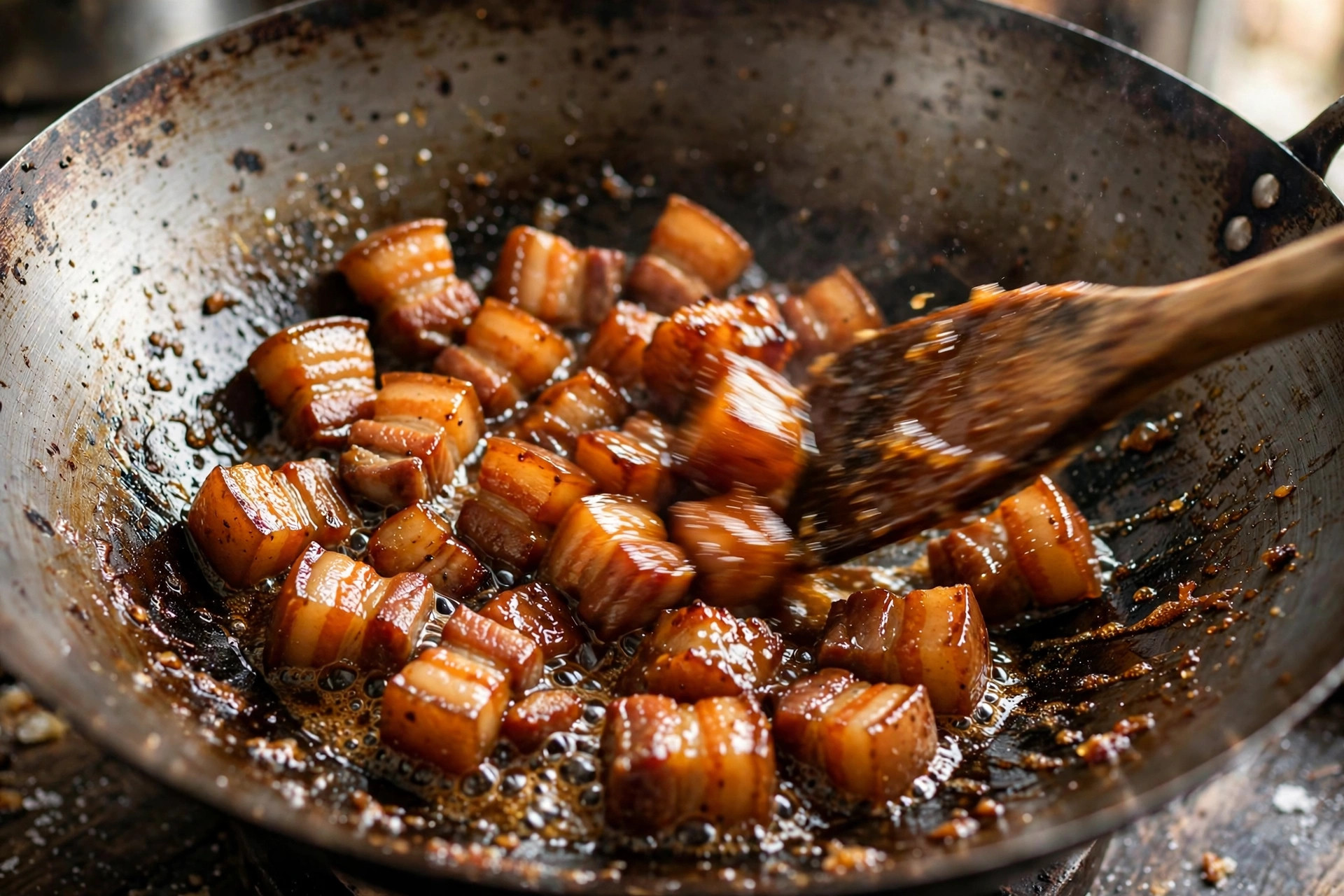
First, the sugar. Rock sugar (or plain sugar) gets melted in hot oil until it turns amber — not pale gold, not burnt black, but that in-between burgundy that smells like toffee and danger. The pork goes in and gets tossed until every cube is coated. This is the step that separates good hong shao rou from brown pork stew. The caramel gives the dish its lacquered shine and a deep, almost smoky sweetness that plain sugar stirred into liquid can never match.
Second, the dark soy sauce. Dark soy is thicker, darker, and less salty than light soy — it’s there mostly for color and a rounded molasses-like depth. Light soy brings the salt and savory punch; dark soy brings the “red.” Get the ratio wrong and the dish either looks anemic or tastes like a salt lick.
Here’s the honest truth most recipes gloss over: you can make hong shao rou without the caramel step — just dump everything in the pot and braise — and it’ll taste fine. But it won’t have that glassy, clinging glaze. The caramel is the difference between pork in brown sauce and hong shao rou.
Three Regions, Three Porks: A Quick Comparison
Every part of China has its version. The three you’ll hear about most:
| Style | Home base | Sweetness | Signature twist | Texture goal |
|---|---|---|---|---|
| Shanghai | Jiangnan | Noticeably sweet | Rock sugar heavy, minimal spice — sometimes just ginger | Melt-in-mouth, glossy |
| Hunan (Mao-style) | Central China | Least sweet | Dried chilies, fermented black beans, bolder soy | Rich with a spicy kick |
| Hangzhou (Dongpo) | Zhejiang | Gentle | Whole slab tied with string, Shaoxing wine forward | Refined, sliceable |
The Shanghai version is the one most people meet first — it’s the sweetest and the glossiest, the nong you chi jiang ideal. The Hunan version is the rebel: savory, spicy, unapologetic. Dongpo pork is the aristocrat, served in neat slices rather than rustic cubes. Try all three before you pick a favorite. Most people can’t.
Buying the Pork: What to Ask For
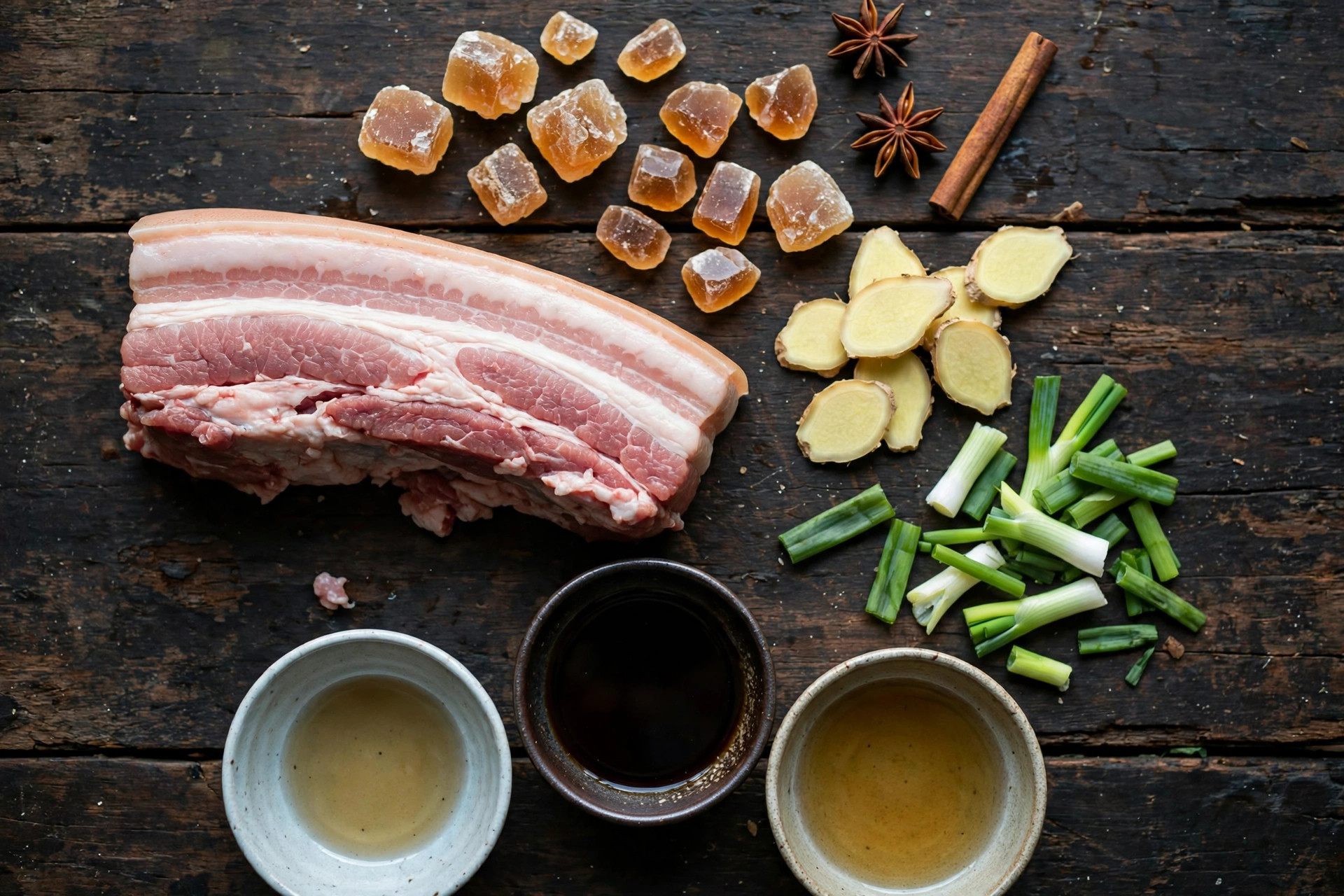
The dish lives or dies on the cut. You want pork belly with the skin on, in one slab if possible, with visible alternating layers of fat and meat — three or four stripes is ideal. Too lean and it dries out; all fat and it’s greasy rather than silky.
At a Chinese butcher, ask for belly “with skin” (they’ll know). At a Western supermarket, belly often comes skinless and pre-sliced for bacon — usable, but the skin adds gelatin that thickens the sauce beautifully. If you need a refresher on navigating the cut, here’s where to buy pork belly and what to look for.
Cut it yourself into 1 to 1½-inch cubes — bigger than you think. The pieces shrink dramatically during the long braise, and small cubes overcook into mush. Uniform size matters more than exact size: even cubes cook evenly.
How Hong Shao Rou Is Made, Step by Step
The method is simple. The patience is the hard part.
- Blanch the pork. Cover the cubes with cold water, bring to a boil, and simmer 3–5 minutes. Drain and rinse under cold water, washing off the scum. This keeps the final sauce clean-tasting instead of murky.
- Caramelize the sugar. Heat a tablespoon of oil in a wok or heavy pot over medium-low heat. Add rock sugar and stir until it melts into an amber-burgundy syrup. Watch it like a hawk — thirty seconds past amber is burnt.
- Coat the pork. Add the blanched pork and toss quickly until every piece glistens with caramel.
- Add aromatics and liquids. Ginger slices, scallion batons, star anise (and cinnamon or bay if you like), then Shaoxing wine, light soy, and dark soy. Add hot water to just barely cover.
- Braise low and slow. Bring to a boil, then drop to the barest simmer, lid ajar, for 60–90 minutes. Stir every 20 minutes or so. The pork is done when a chopstick slides through with no resistance.
- Reduce the sauce. Fish out the aromatics, crank the heat, and boil the liquid down until it thickens into a glaze that coats each cube. This is where the magic happens — don’t walk away.
Total time: about two hours, most of it hands-off. The braise can’t be rushed, but it also can’t really be overdone at a true simmer — this is forgiving food.
What to Serve With It
Hong shao rou is rich. Aggressively rich. The supporting cast exists to cut through that richness:
- Plain steamed jasmine rice — non-negotiable. The sauce over rice is half the point. Here’s how to cook perfect jasmine rice if your rice game needs work.
- Blanched greens — bok choy or gai lan, quickly blanched and drizzled with a little of the braising sauce. Bitter greens against sweet pork is a classic pairing.
- Pickled mustard greens — the sour-salty crunch resets your palate between bites.
- Steamed buns (mantou) — in the north, people mop up the sauce with plain steamed buns instead of rice. Try it once and you’ll get it.
What not to serve: anything else heavy. This is a one-rich-dish meal. Let it be the star.
Mistakes That Ruin It (and How to Dodge Them)
- Burning the caramel. The most common disaster. If the sugar goes past amber to black, start over — burnt caramel makes the whole pot bitter and there’s no fixing it.
- Boiling instead of simmering. A rolling boil toughens the meat and clouds the sauce. You want the laziest bubble, lid ajar.
- Too much dark soy. It stains more than it seasons. When in doubt, use less — you can always add color at the reduction stage.
- Skipping the blanch. The scum doesn’t just look bad; it gives the sauce a muddy, off flavor. Five minutes of blanching saves the dish.
- Reducing too far. The glaze should coat the pork, not glue it to the pot. Pull it when the sauce looks like thin honey — it thickens as it cools.
- Not skimming the fat. Belly renders a lot of fat. Skim the clear oil off the top before reducing, or the “glaze” will be a grease slick.
Frequently Asked Questions
Can I make hong shao rou with pork shoulder instead of belly?
You can, and it’ll taste good — but it won’t be hong shao rou in the full sense. The belly’s fat is what creates the silky texture and glossy sauce. Shoulder gives you tasty braised pork; belly gives you the dish.
Why is my hong shao rou bitter?
Almost always the caramel. Sugar taken past amber turns bitter, and that bitterness spreads through the whole pot. Next time, pull the sugar at a lighter amber than you think — it darkens as the pork cooks.
Is hong shao rou the same as Dongpo pork?
Related, not identical. Both are soy-and-sugar braised belly, but Dongpo pork is the Hangzhou refinement: a whole slab tied with string, more wine, less caramel, sliced to serve. Think of hong shao rou as the beloved home-style original and Dongpo as its dressed-up cousin.
How long does it keep?
Four to five days refrigerated, and it’s genuinely better on day two — the flavors settle and the fat reabsorbs the sauce. Reheat gently; don’t microwave it into rubber.
What does “hong shao” mean beyond pork?
It’s a whole cooking method, not just one dish. You’ll find hong shao yu (red-cooked fish), hong shao eggplant, even hong shao tofu. Once you learn the caramel-soy-braise pattern, a dozen dishes open up.
Hong shao rou rewards the cook who respects two things: the caramel and the clock. Get the sugar to amber, give the pork its unhurried two hours, and you’ll pull a pot of mahogany jewels out of the most ordinary ingredients in the butcher case. Make it on a weekend, eat it over rice, and save the leftovers — if there are any.