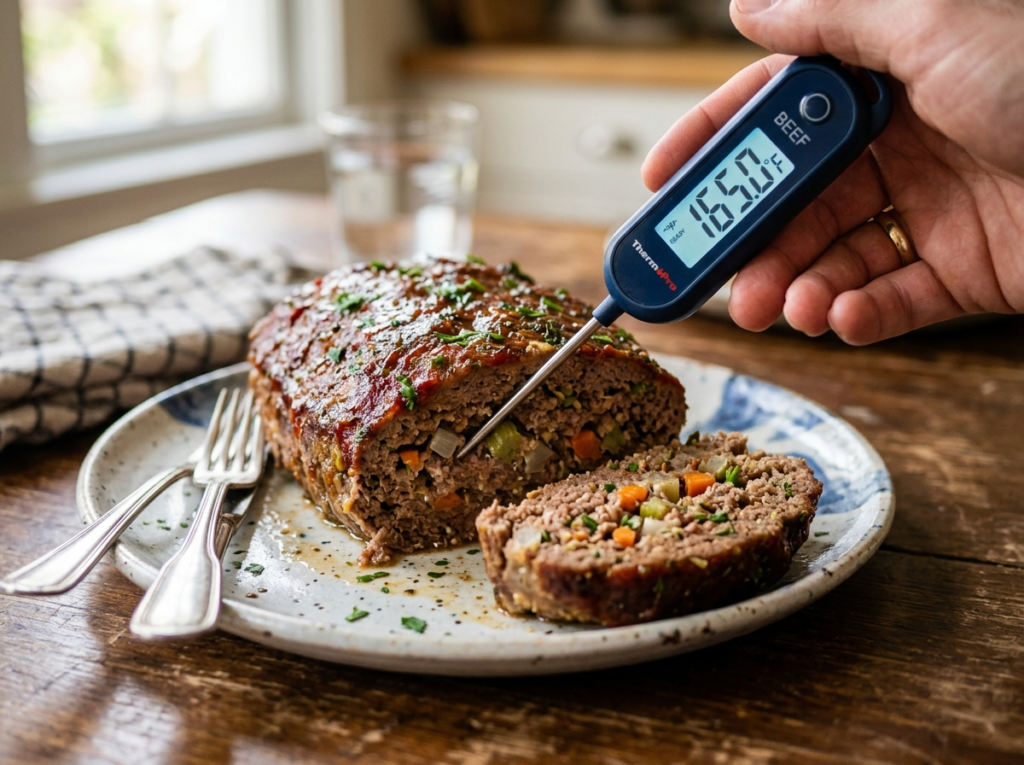
A meatloaf that looks perfectly browned on the outside can still be dangerously undercooked on the inside. That’s the tricky part about this classic comfort food — color and appearance don’t tell you the full story. The only way to know your meatloaf is safe to eat is by checking its internal temperature.
The short answer? Your meatloaf needs to hit 160°F (71°C) if it’s made with beef, pork, lamb, or veal. If you’re using ground turkey or chicken, you’ll need to push that to 165°F (74°C). Those aren’t just suggestions — they come straight from the USDA food safety guidelines.
But there’s more to it than just a number on a thermometer. Where you place the probe, how long you let the meatloaf rest, and even the kind of meat you use all play a role in getting it right. Let’s walk through everything you need to know so your next meatloaf turns out safe, juicy, and delicious.
Why Internal Temperature Matters More Than Cooking Time
You’ve probably seen meatloaf recipes that say “bake at 350°F for one hour.” And sure, that’s a reasonable starting point. But here’s the problem: cooking time is a rough estimate, not a guarantee.
Think about it. A thick, round meatloaf cooks differently than a flatter, wider one. An oven that runs 25 degrees hotter than what the dial says will speed things up. Cold meat straight from the fridge takes longer than meat that’s been sitting at room temperature for 20 minutes.
All of these variables mean that time alone can’t tell you when your meatloaf is done. The internal temperature is the only reliable indicator of both safety and doneness. A cheap instant-read thermometer — you can grab one for under $15 — is the single best investment you can make for your kitchen.
⚠️ Food Safety Note: Ground meat is different from whole cuts like steaks or roasts. When meat is ground, bacteria from the surface get mixed throughout. That’s why a steak can be safe at medium-rare, but ground beef in your meatloaf absolutely cannot. Every bit of that ground meat needs to reach a safe temperature to kill harmful bacteria like E. coli and Salmonella.
The Exact Internal Temperature for Meatloaf by Meat Type
Not all ground meats are created equal, at least when it comes to safe cooking temperatures. The USDA sets different minimum internal temperatures depending on the type of meat you’re using.
Beef, Pork, Lamb, and Veal Meatloaf
For meatloaf made with any of these meats — or a combination of them — your target is 160°F (71°C). This applies whether you’re using 80/20 ground beef, ground pork, ground lamb, or a classic meatloaf mix that blends all three.
A lot of home cooks grew up hearing that pork needs to be cooked to 165°F or even higher. That guideline actually changed back in 2011 when the USDA lowered the recommended temperature for whole cuts of pork to 145°F. But since meatloaf uses ground pork, the 160°F rule still applies.
If you’re curious about working with different pork cuts for other recipes, you might find our guide on what pork cushion meat is helpful for understanding how different cuts behave.
Turkey and Chicken Meatloaf
Ground poultry needs to reach 165°F (74°C) — five degrees higher than beef-based meatloaf. This higher temperature is necessary because poultry can harbor Salmonella, which requires that extra heat to be fully destroyed.
Turkey meatloaf has become popular as a lighter alternative to traditional beef meatloaf. If you’re making one, just know that the leaner grind tends to dry out faster. That higher required temperature makes moisture management even more important. We’ll talk about how to keep it juicy in a bit.
Mixed-Meat Meatloaf
What if your recipe calls for a blend of beef and turkey? Or pork and chicken? Simple rule: always go with the highest required temperature of any meat in the mix. So if your meatloaf has even a small amount of ground chicken or turkey mixed in, the whole thing needs to reach 165°F.
How to Check the Temperature Correctly
Owning a meat thermometer is step one. Using it correctly is step two, and it’s where a lot of people go wrong.
Where to Insert the Thermometer
Push the probe into the thickest part of the meatloaf, right in the center. You want the tip of the probe to be in the very middle of the thickest section — not touching the bottom of the pan, not poking out the other side, and not sitting near the edge.
Here’s a mistake people make: they check the temperature near the top or along the sides. Those areas cook faster because they’re closer to the oven’s heat. The center is always the last part to reach a safe temperature, and that’s the reading that counts.
Instant-Read vs. Leave-In Thermometers
An instant-read thermometer gives you a reading in about 2 to 5 seconds. You open the oven, poke the meatloaf, get your number, and close the door. It’s fast and accurate.
A leave-in thermometer (or probe thermometer) stays in the meat the entire time it’s cooking. Many of these connect to a base unit or even your phone, so you can monitor the temperature without opening the oven at all. This is especially handy because every time you open the oven door, you lose 25 to 50 degrees of heat, which extends your cooking time.
Either type works. If you cook meat regularly — steaks, roasts, grilled pork chops — a leave-in probe thermometer pays for itself quickly.
Check Multiple Spots
Don’t just check one spot and call it done. Take readings from two or three different areas in the center of the meatloaf. If one spot reads 162°F but another reads 155°F, it’s not done yet. All parts of the center need to be at or above the target temperature.
Understanding Carryover Cooking and Resting
Here’s something that trips up even experienced cooks: carryover cooking. When you pull your meatloaf out of the oven, it doesn’t stop cooking immediately. The residual heat continues pushing the internal temperature up by about 3 to 5 degrees over the next 5 to 10 minutes.
This means you can pull a beef meatloaf out at around 155 to 157°F and let carryover cooking bring it to 160°F during the rest period. For turkey meatloaf, you’d pull it at roughly 160 to 162°F and let it climb to 165°F.
Why does this matter? Because those few degrees can be the difference between a meatloaf that’s juicy and one that’s dried out. Overcooking ground meat squeezes out moisture, and nobody wants a crumbly, dry meatloaf.
Pro Tip: Let your meatloaf rest for 10 to 15 minutes after pulling it from the oven. This isn’t just about carryover cooking — resting also allows the juices to redistribute throughout the meat. If you slice into it right away, those juices will pour out onto your cutting board instead of staying in the meatloaf where they belong.
The concept of resting works the same way with steaks and roasts. If you’ve ever looked into what a tomahawk steak is or how to handle premium cuts, you’ll notice that resting is always part of the process.
What Happens if You Under- or Overcook Meatloaf
The Risks of Undercooking
Undercooked meatloaf isn’t just unappetizing — it can make you genuinely sick. Ground beef that hasn’t reached 160°F may contain E. coli O157:H7, a bacterium that causes severe food poisoning. Symptoms include stomach cramps, diarrhea (sometimes bloody), and vomiting, and in serious cases, it can lead to kidney failure, particularly in young children and older adults.
Ground poultry carries its own risks, primarily Salmonella and Campylobacter. According to the CDC, Salmonella causes about 1.35 million infections in the United States each year, and undercooked ground meat is one of the most common sources.
⚠️ Food Safety Note: If your meatloaf looks pink inside, don’t panic right away. Pink color in ground beef doesn’t always mean it’s undercooked — certain conditions (like the pH of the meat or the presence of nitrates from ingredients like Worcestershire sauce) can keep meat pink even at safe temperatures. The thermometer reading is what matters, not the color.
The Downside of Overcooking
On the flip side, pushing your meatloaf well past the target temperature leads to a dry, tough texture. Once ground meat hits about 170°F to 180°F, it starts losing moisture rapidly. The fats render out, the proteins tighten up, and you end up with something that needs a lot of gravy to be enjoyable.
This is especially true for turkey meatloaf, which is already leaner than beef-based versions. If you’ve ever tried a no-egg meatloaf recipe, you know that keeping moisture locked in is one of the biggest challenges — and overcooking makes it even harder.
Tips for a Perfectly Cooked Meatloaf Every Time
Getting the temperature right is the most important piece of the puzzle, but a few other techniques will help you hit that sweet spot consistently.
Start with Room-Temperature Meat
Take your meatloaf mix out of the fridge about 15 to 20 minutes before shaping and baking. Cold meat straight from the refrigerator creates a bigger temperature gap between the outside and inside, which means the exterior can overcook before the center gets up to temperature.
This is a small step that makes a noticeable difference.
Shape Matters More Than You Think
A tall, dome-shaped meatloaf takes significantly longer to cook through than a flatter, wider one. If you’re having trouble getting the center to reach temperature without drying out the edges, try shaping your meatloaf into a lower, wider oval — roughly 3 to 4 inches tall at the peak.
Some cooks bake their meatloaf on a sheet pan instead of inside a loaf pan. A sheet pan allows heat to reach the sides more evenly and also lets excess fat drain away instead of pooling around the meat. Both methods work, but the shape you choose affects your cooking time, so rely on your thermometer rather than a recipe’s suggested time.
Don’t Overmix the Meat
This isn’t directly about temperature, but it affects the final result enough to mention. When you mix ground meat too aggressively — kneading it like bread dough — you develop the proteins too much, and the meatloaf turns dense and tough. Mix your ingredients until they’re just combined, and stop there.
Use a Panade for Moisture
A panade is a mixture of bread and milk (or another liquid) that you add to ground meat. It acts like a tiny sponge inside the meatloaf, holding onto moisture even as the meat reaches its target temperature. Most classic meatloaf recipes include some version of this — breadcrumbs soaked in milk, torn bread pieces, or even crushed crackers.
If you want to skip the eggs in your panade, there’s a really good egg-free meatloaf approach that uses other binders to hold everything together.
Control Your Oven Temperature
Here’s a fact that surprises a lot of people: many home ovens are off by 25 degrees or more. An oven thermometer (a separate one that hangs on your oven rack) costs around $7 and tells you what the actual temperature inside your oven is.
Most meatloaf recipes call for an oven temperature between 350°F and 375°F. Cooking at a moderate, steady heat gives the inside time to come up to temperature without burning the outside. If you’re maintaining a low, steady heat in the kitchen for other dishes, understanding the right simmer temperature on your stove can help you manage side dishes while your meatloaf bakes.
Cooking Times as a General Guide
While time alone isn’t reliable enough to guarantee doneness, it’s still useful to have a ballpark so you know when to start checking with your thermometer.
For a meatloaf baked at 350°F (175°C), here’s a rough guide based on weight:
| Meatloaf Weight | Approximate Cooking Time |
|---|---|
| 1 pound | 35 to 45 minutes |
| 1.5 pounds | 50 to 60 minutes |
| 2 pounds | 60 to 75 minutes |
| 2.5 pounds | 70 to 90 minutes |
Start checking the internal temperature about 10 to 15 minutes before the lower end of these ranges. If you’ve shaped a flatter meatloaf, it could be done sooner. If it’s taller and denser, it could take longer.
Quick Fact: Altitude affects cooking time too. If you live above 3,000 feet, liquids evaporate faster and ovens can behave differently. You may need to add a few minutes to your cooking time and check the temperature more frequently.
What About Meatloaf Made with Other Proteins?
Beef and turkey dominate the meatloaf conversation, but plenty of people get creative with other ground meats.
Ground Pork or Pork-Blend Meatloaf
Ground pork is rich and slightly sweet, which makes it a natural fit for meatloaf — especially in an Asian-inspired version. The USDA target is the same as beef: 160°F. If you’re interested in exploring different ways to prepare pork, our guides on Chinese char siu pork and where to buy pork belly cover some delicious options.
Ground Lamb Meatloaf
Lamb meatloaf has a distinctly earthy, slightly gamey flavor that pairs well with Mediterranean herbs like rosemary, oregano, and cumin. Target temperature: 160°F, same as beef and pork.
Vegetarian or Plant-Based Meatloaf
Plant-based meatloaf made with lentils, beans, mushrooms, or commercial meat alternatives doesn’t carry the same bacterial risks as animal-based meatloaf. There’s no USDA minimum temperature for food safety in the same way. That said, you still want it cooked through so the texture holds together — an internal temperature around 160°F usually gives you a firm, sliceable result.
Storing and Reheating Leftover Meatloaf
Your food safety responsibilities don’t end when the meatloaf comes out of the oven. How you store and reheat leftovers matters too.
Storage
Let the meatloaf cool for no more than two hours at room temperature before refrigerating. (If the room is above 90°F, that window drops to one hour.) Wrap it tightly in plastic wrap or aluminum foil, or store it in an airtight container.
Leftover meatloaf stays good in the fridge for 3 to 4 days. In the freezer, it’ll keep for 3 to 4 months while maintaining its best quality, though it’s technically safe indefinitely when kept frozen at 0°F.
If you’ve ever stored cooked rice in the fridge, you know that timing and proper containers make all the difference. The same principles apply here.
Reheating
When reheating meatloaf, bring it back up to an internal temperature of 165°F regardless of what type of meat it’s made with. This applies to microwave reheating, oven reheating, or stovetop reheating.
For the oven method, cover the meatloaf slices with foil to trap moisture and reheat at 250°F to 300°F until heated through. The microwave works in a pinch, but it tends to dry things out — add a splash of broth or a damp paper towel over the plate to help.
⚠️ Food Safety Note: Never reheat meatloaf more than once. Each time food goes through the “danger zone” (40°F to 140°F), bacteria have a chance to multiply. Reheat only the portion you plan to eat.
FAQ
Can meatloaf be a little pink inside and still be safe?
Yes, it can. Ground beef can remain pink even when it’s reached 160°F internally. Ingredients like onions, tomato-based sauces, or Worcestershire sauce can cause a pink tint that doesn’t go away with cooking. The thermometer reading is what confirms safety — not the color of the meat.
What if I don’t have a meat thermometer?
You can look for visual cues — clear juices running from the meatloaf and firm texture — but these aren’t foolproof. A meat thermometer is the only way to be truly certain. Instant-read models are inexpensive and widely available at grocery stores, kitchen supply shops, and online. If you cook meat of any kind regularly, getting one should be a priority.
Should I cover my meatloaf while baking?
Covering your meatloaf with foil for the first 30 to 45 minutes helps it cook more evenly and retain moisture. Remove the foil for the last 15 to 20 minutes to let the top brown and any glaze caramelize. This approach also helps the center reach temperature without the edges drying out.
Is the internal temperature for meatloaf different in a convection oven?
The target internal temperature stays exactly the same — 160°F for red meat, 165°F for poultry. A convection oven circulates hot air, which usually means your meatloaf will reach that temperature about 25% faster. Reduce your oven temp by 25°F or start checking earlier than you normally would.
Can I cook meatloaf at a lower temperature for longer?
You can, and some cooks prefer baking at 325°F for a slower, more even cook. The meatloaf will take longer, but the lower heat can help the center and edges reach a more uniform temperature. Just make sure the internal temp still hits the safe minimum before you serve it.
Your Meatloaf Deserves a Thermometer
Getting the internal temperature right is the single most important thing you can do when making meatloaf. It keeps your family safe, it prevents overcooking, and it takes the guesswork out of a recipe that’s been feeding households for generations.
Grab an instant-read thermometer if you don’t already have one. Aim for 160°F for beef, pork, and lamb or 165°F for turkey and chicken. Account for a few degrees of carryover cooking, and let the meatloaf rest before you slice into it.
That’s really all there is to it. Once you start using a thermometer consistently, you’ll wonder how you ever cooked without one — not just for meatloaf, but for everything from grilled pork chops to roasted chicken. Your next meatloaf is going to turn out exactly the way it should.