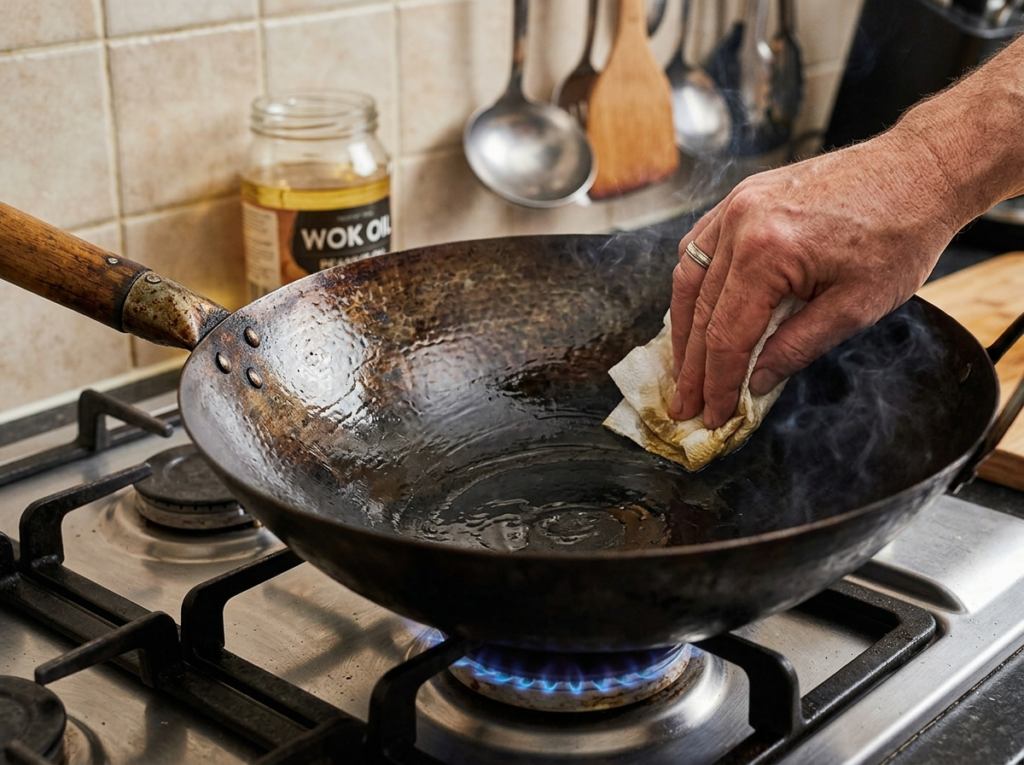
A brand-new carbon steel wok is basically unusable straight out of the box. That might sound dramatic, but it’s true. Without proper seasoning, food will stick, flavors will taste metallic, and you’ll wonder why anyone bothers cooking with a wok at all. The good news? Seasoning a wok only takes about 20 to 30 minutes, and once you get it right, your wok becomes the single most versatile pan in your kitchen.
Let’s walk through exactly how to season a wok — the real way, with practical details that actually help you get it done.
Why You Need to Season a Wok
If you’ve ever picked up a new wok and noticed it felt almost sticky or waxy to the touch, that’s the factory coating. Manufacturers apply a layer of machine oil or lacquer to carbon steel and cast iron woks to prevent rust during shipping and storage. You definitely don’t want to cook on that.
Seasoning does two things. First, it strips away that factory coating so you’re cooking on clean metal. Second — and this is the part that matters long-term — it builds up thin layers of polymerized oil on the surface. That polymerized oil creates a natural nonstick coating that gets better every time you cook.
Think of it like breaking in a leather jacket. A brand-new one is stiff and uncomfortable. But over time, it molds to you and becomes something you never want to take off. Your wok works the same way. Each cooking session adds another micro-layer of seasoning, and after a few months of regular use, a well-seasoned wok develops what the Chinese call wok hei — that smoky, slightly charred flavor that makes restaurant stir-fries taste so good.
Quick fact: Wok hei literally translates to “breath of the wok.” It’s the result of extremely high heat reacting with the oils in a properly seasoned wok, and it’s nearly impossible to replicate in a brand-new, unseasoned pan.
What Type of Wok Needs Seasoning?
Not every wok needs this treatment. Here’s where material matters.
Carbon steel woks are the ones you’ll most likely be seasoning. They’re lightweight, heat up fast, and they’re what professional Chinese chefs use almost exclusively. Brands like Joyce Chen, Craft Wok, and the classic hand-hammered woks from Guangdong are all carbon steel.
Cast iron woks also need seasoning, though they come with a slightly different process since they’re thicker and heavier. The principles are the same, but cast iron takes longer to heat and cool, so you’ll need more patience.
Stainless steel and nonstick woks don’t need seasoning. If you bought a nonstick wok, you can skip this entire process — though you’ll also miss out on the high-heat cooking that makes wok cooking special. Nonstick coatings can’t handle the 500°F+ temperatures where wok cooking really shines.
If you’re not sure what your wok is made of, check the packaging or hold a magnet to it. Carbon steel and cast iron are both magnetic, and carbon steel will feel noticeably lighter than cast iron of the same size.
What You’ll Need Before You Start
Getting everything ready ahead of time makes the process smooth. You don’t want to be rummaging through drawers while your wok is smoking on the stove.
You’ll need your new wok, a stainless steel scrubber or steel wool (the heavy-duty kind), dish soap, a high smoke-point oil like peanut oil, vegetable oil, or flaxseed oil, paper towels or an old cotton rag you don’t mind getting oily, long-handled tongs for safety, and optionally, some scallions, ginger slices, and Chinese chives for the traditional final step.
One thing about oil selection: flaxseed oil creates one of the hardest seasoning layers because it polymerizes very effectively, but it can also flake if applied too thickly. Peanut oil and vegetable oil are more forgiving, especially for beginners. Avoid olive oil and butter — their smoke points are too low, and they’ll leave a gummy residue instead of a smooth coating.
⚠️ Safety note: This process produces a lot of smoke. Open your windows, turn on your range hood fan, and if you have a sensitive smoke detector nearby, you might want to temporarily cover it with a shower cap. Seriously — you’ll thank me later.
How to Season a Wok: Step-by-Step
Step 1: Scrub Off the Factory Coating
Fill your sink with hot water and add a generous squirt of dish soap. This is the one and only time you’ll use soap on your wok, so make it count.
Using the stainless steel scrubber or steel wool, scrub the entire interior and exterior surface of the wok aggressively. You’re trying to remove every trace of that factory oil or lacquer. The water will likely turn gray or slightly brown — that’s normal. It’s the coating coming off.
Rinse the wok thoroughly, then repeat the scrub one more time to make sure you got everything. Some woks have a particularly stubborn lacquer layer. If yours still feels slippery after two rounds of scrubbing, try putting it directly on a burner over medium heat for a few minutes. The heat will help loosen stubborn coatings, and you can scrub again once it cools down.
Dry the wok completely with a clean towel. Any remaining water droplets will interfere with the seasoning process and can cause the oil to splatter dangerously.
Step 2: Heat the Wok Until It Changes Color
Place your clean wok on the stove over high heat. If you have a gas stove, this step is much easier because the flames wrap around the curved sides. Electric and induction stoves work too — you’ll just need to tilt and rotate the wok manually to heat the sides evenly.
As the wok heats up, you’ll notice something pretty cool: the metal will start changing color. It typically shifts from shiny silver to a golden yellow, then to a blue or bluish-black. This color change is called bluing, and it happens because the iron in the steel is oxidizing at high temperature. It’s a visible sign that your wok’s surface is ready to accept oil.
Use the tongs to grip the handle and rotate the wok so the sides get heated evenly. On a gas stove, tilt it at different angles to let the flames reach higher up the walls. This whole process takes about 5 to 10 minutes.
The wok will be extremely hot — well over 400°F. Handle it only by the handle, and keep the tongs handy. Don’t splash water anywhere near it.
Pro tip: If only part of your wok changes color (common on electric stoves), don’t stress. Work in sections, heating one area until it blues, then rotating to the next. Perfection isn’t the goal — coverage is.
Step 3: Apply the First Layer of Oil
Pull the wok off the heat and let it cool for about 2 to 3 minutes — just enough that it’s still very hot but not glowing. Add about 2 tablespoons of your chosen high smoke-point oil.
Using the folded paper towels held with your tongs, spread the oil across the entire interior surface of the wok, including up the sides. You want a thin, even coat. This is critical. Too much oil and you’ll end up with a sticky, uneven layer. Too little and you won’t build enough seasoning.
The wok should be hot enough that the oil shimmers and starts to smoke lightly within a few seconds. If it doesn’t, put it back on medium-high heat.
Now comes the actual seasoning. Place the wok back on the burner over medium to medium-high heat. Let the oil smoke. You’ll see wisps rising from the surface — that’s the oil breaking down and bonding to the metal. This is polymerization in action.
Keep the wok on the heat, tilting and rotating occasionally, until the smoking mostly stops. The oil will darken and the surface will start to look slightly matte instead of shiny. This takes about 3 to 5 minutes per layer.
Step 4: Repeat the Oil and Heat Process
Wipe out any excess oil with fresh paper towels (using your tongs — the wok is still hot), then apply another thin layer and repeat the heating process.
Do this 3 to 4 times total. With each layer, the wok’s surface will gradually darken from a patchy brown to a more even, dark amber or black. Don’t expect a perfectly uniform color after the initial seasoning — it’ll develop and even out over the coming weeks as you cook with it.
After the final round, your wok should look noticeably different from when you started. The surface will have a slight sheen to it, and if you run your finger across it (once it’s cooled down!), it should feel smooth — not sticky, not rough, not tacky.
Step 5: The Traditional Chinese “Stir-Fry Seasoning” (Optional but Recommended)
Here’s a step most Western guides skip, but it’s common practice in Chinese kitchens and it genuinely helps.
After your oil-and-heat rounds, add about a tablespoon of oil to the wok over medium-high heat. Toss in a handful of sliced scallions, a few coins of ginger, and if you have them, some Chinese chives. Stir-fry these aromatics for about 3 to 5 minutes, pressing them against the sides of the wok to spread their natural oils across the surface.
Why does this work? The aromatics have sulfur compounds and natural oils that help neutralize any remaining metallic taste in the new wok. This is an old technique passed down through generations, and while it’s not strictly necessary, it adds a finishing touch that pure oil seasoning alone doesn’t quite achieve. Dishes like a classic char siu pork or a quick General Tso’s chicken will taste noticeably better from a wok that’s gone through this step.
Discard the aromatics when they’re charred and spent. Give the wok a final wipe with an oiled paper towel, and you’re done.
Oven Method: An Alternative Approach
If you don’t want to deal with heavy stovetop smoke or you have an electric stove that doesn’t get hot enough, the oven method is a solid backup.
After scrubbing off the factory coating and drying the wok completely, coat the entire wok (inside and out) with a very thin layer of flaxseed or vegetable oil. Wipe off any excess — the layer should be so thin it almost looks like you didn’t apply any oil.
Place the wok upside down on the middle rack of your oven with a sheet of aluminum foil on the rack below to catch drips. Set the oven to 450°F and let it bake for 30 minutes.
Turn off the oven and let the wok cool inside completely. Then repeat the oil-and-bake process 2 to 3 more times.
The oven method gives you a more even coating since the entire wok gets surrounded by consistent heat. The downside is it takes longer — about 2 to 3 hours including cooling time — and it’ll make your kitchen smell smoky.
How to Maintain Your Wok’s Seasoning
Seasoning isn’t a one-time event. It’s an ongoing relationship. Every time you cook, you’re either building up or wearing down that seasoning layer, and the first few weeks are the most critical.
Cooking with Your Newly Seasoned Wok
For the first couple of weeks, stick to oil-heavy, high-heat cooking. Stir-frying is perfect. The combination of hot oil and high temperature reinforces the seasoning with every meal. Simple dishes work great here — fried rice, stir-fried vegetables, noodles like bami goreng. Use it to cook anything that involves oil and heat.
Avoid acidic foods during this break-in period. Tomato-based sauces, vinegar-heavy dishes, and citrus can strip the young seasoning layer before it’s had time to build up properly. After a month or two of regular use, the seasoning will be tough enough to handle the occasional acidic ingredient. That’s also when you can start using ingredients like Chinese cooking wine, which has mild acidity but adds fantastic depth to stir-fries.
Cleaning Your Wok
After cooking, clean your wok while it’s still warm. Run it under hot water and use a bamboo wok brush, a soft sponge, or even a wadded-up paper towel to scrub off food residue. No soap. The seasoning you’ve built up is essentially a thin layer of polymerized fat, and soap is specifically designed to break down fat. You see the problem.
For stubborn stuck-on bits, add a little coarse salt to the warm wok and scrub with a paper towel. The salt acts as a gentle abrasive that won’t damage the seasoning.
Once clean, put the wok back on the stove over medium heat for a minute or two to evaporate any remaining moisture. Then apply the thinnest possible coat of oil with a paper towel. Store it in a dry place. Moisture is the enemy of carbon steel — even one night left damp can cause rust spots.
What to Do if Food Sticks
Food sticking in a newly seasoned wok is normal. Don’t panic and don’t reach for the soap. The nonstick properties build gradually. If food sticks, it usually means one of three things: the wok wasn’t hot enough before you added oil, you didn’t use enough oil, or the seasoning simply needs more time to develop.
A good test before adding food: heat the wok until it just starts to smoke, add oil, and swirl it around. The oil should shimmer and flow easily across the surface. If it pools and doesn’t spread, the wok isn’t hot enough yet.
How to Fix a Damaged or Rusty Wok
Maybe you left your wok soaking in the sink overnight (it happens) and woke up to rust spots. Or maybe someone in your household helpfully scrubbed it with soap and a Brillo pad. Don’t worry — a wok is remarkably forgiving.
For light rust, scrub the affected areas with steel wool or a stainless steel scrubber until the rust is gone. You’ll likely remove some seasoning in the process, but that’s okay. Wash and dry the wok, then re-season just the damaged spots by heating and applying thin oil layers.
For heavy rust or complete seasoning loss, you’ll need to start from scratch. Scrub the entire wok down to bare metal with coarse steel wool. Some people even use sandpaper (80-grit works well) for particularly stubborn rust. Once you’re back to clean, shiny metal, go through the full seasoning process again from Step 1.
The beauty of carbon steel and cast iron is that they can always be brought back to life. Unlike a scratched nonstick pan that’s destined for the trash, a wok can be re-seasoned indefinitely.
Pro tip: If you’re storing your wok long-term and won’t be using it for weeks, apply a slightly heavier-than-usual coat of oil before putting it away. This creates a protective barrier against moisture. When you pull it out to cook again, just heat the wok and wipe off the excess oil before you start.
Gas vs. Electric vs. Induction: Does Your Stove Matter?
Short answer: yes, quite a bit.
Gas stoves are ideal for wok seasoning and wok cooking in general. The open flame wraps around the curved bottom, heating the sides evenly. You get instant temperature control, and gas burners can push out enough BTUs to get proper wok hei. If you have a gas stove, you’re in the best position.
Electric coil and ceramic stoves work, but they require more effort. Since the heat only comes from the flat bottom, you’ll need to tilt and rotate the wok during seasoning to get the sides coated. Consider using a flat-bottomed wok if you have an electric range — a round-bottomed wok will sit unstably and only a tiny ring of metal will actually contact the heat source.
Induction stoves are the trickiest. They generate heat through magnetic fields, so the wok must be flat-bottomed and made of a magnetic material (carbon steel qualifies, but some stainless steel woks don’t). Induction can actually produce very high heat, which is great for seasoning. The challenge is the same as other flat-top stoves: getting even coverage on the sides.
No matter what stove you have, you can get a good season on your wok. Gas is just easier. If you cook a lot of stir-fries on an electric or induction range, you might also want to pair your newly seasoned wok with recipes that work well at moderately high heat, like a simple jasmine rice stir-fry or a basic vegetable dish before jumping into high-heat searing.
What a Well-Seasoned Wok Looks Like Over Time
Right after initial seasoning, your wok will probably look blotchy — dark in some spots, lighter in others, maybe a golden ring where the oil pooled slightly. This is completely normal. Instagram-perfect, jet-black woks didn’t get that way in an afternoon. They got there through months and years of cooking.
After about two weeks of daily use, you’ll notice the dark patches starting to connect and the lighter spots fading. After a month, the surface should be mostly dark brown to black with a satin-like finish. After six months of regular use, you’ll have a wok that’s genuinely nonstick — you’ll be able to fry an egg in it and slide it right out.
Some serious wok enthusiasts have been cooking with the same carbon steel wok for decades. The seasoning on those woks is so thick and established that they perform better than any nonstick coating ever made, and they’ll never wear out or need replacing. That’s the long game you’re playing.
The Best First Dishes to Cook in Your Newly Seasoned Wok
Your first few meals matter. They’re building the foundation of your wok’s seasoning. Stick to oily, high-heat dishes and avoid anything steamy, soupy, or acidic.
Great starters include simple vegetable stir-fries with plenty of oil, fried rice (especially if you use day-old rice from the fridge), pan-fried dumplings, or basic proteins like sliced pork or chicken stir-fried with garlic and ginger. A recipe like easy Vietnamese caramelized pork works nicely — it’s oily, caramelized, and coats the wok beautifully during cooking.
Save the steaming, braising, and acidic cooking for later. Once that seasoning is rock-solid after a month or so of use, your wok can handle virtually anything you throw at it.
FAQ
Can you season a nonstick wok?
No. Nonstick woks come with a synthetic coating (usually PTFE or ceramic) that doesn’t need or benefit from oil-based seasoning. Applying high heat and oil in the traditional seasoning method could actually damage the nonstick surface. Seasoning applies only to carbon steel and cast iron woks.
How often do you need to re-season a wok?
If you’re using your wok regularly (a few times a week) and following proper cleaning practices — no soap, dry after washing, light oil coat before storage — you shouldn’t need to do a full re-seasoning. The cooking itself maintains and builds the seasoning layer. A full re-season is only necessary if the seasoning gets stripped by acidic food, aggressive scrubbing, or rust. Some people do a light “touch-up” seasoning (one round of oil and high heat) every few months as maintenance, but it’s not required.
What oil is best for seasoning a wok?
Flaxseed oil creates the hardest polymerized layer, making it a popular choice for initial seasoning. Peanut oil and vegetable (soybean) oil are also excellent and more forgiving for beginners. Avoid oils with low smoke points like extra virgin olive oil, butter, or coconut oil — they won’t polymerize properly at the temperatures needed for good seasoning. For everyday cooking after seasoning, peanut oil and refined avocado oil are great all-around choices.
Why does my new wok smell metallic even after seasoning?
A slight metallic smell or taste during the first few cooks is normal, especially if you skipped the aromatic stir-fry step. It goes away as the seasoning builds up. Doing the traditional scallion-and-ginger stir-fry during seasoning helps neutralize this faster. If the smell persists after 4 or 5 uses, do another round of the aromatic fry.
Can I season a wok on a grill or outdoor burner?
Absolutely, and many people prefer it. Outdoor propane burners (like turkey fryer burners) put out far more BTUs than a home stove, which means faster, more even seasoning. Plus, you don’t have to worry about setting off smoke detectors. Just follow the same steps — scrub, heat, oil, repeat — and let the extra heat do its thing.
Your Wok Is Ready — Now Use It
Seasoning a wok isn’t complicated, but it does require a little patience and some tolerance for a smoky kitchen. The 20 to 30 minutes you invest now will pay off for years, maybe even decades, of better cooking.
Here’s your clear next step: go season that wok tonight, and then cook something simple in it tomorrow — a quick stir-fry, some fried rice, anything with oil and heat. Do that a few times a week, and within a month, you’ll have a pan that nothing sticks to, everything tastes better from, and you’ll wonder how you ever cooked without it.
That’s the magic of a well-seasoned wok. It only gets better with time.