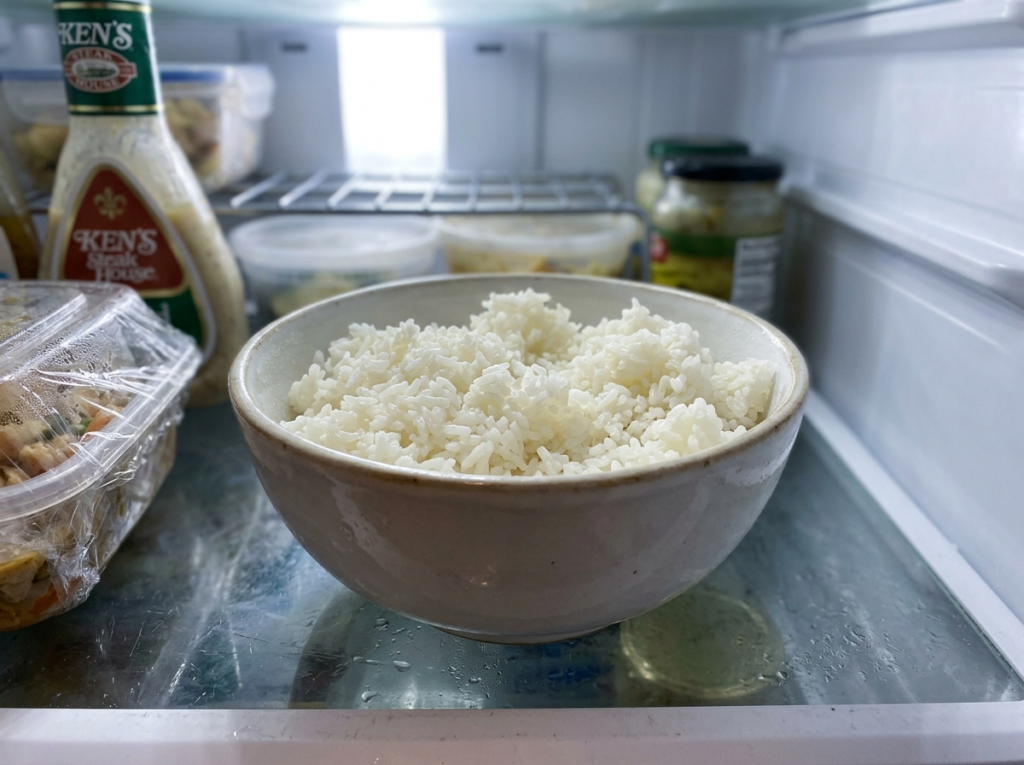
Cooked rice sits in more fridges than probably any other leftover. You make too much on a Monday, shove it in a container, and by Thursday you’re staring at it wondering, “Is this still okay to eat?” You’re not alone — it’s one of the most commonly searched food safety questions on the internet, and for good reason. Rice actually carries a specific bacteria risk that most people don’t know about.
The short answer? Cooked rice lasts 4 to 6 days in the fridge when stored properly. But there’s a catch — and it has everything to do with how you cool it and when you refrigerate it. Get that part wrong, and even rice that looks and smells perfectly fine can make you sick.
Let’s break down exactly what you need to know so you can stop second-guessing your leftovers.
Why Cooked Rice Can Actually Be Risky
Most people think of rice as one of the safest, most boring foods out there. It’s just grain and water, right? But rice has a hidden issue that sets it apart from many other leftovers.
Raw rice often contains spores of a bacterium called Bacillus cereus. These spores are heat-resistant, meaning they survive the cooking process. That’s not a problem by itself — the issue starts when cooked rice sits at room temperature for too long.
Between roughly 40°F and 140°F (4°C to 60°C), which food safety experts call the “danger zone,” those spores can germinate and produce toxins. And here’s the kicker: the toxins themselves are also heat-resistant. So reheating your rice won’t destroy them once they’ve formed.
The result? A type of food poisoning that causes vomiting and diarrhea, usually within 1 to 5 hours of eating the contaminated rice. It’s typically short-lived — most people recover within 24 hours — but it’s thoroughly unpleasant and completely avoidable.
This is why timing matters so much with rice. It’s not just about how long the rice lives in your fridge. It’s about what happened before it got there.
The 4-to-6-Day Rule (and Why It’s Not That Simple)
The USDA and most food safety agencies recommend eating leftover cooked rice within 3 to 4 days. Some sources extend this to 5 or even 6 days if you stored it properly from the start.
So which is it?
The difference comes down to how quickly you got the rice into the fridge after cooking. If you cooled your rice rapidly and refrigerated it within an hour of cooking, you’re on the safer end of that range. If it sat on the counter for a couple of hours first — maybe during a dinner party, or because you forgot — your window shrinks.
Here’s a useful way to think about it:
Quick-cooled and refrigerated within 1 hour: safe for up to 5–6 days.
Left out for 1–2 hours before refrigerating: aim to eat it within 3–4 days.
Left out for more than 2 hours: consider tossing it. The bacterial risk increases significantly once cooked rice sits at room temperature past the 2-hour mark. On hot days (above 90°F/32°C), that window drops to just 1 hour.
These aren’t arbitrary numbers. They’re based on how quickly Bacillus cereus can multiply and produce toxins at room temperature.
⚠️ Food Safety Note: The guidelines in this article are based on recommendations from the USDA and FDA. Individual circumstances may vary. When in doubt, throw it out — no leftover is worth a bout of food poisoning.
How to Store Cooked Rice the Right Way
Getting rice into the fridge quickly is half the battle. The other half is storing it so it stays safe and doesn’t turn into a dried-out brick. If you’ve ever reheated leftover rice and ended up with something resembling tiny pebbles, you know what I’m talking about.
Cool It Down Fast
Don’t put a huge, steaming pot of rice directly into the fridge. It raises the internal temperature of your refrigerator, which can affect everything else stored in there.
Instead, spread the rice out in a thin layer on a baking sheet or large plate. A wider surface area means faster cooling. You can also divide it into several smaller containers. The goal is to get the rice below 40°F (4°C) as quickly as possible — ideally within an hour of cooking.
Some people run the rice under cold water in a fine-mesh strainer to cool it down super fast. That works too, though it adds a bit of moisture you may not want depending on how you plan to use it later.
Use the Right Container
Airtight containers are your best friend here. They do two things: keep bacteria out and keep moisture in. A sealed glass or plastic container works great. If you’re using a bowl with plastic wrap, make sure the wrap touches the surface of the rice with no big air gaps.
Avoid leaving rice in the pot you cooked it in, even with a lid. Those lids aren’t airtight, and the large volume takes much longer to cool evenly.
Portion It Out
This is a small tip that makes a big difference. If you made a large batch, divide it into individual portions before refrigerating. You’ll only reheat what you need, which means the rest stays undisturbed in the fridge — no repeated warming and cooling cycles that accelerate spoilage.
This is actually one of the best tricks for storing cooked rice in the fridge so it stays fresh longer.
Does the Type of Rice Matter?
You might wonder if white rice lasts longer than brown rice, or whether jasmine rice holds up differently than basmati. The answer is yes — but maybe not in the way you’d expect.
White Rice vs. Brown Rice
White rice tends to last slightly longer in the fridge than brown rice. Brown rice still has its bran layer, which contains natural oils. Those oils can go rancid faster, giving brown rice a shorter refrigerated shelf life — closer to 3–4 days compared to white rice’s 4–6 days.
Jasmine, Basmati, and Other Varieties
If you’ve perfected how to cook jasmine rice, you’ll be happy to know it stores just as well as other white rice varieties. Basmati, sushi rice, and long-grain white rice all follow the same general storage rules. The main variable isn’t the type of rice — it’s how you handle it after cooking.
Sticky Rice and Sushi Rice
Sticky rice (glutinous rice) and seasoned sushi rice can be a bit trickier. Sushi rice contains vinegar and sugar, which actually give it a slight preservative edge, but the texture degrades faster in cold storage. Sticky rice tends to harden more than other types when refrigerated. Both are still safe for 4–5 days, but the eating quality drops off sooner.
Mixed Rice Dishes
Rice mixed with other ingredients — think fried rice, rice bowls, or rice with curries — follows the shelf life of its most perishable ingredient. If your rice has shrimp, chicken, or eggs mixed in, you’re looking at 3–4 days max. The rice itself might be fine longer, but the protein components won’t be.
This is worth keeping in mind if you make dishes like nasi goreng, which often combine rice with eggs, shrimp paste, and vegetables. Delicious the next day, but don’t push it past day four.
How to Tell If Cooked Rice Has Gone Bad
Your senses are surprisingly good at catching spoiled rice — but not perfect. Here’s what to watch for.
Smell it first. Fresh cooked rice has a mild, neutral scent. Spoiled rice develops a sour or funky odor. If you open the container and get hit with anything unpleasant, don’t risk it.
Check the texture. Rice that’s gone bad often feels slimy or unusually sticky. A bit of dryness is normal for leftover rice, but sliminess is a red flag.
Look for discoloration or mold. Any visible mold — usually green, black, or white fuzzy spots — means the entire container should go in the trash. Don’t just scoop out the moldy part. Mold sends invisible threads throughout the food long before you can see them on the surface.
Trust the timeline. Even if your rice looks and smells fine on day seven, the bacteria risk has climbed to the point where it’s just not worth it. Remember, Bacillus cereus toxins are odorless and tasteless. You can’t always detect them.
💡 Quick Fact: According to the UK’s National Health Service (NHS), reheated rice is one of the most common causes of food poisoning reported to health services. Most cases trace back to rice that was left at room temperature too long before being stored.
Can You Freeze Cooked Rice?
Absolutely — and if you’re not going to eat your leftovers within a few days, freezing is the smartest move.
Cooked rice freezes beautifully. It keeps safely in the freezer for up to 6 months, though the quality is best within the first 2–3 months. The trick is freezing it while it’s still fresh — ideally the same day you cook it.
How to Freeze Rice Properly
Spread the cooked rice on a sheet pan and let it cool completely. Then transfer it into freezer-safe bags or containers. Press out as much air as possible from bags before sealing. Flat bags are ideal because they stack neatly and thaw faster.
Label each bag with the date. Your future self will thank you.
How to Thaw and Reheat Frozen Rice
You have a couple of options here. The microwave is the fastest — add a splash of water, cover with a damp paper towel, and heat in 1-minute intervals, fluffing with a fork between each round. You can also thaw it in the fridge overnight and reheat on the stovetop with a tablespoon of water.
For stir-fried rice dishes, you can actually toss frozen rice straight into a hot wok. Day-old or frozen rice is actually preferred for fried rice because the drier grains don’t clump as much. If you’re making fried rice regularly, knowing how to season a wok properly makes a noticeable difference in the final result.
One firm rule: never refreeze rice that’s already been thawed. Each freeze-thaw cycle creates new opportunities for bacterial growth.
Reheating Rice Safely
There’s a right way and a wrong way to reheat rice, and the difference matters for both safety and taste.
The Key Temperature
You want your reheated rice to reach an internal temperature of 165°F (74°C) throughout. This kills most active bacteria (though not the heat-resistant toxins, which is why proper initial storage is so critical). Use a food thermometer if you have one. If you don’t, make sure the rice is steaming hot all the way through — not just warm on the edges.
Microwave Method
Place your rice in a microwave-safe bowl. Add about 1–2 tablespoons of water per cup of rice. Cover with a damp paper towel or a microwave-safe lid. Heat on high for 1–2 minutes, then stir and repeat until it’s steaming throughout.
The water is important. It rehydrates the dried-out grains and keeps the texture from going rubbery.
Stovetop Method
Put the rice in a saucepan with a splash of water. Cover with a lid and heat on low, stirring occasionally. This takes a bit longer than the microwave but gives you more control. It’s a great method if you’re reheating rice to pair with something like Chinese char siu pork or General Tso’s chicken.
How Many Times Can You Reheat Rice?
Ideally, only once. Every time you reheat and cool rice, you cycle it through the danger zone again, increasing bacterial risk. Reheat only the portion you plan to eat, and keep the rest sealed in the fridge or freezer.
How to Make the Most of Leftover Rice
If you consistently find yourself with leftover rice, it’s worth having a few go-to recipes in your back pocket. Cold rice and day-old rice actually shine in certain dishes.
Fried rice is the obvious one. The drier texture of refrigerated rice means less steam and better browning in the pan. Toss it in a hot wok with some oil, soy sauce, vegetables, and an egg, and you’ve got a meal in 10 minutes.
Rice porridge (congee) is another brilliant use. Simmer leftover rice in broth until it breaks down into a creamy, comforting soup. It’s a staple across many Asian cuisines and a fantastic way to stretch rice that’s starting to dry out.
Rice bowls work well too. Top your reheated rice with any protein — grilled pork, seared tofu, Korean kalbi short ribs — add some pickled vegetables and a drizzle of sauce, and dinner is done.
Stuffed peppers, burritos, and rice salads are all fair game. Leftover rice is one of the most versatile ingredients in your fridge, as long as it’s been stored safely.
FAQ
Is it safe to eat rice that’s been in the fridge for a week?
Generally, no. Most food safety authorities recommend consuming refrigerated cooked rice within 4 to 6 days at most, and within 3 to 4 days to be safe. By day seven, even rice that looks and smells normal may have developed harmful levels of Bacillus cereus toxins, which you can’t detect by sight or smell. When you’re unsure, it’s always better to throw it away.
Can you eat cold rice straight from the fridge?
Yes, cold rice is safe to eat as long as it was cooled and refrigerated properly within 1–2 hours of cooking and has been stored for fewer than 4–6 days. Cold rice is actually popular in dishes like sushi, rice salads, and onigiri (Japanese rice balls). The safety concern isn’t about the temperature you eat it at — it’s about how the rice was handled before it went into the fridge.
Why does my leftover rice get hard in the fridge?
This happens because of a process called starch retrogradation. When cooked rice cools, the starch molecules recrystallize and the grains lose moisture, making the rice feel dry and crunchy. Storing rice in an airtight container helps slow this down. When you reheat, adding a splash of water and covering the rice restores most of the original texture. It’s a chemistry thing, not a sign that the rice has gone bad.
Does rinsing rice before cooking affect how long leftovers last?
Not significantly. Rinsing rice before cooking removes excess surface starch, which affects texture and stickiness but doesn’t meaningfully change how long cooked rice stays safe in the fridge. Storage temperature and how quickly you refrigerate the cooked rice are far more important factors.
Is leftover rice better for fried rice?
Yes! Day-old refrigerated rice is actually ideal for fried rice. The surface of the grains dries out slightly in the fridge, which means less moisture hitting your hot pan. That translates to better browning and less clumping. Freshly cooked rice tends to turn mushy and steamy in a wok. Many professional cooks specifically use leftover rice — or cook rice a day ahead — for their fried rice dishes.
Your Rice, Your Rules (But Follow the Safety Ones)
Leftover cooked rice is one of the handiest things you can have waiting in your fridge. It turns a 30-minute dinner into a 10-minute dinner. It transforms random vegetables and protein scraps into a full meal. But none of that matters if the rice makes you sick.
The rules are simple: cool it fast, get it into an airtight container, refrigerate within an hour or two, and eat it within 4 to 6 days. If you want it to last longer, freeze it on the same day you cook it. And whenever something seems off — the smell, the texture, the timeline — just toss it. A cup of rice costs pennies. A trip to the doctor doesn’t.
Next time you make a pot of perfect jasmine rice or any other variety, cook a little extra on purpose. Store it right, and you’ll have the foundation of two or three easy meals already waiting for you. That’s not just convenient — it’s smart cooking.