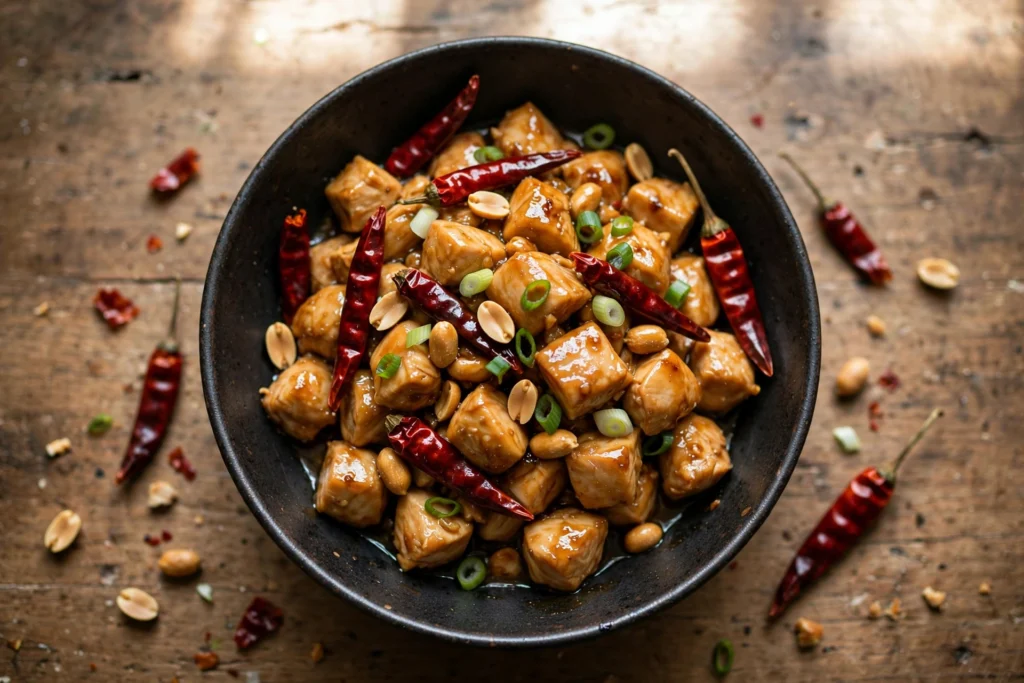
The menu photo makes them look like the same dish. Glossy brown chicken chunks, a few red peppers, a scoop of white rice underneath. You point at one and get a sweet, sticky, crispy pile that eats almost like candy. You point at the other and your lips start buzzing while roasted peanuts crunch between mouthfuls of chili heat.
Kung pao chicken and General Tso’s chicken share a page on nearly every Chinese-American menu, and they get mixed up constantly. They share exactly one ingredient in common — chicken — and almost nothing else. One is a 19th-century Sichuan classic named after an imperial official. The other was invented in Taiwan in the 1950s and rebuilt in New York for American tastes. This guide covers where each dish comes from, what actually lands on your plate, and how to pick the right one for the mood you’re in.
The Short Answer
Kung pao chicken is a Sichuan stir-fry: small cubes of chicken tossed in a hot wok with dried red chilies, Sichuan peppercorns, and roasted peanuts in a thin, tangy, savory sauce. It’s spicy, numbing, nutty, and relatively light.
General Tso’s chicken is battered, deep-fried chicken chunks coated in a thick, glossy, sweet sauce with garlic and ginger. It’s crispy, sweet, mild, and unapologetically rich.
If you want heat and crunch, order kung pao. If you want sweet and crispy, order General Tso’s. Everything below is the detail behind that sentence.
Where Kung Pao Comes From
Kung pao chicken is named after a real person: Ding Baozhen, a Qing dynasty official who governed Sichuan province in the 1800s. His official title was gongbao — roughly “Palace Guardian” — and the dish supposedly started as a favorite at his table. Gongbao jiding literally means “palace-guardian’s diced chicken.”
That origin story matters because it tells you what the dish is supposed to taste like. This is Sichuan cooking, built on ma la — the famous numbing-spicy combination of Sichuan peppercorns and dried chilies. The classic sauce follows what Sichuan cooks call the “lychee flavor” profile: a sweet-sour balance (named because it supposedly tastes the way lychee fruit eats — sweet with a tart edge) made from soy sauce, black vinegar, and sugar. If you’ve read about ma la flavor or why Sichuan peppercorns numb your mouth, this is that cuisine in its most famous export.
Here’s something most American menus won’t tell you: for decades, the kung pao served in the United States couldn’t legally include its signature ingredient. The US banned Sichuan peppercorn imports from 1968 to 2005 over a citrus disease concern, so generations of American cooks made “kung pao” with plain dried chilies and no numbing tingle at all. The ban lifted in 2005, and any restaurant making it properly today will have that buzzing, tingling heat back in the dish. If your kung pao just tastes spicy without the tingle, the kitchen is either skipping the peppercorns or using them stale.
Where General Tso’s Comes From
General Tso’s chicken is much younger, and its story runs through Taiwan and New York rather than Sichuan. The inventor was Peng Chang-kuei, a Hunan-born chef who once cooked for Chiang Kai-shek. He created the dish in Taiwan in the 1950s — a refined, Hunan-influenced sweet-and-sour chicken — and named it after Zuo Zongtang, a Qing dynasty general, mostly because the name sounded grand. The general himself never ate it. He died about eighty years before it existed.
Peng brought the dish to New York when he opened a restaurant there in 1973, and American diners took to it immediately. But the version that conquered the United States drifted far from Peng’s original. Restaurant kitchens made it sweeter, battered the chicken thicker, and crisped it harder — tuning every dial toward what American palates wanted. Resto NYC traces this evolution in detail, from Peng’s original Hunan-style dish to the sweet, crispy version most Americans know today. The result is one of the defining dishes of American-Chinese food, and you can read more about that whole category in our General Tso’s chicken guide.
So the scorecard on authenticity: kung pao is a genuine regional Chinese dish with a 150-year pedigree, slightly adapted abroad. General Tso’s is a genuine invention too — just an American one, with Taiwanese roots and a Hunan accent.
Kung Pao Chicken Up Close
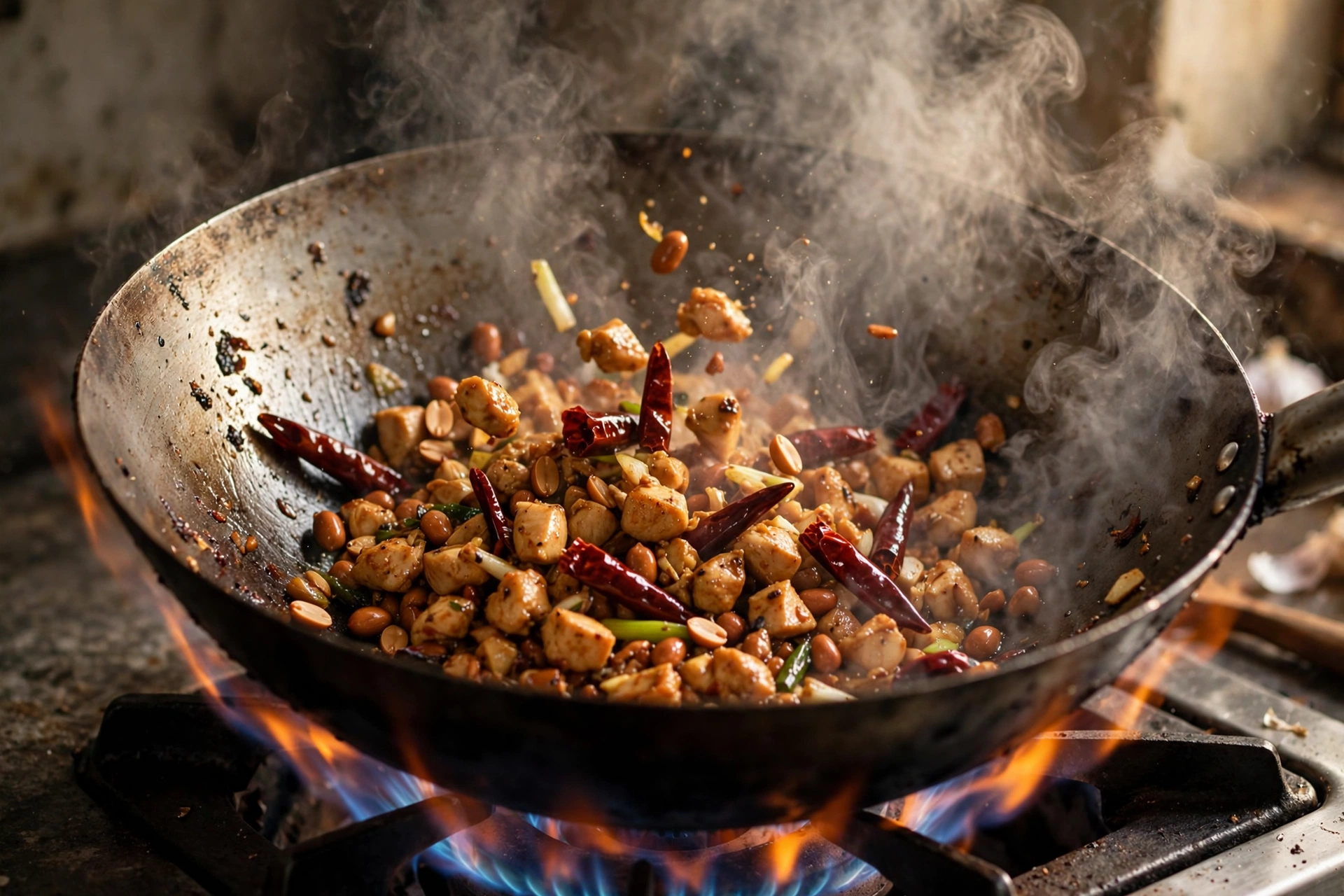
A proper kung pao starts with chicken cut into small, even cubes — traditionally dark meat, which stays juicy in a screaming-hot wok. The cubes get a quick marinade (soy, wine, a little cornstarch), then hit the wok in stages: aromatics first, chicken second, sauce last, peanuts scattered over at the very end so they stay crunchy.
The non-negotiable ingredients are the ones that define the dish:
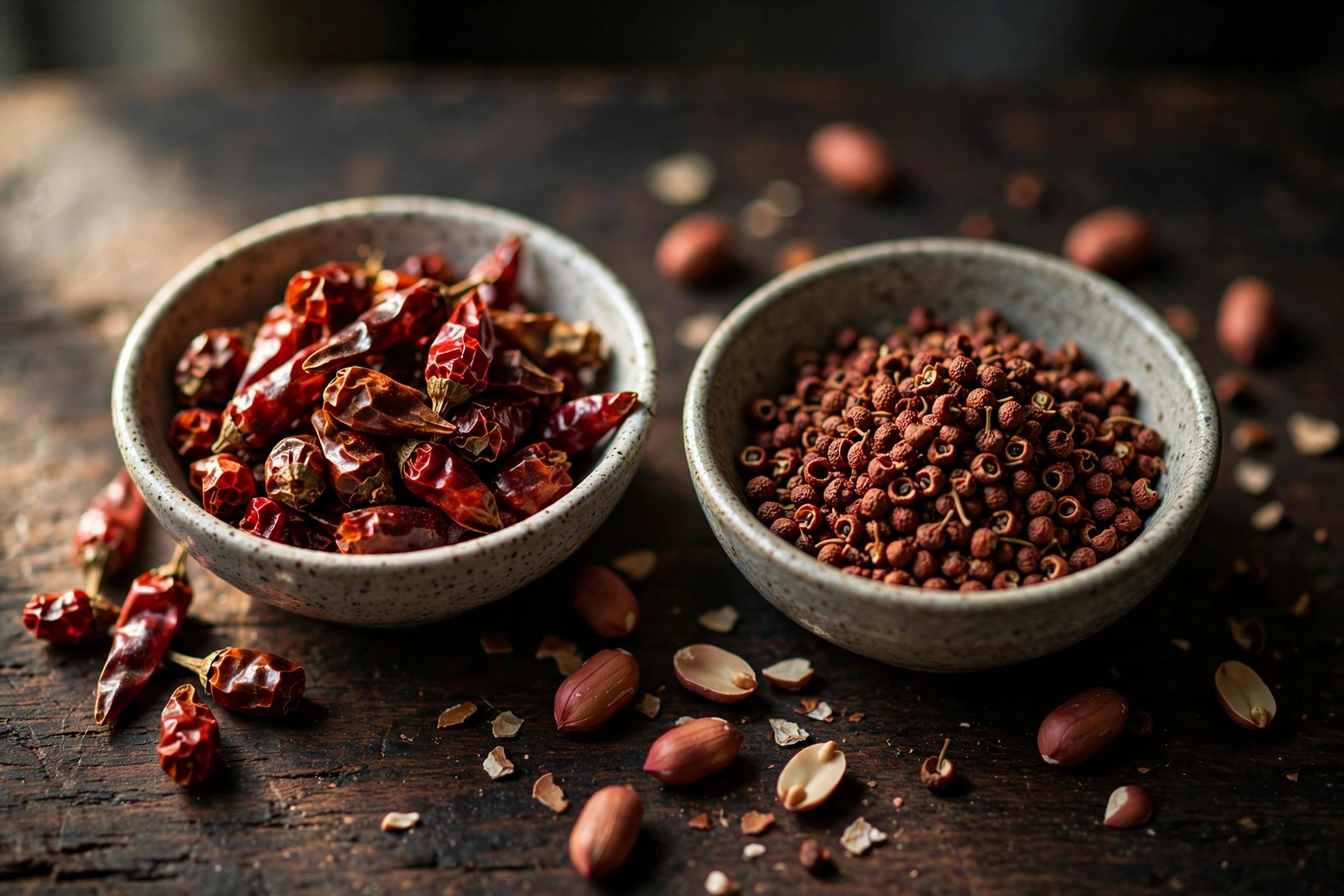
- Dried red chilies, tossed in whole to perfume the oil. They are seasoning, not food — you push them aside, not chew them.
- Sichuan peppercorns, for the numbing ma tingle that makes the heat three-dimensional.
- Roasted peanuts, added last for crunch against the tender chicken.
- A thin sauce of soy, black vinegar, and sugar that coats everything lightly instead of drowning it.
Vegetables are supporting players: scallions always, plus whatever the kitchen has — bell peppers, celery, water chestnuts, bamboo shoots. In Sichuan, you might also find versions with cucumber or lotus root. What you won’t find in the traditional dish is a heavy batter or a pool of sauce. Kung pao is a dry-ish stir-fry; the wok should look almost clean when it’s done. For a full side-by-side of both dishes’ ingredient lists, this deep-dive comparison lays out exactly what goes into each one.
General Tso’s Chicken Up Close
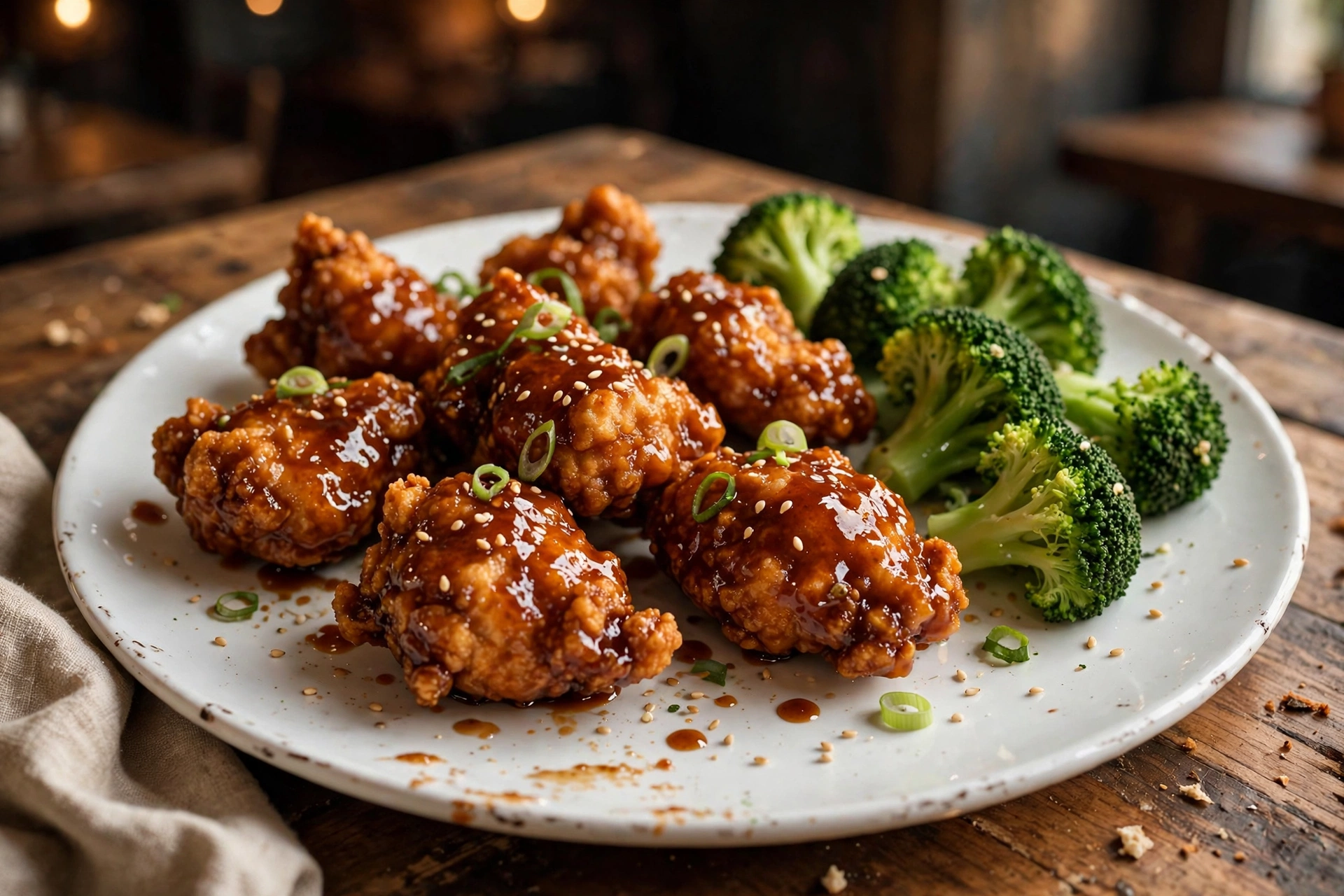
General Tso’s works from the opposite direction. The chicken gets cut into larger chunks, dredged in a cornstarch batter, and deep-fried until deeply golden and craggy. That crust is the whole point — it’s a delivery vehicle for sauce.
The sauce is where the American adaptation shows. Soy sauce and rice vinegar form the base, but sugar does the heavy lifting, with garlic, ginger, and sometimes hoisin or oyster sauce rounding it out. Cornstarch thickens it to a glaze that clings to every crag of the fried chicken. Dried chilies may appear, but they’re background singers; the sweetness runs the show.
Broccoli shows up alongside more often than not — not traditional, but a smart addition, since something green and slightly bitter cuts the richness. Scallions and sesame seeds finish it. Served over steamed white rice, it’s a complete sweet-savory-crunchy package that explains exactly why it became the most ordered dish in American-Chinese restaurants.
One honest note: this is not health food, and it isn’t trying to be. The batter plus the sugar-heavy glaze puts it among the richest things on the menu. Kung pao, being a stir-fry with no batter and far less sugar, is the lighter choice by a clear margin — though “lighter” still means a wok full of oil, so let’s not get carried away.
Side by Side: Every Difference That Matters
| Kung Pao Chicken | General Tso’s Chicken | |
|---|---|---|
| Origin | Sichuan, China — Qing dynasty, mid-1800s | Taiwan, 1950s; popularized in New York, 1970s |
| Named after | Ding Baozhen, the “Palace Guardian” official | Zuo Zongtang, a Qing general (honorary only) |
| Cooking method | Stir-fried in a wok, no batter | Battered and deep-fried |
| Chicken cut | Small even cubes | Larger chunks |
| Sauce | Thin, tangy — soy, black vinegar, a little sugar | Thick, glossy, sweet — sugar-forward glaze |
| Heat | Spicy + numbing (chilies + Sichuan peppercorns) | Mild to medium (chilies in the background) |
| Signature ingredient | Roasted peanuts | The crispy batter itself |
| Sweetness | Balanced, sour-sweet | Noticeably sweet |
| Typical vegetables | Scallions, bell peppers, celery, water chestnuts | Broccoli, sometimes carrots |
| Texture | Tender chicken, crunchy peanuts, crisp-tender veg | Crunchy crust giving way to juicy chicken |
Which One Should You Order?
There’s no wrong answer, but there is a right answer for tonight. Match the dish to the craving:
- Order kung pao when you want heat with complexity — the numbing tingle, the vinegar brightness, the peanut crunch. It pairs beautifully with other Sichuan dishes like mapo tofu as part of a shared spread.
- Order General Tso’s when you want comfort: crispy, sweet, saucy, satisfying. It’s a main-event dish — rice, maybe an egg roll, done.
- Feeding kids or spice-averse eaters? General Tso’s, easily. The sweetness wins over cautious palates.
- Watching the calories? Kung pao. No batter, less sugar, more vegetables per bite.
- Want the most “authentic Chinese” experience? Kung pao is the real regional dish — but order it at a Sichuan restaurant, where the peppercorns will actually show up.
And if you’re cooking at home, know that kung pao is the far more achievable of the two. It needs a hot wok or skillet, fifteen minutes, and no deep-frying. General Tso’s demands a pot of hot oil and a tolerance for batter splatter. A well-seasoned wok — here’s how to season one — is the single biggest upgrade you can give homemade kung pao, since wok hei is what separates restaurant stir-fry from steamed chicken with sauce.
Frequently Asked Questions
Is General Tso’s chicken real Chinese food?
It’s real food with real Chinese roots — invented by a Chinese chef, built on Hunan flavors — but the sweet, heavily battered version on American menus is an American-Chinese creation. You won’t find it in China in that form. Think of it the way you’d think of the California roll: invented by a Japanese chef, beloved in America, not quite the same thing back home.
Why isn’t my kung pao numbing?
The numbing comes from Sichuan peppercorns, and plenty of takeout kitchens skip them or use old ones that lost their punch. Fresh peppercorns should smell citrusy and make your tongue buzz within seconds of tasting one. If a restaurant’s kung pao is merely spicy, that’s the missing piece. (It’s also worth knowing these peppercorns were banned from US import between 1968 and 2005, which is why older American recipes omit them entirely.)
Are you supposed to eat the dried chilies in kung pao?
No — push them aside. They’re there to flavor the oil, the way bay leaves flavor a stew. Biting into one is a rough, seedy experience that the dish never intended for you.
Which dish is healthier?
Kung pao, by a comfortable margin. It’s a stir-fry with no batter and a lighter, less sugary sauce, plus peanuts and vegetables adding protein and fiber. General Tso’s is deep-fried and glazed in a sugar-heavy sauce. Neither is a salad, but if it matters, the choice is clear.
Does kung pao always have peanuts?
In the classic Sichuan version, yes — peanuts are signature. Some American kitchens swap in cashews, which is fine and delicious but technically a different dish. If you have a peanut allergy, tell the restaurant; many will make it with cashews or leave the nuts out.
Next time the menu offers both, you’ll know exactly what you’re choosing between: a 150-year-old Sichuan stir-fry built on tingle and crunch, or a Taiwanese-born, New York-raised crowd-pleaser built on crisp and sweet. Try them back to back once — it’s the fastest education in how Chinese food changed when it crossed the Pacific.