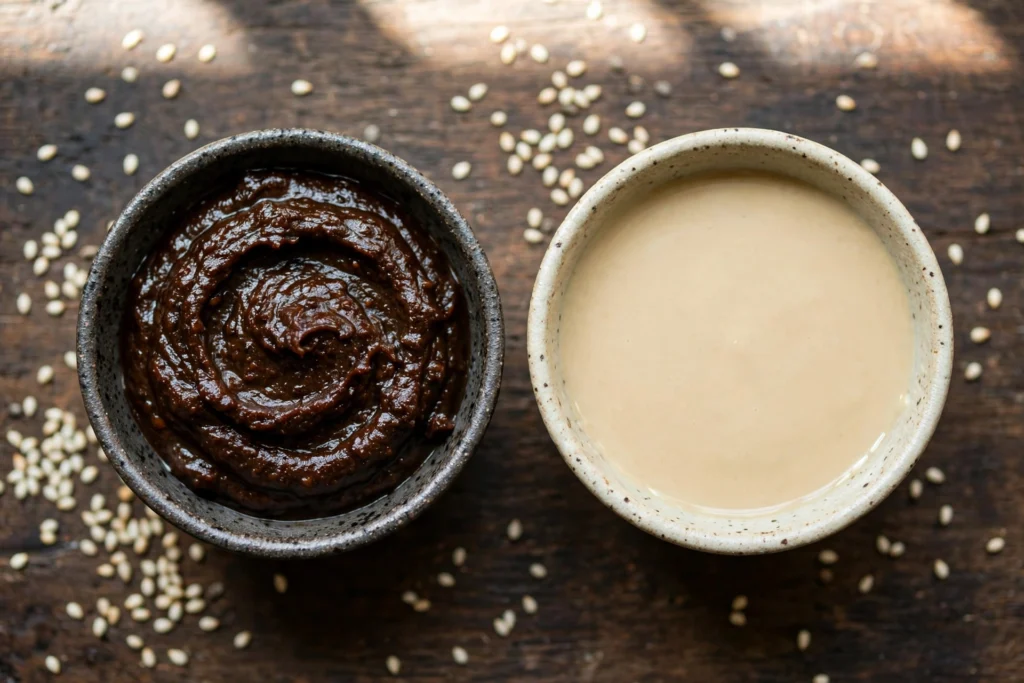
Open a jar of Chinese sesame paste and a jar of tahini side by side and you’ll see two pastes that could not look less alike. One is deep brown, thick as cold peanut butter, and smells like a toasted sesame seed turned up to eleven. The other is pale beige, pourable, and mild enough to disappear into hummus. Yet both are just ground sesame seeds — and recipes, store labels, and well-meaning cooking blogs treat them as interchangeable all the time.
They aren’t. Chinese sesame paste (芝麻酱, zhima jiang) and tahini come from different seeds, different roasts, and different food cultures, and swapping them blind changes a dish. This guide covers what each one is, the differences that actually matter in the kitchen, when to use which, and how to substitute in a pinch without ruining dinner.
The Short Answer
Chinese sesame paste is made from deeply toasted (sometimes unhulled) sesame seeds ground into a thick, dark, intensely nutty paste. It’s the backbone of Chinese noodle sauces, dan dan noodles, and hot pot dipping sauces.
Tahini is made from hulled sesame seeds that are raw or only lightly toasted, ground into a paler, thinner, milder paste. It’s the essential ingredient in hummus and Middle Eastern dressings and sauces.
Think of it this way: tahini is sesame in a supporting role; Chinese sesame paste is sesame as the lead actor. Use each where its cuisine puts it.
What Chinese Sesame Paste Actually Is
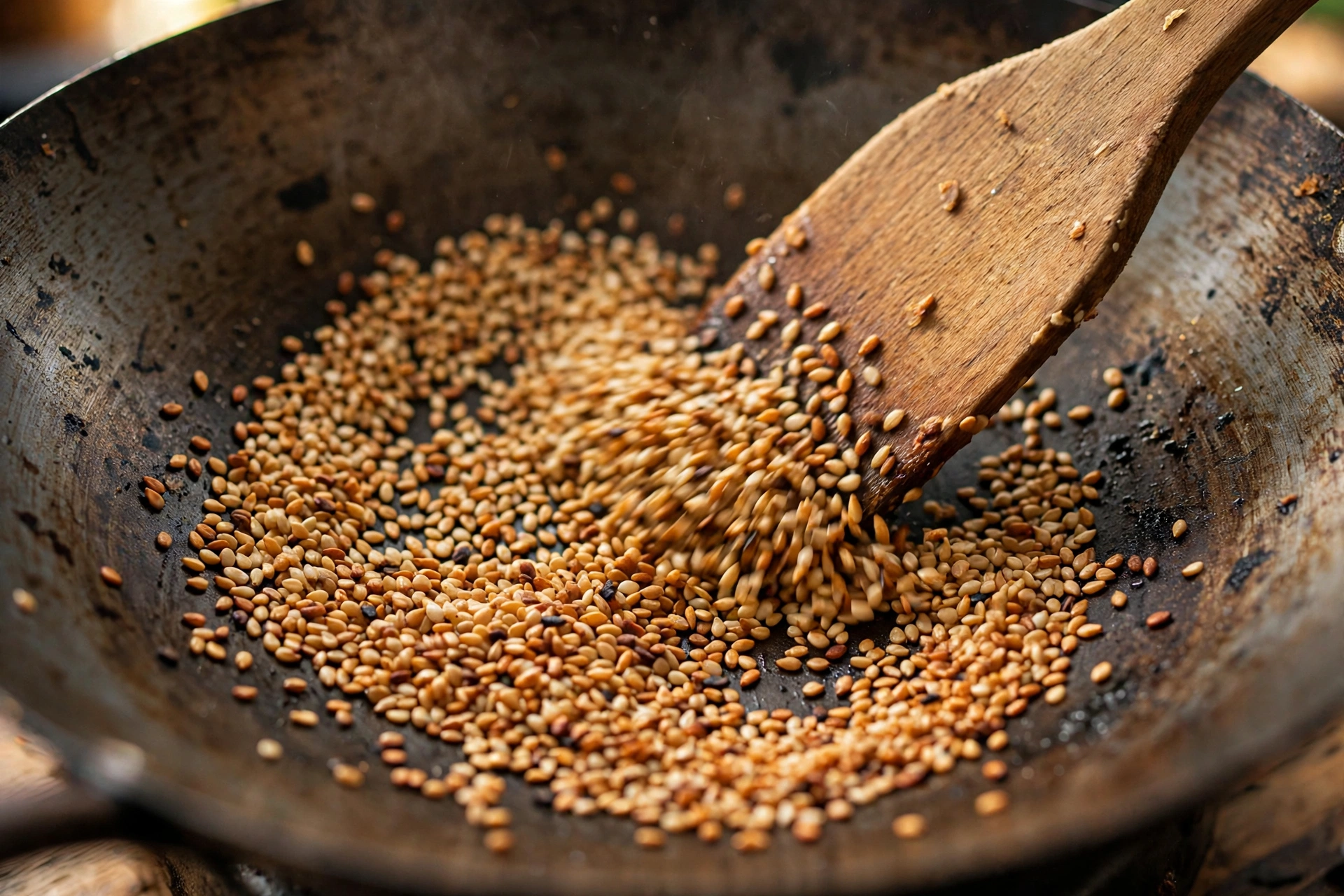
In China it’s called zhima jiang — literally “sesame sauce/paste” — and it’s been around far longer than tahini’s modern fame. The seeds are toasted dark before grinding, which triggers the browning reactions that give the paste its signature character: deep, roasty, almost smoky, with a pleasant bitter edge underneath the nuttiness. Some versions use unhulled seeds, which deepens the color and adds a touch more bitterness.
Because the seeds go in dry and no oil is added during grinding, the texture is stiff — closer to natural peanut butter than to a sauce. Open a jar and you’ll usually find a layer of sesame oil sitting on top; that’s normal separation, not spoilage. Stir it back in (or pour a little off if you want a thicker paste) and you’re good.
This is the paste behind some of Chinese cooking’s most beloved flavors. It’s the creamy base of dan dan noodles, the namesake of sesame noodles (ma jiang mian), a key component of the dipping sauce at a Chinese hot pot table, and the filling in black-sesame dessert dumplings — tang yuan — during Lunar New Year. Sweet versions also exist: black sesame paste (黑芝麻酱), made from black seeds, shows up in desserts and sweet soups, and it’s a different product from the white-seed paste this article is about. If you’re exploring the flavor building blocks of Chinese cuisine, zhima jiang belongs on the short list.
What Tahini Actually Is
Tahini comes from the Middle East and the eastern Mediterranean, where sesame has been cultivated for thousands of years. The seeds are hulled — the outer bran layer removed — and usually ground raw or only lightly toasted. No dark roast, no browning, no drama.
The result is a pale beige paste that’s noticeably thinner than Chinese sesame paste, often pourable straight from the jar, with a gentle, mild nuttiness and sometimes a faint bitter note (especially in lower-quality jars). Because it’s mild, it plays well with strong partners: lemon juice, garlic, and olive oil turn it into the classic sauce drizzled over falafel and shawarma, and blended with chickpeas it becomes hummus — the dish most Western cooks buy tahini for.
Beyond hummus, tahini shows up across the region’s sweet side too — it’s the base of halva, the crumbly sesame confection, and it gets drizzled over date syrup for a traditional breakfast. That versatility is exactly why it earned a permanent spot in Western supermarkets while Chinese sesame paste stayed a specialty-store find: mild plays well with everything, from savory dressings to cookies.
Quality varies enormously. Good tahini — the kind where the only ingredient is sesame seeds — is silky and mild. Cheap or old tahini can taste harsh and bitter enough to ruin a batch of hummus. If your tahini sauce keeps coming out bitter, taste the tahini straight from the jar first; a bitter jar is a dead jar, and no amount of lemon will save it.
The Differences That Actually Matter
| Chinese Sesame Paste | Tahini | |
|---|---|---|
| Chinese name | 芝麻酱 (zhima jiang) | — (Middle Eastern origin) |
| Seeds | Toasted dark; sometimes unhulled | Hulled; raw or lightly toasted |
| Color | Deep golden-brown to dark brown | Pale beige |
| Texture | Thick, stiff — like natural peanut butter | Thinner, often pourable |
| Flavor | Intense, toasty, nutty, lightly bitter | Mild, gentle nuttiness, can be slightly bitter |
| Oil separation | Common — stir before using | Common — stir before using |
| Signature dishes | Dan dan noodles, sesame noodles, hot pot dip | Hummus, baba ganoush, tahini sauce |
| Where to buy | Asian grocery stores | Most supermarkets |
SPICEography’s head-to-head breakdown lands in the same place: the roast is the root of every difference between the two jars.
Where Each One Belongs
The simplest rule: match the paste to the cuisine. But it helps to see exactly where each one does its best work — and Mighty Sesame’s dish-by-dish guide is a handy cheat sheet if you want even more pairings.
Reach for Chinese sesame paste when you’re making:
- Dan dan noodles — the sauce is sesame paste thinned with chili oil, soy, and vinegar.
- Sesame cold noodles (ma jiang mian) — the paste is the sauce, loosened with warm water.
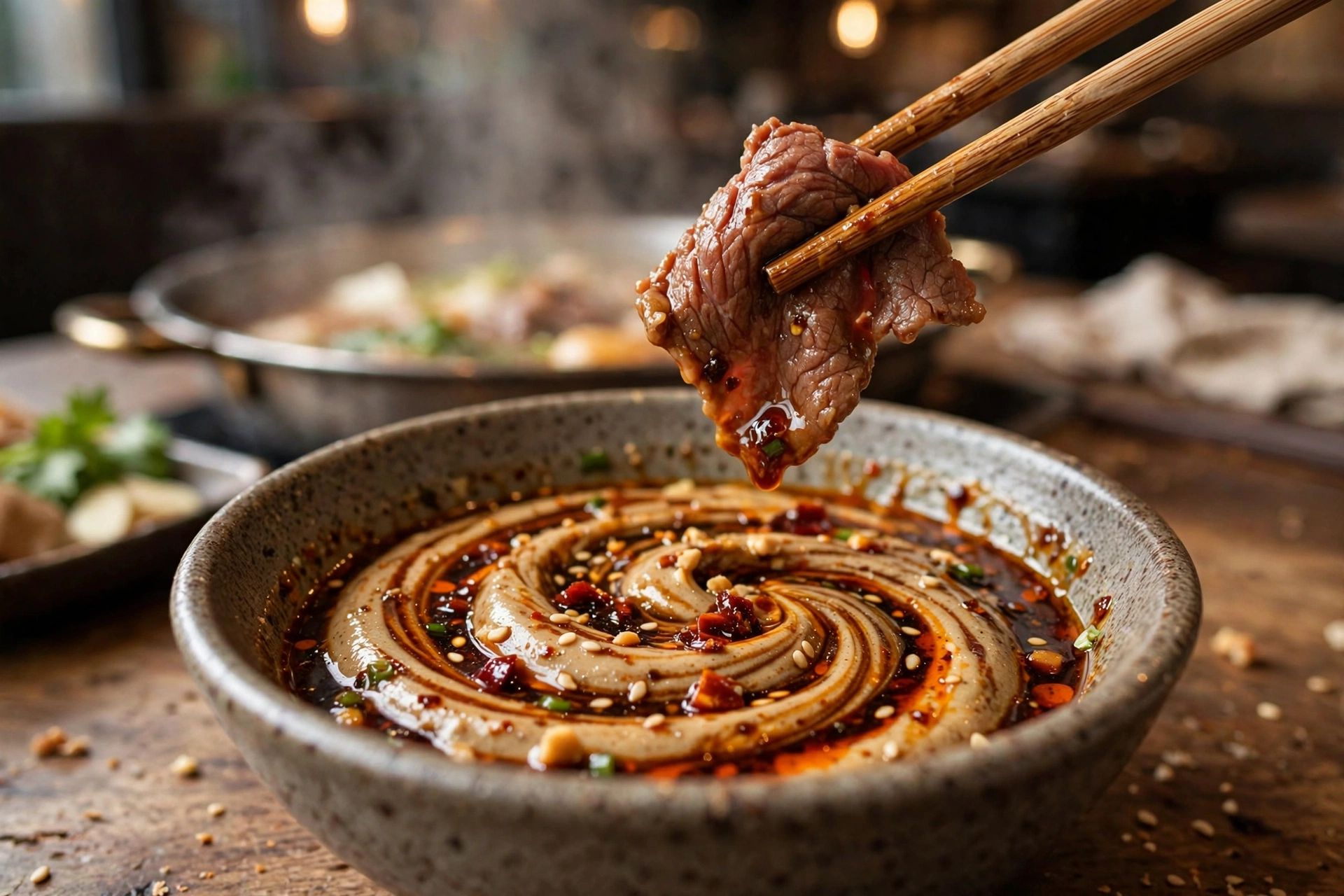
- Hot pot dipping sauce — sesame paste mixed with soy, vinegar, and garlic for dunking cooked meats and vegetables.
- Jianbing and breakfast crepes — a smear of the paste adds richness under the egg and crunch.
- Dumpling dipping sauces — whisked with soy and black vinegar. Here’s an easy dumpling dipping sauce to start from.
Reach for tahini when you’re making:
- Hummus — non-negotiable. This is tahini’s home turf.
- Baba ganoush — the mild paste supports smoky eggplant without overpowering it.
- Tahini-lemon dressing — whisked with lemon, garlic, and water for salads and grain bowls.
- Drizzle sauces — thinned tahini over roasted vegetables, falafel, or grilled fish.
- Baking — tahini cookies and brownies, where you want gentle sesame richness, not a flavor takeover.

Can You Swap One for the Other?
Sometimes — but direction matters, and there’s a trick that makes the swap work much better.
- Tahini in place of Chinese sesame paste: This is the easier direction. You’ll get the right richness and texture, but a milder, less toasty flavor. Fix it by whisking in a small splash of toasted sesame oil — it adds back much of the roasted depth the recipe expects. Start with half a teaspoon per tablespoon of tahini and taste.
- Chinese sesame paste in place of tahini: Riskier. The stronger, darker flavor will dominate mild dishes — your hummus will taste like sesame noodles, which is not what anyone wanted. It works better in bold, heavily seasoned recipes where the paste won’t bulldoze everything else.
- Never swap 1:1 by volume without tasting. Chinese sesame paste is more concentrated; start with about three-quarters of what the recipe calls for and adjust.
- Peanut butter is the other classic stand-in for Chinese sesame paste in noodle sauces — many Sichuan recipes accept either. It changes the flavor, but in the right direction for the cuisine.
One more thing worth knowing: Japanese nerigoma sits between the two — toasted like the Chinese paste but usually ground finer and milder. If a recipe calls for it, Chinese sesame paste is the closer substitute. Tasting Table gives the same substitution advice: tahini plus a dash of toasted sesame oil gets you most of the way there.
Buying, Storing, and Using Them Well
- Read the label. Good versions of both list one ingredient: sesame seeds. Skip jars with added oils, sweeteners, or emulsifiers — they mute the flavor you’re paying for.
- Know what you’re grabbing. In an Asian grocery, look for 芝麻酱 (zhima jiang) for the white-seed paste; 黑芝麻酱 is the black-seed dessert version. Western labels may just say “sesame paste,” which is exactly where the confusion starts.
- Stir the jar. Both pastes separate — oil on top, solids below. Stir thoroughly when you open a new jar; after that, a quick stir each time keeps it usable. Store upside down and the oil redistributes itself.
- Keep it in the pantry, not the fridge. Refrigeration turns both pastes stiff and hard to scoop. A cool, dark cupboard keeps them fresh for months. They rarely go rancid quickly thanks to sesame’s natural antioxidants, but give an old jar a sniff — stale oil smells like crayons.
- Thin with warm water, not cold. When making a sauce from Chinese sesame paste, drizzle in warm water a spoonful at a time while whisking. It’ll seize up and look broken before it turns silky — that’s normal. Keep whisking.
Frequently Asked Questions
Is Chinese sesame paste the same as tahini?
No. Both are ground sesame seeds, but Chinese sesame paste uses dark-toasted seeds for an intense, nutty flavor and thick texture, while tahini uses hulled, raw or lightly toasted seeds for a milder, paler, runnier paste. They come from different food cultures and aren’t freely interchangeable.
What is zhima jiang?
It’s the Chinese name for Chinese sesame paste (芝麻酱). If you see it on a label or in a recipe, it means the dark, toasted-seed paste used in dan dan noodles, sesame noodles, and hot pot dipping sauces — not tahini.
Can I use tahini for dan dan noodles?
In a pinch, yes — whisk in a little toasted sesame oil to add back the roasted depth. It won’t be identical to the real thing, but it’ll be much closer than skipping the sesame element entirely.
Why is there oil on top of my sesame paste?
Natural separation. Neither paste contains emulsifiers, so the sesame oil rises over time. Stir it back in — or pour a little off for a thicker paste. It’s a sign of a minimally processed jar, not a bad one.
What’s the difference between white and black sesame paste?
White-seed paste (the subject of this article) is savory-leaning and used in noodle sauces and dips. Black sesame paste, made from black seeds, is nuttier, slightly more bitter, and mostly used in Chinese desserts — sweet tang yuan dumplings, black sesame soup, and pastries. Don’t swap them without expecting a different dish.
The practical move: keep both jars in your pantry. Tahini for the Mediterranean side of your cooking, Chinese sesame paste for the Chinese side — and a bottle of toasted sesame oil to bridge the gap when one runs out. Once you’ve tasted real dan dan noodles made with the dark, roasty paste, you’ll understand why the distinction matters.
Leave a Reply