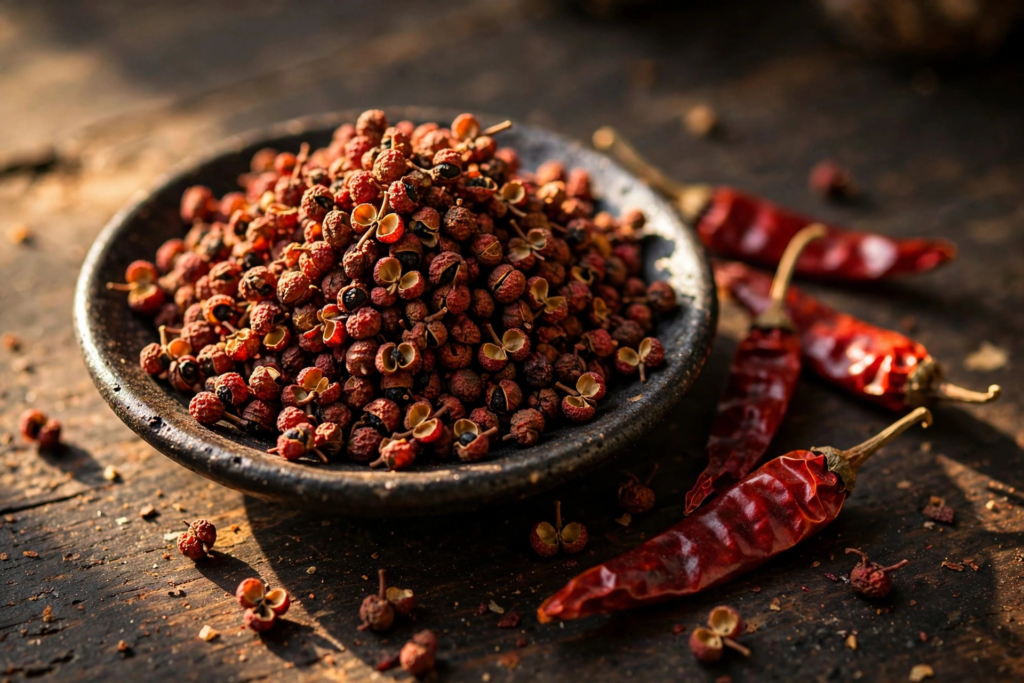
Pop a Sichuan peppercorn in your mouth and something weird happens. First a whisper of citrus and pine. Then your lips start to buzz, like you’ve pressed them against a nine-volt battery. Then the tingling spreads, and your whole mouth feels like it’s vibrating at some faint, pleasant frequency. It isn’t hot. It isn’t spicy. It’s something else entirely — and once you’ve felt it, you never forget it.
That buzzing numbness is called má, and it’s the signature sensation of one of the most misunderstood spices in the world. This guide covers what Sichuan peppercorn actually is, the real science of why it numbs your mouth, how it tastes, the varieties worth knowing, and how to cook with it.
What Is Sichuan Peppercorn, Really?
First, the name lies to you twice. It’s not from the pepper family, and the “corns” aren’t peppercorns at all.
Sichuan peppercorns are the dried husks of tiny berries from prickly ash trees in the Zanthoxylum genus — a member of the citrus family, which explains a lot about their flavor. Each berry splits open when ripe into a shape that looks a bit like a tiny wooden flower, which is why the Chinese name is huājiāo — literally “flower pepper.” The spice you buy is the papery husk; the hard black seed inside is bitter and usually discarded or sifted out.
This matters because it explains why Sichuan peppercorn behaves nothing like black pepper. Black pepper’s bite comes from piperine, which trips pain-sensing nerves. Chili heat comes from capsaicin, which trips heat-sensing nerves. Sichuan peppercorn runs on an entirely different circuit — which is exactly why it feels so strange.
It’s also one of the five spices in Chinese five-spice powder, though it plays a very different role there than it does in a bowl of mapo tofu.
Why Does It Numb Your Mouth? The Science
The short answer: a molecule called hydroxy-alpha-sanshool. The longer answer is one of the coolest stories in food science.
Most “spicy” compounds work by fooling pain or heat receptors. Sanshool doesn’t. Instead, it excites the nerves that normally respond to touch — light mechanical pressure, the kind you’d feel from a vibration against your skin. Your brain receives a touch signal with no actual touching happening, and interprets it as tingling, buzzing, and numbness. Scientists call this paresthesia — the same pins-and-needles you get when your foot falls asleep.
Researchers have measured this buzz with almost comical precision. In a 2013 study, a Japanese team dusted ground Sichuan peppercorn on volunteers’ lips, then matched the sensation against a mechanical vibrator pressed to their fingers. The tingling matched a vibration of 50 cycles per second. As Peninsula Press reported on the science behind má, you could theoretically simulate half the experience by holding a 50-hertz tuning fork to your lips while eating.
There’s a second layer too. Sanshool also activates the same nerve pathways targeted by modern local anesthetics — which is where the actual numbing part comes from. And specific nerve fibers called D-hair fibers, which fire about a minute after stimulation, explain why the tingle seems to arrive in waves rather than all at once. Saveur’s deep dive into the spice quotes Monell researcher Bruce Bryant explaining that sanshools “chemically activate nerves that are usually only triggered mechanically” — your brain reads it as the tingle of coming back from anesthesia.
Here’s the part most people get wrong: the numbness doesn’t dull flavor. It actually seems to heighten sensitivity to everything else on the plate. That’s why Sichuan cooks pair it with blazing chilies — the two sensations run on separate nerve systems, so you feel both at full volume simultaneously. That combination is málà: numbing and spicy, the defining flavor of an entire cuisine.
What Does It Actually Taste Like?
Strip away the tingle and Sichuan peppercorn has a real flavor: bright citrus, pine resin, a little floral sweetness — lavender gets mentioned a lot — with a warm, woodsy base. The red variety leans earthy and warm; the overall impression is closer to lemon zest and juniper than to anything “peppery.”
It helps to separate the two sensations the Chinese language keeps distinct:
- Má (麻) — the numbing tingle, from the peppercorn alone.
- Là (辣) — the burning heat, from chilies.
- Málà (麻辣) — both together, the flavor that built Sichuan cuisine.
Try this sometime: chew a single peppercorn husk on its own, no chilies anywhere. You’ll get citrus, flowers, and the full electric tingle with zero heat. That experiment alone clears up years of confusion about what this spice actually does.
Red vs Green: Know Your Varieties
Walk into a good Chinese grocery and you’ll find more than one kind. They’re not the same spice at different ripeness — they’re different plants, and they cook differently.
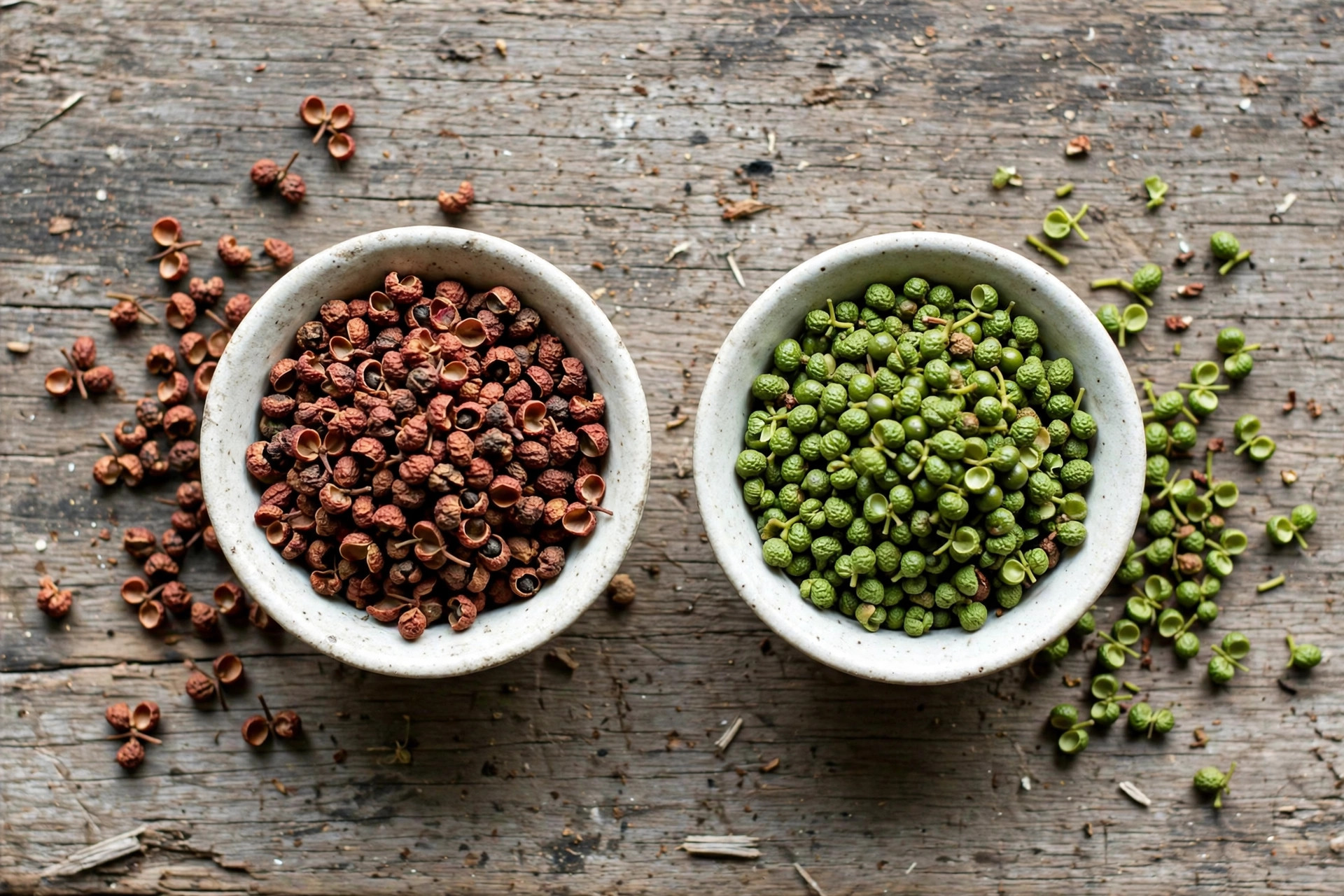
| Variety | Look | Flavor | Numbing strength | Best for |
|---|---|---|---|---|
| Red (Dà Hóng Pāo) | Dark reddish-brown, textured husks | Citrusy, warm, slightly woody | Moderate | Mapo tofu, dry-fried dishes, five-spice |
| Red (Hanyuan) | Smaller, darker berries | Brighter, more floral | Moderate-high | Cold dishes, dipping sauces |
| Green (Qīng Huājiāo) | Bright green, smoother | Grassy, sharp lemon, almost minty | Intense | Fish dishes, green málà hotpot |
| Japanese Sanshō | Small, green | Strong yuzu-like citrus | Mild | Noodles, tofu, grilled eel |
The red Dà Hóng Pāo — “big red robe” — is the workhorse most recipes mean when they say “Sichuan peppercorn.” Green qīnghuājiāo is the connoisseur’s pick: more aggressively numbing, with a lemon-mint brightness that cuts through rich fish beautifully. If a recipe just says Sichuan peppercorn, reach for red.
Málà: The Flavor That Built a Cuisine
Sichuan food is China’s most popular regional cuisine, and málà is its engine. The peppercorn doesn’t just add tingle — it changes how you perceive everything around it, which is why Sichuan dishes can be ferociously hot yet still taste layered and complex instead of just painful.
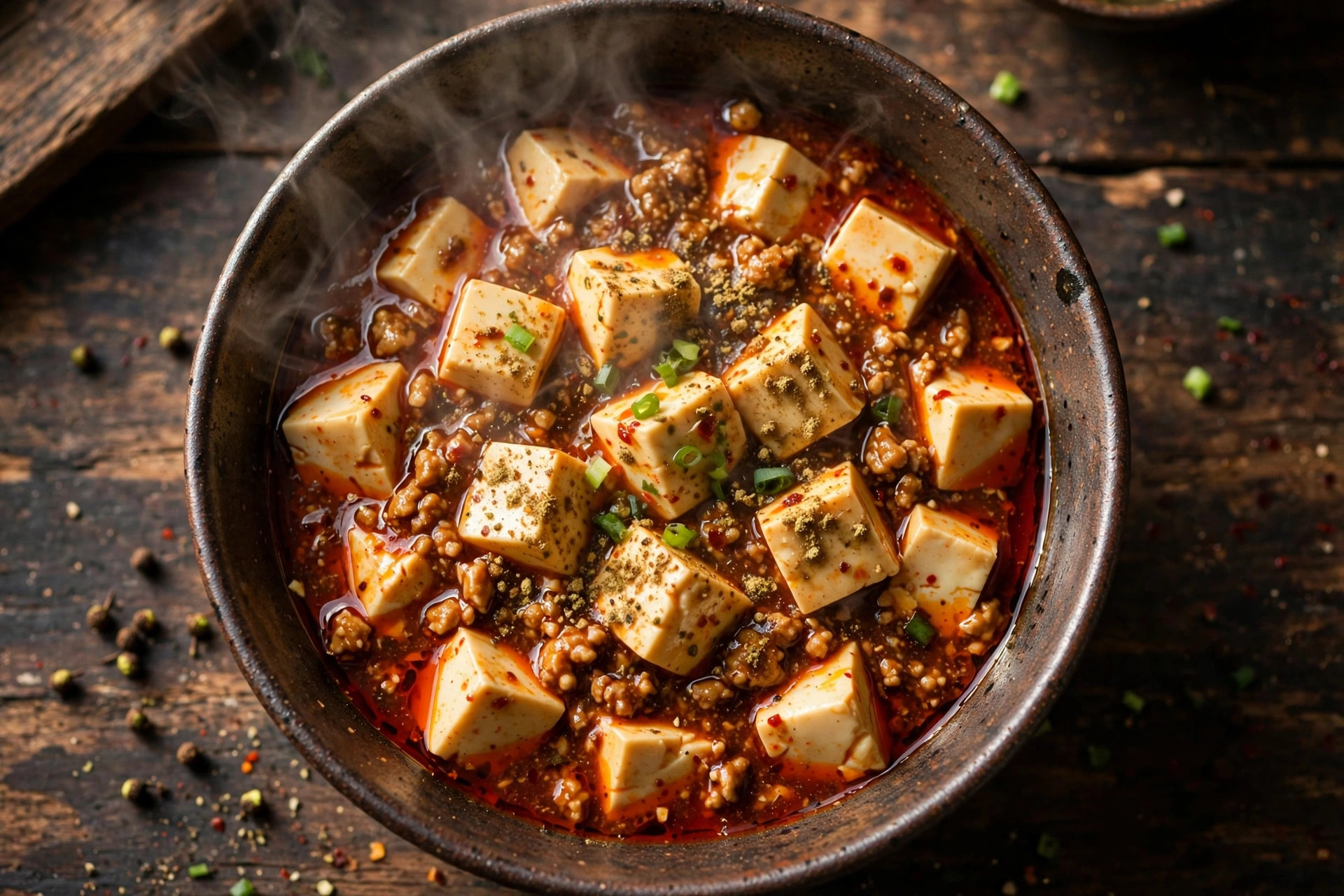
The dishes where the peppercorn does its most famous work:
- Mapo tofu — silken tofu and minced pork in chili-bean sauce, finished with a snowfall of ground peppercorn.
- Làzi jī — “call 911 chicken,” nuggets of fried chicken buried under a mountain of dried chilies and peppercorns.
- Dandan noodles — sesame-peanut sauce with chili oil, where the tingle lifts the richness.
- Sichuan hotpot — the broth itself is seasoned with whole husks, so the numbness builds with every dip.
- Dry-fried green beans — blistered beans tossed with peppercorn, chilies, and preserved mustard greens.
It’s worth noting how central this is to China’s regional cooking traditions — Chengdu, the capital of Sichuan, became the first Asian city designated a UNESCO City of Gastronomy, and the peppercorn is a big reason why.
How to Cook With Sichuan Peppercorn
The spice is easy to use badly and easy to use well. The whole game is freshness and heat control.
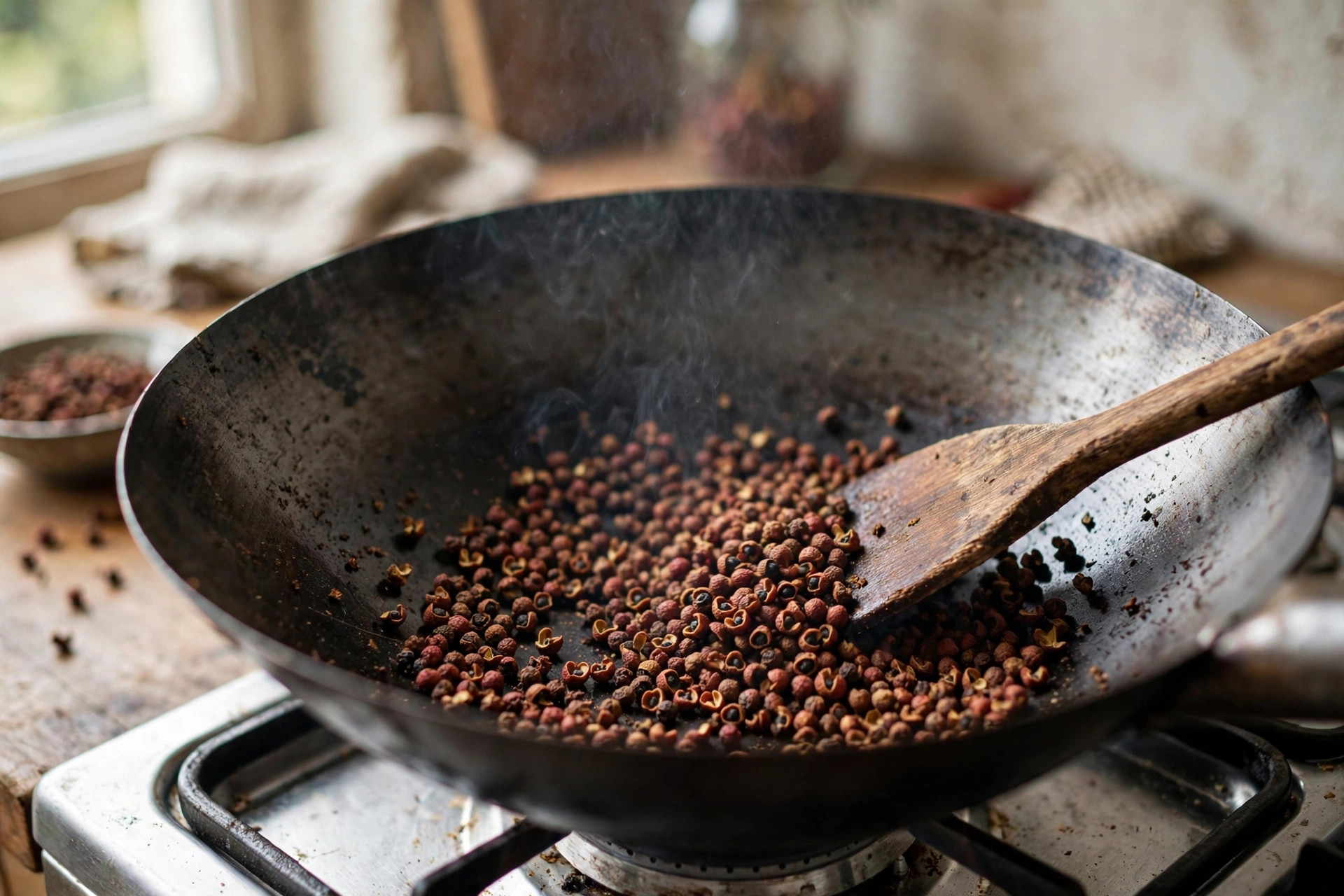
Toast before grinding. Toss whole husks in a dry wok or skillet over medium heat for 30–60 seconds, shaking constantly, until fragrant. Then grind in a mortar or spice grinder while still warm. Pre-ground peppercorn loses its tingle fast; whole husks ground fresh are a different spice entirely.
Infuse it into oil. Tasting Table’s guide to the spice points to chili oil as the ideal starting vessel — gently heat whole husks in neutral oil, strain them out, and you get all the citrus-tingle with none of the crunch. Drizzle over anything.
Mind the crunch. Whole husks are woody and unpleasant to bite into. In dishes like làzi jī they’re traditionally pushed aside, not eaten. When in doubt, grind finely or infuse and strain.
A few rules that separate good results from great ones:
- Grind fresh, every time — the tingle fades within days of grinding.
- Add ground peppercorn at the end of cooking, not the beginning; long heat dulls it.
- Start with less than you think — you can always add more tingle, but you can’t take it back.
- Pair with chilies for málà, but try it solo first to learn what it actually tastes like.
- Sift out the hard black seeds before grinding; they’re bitter and gritty.
If you’re toasting spices in a wok for the first time, here’s how to season a wok properly first — it makes everything that follows easier.
How to Buy and Store It
Stale Sichuan peppercorn is the number-one reason home cooks think the spice is “overrated.” Fresh husks should smell intensely citrusy through the bag — if you can’t smell anything, don’t buy it.
What to look for:
- Color: bright reddish-brown (red) or vivid green (green). Dull, dark, or grayish husks are old.
- Aroma: strong citrus-pine scent even through packaging.
- Seeds: fewer hard black seeds mixed in means better quality — but some seeds are normal.
- Source: Chinese groceries and reputable online spice sellers beat supermarket jars, which can sit for years.
Fun historical footnote: Sichuan peppercorn was banned from import into the United States until 2004 over fears it could carry citrus canker. That’s why an entire generation of American cooks grew up without it — and why it still feels like a “new” ingredient in the West despite centuries of use in China.
Store whole husks in an airtight container away from light; they’ll keep their punch for a year or more. Ground, use within a few weeks. And keep it away from moisture — damp husks go musty fast.
For the bigger picture of how this flavor fits into Chinese cooking, see the flavours of Chinese cuisine and what Chinese hotpot is all about — both are places where this little husk does heavy lifting.
Frequently Asked Questions
Is Sichuan peppercorn actually spicy?
No — not by itself. It creates tingling and numbness, not heat. The “spicy” reputation comes from málà dishes, where it’s always paired with chilies. Taste a husk alone and you’ll get citrus and buzz with zero burn.
Is it related to black pepper?
Not at all. Black pepper is the dried fruit of a climbing vine (Piper nigrum); Sichuan peppercorn is the husk of a berry from a prickly ash tree in the citrus family. Different plants, different chemistry, different sensation.
Why do my lips feel like they’re vibrating?
Because, neurologically speaking, they are. The sanshool molecule triggers touch-sensing nerves, and researchers measured the resulting tingle at about 50 vibrations per second — your brain interprets it as buzzing because that’s exactly what the nerves are reporting.
Can I substitute black pepper or chili for it?
Not really. Nothing else produces the má tingle. In a pinch, a mix of black pepper and coriander seed gives a vague citrusy warmth, but it won’t numb. If the tingle is the point of the dish, there’s no substitute — buy the real thing.
Is it safe to eat?
Yes, in normal culinary amounts. It’s been eaten for centuries and is even used in traditional medicine. The numbing effect is temporary and harmless — though eating a spoonful straight will be an experience you only try once.
The next time you’re at a Sichuan restaurant, order the mapo tofu and pay attention to the two separate sensations hitting your mouth: the chili’s heat and the peppercorn’s electric buzz, running side by side. Once you can tell them apart, you’ve unlocked the whole cuisine. Then go buy a bag of whole husks, toast them fresh, and taste what you’ve been missing.