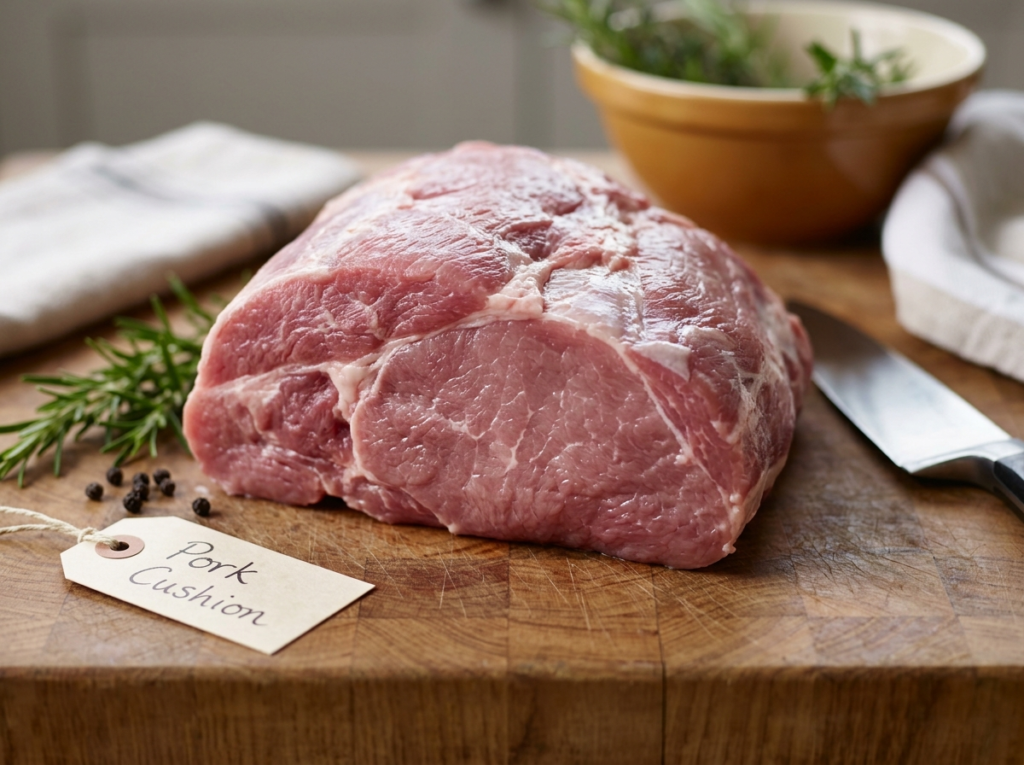
You’re standing at the butcher counter, staring at a label that says “pork cushion meat,” and you have absolutely no idea what it is. You’re not alone. Most home cooks have never heard of this cut, and even some experienced grillers walk right past it. But here’s the thing — pork cushion meat is one of the most flavorful, affordable, and versatile pork cuts you can buy. Once you know what it is and how to cook it, there’s a good chance it’ll become a regular in your kitchen rotation.
Let’s break it all down.
Where Does Pork Cushion Meat Come From?
Pork cushion meat comes from the picnic shoulder, which is the lower portion of the pig’s front leg. If you picture the whole front shoulder of a pig, it’s divided into two main sections: the upper part is called the Boston butt (or pork butt), and the lower part is the picnic shoulder. The cushion is a boneless section cut from the inside of that picnic shoulder — basically a thick, meaty slab nestled against the leg bone.
The name “cushion” comes from its shape and position. It sits like a cushion or pad against the bone, and when you remove it, you get a roughly rectangular piece of meat that weighs anywhere from 2 to 4 pounds on average.
Because it’s part of the shoulder — a hardworking muscle group — it contains plenty of connective tissue and intramuscular fat. That marbling is exactly what makes it so flavorful when cooked properly.
Quick Fact: The USDA’s Institutional Meat Purchase Specifications (IMPS) classify the pork cushion under item number 405B, so if you’re ordering from a wholesale supplier, that’s the number to ask for.
What Does Pork Cushion Meat Look and Taste Like?
When you pick up a piece of pork cushion meat at the store, you’ll notice it’s a thick, somewhat irregularly shaped chunk of pork with visible fat marbling running through it. It’s darker in color than a pork loin and has a coarser grain — similar to what you’d see in a pork butt.
The taste? Rich, porky, and deeply savory. Because of all that intramuscular fat, the meat stays juicy and tender when you cook it low and slow. It doesn’t dry out the way leaner cuts like pork loin or tenderloin can if you overcook them by even a few minutes.
If you’ve ever had Chinese char siu pork, you already know how incredible well-marbled shoulder cuts taste when prepared right. Pork cushion meat gives you that same kind of melt-in-your-mouth quality.
Think of it this way: pork cushion meat is basically the flavor of pork butt in a smaller, more manageable package. You get the same rich taste without committing to an 8-pound roast.
Pork Cushion Meat vs. Pork Butt: What’s the Difference?
This is probably the most common point of confusion, so let’s clear it up.
Pork butt (Boston butt) comes from the upper shoulder. It’s a large cut, typically 6 to 10 pounds, loaded with fat and connective tissue. It’s the go-to for pulled pork and large barbecue cooks. Pork butt sits higher on the shoulder and has a more even distribution of fat throughout.
Pork cushion meat comes from the lower shoulder (picnic) and is much smaller — usually 2 to 4 pounds. It has similar marbling but a slightly different muscle structure. The grain is a bit tighter, and the fat distribution can be slightly less uniform than a pork butt.
So why would you choose one over the other?
If you’re cooking for a crowd and want classic pulled pork, pork butt is still your best bet. But if you’re feeding 4 to 6 people, want a quicker cook time, or just don’t need 8 pounds of meat, pork cushion is the smarter choice. It gives you 80% of the pork butt experience in about half the time and at a lower price point.
The texture after slow cooking is remarkably similar. Both cuts shred beautifully. Both deliver that deep, satisfying pork flavor. The cushion just gets you there faster.
Why Is Pork Cushion Meat So Affordable?
Here’s something that might surprise you: pork cushion meat is often one of the cheapest cuts at the grocery store. Depending on your location, you might find it priced between $1.50 and $3.00 per pound — sometimes even less on sale.
Why so cheap? A few reasons.
Most shoppers don’t know what it is, so demand stays low. Butchers and grocery stores price meat based largely on demand, and cuts that people don’t recognize tend to sit on the shelf. Low demand equals low prices.
It also comes from a part of the pig that requires slow cooking to taste its best. Americans have historically preferred quick-cooking cuts like chops, tenderloins, and ribs. Anything that needs hours of braising or smoking gets pushed to the bargain bin.
And honestly, that’s great news for you. You’re getting a richly marbled, incredibly flavorful piece of pork for a fraction of what you’d pay for popular cuts. It’s one of those “secret” butcher-counter deals that pit masters and barbecue enthusiasts have known about for years.
How to Cook Pork Cushion Meat
This is where things get fun. Pork cushion meat is forgiving, versatile, and hard to mess up — as long as you respect one golden rule: cook it low and slow.
The connective tissue and fat in this cut need time and gentle heat to break down. Rush it with high heat, and you’ll end up with tough, chewy meat. Give it time, and you’ll get something tender enough to pull apart with two forks.
Smoking Pork Cushion Meat
Smoking is arguably the best way to cook pork cushion meat. The smaller size means you’ll get a finished product in roughly 4 to 6 hours instead of the 10 to 14 hours a full pork butt demands.
Set your smoker to 225°F to 250°F. Season the meat with your favorite rub — a simple mix of salt, black pepper, paprika, garlic powder, and brown sugar works beautifully. Place the cushion fat-side up so the rendered fat bastes the meat as it cooks.
You’re aiming for an internal temperature of 195°F to 205°F for pull-apart tender results. Use a reliable meat thermometer — don’t guess. Once it hits that range, wrap it in foil or butcher paper and let it rest for at least 30 minutes. The resting period lets the juices redistribute and makes a noticeable difference in the final texture.
Pro Tip: If you hit a temperature stall around 150°F to 170°F (where the internal temp seems to stop rising), don’t panic. This is completely normal. The moisture in the meat is evaporating and cooling it down, similar to how sweating cools your body. Just be patient — it’ll push through.
Braising Pork Cushion Meat
If you don’t own a smoker, braising is your next best option, and it produces incredible results.
Sear the cushion meat on all sides in a hot Dutch oven or heavy-bottomed pot until it’s deeply browned. That sear isn’t just for looks — the Maillard reaction creates hundreds of flavor compounds that make the final dish taste significantly better.
After searing, add your braising liquid. This could be chicken broth, beer, apple cider, or even a mixture of Chinese cooking wine and soy sauce for an Asian-inspired twist. Add aromatics like onion, garlic, and herbs, then cover the pot and slide it into a 300°F to 325°F oven for 3 to 4 hours.
You’ll know it’s done when a fork slides into the center with zero resistance.
Slow Cooker / Crockpot Method
This is the “set it and forget it” approach, and it’s perfect for busy weekdays.
Place the seasoned pork cushion in your slow cooker. Add about a cup of liquid (broth, barbecue sauce, salsa — whatever fits your flavor profile), set it on low for 8 to 10 hours, and walk away. When you come back, the meat will be falling apart and ready to shred.
One word of caution: slow cookers don’t develop the same depth of browning that smoking or braising does. If you want a richer flavor, take five minutes to sear the meat in a hot skillet before putting it in the slow cooker. That small extra step makes a big difference.
Roasting in the Oven
A straightforward oven roast works well too. Season the meat, place it on a rack in a roasting pan, and cook at 275°F to 300°F for about 3 to 4 hours. Again, you’re targeting that 195°F to 205°F internal temperature for pulled pork, or around 180°F if you want sliceable meat that holds its shape better.
⚠️ Food Safety Note: The USDA recommends cooking all whole cuts of pork to a minimum internal temperature of 145°F with a three-minute rest. For cuts like pork cushion where you want a pulled texture, you’ll naturally go well above that threshold. Always use a calibrated meat thermometer to verify internal temperatures.
Best Recipes and Uses for Pork Cushion Meat
Once the meat is cooked, the possibilities are wide open. Here are some of the tastiest ways to use it.
Pulled Pork Sandwiches — The classic. Shred the meat, toss it with your favorite barbecue sauce, and pile it onto toasted buns with coleslaw. Simple, satisfying, and perfect for feeding a group.
Tacos and Burritos — Shredded pork cushion meat works beautifully in tacos. Season it with cumin, chili powder, and lime juice for a Tex-Mex spin, or go with a citrus-and-garlic Cuban-style preparation. Pile it into warm tortillas with pickled onions and fresh cilantro.
Asian-Inspired Bowls — Slice or shred the meat and serve it over steamed jasmine rice with pickled vegetables, a drizzle of sriracha, and some crispy fried shallots. If you enjoy Vietnamese flavors, this cut works wonderfully in recipes similar to Vietnamese caramelized pork.
Bao Buns — Stuff fluffy steamed bao with pulled pork cushion, hoisin sauce, cucumber, and scallions. If you’ve never tried bao buns before, this is a great introduction — the combination of soft bread and rich pork is hard to beat.
Pork Fried Rice — Chop leftover cushion meat into small pieces and toss it into fried rice. Use day-old rice from the fridge for the best texture — freshly cooked rice tends to turn mushy in the pan.
Meatloaf — Grind the cushion meat or chop it finely and use it as the base for a pork meatloaf. The fat content keeps it from drying out, which is a common complaint with leaner ground pork. Getting the internal temperature of your meatloaf right ensures it’s safe and juicy.
Tips for Buying Pork Cushion Meat
Not every grocery store labels this cut the same way, which can make shopping a little tricky. Here’s what to look for.
Some stores label it plainly as “pork cushion meat.” Others might call it “boneless picnic roast,” “picnic cushion,” or even just “boneless pork shoulder.” If you’re unsure, ask the butcher for the boneless portion from the inside of the picnic shoulder — they’ll know exactly what you mean.
Look for a piece with good marbling — white streaks of fat running through the red meat. Avoid pieces that look excessively pale or have large pockets of hard fat on the surface. Some surface fat is fine (and actually desirable for slow cooking), but you want it to be reasonably even.
If your local grocery store doesn’t carry it, try a Latin or Asian market. These stores tend to break down the whole hog into more cuts than mainstream supermarkets do, and they’re more likely to have cushion meat available at a great price. You might also find it at wholesale clubs like Costco or Sam’s Club, sometimes sold as part of a larger picnic shoulder that you can break down yourself.
How to Store Pork Cushion Meat
Raw pork cushion meat keeps in the refrigerator for 3 to 5 days, according to USDA guidelines. Keep it in its original packaging or transfer it to an airtight container. Store it on the lowest shelf of your fridge to prevent any juices from dripping onto other foods.
For longer storage, freeze it. Wrap the meat tightly in plastic wrap, then again in aluminum foil or place it in a freezer-safe bag. Squeeze out as much air as possible. Properly wrapped, it’ll stay good in the freezer for 4 to 6 months without significant quality loss.
Cooked pork cushion meat lasts 3 to 4 days in the fridge and can be frozen for 2 to 3 months. If you’re meal prepping, portion the cooked meat into individual containers before freezing — that way, you can thaw only what you need.
⚠️ Food Safety Reminder: Always thaw frozen pork in the refrigerator, in cold water, or in the microwave — never on the counter at room temperature. Bacteria multiply rapidly between 40°F and 140°F (the “danger zone”), and leaving meat out can create food safety risks.
What Makes Pork Cushion Meat Different from Other Pork Cuts?
Understanding where cushion meat sits among other common pork cuts helps you make smarter decisions at the store.
Pork loin is lean, tender, and best cooked with dry heat (roasting, grilling). It doesn’t have the marbling or connective tissue of cushion meat, so it behaves completely differently. Think of loin as the “quick and clean” option.
Pork tenderloin is the most tender cut on the pig but also the leanest. It’s small, cooks fast, and dries out easily. Not even in the same category as cushion meat in terms of flavor depth.
Pork belly is extremely fatty — it’s what bacon comes from. If you’re looking for where to buy pork belly or comparing it to cushion meat, just know that belly is about 50% fat, while cushion meat has a much more balanced meat-to-fat ratio.
Spare ribs and baby back ribs are bone-in cuts from the rib section. They’re great for grilling and smoking but serve a different purpose than cushion meat.
The closest comparison to pork cushion will always be pork butt. They come from the same general area, cook the same way, and deliver similar results. Cushion is just smaller and often cheaper.
Common Mistakes to Avoid
A few pitfalls trip people up with this cut. Knowing them ahead of time saves you frustration.
Cooking it too fast. This is the number one mistake. High heat and short cooking times don’t work here. The collagen in the meat needs hours of low, gentle heat to break down into gelatin. That gelatin is what gives properly cooked cushion meat its silky, succulent texture. If you try to roast it at 400°F for an hour, you’ll get something tough and disappointing.
Skipping the rest period. After any slow cook, you need to let the meat rest. Thirty minutes minimum, wrapped in foil. During this time, the muscle fibers relax and reabsorb moisture. Cutting into it immediately means those juices run out onto your cutting board instead of staying in the meat.
Not seasoning early enough. Salt needs time to penetrate a thick cut like this. If possible, season your pork cushion the night before and let it sit uncovered in the fridge. This dry-brining technique seasons the meat more deeply and also dries out the surface, which helps create a better bark or crust during cooking.
Pulling at the wrong temperature. If you’re going for pulled pork and you take the meat off at 180°F, it won’t shred well. You need to hit 195°F to 205°F for that effortless, pull-apart texture. The difference between 180°F and 200°F is dramatic.
FAQ
Is pork cushion meat the same as pork butt?
No, they’re different cuts, though they’re closely related. Pork butt comes from the upper shoulder (Boston butt), while pork cushion meat comes from the lower shoulder (picnic). They cook similarly and taste alike, but cushion meat is smaller and typically cheaper. You can use them interchangeably in most recipes — just adjust your cooking time since the cushion is lighter.
Can you grill pork cushion meat?
You can, but it requires an indirect grilling approach. Set up your grill for two-zone cooking — hot coals on one side, nothing on the other. Place the cushion on the cool side, close the lid, and maintain a temperature around 250°F. This is essentially using your grill as a smoker. Direct grilling over high heat won’t work well because the cut is too thick and needs slow rendering of its fat and connective tissue.
How long does it take to cook pork cushion meat?
The exact time depends on your method and the size of the cut. As a general guide, expect 4 to 6 hours when smoking at 225°F to 250°F, 3 to 4 hours when braising or oven roasting at 300°F, and 8 to 10 hours on low in a slow cooker. Always cook to internal temperature rather than time — 195°F to 205°F for pulled pork, 145°F minimum (with a 3-minute rest) per USDA guidelines for safe consumption.
Where can I buy pork cushion meat?
Check your local grocery store’s meat counter or butcher shop first. It may be labeled as “boneless picnic roast” or “boneless pork shoulder” instead of “pork cushion meat.” Latin and Asian markets are also excellent sources. If you can’t find it pre-cut, ask a butcher to remove the boneless cushion section from a whole picnic shoulder — most will do this happily.
What’s the best wood for smoking pork cushion meat?
Fruitwoods like apple and cherry are popular choices because they produce a mild, slightly sweet smoke that complements pork without overpowering it. Hickory works well too but produces a stronger smoke flavor. Avoid mesquite for long cooks — its intense smokiness can turn bitter over several hours.
Your Next Step
Pork cushion meat is one of those under-the-radar cuts that deserves far more attention than it gets. It’s affordable, packed with flavor, and endlessly versatile — whether you smoke it, braise it, or let it do its thing in a slow cooker all day.
Next time you’re at the meat counter, skip the usual suspects and grab a pork cushion. Season it the night before, cook it low and slow, and let it rest before you dig in. You might just find your new favorite weeknight (or weekend barbecue) cut. And if you make more than you can eat in one sitting — which is almost guaranteed — the leftovers make incredible tacos, rice bowls, and sandwiches for days.
Give it a try. Your wallet and your taste buds will both thank you.