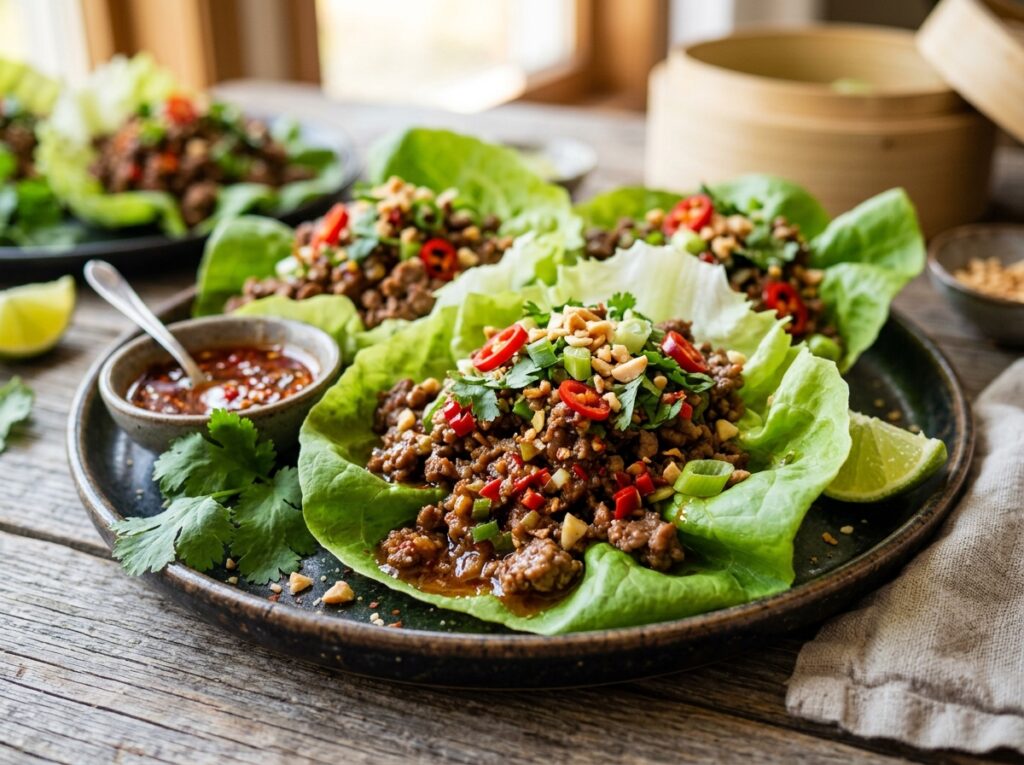
Every once in a while, a dish transcends its category. Lettuce wraps did exactly that—evolving from ancient Asian table traditions into one of the most enduring modern “healthy” meals in restaurants worldwide.
But here’s the truth from behind professional kitchen doors: lettuce wraps aren’t just a calorie fix or low-carb gimmick. When crafted properly, they represent perfect balance—crunch versus heat, chill versus sizzle, contrast against harmony. They act as a stage where texture and temperature become more important than portion size. In my 20+ years across pan-Asian and New American concepts, I’ve treated the lettuce wrap as both a casual indulgence and a high-end amuse-bouche.
Everyone knows PF Chang’s lettuce wraps, but long before that iconic menu hit suburban malls, Chinese, Vietnamese, Thai, and Korean cuisines had been wrapping umami proteins in crisp greens for centuries. The version we know today is simply global shorthand for the pleasure of crisp freshness paired with savory filling—easy to hold, instantly gratifying, endlessly adaptable.
Let’s take that understanding apart. You’ll learn how to design restaurant-level lettuce wraps recipes, select your greens with precision, manage moisture (the hidden Achilles’ heel), and plate them either rustic or refined.
1. What Lettuce Wraps Really Represent in Culinary Logic
To a professional, a lettuce wrap is not just a dish—it’s a concept category: “customizable hand-held assembly combining warmth and crunch.”
This format appears across cultures:
- Chinese Sung choi bao: minced stir-fry pork or chicken in iceberg cups.
- Korean ssam: grilled meat (samgyeopsal) rolled in perilla or romaine with gochujang.
- Thai laab: spicy minced chicken or beef packed in lettuce or cabbage leaves.
- Vietnamese bo cuon la lot or goi cuon: fresh herbs and proteins encased in leafy greens.
In culinary anthropology terms, lettuce wraps represent the primitive instinct of self-assembly dining—the diner composes each bite to personal ratio. Inside restaurants, we design these dishes to put control back into the guest’s hands.
When made right, a good wrap hits six sensory notes:
- Crispness – from fresh lettuce.
- Savory core – protein, tofu, or seafood.
- Heat and spice – chili oil, ginger, pepper.
- Acid – vinegar, lime, pickled veg.
- Sweet echo – hoisin, caramelized onions, or sauce.
- Perfume – herbs or aromatics that “lift” the bite (mint, basil, cilantro).
Each part must arrive in balance and temperature contrast. That’s the insider hierarchy you build from every time you compose great lettuce wraps.
2. The True Anatomy of a Restaurant-Level Lettuce Wrap
The 3 Structural Layers
| Layer | Function | Insider Notes |
|---|---|---|
| Leaf | Vehicle & first crunch | Must be dry, firm, temperature-cooled; one wrong drip ruins texture |
| Filling | Body and temperature contrast | Should be slightly caramelized (for sugar-protein browning) yet moist enough to cling |
| Condiment / Sauce | Glue & flavor dial | Serves as calibration point; too sweet or thick destroys interplay |
If your wrap collapses mid-bite, you’ve either over-sauced or under-dried. Restaurant cooks triple-spin our greens before service for a reason. Moisture destroys structural crispness faster than heat or salt ever will.
When prepping lettuce for wraps, I line sheet trays with bar towels and chill leaves uncovered for 10–15 minutes before service—this ensures the cool shock sensation when warm filling meets cold lettuce. The contrast is what makes diners remark, “Wow, that’s refreshing.” That comment sounds simple; it means you engineered proper thermal balance.
3. Choosing the Right Lettuce – A Chef’s Matrix
| Lettuce Type | Texture Rating | Flavor Trait | Ideal Application | Notes |
|---|---|---|---|---|
| Butter (Bibb/Boston) | 9/10 silky yet strong | Mild, slightly sweet | High-end plated wraps | Flexibility, perfect folding capacity |
| Iceberg | 7/10 ultra-crisp | Neutral, watery | Classic “PF Chang’s lettuce wraps” | Reliable crunch, but lower aroma |
| Romaine Hearts | 6/10 firm rib | Sweet-bitter | Korean barbecue / spicy fillings | More chew, less pliable |
| Green Leaf | 8/10 tender edges | Light bitterness | Thai / Vietnamese fusion | Balanced aesthetics |
| Cabbage leaves (blanched) | 8/10 | Sweet, earthy | Hotter fillings; Korean ssam | Doesn’t wilt easily, needs prep blanch |
Industry insight: most corporate chains use iceberg or hydroponic butter lettuce. Butter lettuce is always my go‑to for premium chicken lettuce wraps recipe plating—its cup-like shape holds hot fillings without cracking.
For catering or packed lunch wraps, cabbage wins—retains integrity hours later.
4. Building Proper Protein “Core Flavor”
Here’s what nobody outside the kitchen tells you: the filling shouldn’t taste like stir‑fry—it should taste like seared glaze.
You’re searching for “one spoon umami”—a balance of salt, fat, acid, and aromatics that don’t leak water once inside the lettuce.
Core Options
| Protein | Key Technique | Flavor Identity |
|---|---|---|
| Ground chicken | High heat wok sear with ginger, garlic, soy, hoisin | Classic “PF Chang’s chicken lettuce wraps” |
| Pork | Caramelization + fish sauce | Vietnamese style; deep savory |
| Beef | Fine mince + chili paste or oyster sauce | Thai larb kai style wraps |
| Shrimp | Quick sauté, chopped, mix with chili‑lime mayo | Shrimp lettuce wraps with spicy peanut sauce |
| Tofu / Tempeh | Pressed, diced, wok crisped with soy glaze | Vegan lettuce wraps hero ingredient |
| Mushrooms (shiitake or cremini) | Dry sauté until nutty aroma, then sauce | Meaty vegetarian filler |
Insider pro tip:
Protein prep is 90% temperature control. Overcrowding the pan traps steam and waters everything down. At PF Chang’s test kitchen, cooks divided chicken fillings into micro batches to get even browning. That’s why you get that distinct caramel edge with no sogginess in their rolls.
5. Formulating the Iconic PF Chang’s Lettuce Wraps Recipe
The PF Chang’s legacy owes its cult status to simplicity done with precision.
Here’s a condensed industry-grade breakdown (not copycat gimmick, but technique logic).
Ingredients
- Ground chicken (90% lean)
- Minced shiitake or button mushrooms
- Diced water chestnuts
- Green onions
- Garlic and ginger
- Soy sauce, oyster sauce, hoisin (base umami trio)
- A dash of mirin or rice wine (sweet acid balance)
Process – Professional Style
- Sear chicken dry first until opaque and crumbly. Remove water before adding sauce ingredients.
- Add aromatics late—garlic/ginger release fast; early addition burns them before chicken browns.
- Deglaze with mirin for glaze rather than liquid pooling.
- Finish with cool chopped green onion for temperature contrast.
At PF Chang’s, cooks toss the finished filling in a wok with sauce just 20 seconds before plating—the sauce coats protein without thinning it. That gloss coating yields the sticky-sweet salt profile their customers crave.
And yes, that same ratio (soy 2: hoisin 1: oyster 1) underpins dozens of Asian American chains.
6. The Balance of Heat, Sweet, and Crunch
Professional chefs work through what we call the “triangle of sensory anchors” for lettuce wraps:
- Savory‑Fat: from sesame oil, nuts, or meat.
- Acid‑Sweet: via lime, vinegar, palm sugar.
- Crunch‑Fresh: lettuce + garnish.
Your sauce must echo every part of this triangle.
Key Rule: “Hot Inside, Cold Outside”
The heart of the wrap must steam at 130–150°F (54–65°C) while the outer lettuce stays chilled below 50°F (10°C). That 80°F thermal contrast keeps each bite dynamic.
At my Bangkok pop‑up in 2016, we served searing lemongrass chicken in chilled romaine “boats.” Guests called it “mini air-conditioning.” That was deliberate engineering.
7. How to Plate Like a Pro
Corporate chains plate DIY assembly style—big platter, lettuce on one side, filling bowl center, sauce cups around.
Fine dining flips that script: chefs pre‑assemble each roll, drizzle micro‑sauce, and secure with a chive strand so the wrap stands upright (great for passed appetizers).
Insider plating matrix
| Venue Type | Plating Model | Holding Time | The Visual Cue |
|---|---|---|---|
| Casual Dining | Interactive – guest wraps | 20 min | Abundance and sharing |
| Tasting Menu | Pre‑rolled individual | 5 min | Minimalist precision |
| Catering | Buffet bar | 1 hr (heat‑controlled) | Functional architecture |
In luxe presentations, we paint a swoosh of peanut sauce on plate base—wrap sits at 15° angle, microgreens accent on top. It looks effortless, but believe me, it’s geometry.
8. The Perfect Sauce Pairings
If the lettuce wrap is architecture, the sauce is its central nervous system. This is where restaurant differentiation happens.