Here’s a fun little puzzle for you: walk into five different butcher shops, ask for a Delmonico steak, and there’s a solid chance you’ll walk out with five different cuts of beef. No other steak name causes this much confusion. The Delmonico isn’t defined by where it comes from on the cow — it’s defined by a 180-year-old restaurant, a philosophy of quality, and a whole lot of regional tradition. So what exactly is a Delmonico steak, and why can’t anyone seem to agree on the answer?
Let’s untangle this.
The History Behind the Name
The Delmonico steak traces back to Delmonico’s Restaurant, which opened in New York City in 1837. Run by Swiss-Italian brothers Giovanni and Pietro Delmonico, the restaurant became one of the most famous fine dining establishments in American history. It’s credited with popularizing the à la carte menu in the United States and introducing dishes like Eggs Benedict, Baked Alaska, and — of course — the Delmonico steak.
At Delmonico’s, the steak wasn’t named after a specific primal cut. It was named after the restaurant itself. The kitchen served what they considered the finest, thickest, most flavorful steak available, and that’s what became “the Delmonico.” The exact cut they used likely changed over time depending on supply, season, and the chef’s preference.
This is where the confusion starts. Because the name was tied to a restaurant and not a USDA-defined cut, there was never a single, universal agreement on which part of the cow a Delmonico steak comes from.
Delmonico’s has closed and reopened multiple times over the decades. A version of the restaurant still operates in Manhattan today, though it’s gone through different ownership. But the steak name has long outlived any one incarnation of the restaurant, spreading to butcher shops and steakhouses across the country — each with their own interpretation.
So What Cut Is a Delmonico Steak, Really?
This is the question everyone asks, and the honest answer is: it depends on who you ask and where you live.
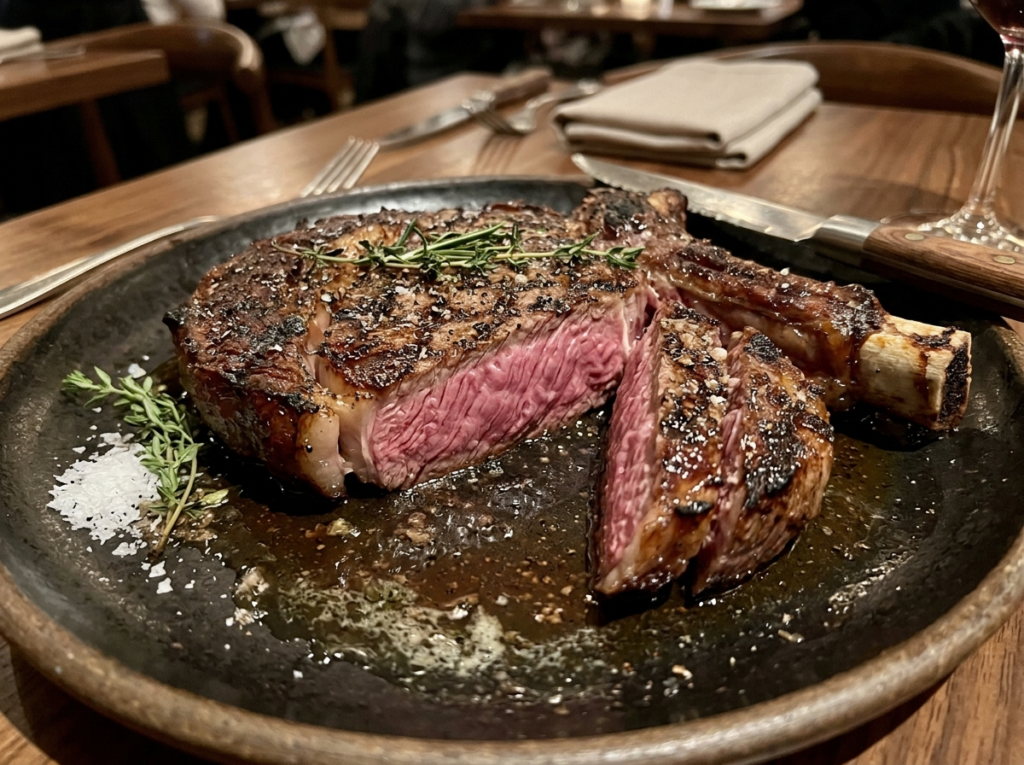
The most common interpretation — and probably the one closest to the original — is that a Delmonico steak is a thick-cut, bone-in or boneless ribeye from the rib section. Many butchers and steak enthusiasts consider this the “true” Delmonico. It makes sense historically, too. The ribeye is rich, well-marbled, and deeply flavorful — exactly the kind of premium steak a high-end 19th-century restaurant would serve to impress.
But that’s far from the only cut that gets the Delmonico label. Depending on the region and the butcher, you might see any of these called a Delmonico:
- Boneless ribeye (the most widely accepted version)
- Bone-in ribeye
- Chuck eye steak (a budget-friendly alternative from the shoulder, sometimes called the “poor man’s ribeye”)
- Top sirloin or strip steak in some areas
- Thick-cut top loin in parts of the Midwest and South
If you’ve ever looked at a tomahawk steak — that dramatic, long-boned ribeye — you’re looking at a close cousin. The tomahawk is essentially a bone-in ribeye with the full rib bone left intact. A Delmonico ribeye, by contrast, is typically trimmed shorter or served boneless.
The point is, the “Delmonico” label is more about quality and presentation than a strict anatomical definition. If you’re shopping for one, always ask your butcher exactly which cut they’re selling under the Delmonico name. Don’t assume.
What Makes a Delmonico Steak Special?
Even though the cut can vary, there are a few qualities that most people agree a Delmonico steak should have.
Thickness Matters
A true Delmonico is thick — usually 1.5 to 2 inches. This isn’t a thin breakfast steak you’d cook in two minutes. The thickness allows you to get a deep, caramelized crust on the outside while keeping the center pink and juicy. That contrast between the seared exterior and the tender interior is what makes the eating experience so satisfying.
Marbling and Flavor
Because the Delmonico is most often cut from the rib section, you’re getting beef that’s loaded with intramuscular fat — those thin white streaks running through the meat. That marbling is what gives ribeye-style steaks their rich, buttery flavor. It’s the same quality that makes cuts like Wagyu and Kobe beef so prized, just on a different scale.
A well-marbled Delmonico practically bastes itself as it cooks. The fat melts and flows through the meat, keeping everything moist and adding deep beefy flavor that leaner cuts simply can’t match.
Portion Size
Delmonico steaks tend to be generous. You’re typically looking at 16 to 24 ounces depending on the cut and the butcher. This was part of the original appeal at Delmonico’s Restaurant — a thick, impressive slab of steak that made a statement on the plate.
Quick Fact: In the mid-1800s, a Delmonico steak dinner at the original restaurant cost around $1 to $2, which was considered extravagant. Adjusted for inflation, that’s roughly $35 to $70 — not far off from what a quality ribeye costs at a good steakhouse today.
How to Cook a Delmonico Steak
Getting the most out of a Delmonico steak doesn’t require fancy equipment or culinary training. You just need to respect the cut and follow a few straightforward steps.
Start with the Right Temperature
Take your steak out of the fridge 30 to 45 minutes before cooking. You want it closer to room temperature so it cooks evenly. A cold steak straight from the fridge will develop a grey band of overcooked meat around the edges before the center warms up.
⚠️ Food Safety Note: Don’t leave raw beef at room temperature for longer than 2 hours. The 30-to-45-minute window is safe and gives you better results without entering the danger zone (40°F–140°F / 4°C–60°C), according to the USDA.
Season Simply
Salt and freshly cracked black pepper. That’s really all you need. A thick-cut, well-marbled Delmonico has enough natural flavor that heavy seasoning can actually get in the way. If you like garlic, rub the steak lightly with a crushed clove before cooking. A touch of flaky finishing salt after cooking adds a nice texture.
Some people swear by a dry brine — sprinkling kosher salt on all sides and letting the steak sit uncovered in the fridge for 12 to 24 hours. This draws moisture to the surface, which then gets reabsorbed, seasoning the meat deeper than surface-level salting alone.
Choose Your Cooking Method
You’ve got several good options here. The best one depends on what you have available.
Cast Iron Skillet (The Gold Standard)
Heat a heavy cast iron pan over high heat until it’s screaming hot — you want to see a faint wisp of smoke. Add a high-smoke-point oil like avocado or refined peanut oil. Sear the steak for 3 to 4 minutes per side without moving it. For a thick Delmonico, you’ll likely need to finish it in a 400°F (204°C) oven for another 5 to 8 minutes to reach your target doneness.
If you already own a well-maintained cast iron pan or a properly seasoned wok, you understand how important a good cooking surface is for building that crust. The same principle applies here — a ripping-hot, well-seasoned pan is your best friend.
Reverse Sear (For Precision)
This method works beautifully for steaks over 1.5 inches thick. Start by cooking the steak in a low oven — around 250°F (121°C) — until the internal temperature reaches about 10 to 15 degrees below your target. Then pull it out and sear it in a blazing-hot skillet for about 90 seconds per side.
The reverse sear gives you edge-to-edge pink with a thin, dark crust. It’s the closest most home cooks can get to steakhouse results.
Grill
If you’re grilling, set up a two-zone fire: one side screaming hot for searing, the other side cooler for indirect cooking. Sear over direct heat for 2 to 3 minutes per side, then move to the cooler side and close the lid until you hit your target temp. If you enjoy grilling meats like Korean short ribs, you already know how to manage a two-zone setup.
Nail the Internal Temperature
Use an instant-read thermometer. Guessing with the poke test is unreliable, especially with a cut this thick.
- Rare: 120–125°F (49–52°C)
- Medium-Rare: 130–135°F (54–57°C) — the sweet spot for most ribeye-style Delmonicos
- Medium: 135–145°F (57–63°C)
- Medium-Well and beyond: Possible, but you’ll lose a lot of the marbling’s benefit
After cooking, let the steak rest on a cutting board for 5 to 10 minutes. This lets the muscle fibers relax and reabsorb their juices. Cut into it too early, and those juices end up on the plate instead of in your mouth.
Knowing your target internal temperatures for different proteins is a skill that pays off across the board, not just for steak.
Pro Tip: Carry-over cooking will raise the steak’s temperature by about 5°F after you pull it off the heat. So if you’re aiming for medium-rare at 135°F, take it off at 130°F.
Delmonico Steak vs. Ribeye: Is There a Difference?
This is the question that trips people up the most. If the Delmonico is usually a ribeye… then aren’t they the same thing?
Not exactly. Think of it this way: all Delmonico steaks (in the most common interpretation) are ribeyes, but not all ribeyes are Delmonicos.
The Delmonico label typically implies something extra — a thicker cut, a higher grade of beef, a more premium presentation. A standard ribeye at the grocery store might be 3/4 inch thick and USDA Select grade. A Delmonico, on the other hand, usually suggests a 1.5-to-2-inch thick steak, ideally USDA Choice or Prime.
There’s also the regional issue. In some parts of the country, especially the Northeast, “Delmonico” specifically means a boneless ribeye. In other areas, butchers use the name for completely different cuts. A New York strip, a chuck eye, or even a thick sirloin could carry the Delmonico label depending on local tradition.
The takeaway? If you see “Delmonico” at a butcher counter or on a restaurant menu and you care about getting a specific cut, ask. A good butcher will happily tell you exactly what you’re getting.
Where to Buy a Good Delmonico Steak
You’ve got a few options, and each has its strengths.
Local Butcher Shops are the best bet if you want control over the cut, thickness, and grade. Tell the butcher you want a boneless ribeye, about 1.5 to 2 inches thick, USDA Choice or Prime. They can cut it to order. If they call it a Delmonico, great — just confirm it’s from the rib section.
Online Specialty Retailers like Snake River Farms, Porter Road, and Crowd Cow offer high-quality, well-graded steaks shipped to your door. You’ll pay more, but the consistency and grading are usually excellent. Some even offer American Wagyu Delmonico-style cuts.
Grocery Stores sometimes carry steaks labeled “Delmonico” in the meat case. Quality varies widely here. Check the USDA grade and look for visible marbling. If it looks lean and thin, it might technically be called a Delmonico, but it won’t deliver the experience you’re after.
If you enjoy exploring different cuts and preparations, you might also want to check out what pork cushion meat is or learn where to buy quality pork belly — both are underrated cuts that reward curious cooks.
Classic Delmonico Preparation: The Butter-Basted Method
If you want to cook a Delmonico the way a steakhouse would, butter basting is the move. Here’s how it works.
After you’ve seared both sides of the steak in a cast iron skillet, drop the heat to medium. Add 2 tablespoons of unsalted butter, a few crushed garlic cloves, and a sprig of fresh thyme or rosemary to the pan. As the butter melts and foams, tilt the pan slightly and use a spoon to scoop the melted butter over the top of the steak repeatedly — about 30 seconds to a minute.
The butter carries the garlic and herb flavors directly onto the steak’s surface while adding another layer of richness. That aromatic, golden-brown butter pooling in the pan? It’s liquid gold. Spoon it over the steak one last time just before resting.
This technique is how many high-end steakhouses achieve that glossy, impossibly flavorful crust. It’s simple, but it makes a noticeable difference.
What to Serve with Delmonico Steak
A steak this rich and flavorful does best with sides that either complement or contrast. You don’t need to overthink it.
Creamed spinach is a steakhouse classic for a reason — the slight bitterness of the greens cuts through the richness of the beef. Roasted asparagus with a squeeze of lemon works the same way. A loaded baked potato leans into the indulgence, while a simple arugula salad with shaved Parmesan and lemon vinaigrette keeps things balanced.
For sauces, a traditional red wine reduction, a peppercorn cream sauce, or even a simple compound butter (butter mixed with fresh herbs, garlic, and a pinch of salt) all pair beautifully without overpowering the steak.
If you love bold flavors, consider serving your Delmonico alongside something with a bit of Asian-inspired heat. A spicy beef lettuce wrap made with the leftover bits makes a killer next-day lunch, too.
FAQ
Is Delmonico steak the same as ribeye?
In most cases, yes — a Delmonico steak is typically a thick-cut boneless ribeye. But the name isn’t standardized by the USDA, so it can refer to different cuts depending on the butcher or region. In some areas, chuck eye, strip steak, or top sirloin may also be sold under the Delmonico name. Always ask your butcher which specific cut they’re using.
Why is Delmonico steak so expensive?
Delmonico steaks tend to be pricier because they’re usually cut thick (1.5 to 2 inches) from the well-marbled rib section and sold in higher USDA grades like Choice or Prime. You’re also paying for the portion size — most Delmonicos weigh 16 to 24 ounces. The name carries a steakhouse premium, too, especially at restaurants that want to evoke the history of the original Delmonico’s in New York.
What is the best way to cook a Delmonico steak at home?
The reverse sear method gives the most consistent results for a thick Delmonico. Cook the steak slowly in a 250°F oven until the internal temp is about 120°F, then sear it in a screaming-hot cast iron pan for 90 seconds per side. Finish with a butter baste. Rest for 5 to 10 minutes before serving. Use an instant-read thermometer — don’t guess.
Is chuck eye steak a real Delmonico?
Some butchers, especially in budget-friendly markets, label chuck eye steaks as Delmonicos. The chuck eye comes from the shoulder area, right next to the rib section, so it shares some of the ribeye’s tenderness and marbling. It’s a good steak for the price, but it’s not the same cut as a true rib-eye Delmonico. Think of it as a close relative rather than the real thing.
What USDA grade should I look for?
For the best Delmonico experience, look for USDA Prime (the top 2-3% of all beef) or at least USDA Choice with visible marbling. Select grade will be leaner and less flavorful, which undercuts the whole point of choosing a Delmonico in the first place.
The Delmonico steak is one of those rare foods where the story is almost as interesting as the taste. It’s not a precisely defined cut — it’s a tradition, an idea of what a perfect steak should be: thick, richly marbled, and cooked with care. That ambiguity frustrates some people, but it’s also what makes the Delmonico unique in the steak world.
Next time you’re at the butcher, ask for a boneless ribeye cut about two inches thick, and you’ll have the closest thing to what the Delmonico brothers served in 1830s Manhattan. Season it simply, sear it hard, baste it with butter, and let it rest. That’s all there is to it — and honestly, that’s all there needs to be.