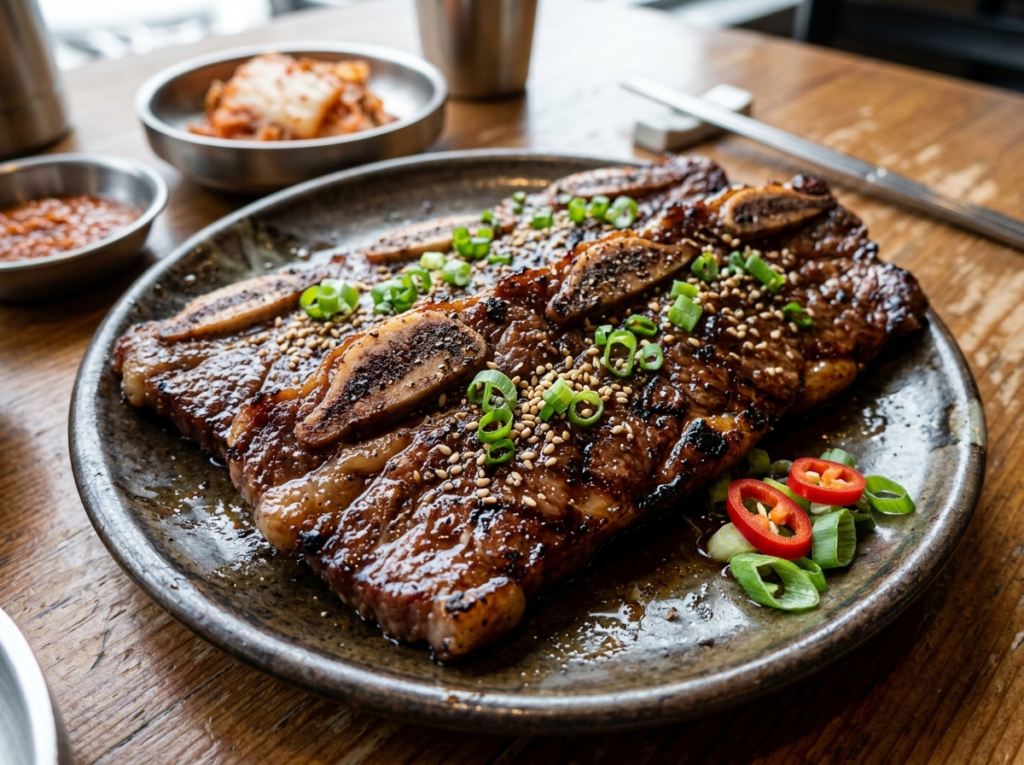
The difference between forgettable kalbi and the kind that makes people go silent mid-bite often comes down to about 25 degrees. That’s it. A small temperature window separates tender, caramelized Korean short ribs from tough, chewy ones — or worse, dried-out meat with a burnt sugar crust. Whether you’re grilling over charcoal, using a cast iron pan, or slow-cooking for a different texture entirely, getting the temperature right is the single most important thing you can control.
Korean short ribs kalbi (also spelled galbi) are one of the most beloved dishes in Korean cuisine, and they’ve earned a loyal following worldwide for good reason. Thin-cut beef ribs, soaked in a sweet and savory marinade built on soy sauce, Asian pear, garlic, and sesame oil, then cooked fast over high heat — the concept sounds simple. But the execution? That’s where most home cooks hit a wall.
This guide breaks down the exact temperatures, timing, and techniques you need to get kalbi right, no matter what cooking method you’re using.
What Makes Kalbi Different from Other Short Ribs
Before we talk temps, it helps to understand what you’re actually working with. Kalbi uses beef short ribs cut in a specific way that you won’t find in most Western barbecue traditions.
The Flanken Cut
Traditional kalbi uses what’s called a flanken cut (also known as LA-style kalbi, named after the Korean community in Los Angeles that popularized this butchering method in the U.S.). Instead of cutting between the bones to give you one thick slab per rib, the butcher cuts across the bones. You end up with a thin strip of meat — usually about ¼ to ⅓ inch thick — with three or four small cross-sections of bone running through it.
This thin cut is the whole reason kalbi cooks the way it does. It means the meat cooks in minutes, not hours. It means the marinade penetrates deeply in a short time. And it means you need a completely different temperature approach than you’d use for, say, braised English-cut short ribs.
If your butcher doesn’t have flanken-cut ribs on display, just ask. Most will cut them for you. Korean grocery stores almost always carry them pre-cut.
Why the Marinade Matters for Temperature
Kalbi marinade is loaded with sugar — from Asian pear, brown sugar, and sometimes honey or mirin. That sugar caramelizes beautifully at the right temperature but burns fast if your heat is too high or your timing is off. The soy sauce in the marinade also contains amino acids that participate in the Maillard reaction, which is what gives you that deep, complex char flavor.
So you’re juggling two things at once: cooking the beef to the right internal doneness and managing the sugar in the marinade so it caramelizes without turning bitter. That balancing act is really the heart of cooking great kalbi.
The Right Temperatures for Grilling Kalbi
Grilling is the most traditional way to cook kalbi, and it’s what most people picture when they think of Korean BBQ. Here’s how to get it right.
Grill Surface Temperature
You want your grill grates to be between 450°F and 550°F (230°C–290°C). That’s solidly in the high-heat zone. The goal is to sear the outside quickly, caramelize the sugars in the marinade, and cook the thin meat through before it dries out.
If you’re using a charcoal grill, let the coals burn until they’re covered in white ash and glowing red underneath. Spread them in an even layer for direct heat. A chimney starter full of briquettes or lump charcoal will give you the right temperature for about 20 to 30 minutes of cooking — plenty of time for a batch of kalbi.
For gas grills, preheat on high with the lid closed for about 10 to 15 minutes. All burners on. You want that grate screaming hot before the first piece of meat goes down.
Pro Tip: If you have an infrared thermometer, point it at your grill grates right before cooking. You’ll know exactly where your hot spots are. This is more useful than the built-in lid thermometer, which measures air temperature, not grate temperature.
Internal Temperature of the Meat
Here’s where things get a little different from what you might be used to with steaks or roasts. Because kalbi is cut so thin — often under ⅓ inch — checking internal temperature with a probe thermometer is almost impossible. The meat is thinner than the probe itself.
So instead of relying on a thermometer, you’re cooking by time and visual cues.
For flanken-cut kalbi at ¼-inch thickness over a properly preheated grill, you’re looking at 2 to 3 minutes per side. That’s it. The meat should have visible char marks and caramelized edges. When you flip it, the cooked side should be dark brown to slightly charred in spots, not uniformly black.
If you’re working with a thicker cut — say ½ inch — you’ll need closer to 3 to 4 minutes per side. And for the rare occasions where someone cuts kalbi at ¾ inch or thicker, you can actually get a probe thermometer in there. Aim for an internal temperature of 130°F to 145°F (54°C–63°C), depending on how you like your beef.
⚠️ Food Safety Note: The USDA recommends cooking beef to a minimum internal temperature of 145°F (63°C) with a 3-minute rest for safety. Kalbi’s thin cut and high-heat cooking method typically brings it to this range quickly, but keep this guideline in mind, especially if you’re cooking for children, elderly individuals, pregnant women, or anyone with a compromised immune system.
Managing Flare-Ups
The sugar and fat in kalbi marinade will cause flare-ups on a grill. Count on it. This isn’t a problem — it’s actually part of how you get that characteristic smoky flavor. But you do need to manage it.
Keep a cooler zone on your grill (one side with no coals, or one burner turned off on a gas grill). If flames get too aggressive, slide the meat over to the cooler side for a few seconds until things calm down. Don’t spray water on a grease fire — you’ll scatter burning fat and make things worse.
The flare-ups also mean you shouldn’t walk away from the grill. Kalbi is a hands-on cook from start to finish. Tongs in hand, eyes on the meat, the entire time.
Cooking Kalbi on a Stovetop
Don’t have a grill? A cast iron skillet or grill pan works surprisingly well. In fact, some Korean home cooks prefer it because you get more control over the heat.
Skillet Temperature
Preheat your cast iron pan over medium-high to high heat for at least 5 minutes. You want the surface temperature to reach about 400°F to 475°F (200°C–245°C). A drop of water flicked onto the pan should evaporate almost instantly — that’s your cue.
If you have a well-seasoned wok, that can work too, though the curved shape makes it trickier to get even contact with the flat meat. If you’re curious about wok care, there’s a helpful guide on how to season a wok properly that’s worth reading before you try it.
The Dry Pan Technique
Here’s something many recipes skip: pat your marinated kalbi dry with paper towels before it hits the pan. I know — you just spent hours soaking it in that beautiful marinade, and now I’m telling you to wipe it off? Not all of it. Just the surface moisture.
Excess liquid on the meat’s surface will create steam instead of sear. You’ll end up braising the ribs in their own marinade puddle, and they’ll turn gray and boiled-looking instead of getting that gorgeous caramelized crust.
Remove the ribs from the marinade, let the excess drip off, then blot lightly with a paper towel. The flavor has already penetrated the meat during marination — the surface moisture is just getting in the way.
Cook in small batches. If you crowd the pan, the temperature drops dramatically and you’re back to steaming. Two or three pieces at a time in a 12-inch skillet is plenty.
Timing on the Stovetop
Expect 2 to 3 minutes per side for standard thin-cut kalbi, very similar to grilling. You’ll know it’s time to flip when the edges start to curl slightly and you can see browning creeping up the sides of the meat.
One advantage of the stovetop: you can add a quick glaze at the end. In the last 30 seconds, brush a thin layer of reserved marinade (not the marinade the raw meat sat in — more on that in the food safety section below) onto the cooked side. It’ll hit the hot pan surface and caramelize instantly.
Broiling Kalbi in the Oven
If grilling and stovetop cooking aren’t options — maybe you’re in an apartment with a sensitive smoke detector — the oven broiler is your friend.
Broiler Setup
Set your oven broiler to high. Position the rack so the meat will sit about 4 to 6 inches from the heating element. Place the kalbi on a wire rack set over a foil-lined baking sheet. The wire rack lets hot air circulate under the meat and allows excess marinade to drip away, preventing steaming.
Most oven broilers run between 500°F and 550°F (260°C–290°C), which puts you right in the ideal temperature range for kalbi.
Timing Under the Broiler
Broil for 3 to 4 minutes per side. Watch closely — broilers vary a lot between ovens, and the sugar in the marinade can go from perfectly caramelized to burnt in under a minute.
Leave the oven door slightly ajar if your oven’s manual recommends it for broiling (many do). This lets steam escape and keeps the broiler element from cycling off, which would drop your temperature.
Slow-Cooking Kalbi: A Different Approach Entirely
This might surprise you: not all kalbi is cooked fast. Galbi-jjim is a traditional Korean braised short rib dish that takes the same cut of meat in a completely different direction. Instead of thin-sliced flanken cuts cooked in minutes, galbi-jjim uses thicker English-cut short ribs braised low and slow until the connective tissue breaks down into gelatin.
Temperatures for Braised Galbi-Jjim
You’re looking at a gentle simmer around 200°F to 210°F for 2 to 3 hours. The internal temperature of the meat should reach 195°F to 205°F (90°C–96°C) — that’s the sweet spot where collagen has fully converted to gelatin and the meat pulls apart easily.
This is the same principle behind any great braised meat, from Chinese char siu pork to Western-style pot roast. Low temperature, long time, and enough liquid to keep everything moist.
For braised galbi-jjim, the marinade base shifts too. You’ll still use soy sauce and garlic, but the sweetness usually comes from Korean radish (mu), chestnuts, jujubes, and sometimes carrot rather than the heavy sugar load in grilled kalbi marinade.
Marinade Time and Temperature
The marinade stage isn’t just about flavor — it’s a food safety concern too.
How Long to Marinate
For thin flanken-cut kalbi, 4 to 8 hours is the sweet spot. The Asian pear in the marinade contains enzymes (similar to those in pineapple and kiwi) that help tenderize the meat. Leave it too long — say, past 24 hours — and those enzymes can break down the surface of the meat too much, leaving it mushy.
Two hours is the absolute minimum if you’re pressed for time. You’ll still get flavor, just not as deep.
Marinating Temperature
Always marinate in the refrigerator at 40°F (4°C) or below. Never at room temperature. Raw beef sitting in a sugar-rich liquid at room temp is a fast track to bacterial growth.
⚠️ Food Safety Note: If you want to use marinade as a finishing glaze or dipping sauce, set aside a portion before the raw meat goes in. Never reuse marinade that’s been in contact with raw beef unless you boil it for at least 5 minutes to kill harmful bacteria.
Also, if you’ve got leftover cooked rice from the fridge to serve alongside your kalbi, make sure it’s been stored properly — cooked rice is one of those sneaky food safety risks people overlook.
Resting and Serving Temperature
Kalbi doesn’t need a long rest like a thick steak does. Because the cut is so thin, there’s not a huge temperature differential between the surface and the center. A 1 to 2 minute rest on a cutting board or warm plate is plenty.
Serve it hot. Kalbi is best eaten right off the grill or pan. The fat in the meat starts to firm up as it cools, and the caramelized sugars lose their glossy, sticky appeal.
Did you know? In Korean restaurants, kalbi is traditionally served with scissors at the table. Diners snip the meat away from the small bone sections before wrapping pieces in lettuce leaves with ssamjang (a thick, spicy paste), garlic slices, and sometimes a slice of raw jalapeño. If you enjoy pickled heat on the side, a batch of easy pickled jalapeños pairs really well here.
Choosing the Right Meat
Temperature and technique only get you so far if you start with the wrong cut. Let’s talk about what to look for at the butcher counter.
Beef Grade Matters
For grilled kalbi, you want well-marbled meat. USDA Choice is the minimum you should aim for. USDA Prime is better if you can find it and don’t mind the higher price. The intramuscular fat in higher-grade beef keeps the thin slices juicy during high-heat cooking.
If you’re curious about the upper end of beef marbling and what makes certain breeds special, the differences between wagyu and Kobe beef are worth understanding — though you certainly don’t need wagyu to make excellent kalbi at home.
Bone-In vs. Boneless
Traditional kalbi is bone-in, and there’s a reason for that beyond aesthetics. The bones add flavor during cooking and they help the thin strips keep their shape on the grill. Boneless flanken-style strips work fine in a pinch, but they tend to curl more aggressively and can be harder to manage over open flames.
How Thick Should You Ask For?
Tell your butcher ¼ inch (6mm). This is the standard for LA-style kalbi. Some Korean markets cut even thinner — almost paper-thin — which works beautifully on a tabletop Korean BBQ grill but can be tricky on a standard backyard grate because the meat falls through or sticks.
If your butcher isn’t familiar with the flanken cut, you can ask for “short ribs cut across the bone, ¼ inch thick.” That gets the message across clearly.
Temperature Quick Reference
Here’s a quick reference to keep handy while you cook:
| Method | Surface/Heat Temp | Time Per Side | Notes |
|---|---|---|---|
| Charcoal grill | 450°F–550°F | 2–3 min | Manage flare-ups, don’t walk away |
| Gas grill | 450°F–550°F | 2–3 min | Preheat 10–15 min, lid closed |
| Cast iron skillet | 400°F–475°F | 2–3 min | Small batches, pat meat dry |
| Oven broiler | 500°F–550°F | 3–4 min | Rack 4–6 inches from element |
| Braised (galbi-jjim) | 200°F–210°F simmer | 2–3 hours total | Internal temp to 195°F–205°F |
Troubleshooting Common Kalbi Problems
Even with the right temps, things can go sideways. Here are the issues I see most often and how to fix them.
The Meat Is Tough and Chewy
This usually means one of two things: you didn’t marinate long enough, or your heat was too low. Low heat means longer cook times, and longer cook times dry out thin-cut meat. Crank your heat up and cut your cook time down. Also, make sure your marinade includes something with natural enzymes — Asian pear is traditional, but kiwi or fresh pineapple juice work too.
The Outside Is Burnt but the Inside Isn’t Done
Your heat is too high, or you’re too close to the broiler element. Move the meat farther from the heat source, or if grilling, try letting the coals burn down for a few more minutes before cooking. You want intense heat, not inferno heat.
The Marinade Tastes Great but the Meat Is Bland
The flavor stayed on the surface instead of penetrating. This happens when you rush the marination or when the cut is too thick for the marinating time. For thick cuts, score the meat lightly with a knife in a crosshatch pattern before marinating. The slits give the marinade a way in.
Everything Sticks to the Grill
Oil your grates right before cooking. Dip a folded paper towel in vegetable oil, grab it with tongs, and rub it across the hot grates. The sugar in kalbi marinade makes sticking almost inevitable on a dirty or improperly oiled surface.
FAQ
What temperature should kalbi be cooked to?
For grilled flanken-cut kalbi, cook over a grill surface temperature of 450°F to 550°F for 2 to 3 minutes per side. Because the meat is so thin (¼ inch), internal temperature is hard to measure with a probe, so you rely on time and visual cues — look for caramelized, slightly charred edges. If your cut is ½ inch or thicker, aim for an internal temperature of 130°F to 145°F, keeping in mind the USDA recommends 145°F with a 3-minute rest for beef safety.
Can I cook kalbi in the oven instead of on a grill?
Yes. Use your oven’s broiler set to high, with the meat on a wire rack positioned 4 to 6 inches from the heating element. Broil for 3 to 4 minutes per side. You won’t get exactly the same smoky flavor as charcoal grilling, but you’ll still get great caramelization from the high radiant heat. A cast iron skillet on the stovetop is another excellent alternative.
How long should you marinate kalbi?
The ideal marinating time for thin-cut kalbi is 4 to 8 hours in the refrigerator. Two hours is the minimum for noticeable flavor penetration. Don’t exceed 24 hours — the enzymes in Asian pear (or kiwi/pineapple, if you use those) will start to break down the meat’s texture too much, making it mushy rather than tender.
What’s the difference between kalbi and galbi?
They’re the same dish. “Kalbi” and “galbi” are different romanizations of the Korean word 갈비, which simply means “ribs.” You’ll see both spellings on restaurant menus and recipes. Some people also use “galbi” to refer specifically to the grilled version and “galbi-jjim” for the braised version, but there’s no hard rule.
Is kalbi the same as bulgogi?
No, though they share a similar flavor profile. Kalbi uses short ribs (bone-in, flanken cut), while bulgogi uses thinly sliced boneless beef, typically from the sirloin, tenderloin, or rib eye. The marinades are similar — soy sauce, sugar, garlic, sesame oil, Asian pear — but the cuts cook differently and have different textures. Kalbi has a richer, fattier bite because of the rib meat and marbling near the bone.
Your Next Kalbi Cook Starts Here
Getting kalbi right isn’t about fancy equipment or hard-to-find ingredients. It’s about understanding how thin-cut, sugar-marinated beef behaves at high heat — and then giving it exactly what it needs. Hot grill, quick cook, don’t walk away.
Start with a good flanken cut from your butcher, give it at least four hours in the marinade, and get your cooking surface ripping hot before the first piece goes down. Pay attention for those few minutes of active cooking, and you’ll pull off restaurant-quality Korean short ribs in your own backyard or kitchen.
And once you’ve got kalbi down, you might want to explore what else Korean and Asian grilling has to offer. A platter of kalbi alongside some quick pickled vegetables and steamed rice makes one of the best weeknight meals you’ll ever put together. Your next cookout just got a serious upgrade.