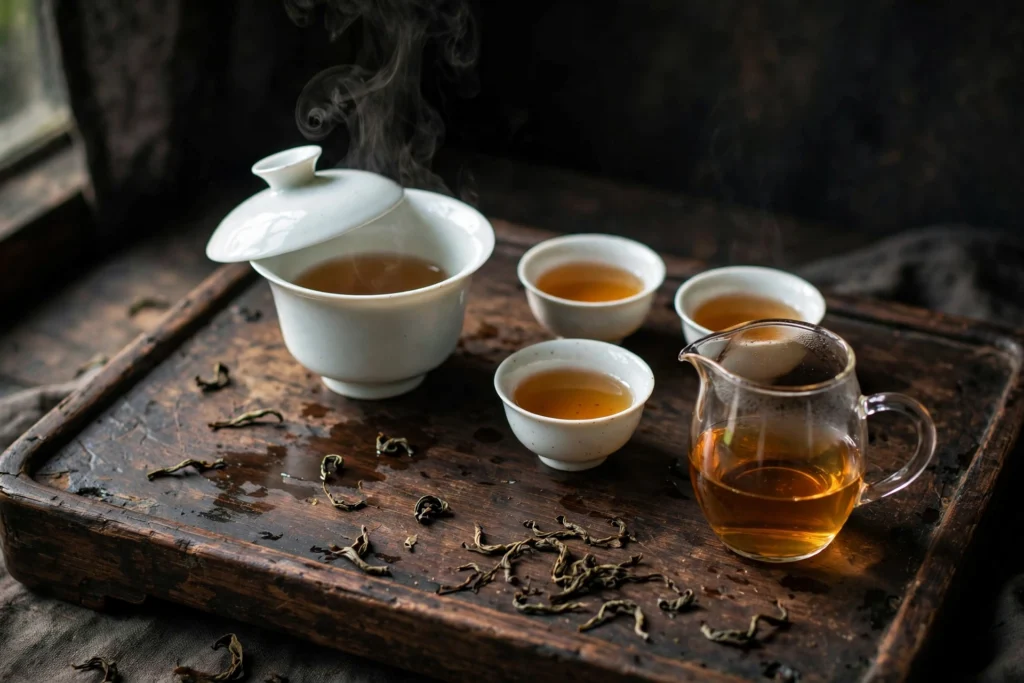
You’ve probably seen it: someone pulls out a tiny teapot, thimble-sized cups, and a wooden tray of mysterious tools. Water gets poured over everything, then thrown away. The same leaves get steeped again and again, and each little cup tastes different. It looks like a ritual with secret rules — and once you understand them, it becomes the best cup of tea you’ve ever had.
This is gongfu cha, the Chinese tea ceremony: a centuries-old method of brewing tea with small vessels, lots of leaf, and very short steeps. This guide explains what it actually is, the teaware you need (and the pieces you can skip), the ceremony step by step, exact brewing parameters for every major tea type, and how to behave when someone brews for you.
What “Gongfu Cha” Actually Means
Forget the word “ceremony” for a moment. Gongfu cha (功夫茶) translates roughly to “making tea with skill” — and it’s the same gongfu as in kung fu. It means attention and practice, not pageantry. A chef with great knife skills has gongfu. A calligrapher with a steady hand has gongfu. A person who can pull ten delicious infusions out of one pinch of oolong has gongfu. The “ceremony” part is just what it looks like from the outside when someone does it well.
The practice took shape during the Song dynasty and matured through the Ming and Qing dynasties, particularly in the Chaozhou region of Guangdong province in southern China — one of China’s great regional food cultures, where tea gets the same seriousness as the cooking. It rests on four principles: harmony, respect, purity, and tranquility. Those aren’t wall-poster slogans; they’re instructions. Harmony between water temperature and leaf. Respect for the tea and the people drinking it. Purity of water and vessels. Tranquility in the pace — nobody rushes gongfu cha.
The entire method boils down to one sentence: more leaf, less water, short steeps, many of them. Instead of a big mug with a teaspoon of tea steeped for four minutes, you use a small vessel (100–150 ml), fill it generously with leaf, steep for seconds, empty it completely, and repeat — five, ten, sometimes fifteen times. Each infusion tastes different, and following that evolution is the whole point.
The Teaware: What Each Piece Actually Does
A full gongfu setup can look like a chemistry lab, but every piece earns its place. Here’s the core kit:
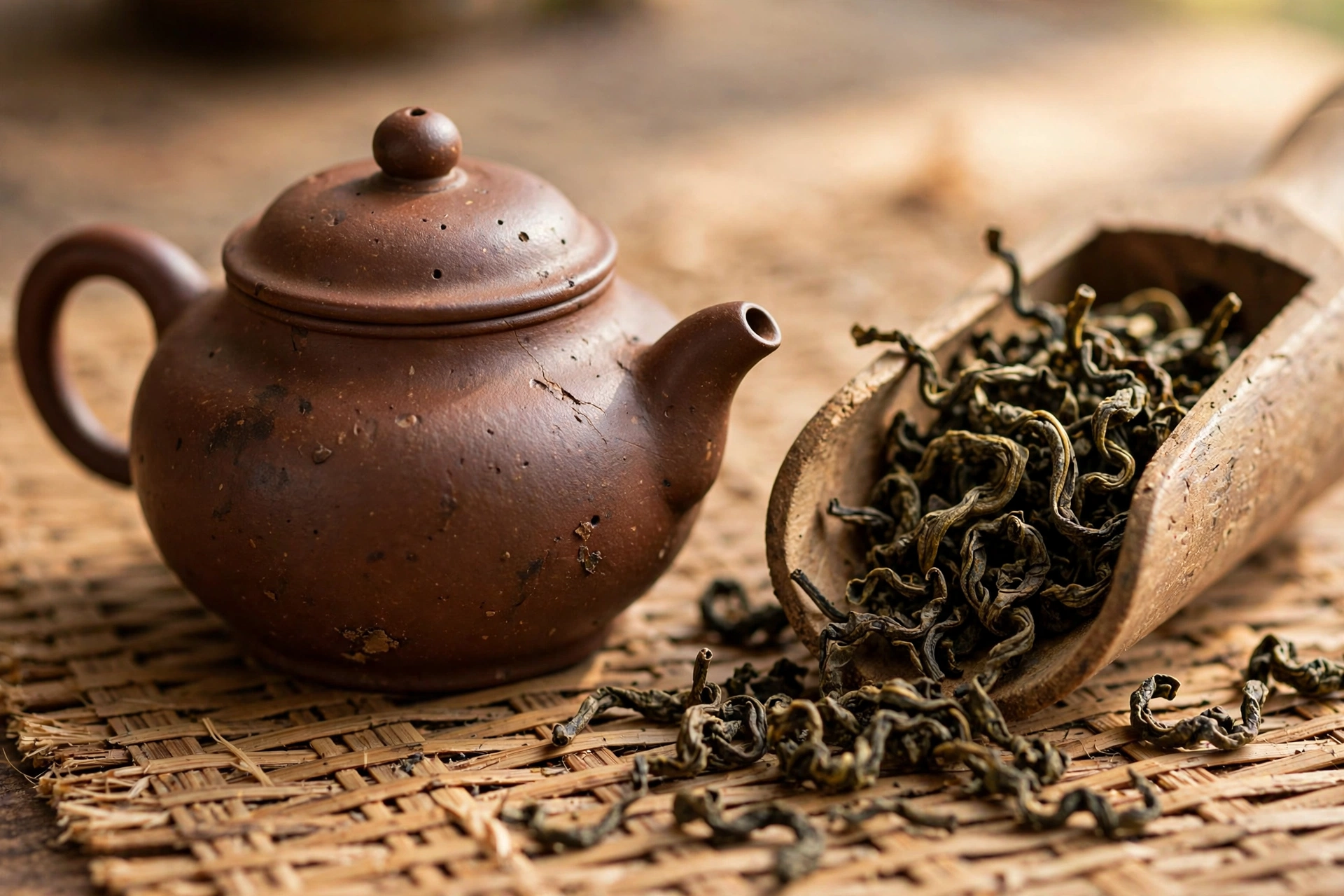
- Gaiwan or small teapot — the brewing vessel, and the heart of the whole thing. A gaiwan is a lidded porcelain bowl; a Yixing teapot is unglazed clay from Jiangsu. Porcelain is the best starter choice because it holds no flavor and suits every tea. Unglazed clay absorbs aroma over time, so a Yixing pot should be dedicated to one type of tea.
- Fair cup (gong dao bei / cha hai) — a small pitcher you decant each infusion into before serving. Without it, the first cup poured would be weak and the last one stewed. The fair cup makes every cup the same strength. Hence “fair.”
- Tasting cups — tiny, usually 30–50 ml. Their size isn’t preciousness; it forces you to sip slowly and pay attention.
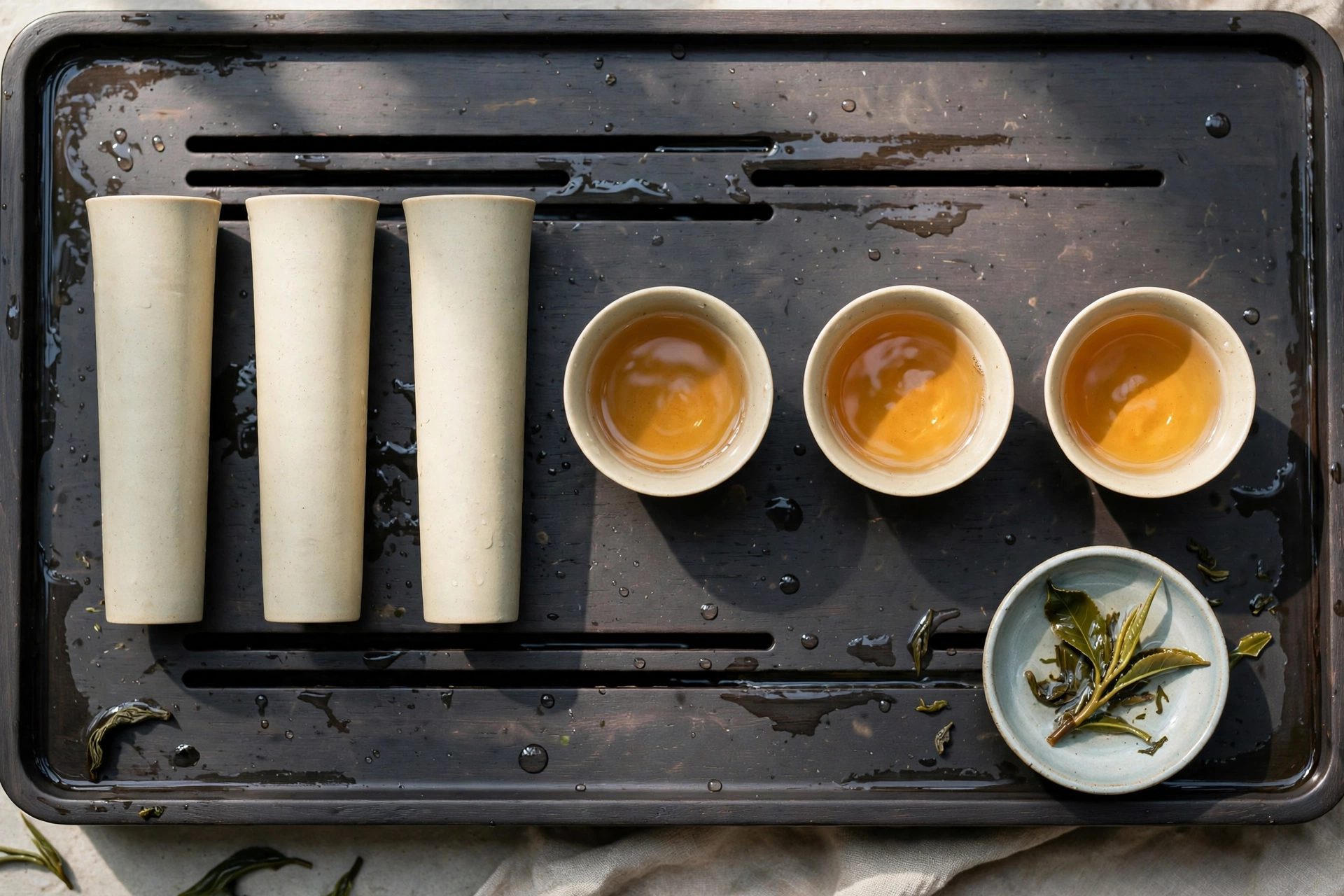
- Sniffing cups (wen xiang bei) — tall, narrow cups for appreciating aroma. Tea goes into the sniffing cup, which is inverted into the tasting cup; you smell the empty sniffing cup before drinking. Oolong lovers swear by them.
- Tea tray (cha pan) — a slatted tray with a reservoir underneath that catches rinse water and spills. Gongfu brewing is gloriously messy; the tray keeps it civilized.
- Tea tools (cha dao) — a bamboo set that may include a spoon for moving dry leaves, a pick for unclogging spouts, and tongs for handling hot cups.
- Tea pet — a small clay figurine (often an animal) that sits on the tray and gets “fed” leftover tea. Pure charm — and every tea table has one.
You don’t need all of this to start. A gaiwan, three cups, and a bowl to catch water will teach you 90% of gongfu cha. Buy the tea pet later. China Tea Sale’s gongfu cha guide has a good illustrated rundown of the full traditional set if you want to see every piece in action.
The Ceremony, Step by Step
Here’s the full sequence. It looks long written out; in practice it flows like making coffee — you just do it.
- Warm everything. Pour hot water into the empty gaiwan or teapot, swirl, tip it through the fair cup and drinking cups, then discard. Cold porcelain steals heat from the first infusion, and a warm vessel makes dry leaf release its scent.
- Add the leaf and smell it. About 5–7 grams per 100 ml for oolong. Lid on, wait a few seconds, lift and breathe in. That dry aroma tells you a great deal about what’s coming.
- Rinse the leaves (most teas). Fill and pour straight back out in under five seconds. This wakes the leaf so the first real infusion extracts evenly, and helps rolled or compressed leaves start opening. Skip it for green tea and delicate white buds, which give their best in the opening seconds.
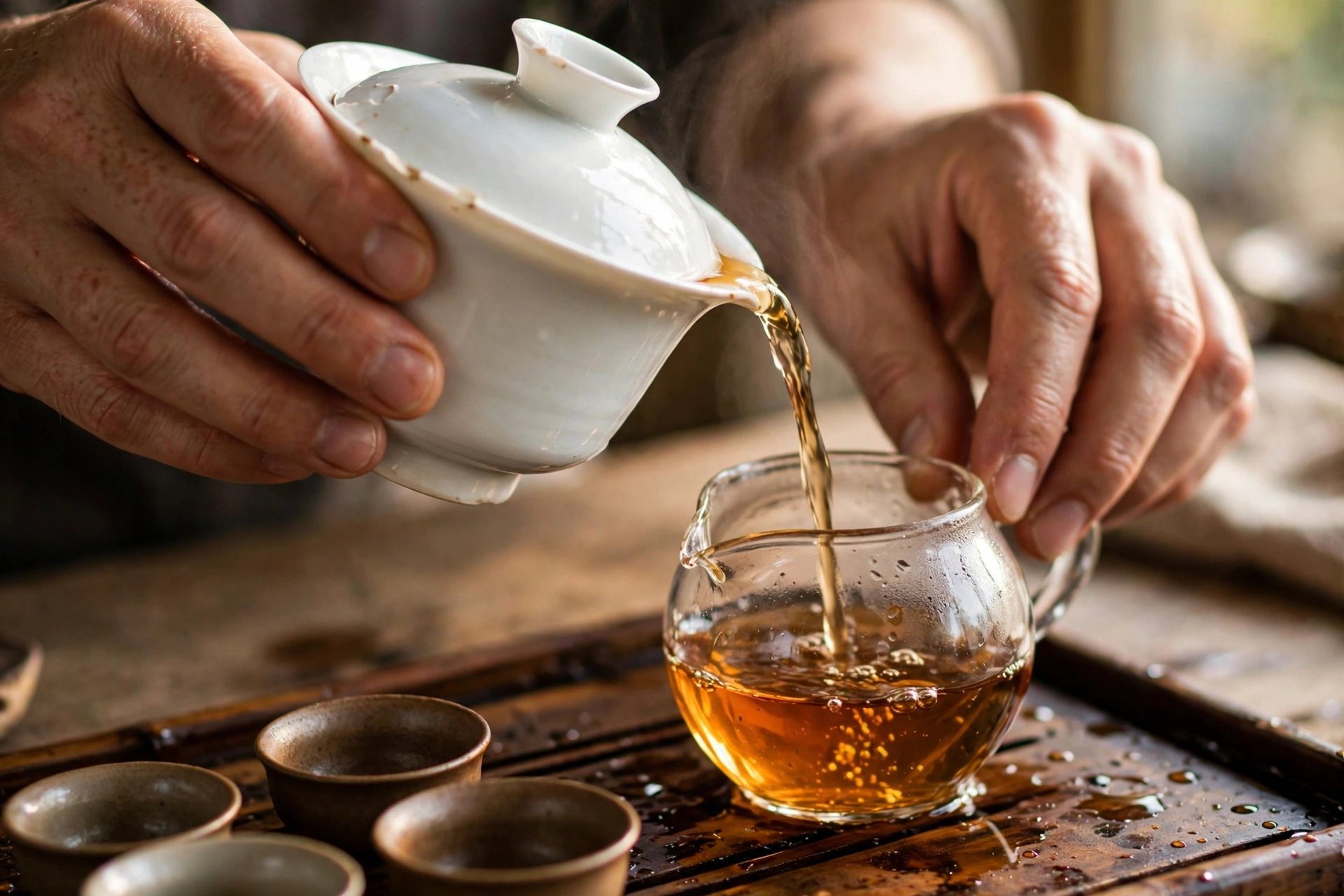
- First infusion — count in seconds. Pour water at the right temperature (see the table below), lid on, and steep briefly: 10–20 seconds for most oolongs. Pour down the inside wall for delicate leaves; straight onto the leaf for compressed pu’er to help it break open.
- Empty the vessel completely. Every drop into the fair cup. Water left on the leaves keeps extracting and sours the next round — the single most important habit in gongfu brewing.
- Pour, smell, sip. Serve from the fair cup. Look at the color, breathe in the aroma, take small sips. Notice body, sweetness, bitterness, and the aftertaste — the lingering flavor after you swallow is where great tea shows off.
- Repeat, adding time. Re-steep the same leaves, adding roughly 3–10 seconds per round. Good oolong or pu’er will give 8–12 infusions, each one different.
- Know when to stop. When a cup tastes thin and watery rather than merely light, the leaves are done. Admire the unfurled leaves one last time, then clean up. (Never use soap on unglazed clay; hot water is enough.)
Brewing Parameters by Tea Type
Different teas want different handling. Treat these as starting points, not commandments — your taste beats any chart. (Leaf amounts are per 100 ml of vessel; scale up for a larger gaiwan.)
| Tea type | Water temp | Leaf per 100 ml | Rinse first? | First steep | Infusions to expect |
|---|---|---|---|---|---|
| Green (Dragon Well, Bi Luo Chun) | 75–85°C | 3–4 g | No | 20–30 sec | 3–4 |
| White (Silver Needles, White Peony) | 85–90°C | 4–5 g | Optional | 30–45 sec | 4–6 |
| Rolled oolong (Tie Guan Yin) | 95–100°C | 5–7 g | Yes, ~5 sec | 25–35 sec | 6–8 |
| Rock oolong (Da Hong Pao, Rou Gui) | 100°C | 5–7 g | Yes, ~5 sec | 15–20 sec | 8–10 |
| Red/black (Keemun, Lapsang Souchong) | 90–95°C | 4–5 g | Optional | 10–20 sec | 4–6 |
| Raw pu’er | 90–100°C | 5–7 g | Yes, ~5 sec | 10–15 sec | 8–12 |
| Ripe pu’er | 100°C | 5–7 g | Yes, once or twice | 10–15 sec | 10–15 |
After the third infusion, add about five seconds to each steep. And judge by taste, not color — a pale infusion of Dragon Well can be full of flavor while a dark one tastes hollow. Tea Chapter’s gongfu brewing guide, from a Singapore tea house that’s been brewing this way since 1989, is the source of these parameters and the best practical reference I’ve found.
Why Short Steeps Make Better Tea
The whole method rests on a simple piece of chemistry. Different compounds leave the leaf at different speeds: the aromatic, sweet-tasting parts dissolve fast, while the bitter, astringent ones build with time and heat. A four-minute mug drags all of it into one cup — which is why over-steeped tea tastes flat and drying. Short steeps skim the fragrant fraction first and leave the harsh stuff behind. And because you’re using two or three times as much leaf as a normal brew, the cup is concentrated, not weak.
Whole leaves make the repeats possible. Tea in a bag is broken into tiny particles with enormous surface area, so it surrenders everything in one go. Whole leaves unfurl gradually, and each infusion reaches leaf the previous one never touched. That’s why the cups keep changing: the first two or three are the most perfumed, the middle stretch the thickest and sweetest, the tail end soft and mineral. Drinking that arc — watching one pinch of leaves tell a whole story — is the real pleasure of gongfu cha. No single mug can do it.
How to Behave When Someone Brews for You
Sooner or later, someone who knows what they’re doing will brew for you. Here’s how to be a good guest:
- Tap two fingers on the table when served. Index and middle finger, twice — a silent “thank you,” a miniature kowtow from the old days. You’ll see it constantly in Cantonese tea houses. Use it and you’ll look like you belong.
- Smell before you sip. If sniffing cups are in play, breathe in the aroma from the empty tall cup first. The host went to trouble for that fragrance; acknowledge it.
- Sip, don’t shoot. The cups are small because the tea is meant to be tasted, not drunk. Take small sips, notice the aftertaste, don’t rush.
- Let the host pour. The brewer serves everyone. Don’t grab the pot and top yourself up — wait your turn like everyone else.
- Ask questions. What tea is this? Where’s it from? How many steeps will it give? Tea people love talking about tea. The only real faux pas is treating it like a beverage station — phone in one hand, cup drained in one gulp.
Tea also shows up as a gesture of respect beyond the ceremony table — it’s one of the classic gifts in Chinese gift-giving tradition, and no Chinese breakfast spread is complete without a pot of it. The ceremony is the formal version of something woven through daily life.
Beginner Mistakes to Skip
Everyone makes these at first. Knowing them in advance saves you a few disappointing pots:
- Too little leaf, then a long steep to compensate. The number one error. It buys bitterness instead of body. Be generous with the leaf, ruthless with the timer.
- Boiling water on green tea. It scorches delicate leaves into a stewed, spinachy cup. Let boiled water rest a minute or two first.
- One clay pot for every tea. Unglazed Yixing clay absorbs aroma — Monday’s roasted oolong will haunt Tuesday’s green tea. Use porcelain until you commit to one tea type.
- Buying every tool before your first brew. A gaiwan and some cups teach you more than a full bamboo tool set gathering dust.
- Following timing charts too rigidly. Charts are starting points. Your tongue is the instrument — if 15 seconds tastes better than 20, you’re right and the chart is wrong.
- Leaving water on the leaves between steeps. Empty the vessel completely every time, and leave the lid ajar so wet leaves don’t stew in their own heat.
Tealibere’s beginner guide covers these pitfalls well, with the reassuring reminder that you can’t actually ruin a tea — only make one cup slightly too strong, then adjust the next.
Frequently Asked Questions
Do I need a gaiwan to start gongfu cha?
No. A small teapot works just as well. What matters is that the vessel is small (100–150 ml), that you can empty it quickly and completely, and that it doesn’t hold onto the flavor of the last tea you brewed in it. Porcelain is the most forgiving starting material.
Should I rinse the leaves every time?
Rinse compressed, aged, rolled, and heavily roasted teas — pu’er, rock oolong, Tie Guan Yin. Skip it for green tea and delicate white buds, where much of the character sits in the opening seconds. A five-second rinse doesn’t decaffeinate anything, either; barely any caffeine leaves that fast.
How many times can I really re-steep the same leaves?
More than you’d think. Greens are finished after three or four, but a good rock oolong or ripe pu’er will often pass ten if you keep lengthening the steep. Stop when the cup tastes thin and watery rather than merely light.
Is this the same as the Chinese wedding tea ceremony?
Related but different. The wedding tea ceremony is a ritual of respect: the couple kneels and serves tea to their parents and elders, who accept it and give blessings (and red envelopes) in return. Gongfu cha is a brewing method focused on tasting the tea itself. One honors family; the other honors the leaf.
The best next step is the smallest one: get a porcelain gaiwan (they cost less than a takeout dinner), a bag of Tie Guan Yin or Da Hong Pao oolong, and brew one session this weekend. Warm the vessel, wake the leaves, count your seconds. By the third infusion, when the cups turn thick and sweet, you’ll understand what gongfu means — and you’ll taste the flavors of Chinese cuisine with a whole new palate.