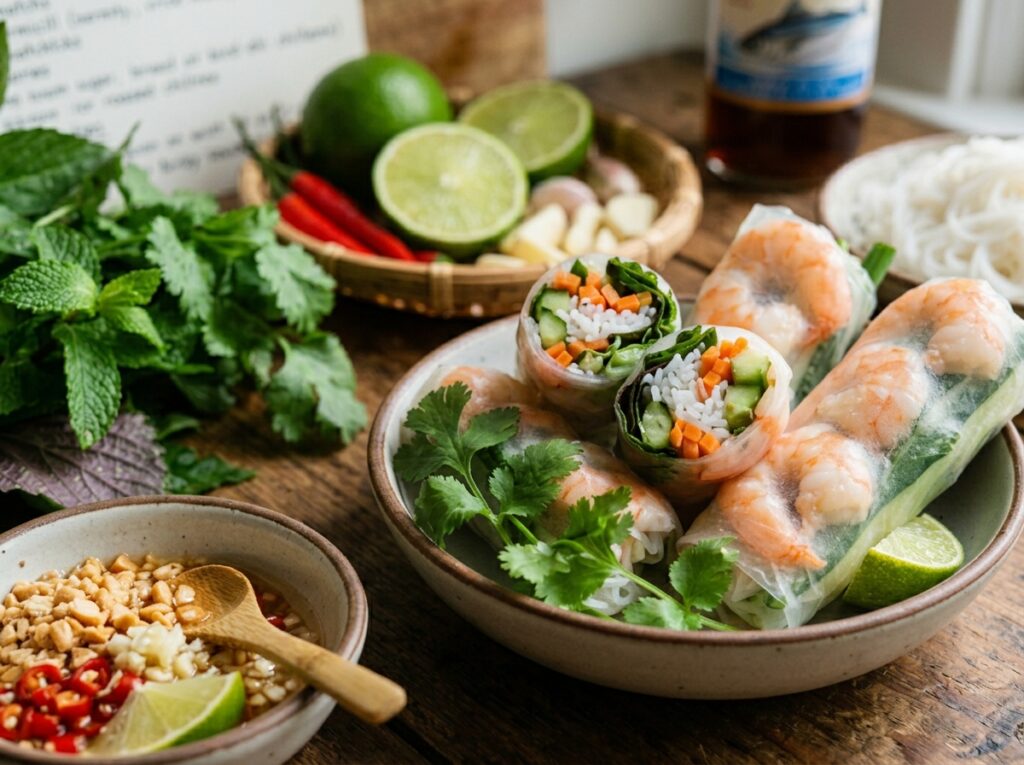
The first time I truly understood Vietnamese cuisine, I wasn’t in a famous restaurant in Hanoi or Ho Chi Minh City. I was on a slow, rickety boat navigating the labyrinthine waterways of the Mekong Delta. The family I was with had prepared a small, impromptu meal. There was a bowl of simple fish soup with tomatoes and pineapple, a plate of freshly made rice noodles, and a small dish of nước chắm—the classic dipping sauce.
The matriarch of the family watched me as I ate. She pointed to the soup, then to the dipping sauce, then to a small bowl of chili flakes on the side. She said, through a translator, “You are the chef. You make the balance. Too sweet, you add this.” She pointed to the fish sauce. “Too sour, you add that.” She pointed to the sugar. “Too plain, you add this.” She pointed to the chili. In that simple moment, she laid out the entire philosophy of the cuisine. It wasn’t a set of rigid recipes; it was a dynamic, intuitive system of balance.
After decades of traveling, cooking, and eating my way through Vietnam, I can tell you that most Western perceptions of this food are flat. We see it as a list of vietnamese cuisine dishes—Phở, Bánh Mì, summer rolls—without understanding the connective tissue. This is your insider’s guide. I’m not just going to give you an overview. I’m going to give you the Flavor Compass, the fundamental philosophy that governs every dish, from a humble street-side snack to a royal feast. Once you understand this, you won’t just be eating Vietnamese food; you’ll be able to read it, speak it, and even cook it with true intuition.
The Core Principle: Âm-Dương: The Culinary Yin-Yang
The entire philosophy of Vietnamese cooking can be boiled down to one concept: âm-dương, or yin-yang. It’s the idea of balancing opposing forces to create a harmonious whole. On the plate, this translates to a constant, dynamic interplay of five fundamental flavor and textural elements. Every great dish, and every great meal, contains elements from both sides of this spectrum.
| The “Yin” (Cooling, Refreshing, Light) | The “Yang” (Warming, Rich, Intense) |
|---|---|
| Acidic: Lime juice, vinegar, pickles (đồ chua) | Salty/Fermented: Fish sauce (nước mắm), shrimp paste, soy sauce |
| Herbaceous: Mint, cilantro, perilla, Thai basil | Sweet: Sugar, palm sugar, coconut water |
| Bitter/Raw: Raw vegetables, bitter greens | Rich/Fatty: Meats, organ meats, fried elements, coconut milk, pâté |
| Cooling: Cucumber, room-temperature noodles | Spicy/Hot: Chili, black pepper |
This is not a suggestion; it’s a requirement. A dish that is only “yang”—rich and fatty—will feel heavy and cloying. A dish that is only “yin”—sour and raw—will feel thin and unsatisfying. The genius of Vietnamese cuisine lies in how it masterfully weaves these elements together. A single bowl of beef noodle soup can contain the rich, fatty bone broth (yang), the sour lime and sharp herbs (yin), the spicy chili (yang), and the cooling bean sprouts (yin). It’s a self-contained universe of flavor.
This framework is the key to any vietnamese cuisine overview. It’s why a meal is often served with a massive platter of fresh herbs and lettuce. It’s not a garnish; it’s an essential tool for you, the diner, to adjust the âm-dương of your own plate with every single bite.
The Holy Trinity of Ingredients: The Soul, the Breath, and the Body
To execute this philosophy, you need the right building blocks. While Vietnamese cuisine uses thousands of ingredients, three are so fundamental they form a holy trinity.
- The Soul: Fish Sauce (Nước Mắm). I’ve said it before, and I’ll say it again: this is not just a salty condiment. It is the liquid soul of the cuisine. A true, first-press fish sauce (like the famous Red Boat brand) is a pure expression of fermented anchovy and salt, packed with glutamates that provide a profound, savory depth that salt alone cannot achieve. It is the primary “yang” element in the flavor compass. It’s the salt, the umami, and the funk all in one. A kitchen without a good bottle of fish sauce is like a French kitchen without butter.
- The Breath: Fresh Herbs. If fish sauce is the soul, the vast array of fresh herbs are the breath of the cuisine. They are the ultimate “yin” element. They provide the cooling, aromatic lift that cuts through richness and cleanses the palate. But it’s not just “a handful of herbs.” Different herbs have different jobs. Mint provides an intense cooling sensation. Cilantro offers a bright, citrusy pop. Perilla leaf has a unique, deep, almost minty-basil flavor. Thai basil brings a licorice note. A true Vietnamese meal will often feature a combination of three or more herbs, creating a complex aromatic bouquet that is as important as the main dish itself.
- The Body: Rice in All Its Forms. Rice is the canvas, the body, the foundation upon which the entire meal is built. But to think of it as just a bowl of steamed grains is to miss 90% of its function. Rice is the ultimate chameleon. It’s ground into flour to make the delicate wrappers for spring rolls. It’s fermented into rice vinegar for pickles and dipping sauces. It’s pounded and stretched into the translucent, chewy sheets used for Bánh Bò Nướng (honeycomb cake). It’s puffed into a crispy cracker. And, most famously, it’s extruded into the myriad noodles that form the base of countless dishes, from Phở to Bún. The presence of rice in all these forms is the neutral, grounding element that allows the yin-yang flavors to shine.
The Two Pillars of Technique: Raw vs. Cooked
With the philosophy and the ingredients in place, we can look at how they come together through technique. I see all vietnamese cuisine dishes as falling into one of two fundamental pillars.
Pillar 1: The Raw and the Assembled (Gỏi/Nộm)
This is the ultimate expression of freshness and balance. Think of salads, summer rolls, and noodle bowls that are served at room temperature or cool. The technique here is less about applying heat and more about composition. The chef’s art is in the cutting, the julienning, and the arranging. A classic Gỏi (Vietnamese salad) is a masterclass in texture: finely shredded green papaya for crunch, boiled shrimp for a firm bite, roasted peanuts for fattiness, and fresh herbs for aroma, all tied together with that perfect sweet-sour-spicy fish sauce dressing. The baguette in vietnamese cuisine, the iconic Bánh Mì, is a perfect example of this principle. It’s a constructed salad on bread: the rich, fatty pâté and mayonnaise (yang) are balanced by the sharp, sour pickled carrots and daikon (yin) and the cool cucumber and cilantro (yin). It’s a symphony in a sandwich.